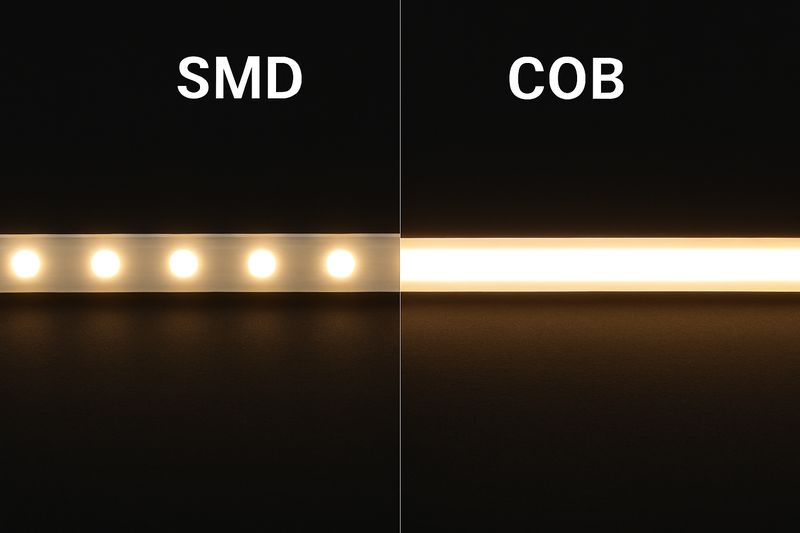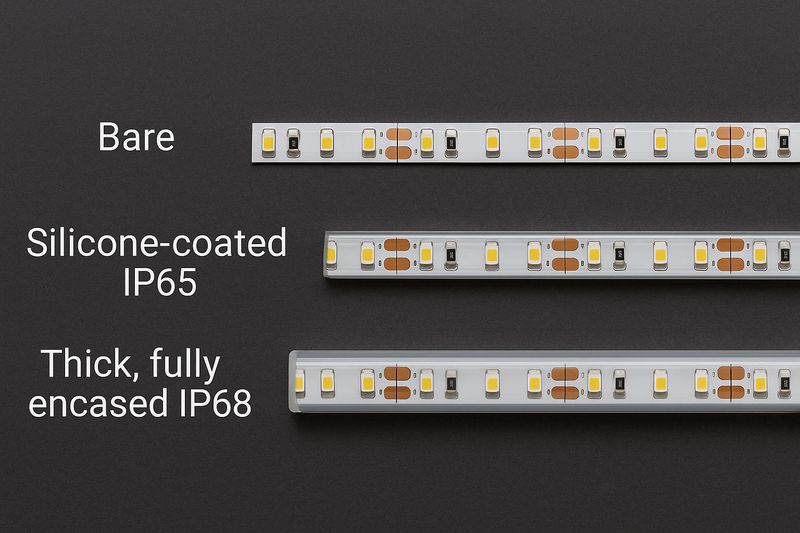
Choosing outdoor LED strips means looking beyond just length and color. The tiny LED chips, or "beads," are the workhorses, but with names like 3528, 5050, 2835, what’s the difference?
SMD 3528, 5050, and 2835 LED chips differ primarily in size, brightness output, power consumption, and thermal efficiency. These differences significantly impact their suitability for various outdoor lighting applications, from subtle accents to powerful illumination.
As the owner of Rhlite, an LED strip light factory, I often explain these distinctions to clients. For someone like Tom, a company owner or product manager sourcing from China for projects in the US or Japan, understanding these chip types is crucial for selecting the right product that balances performance, cost, and reliability for his specific outdoor needs. Let’s explore these common SMD types.
What Are SMD LEDs and Why Are They Key for Outdoor Strips?
Before comparing specific types, what exactly is an SMD LED? This foundational knowledge helps understand why these chips are so prevalent in modern lighting.
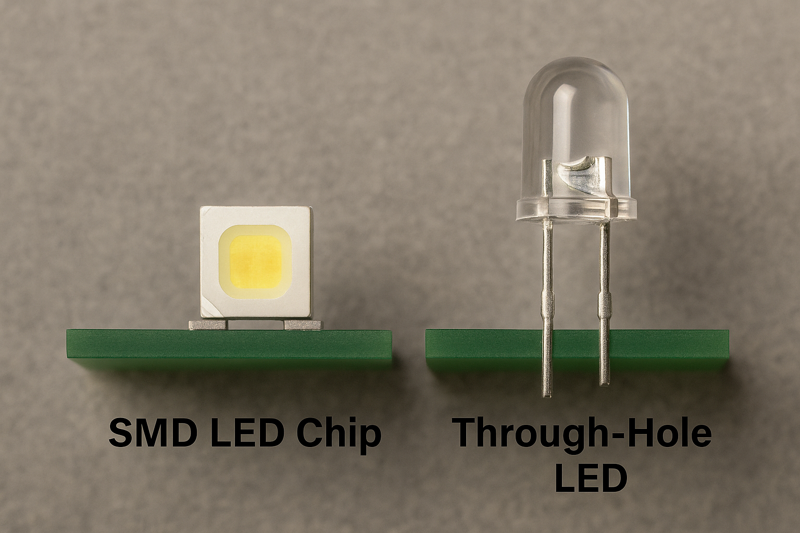
SMD stands for Surface Mount Device. Unlike older through-hole LEDs, SMD chips are mounted directly onto the surface of the Printed Circuit Board (PCB). This allows for smaller, more automated, and efficient lighting designs, ideal for flexible LED strips.
For outdoor LED strips, the compact nature of SMD chips allows for robust encapsulation (like IP67 or IP68 silicone or PU coatings) while maintaining flexibility. At Rhlite, virtually all our strip lights, including our customizable outdoor range, utilize SMD technology due to its versatility and performance.
The Significance of SMD Technology
SMD technology1 revolutionized LED lighting assembly and performance.
- What Does "SMD" Imply?
It means the LED package is designed to be soldered directly onto the surface of the PCB. This contrasts with older "DIP" (Dual In-line Package) LEDs that had leads passing through holes in the PCB. - How Are SMD Chip Sizes2 Named?
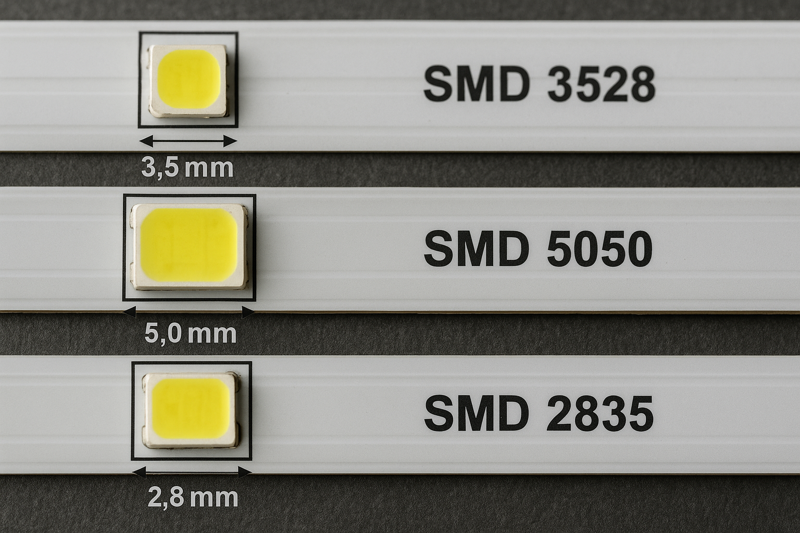
The numbers (like 3528, 5050) typically refer to the dimensions of the LED package in tenths of a millimeter.3528: 3.5mm x 2.8mm5050: 5.0mm x 5.0mm2835: 2.8mm x 3.5mm (Note the dimensions are similar to 3528, but the package design is very different, especially for heat dissipation).
- Why Are SMDs Dominant in LED Strips?
- Miniaturization: SMDs are much smaller, allowing for higher density strips and more compact fixture designs.
- Automation: Their design is perfect for automated pick-and-place manufacturing, leading to consistency and cost-efficiency – important for factory-priced wholesale goods.
- Thermal Management3: Modern SMD packages are designed to transfer heat more effectively to the PCB, which is crucial for longevity, especially in outdoor products.
- Light Output & Beam Angle: SMDs typically offer a wider beam angle (e.g., 120 degrees) which is desirable for area illumination with strip lights.
For Tom, understanding that Rhlite uses SMD technology means he’s getting products based on modern, efficient manufacturing. The choice of which SMD then comes down to the specific application.
| SMD Characteristic | Description | Outdoor Relevance | Rhlite’s Approach |
|---|---|---|---|
| Mounting Type | Directly on PCB surface. | Allows for slim, flexible, and well-sealed outdoor strips. | Standard for all Rhlite strip lights. |
| Size Naming | E.g., 3528 = 3.5mm x 2.8mm package. | Helps identify chip type and general power class. | Clear labeling of chip types used. |
| Automation | Suited for high-speed automated assembly. | Ensures consistency, quality, and competitive factory pricing. | Utilizing automated manufacturing lines. |
| Thermal Path | Designed for heat transfer to PCB. | Critical for LED lifespan in potentially hot outdoor conditions. | Focus on PCB design to aid heat dissipation. |
SMD is the foundational technology; the specific chip type determines the performance details.
SMD 3528 for Outdoor Use: Still Relevant or Outdated?
The SMD 3528 was one of the earliest popular choices for LED strips. But with newer chips available, does it still have a place in outdoor lighting today?
SMD 3528 chips are relatively small, single-die LEDs offering lower brightness and power consumption per chip. While less common now for primary outdoor illumination, they can still be suitable for subtle accent lighting or applications where low power and heat are paramount.
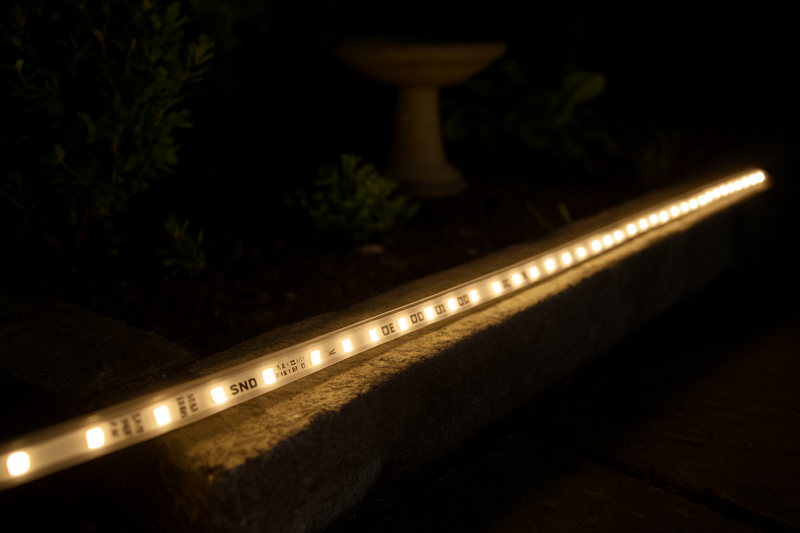
At Rhlite, while we see more demand for brighter chips like the 2835 for general outdoor use, we recognize that for specific niche applications, the 3528 can still be a cost-effective choice if its limitations are understood. Tom might encounter these in very budget-sensitive projects.
Characteristics and Niche of SMD 35284
The 3528 is a simpler, foundational SMD chip.
- Key Characteristics of SMD 35284:
- Size: 3.5mm x 2.8mm.
- Die: Typically contains one light-emitting die per package.
- Brightness: Relatively low, typically around 5-8 lumens per chip (depending on color and bin).
- Power: Low power consumption, around 0.06W – 0.08W per chip.
- Heat: Generates less heat per chip compared to larger, higher-power LEDs.
- Outdoor Suitability and Common Uses:
- Pros: Lower cost, lower heat output (can be beneficial in very enclosed, small outdoor fixtures if brightness demand is low).
- Cons: Lower light output means many chips are needed for significant brightness, which can lead to a "dotted" look unless density is very high or diffusers are used. Less efficient (lumens per watt) than newer chips like the 2835.
- Typical Uses: Decorative accent lighting, signage backlighting (where individual points of light might be acceptable), some pathway or step marking if subtlety is desired and strips are well-protected.
- Rhlite’s Perspective:
We generally recommend newer, more efficient chips for most outdoor projects. However, if a client like Tom has a specific OEM requirement for a very low-power indicator or a subtle decorative effect where cost is the absolute primary driver and high brightness is not needed, a 3528-based strip (with robust outdoor protection) could be considered.
I recall a client who needed very subtle "starry sky" effect lighting embedded in an outdoor bar countertop. They specifically wanted low-output points of light. A high-density, IP67-rated 3528 strip was perfect because individual chip brightness was low, and the overall power draw was minimal.
| 3528 Feature | Description | Outdoor Implication | Rhlite Guidance |
|---|---|---|---|
| Brightness/Chip | Low (e.g., 5-8 lumens). | Requires high density for general illumination; best for accents. | Usually recommend 2835 or 5050 for higher output. |
| Power Consumption | Low (e.g., 0.06-0.08W). | Lower energy cost, less heat per chip. | Can be good for battery-powered or off-grid outdoor use. |
| Efficiency (lm/W) | Generally lower than modern chips like 2835. | Not the best choice if energy efficiency is a key driver. | Advise newer chips for better efficacy. |
| Cost | Often lower cost per chip. | Can be attractive for very budget-focused, low-lumen applications. | We ensure quality even in lower-cost chip options. |
| Heat Output | Low per individual chip. | Easier thermal management if overall strip power is low. | Still needs good PCB for overall strip health. |
While the 3528 is an older generation, it’s not entirely obsolete, but its outdoor applications are increasingly niche.
SMD 5050 in Outdoor Lighting: The All-Rounder Powerhouse?
The SMD 5050 chip has been a very popular choice for a wide range of LED strip applications, including outdoor ones, especially where more brightness or color options are needed.
SMD 5050 chips are larger (5.0mm x 5.0mm) and typically contain three LED dies. This allows for significantly higher brightness per chip than 3528s and makes them ideal for RGB (Red, Green, Blue) color-changing outdoor LED strips.
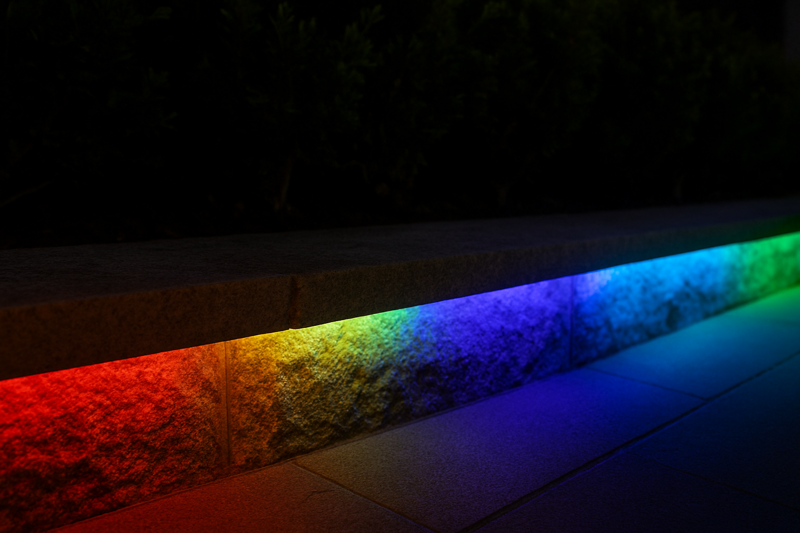
For clients like Tom looking for versatile outdoor lighting, especially for dynamic color effects or general illumination, Rhlite’s 5050-based strips are a common go-to. Their ability to house three dies makes them naturally suited for RGB applications, where each die can be a different primary color.
Versatility and Power of SMD 5050
The 5050 chip stepped up the game in terms of light output from a single package.
- Defining Features of SMD 50505:
- Size: 5.0mm x 5.0mm square package.
- Die: Typically contains three light-emitting dies. These can all be white (for a bright white chip) or one red, one green, and one blue (for an RGB chip). There are also RGBW versions6 (RGB + a separate White die).
- Brightness: Significantly brighter than a single 3528 chip, typically around 15-22 lumens per chip for white (or per color for RGB).
- Power: Higher power consumption, around 0.20W – 0.24W per chip.
- Outdoor Strengths and Considerations:
- Pros: Good brightness for general outdoor illumination (e.g., cove lighting, under railings, pathway lighting). Excellent for RGB color-changing effects, as the colors mix well from a single point. Widely available and understood technology.
- Cons: Generates more heat per chip than 3528 or 2835, so good thermal management7 (quality PCB, mounting on aluminum profiles outdoors) is very important. Can be less energy-efficient (lumens per watt) than the newer 2835 for single-color white applications.
- Ideal Outdoor Scenarios: Landscape lighting with color options, architectural facade illumination, entertainment areas, pool lighting (with appropriate IP68 rating), sign lighting.
- Rhlite’s Offering:
We offer a wide range of outdoor IP65, IP67, and IP68 strips using 5050 chips, particularly for our RGB and RGBW series. We emphasize the need for proper power supplies and heat sinking for these more powerful strips to ensure longevity, especially in Tom’s key markets like the US where varied climates exist.
A lighting designer Tom works with in Florida used Rhlite’s IP68 5050 RGB strips for a stunning resort pool. The ability to change colors for different events, combined with the brightness to illuminate the water effectively, made the 5050 the perfect choice.
| 5050 Attribute | Details | Outdoor Use Case | Rhlite Note |
|---|---|---|---|
| Brightness/Chip | Medium to High (e.g., 15-22 lumens for white). | Good for general outdoor illumination and vibrant color effects. | A workhorse for many medium-to-high brightness needs. |
| Color Options | Excellent for RGB, RGBW due to tri-die/quad-die design. | Ideal for dynamic color-changing landscape or architectural lighting. | Our primary chip for full-color outdoor strips. |
| Power Consumption | Higher (e.g., 0.2-0.24W). | Needs adequately sized power supplies and wiring. | We provide guidance on power supply selection. |
| Heat Output | Higher per chip; good thermal management is crucial. | Requires quality PCB and often aluminum mounting profiles outdoors. | We use ≥2oz copper PCBs for our 5050 outdoor strips. |
| Efficiency (lm/W) | Good, but can be lower than 2835 for single-color white. | Balance brightness needs with energy consumption. | Still a good balance for many applications. |
The SMD 5050 remains a strong contender for many outdoor applications, especially where color versatility and good brightness are required.
SMD 2835 for Outdoor Applications: The Modern Efficiency King?
The SMD 2835 is a newer generation chip that has rapidly gained popularity, often outperforming older chips like the 3528 and even the 5050 in certain aspects, particularly for white light applications.
SMD 2835 chips (2.8mm x 3.5mm) are designed for superior thermal performance and higher luminous efficacy (lumens per watt). They typically produce more brightness than a 3528 and can rival or exceed a 5050 for single-color white light, but with better efficiency.
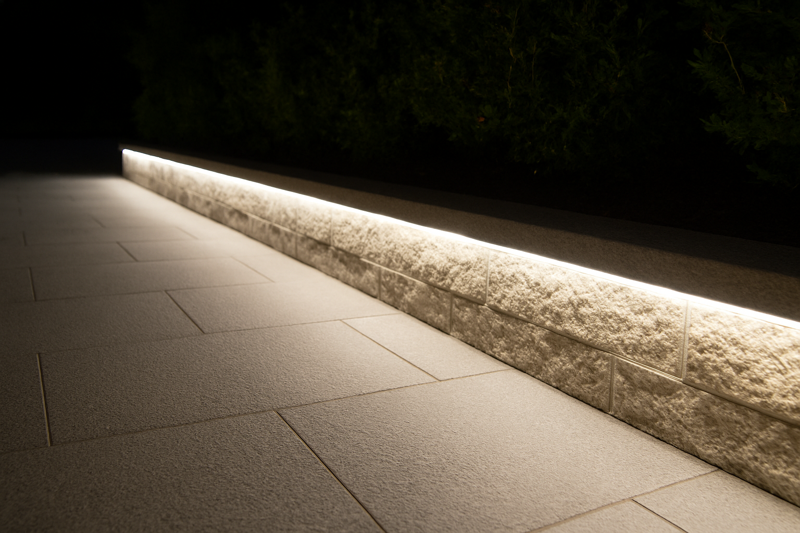
At Rhlite, we increasingly recommend our 2835-based outdoor strips for clients like Tom who are looking for top-tier brightness and energy efficiency for single-color applications. Their design allows for better heat dissipation, which is a major plus for longevity in outdoor environments.
Efficiency and Performance of SMD 2835
The 2835 was engineered for better performance in a compact package.
- What Makes SMD 28358 Stand Out?
- Size: 2.8mm x 3.5mm package.
- Thermal Design: A key feature is its larger heat dissipation pad on the underside of the chip compared to the 3528, and a thinner profile. This allows for more efficient heat transfer to the PCB.
- Brightness: High lumen output, often ranging from 10 to 30+ lumens per chip depending on the bin and driving current. A single 2835 can be significantly brighter than a 3528 and can match or exceed a 5050 die.
- Power: Typically driven at around 0.1W or 0.2W, but higher power versions exist (e.g., 0.5W, 1W, though less common in flexible strips).
- Efficacy: Generally offers the best lumens per watt among these three common types, making it very energy efficient.
- Outdoor Strengths of 2835 Chips:
- Pros: Excellent brightness for general and task outdoor lighting. Superior energy efficiency9 means more light for less power, reducing running costs and PSU size. Better thermal management10 contributes to longer lifespan (better lumen maintenance). Can achieve very smooth light lines at high densities.
- Cons: While RGB 2835 chips exist, 5050s are still more common and often preferred for RGB due to their integrated tri-die nature allowing for better color mixing from a single point.
- Ideal Uses: General outdoor illumination (walkways, landscape, under eaves), task lighting (outdoor kitchens, workspaces), architectural highlighting where high efficiency and bright white light are needed.
- Rhlite’s Emphasis:
For new single-color outdoor projects, especially in North America or Japan where energy efficiency and performance are highly valued, our 2835 LED strips are often the top recommendation. Tom would appreciate the combination of quality light, energy savings, and reliability.
We recently supplied a large quantity of IP67 2835 LED strips to a contractor Tom knows for a commercial building’s exterior pathway and landscape lighting. The client was impressed by the brightness achieved and the projected energy savings compared to older technologies they had considered.
| 2835 Advantage | Explanation | Outdoor Benefit | Rhlite Emphasis |
|---|---|---|---|
| Luminous Efficacy | Typically highest lumens per watt among the three. | More light for less energy; lower running costs; smaller PSUs. | Our go-to for efficient, bright white outdoor light. |
| Thermal Performance | Designed with a larger heat sink pad for better heat dissipation. | Contributes to longer lifespan and better lumen maintenance outdoors. | Key for reliability in varied outdoor climates. |
| Brightness/Chip | High (e.g., 10-30+ lumens, varies by bin). | Excellent for applications needing strong, consistent illumination. | Offering various brightness bins of 2835. |
| Profile | Often thinner package than 5050. | Can allow for slightly slimmer fixture or strip designs. | Versatile for different outdoor strip constructions. |
| White Light Quality | Excellent for high CRI and consistent CCT white light applications. | Ideal for true color rendering of landscapes and architectural details. | Focus on high CRI 2835 options. |
The SMD 2835 represents a significant step forward in efficiency and performance for single-color outdoor LED strips.
Which SMD Chip is Best for Your Outdoor LED Strip Project?
With these three common SMD types explained, the big question is: which one should you choose for your outdoor LED strip lighting? There’s no single "best" – it depends entirely on the project’s specific needs.
The "best" SMD chip (3528, 5050, or 2835) for your outdoor project depends on desired brightness, color requirements (single color vs. RGB), energy efficiency goals, and budget. A careful evaluation of these factors will guide your selection.
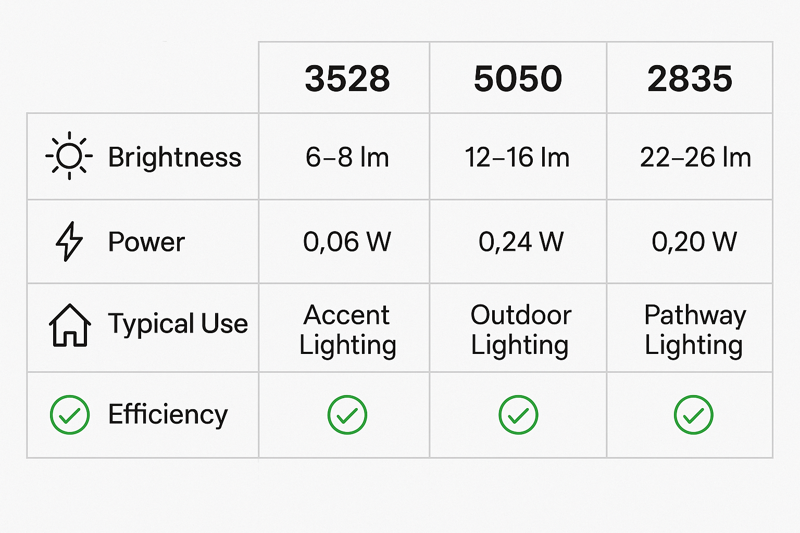
As a factory, Rhlite provides all these options because we serve diverse clients like Tom, who tackle varied projects. Our role is to provide the technical details and guidance to help him select the optimal chip type and strip construction.
Making an Informed Decision
Here’s a quick guide to help you choose:
Primary Goal: Subtle Accent Lighting / Low Power / Tight Budget?
- Consider SMD 3528: If the demand for brightness is low, and cost or minimal heat is the absolute priority, 3528 can still work, provided it’s well-protected for outdoor use. Be mindful of potential "dotting."
Primary Goal: Dynamic Color-Changing (RGB/W) / Good Brightness?
- Consider SMD 5050: This is generally the preferred chip for RGB and RGBW applications due to its multi-die design, offering good color mixing and brightness. Ensure good heat sinking for outdoor longevity.
Primary Goal: Bright White Light / High Energy Efficiency / Maximum Lifespan?
- Consider SMD 2835: For most single-color white outdoor applications requiring good brightness and optimal energy efficiency, the 2835 is often the superior choice due to its higher efficacy and better thermal design.
Consider LED Density: Regardless of chip type, the number of LEDs per meter will also significantly impact overall brightness and light uniformity. A high-density 3528 strip might be brighter than a low-density 5050 strip, for example, but likely less efficient.
Here’s a simplified comparison table for Tom’s quick reference:
| Feature | SMD 3528 | SMD 5050 | SMD 2835 | Best For (Outdoor General Guide) |
|---|---|---|---|---|
| Typical Size | 3.5×2.8mm | 5.0×5.0mm | 2.8×3.5mm | – |
| Dies per Chip | 1 | Usually 3 (ideal for RGB) | 1 | – |
| Rel. Brightness | Low | Medium-High | High (for white) | Match to illumination needs |
| Rel. Efficacy | Lower | Medium | High (for white) | High efficacy for energy saving |
| Heat Output | Low | Medium-High (needs good sinking) | Medium (good thermal design) | Manage heat for longevity |
| Primary Use | Subtle accents, low power | RGB/W color changing, general brightness | Bright & efficient white light | Choose based on light color/function |
| Rhlite Focus | Niche/budget OEM | Robust RGB/W & some white options | Preferred for most single-color white applications | Quality across all types |
When Tom is sourcing for a large project, say path lighting for a new development in the US, I’d likely guide him towards our high-efficacy IP67 2835 strips. If he’s sourcing for a client wanting vibrant color-changing facade lighting for a hotel in Singapore, our IP67 5050 RGB/RGBW strips would be the primary recommendation. The key is matching the chip’s strengths to the application’s demands.
Conclusion
Understanding the differences between SMD 3528, 5050, and 2835 LED chips—their brightness, efficiency, and color capabilities—is key. This knowledge empowers you to select the best outdoor LED strip for your project’s specific needs.
Explore this link to understand how SMD technology is transforming LED lighting and its benefits. ↩
Learn about the naming conventions of SMD chip sizes and their implications for LED performance. ↩
Discover the significance of thermal management in SMD LEDs and how it affects product longevity. ↩
Explore this link to understand the pros and cons of SMD 3528 LEDs, helping you make informed decisions for your lighting projects. ↩ ↩
Explore the benefits of SMD 5050 LED chips to understand their superior brightness and versatility for various applications. ↩
Learn about RGBW LED lights to see how they enhance color mixing and lighting effects for your projects. ↩
Discover the significance of thermal management in LED lighting to ensure efficiency and longevity of your installations. ↩
Explore the benefits of SMD 2835 chips to understand why they are preferred for energy-efficient lighting solutions. ↩
Learn how energy efficiency affects LED performance and cost savings, making it crucial for lighting projects. ↩
Discover why thermal management is vital for LED longevity and performance, ensuring optimal operation in various applications. ↩