Investing in outdoor LED strip lighting for a project, only to see it fail prematurely? This common fear can be avoided by understanding the factors that truly impact lifespan.
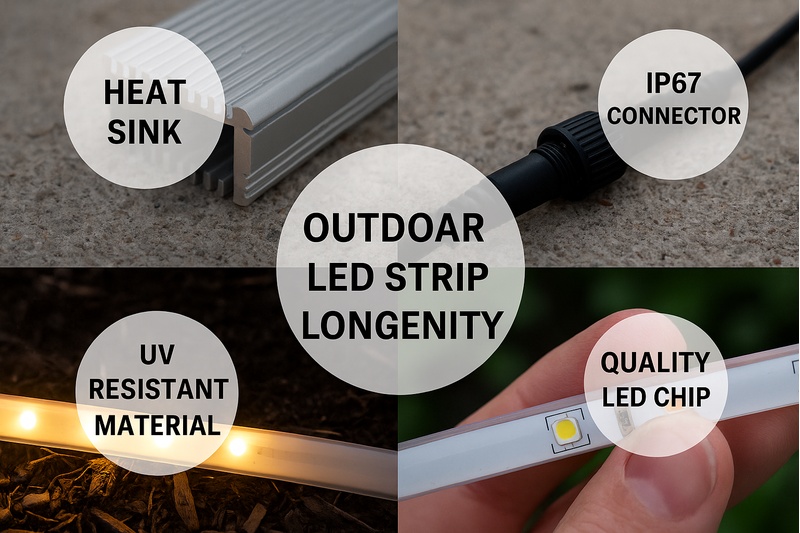
The longevity of outdoor LED strips is primarily determined by heat management, quality of LED chips and PCB, effectiveness of IP-rated moisture and dust protection, UV resistance of materials, power supply stability, and correct installation practices.
As the owner of Rhlite, a factory specializing in LED strip light solutions, I’ve seen firsthand how these variables play out. Clients like Tom, who might be a lighting designer, contractor, or managing OEM projects in demanding markets like North America or Japan, need assurance that their investment will endure. Let’s delve into what really makes an outdoor LED strip last.
How Does Heat Management Impact Outdoor LED Strip Lifespan?
Heat is often called the number one enemy of LEDs. For outdoor installations, strips face both internal heat from operation and external heat from the sun, so how is this managed?
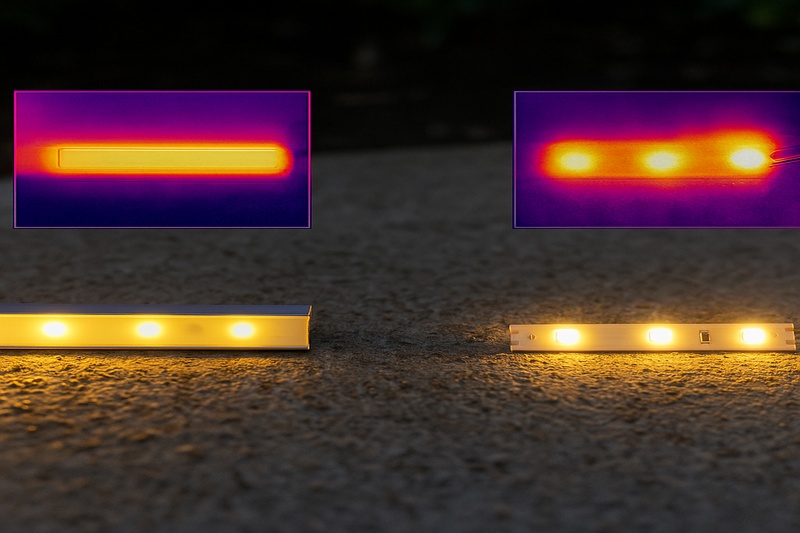
Effective heat management, through proper PCB design, use of quality thermal materials, and appropriate mounting (like aluminum channels), is crucial. Excessive heat accelerates LED degradation, leading to reduced brightness (lumen depreciation) and color shifts over time.
At Rhlite, we emphasize thermal design because we know it’s fundamental to the L70 B50 ratings (time until light output drops to 70%, with 50% of a sample group affected) that serious clients look for. Poor heat management is a common cause of premature failure, a significant pain point for buyers like Tom.
The Science of Heat and LED Degradation
Heat directly impacts the semiconductor junction within the LED chip:
- Sources of Heat:
- Junction Temperature (Tj)1: The primary source. As electricity passes through the LED, some energy is converted to light, and some to heat right at the chip.
- Ambient Temperature: Outdoor environments can get very hot, especially in direct sunlight or enclosed fixtures. This adds to the thermal load.
- Poor Air Circulation: Trapped heat around the strip worsens the problem.
- Effects of Excessive Heat:
- Lumen Depreciation2: The most common effect. LEDs gradually lose brightness faster at higher temperatures. This is often described by the L70 rating.
- Color Shift: The color characteristics (CCT, CRI) of the LED can change over time, becoming inconsistent. Whites might turn yellowish or bluish.
- Component Failure: Other components on the strip, like resistors or the PCB substrate itself, can degrade or fail under prolonged high temperatures. Solder joints can weaken.
- Reduced Lifespan: All these factors contribute to a shorter operational life. A strip rated for 50,000 hours at 25°C ambient might only last a fraction of that if consistently operated at 50°C ambient without proper sinking.
- Rhlite’s Mitigation Strategies3:
- Quality PCBs: We use thicker copper layers in our PCBs (e.g., 2oz or 3oz) which help spread and dissipate heat more effectively away from the LED chips.
- Efficient LED Chips: Higher efficiency LEDs convert more electricity to light and less to heat in the first place.
- Design for Current: We design our strips to run LEDs at conservative currents, not pushing them to their maximum (which generates excessive heat for minimal brightness gain).
- Recommending Mounting Profiles: For higher power outdoor strips, we strongly advise using aluminum mounting channels. These act as excellent heat sinks, drawing heat away from the strip and dissipating it into the air.
I once worked with a contractor in a hot climate who installed some generic outdoor strips directly onto a dark-colored wooden fence. They failed within a year due to extreme heat buildup. When he switched to Rhlite strips mounted in our aluminum profiles, the problem was solved, and the installation has lasted for years. Tom would appreciate this kind of proactive advice to avoid such issues.
| Heat Factor | Impact on LED Strip | Rhlite’s Approach to Mitigation |
|---|---|---|
| LED Junction Temp | Primary driver of lumen depreciation & color shift. | Using efficient LEDs, conservative drive currents. |
| PCB Quality | Poor heat spreading accelerates degradation. | Utilizing PCBs with thicker copper layers (e.g., 2oz, 3oz). |
| Ambient Temperature | Adds to overall thermal load on the strip. | Recommending appropriate strip types for high-temp environments. |
| Mounting/Sinking | No heatsink = rapid heat buildup & failure. | Strongly advising/providing aluminum profiles for heat dissipation. |
| Air Circulation | Trapped heat significantly shortens lifespan. | Advising on fixture design to allow for some airflow if possible. |
Effective thermal management is non-negotiable for achieving long outdoor LED strip lifespan.
Why is IP Rating and Moisture Protection Crucial for Outdoor LED Strip Durability?
Outdoor environments mean exposure to rain, humidity, sprinklers, and condensation. How critical is the strip’s defense against moisture for its long-term survival?
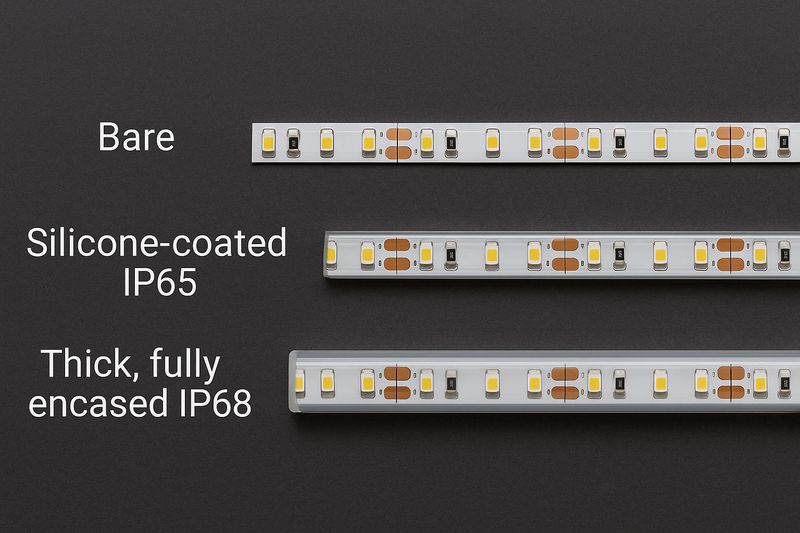
A suitable Ingress Protection (IP) rating (e.g., IP65, IP67, IP68) and high-quality encapsulation material are vital. Moisture ingress leads to corrosion of metallic parts, short circuits, and ultimately, complete failure of the outdoor LED strip.
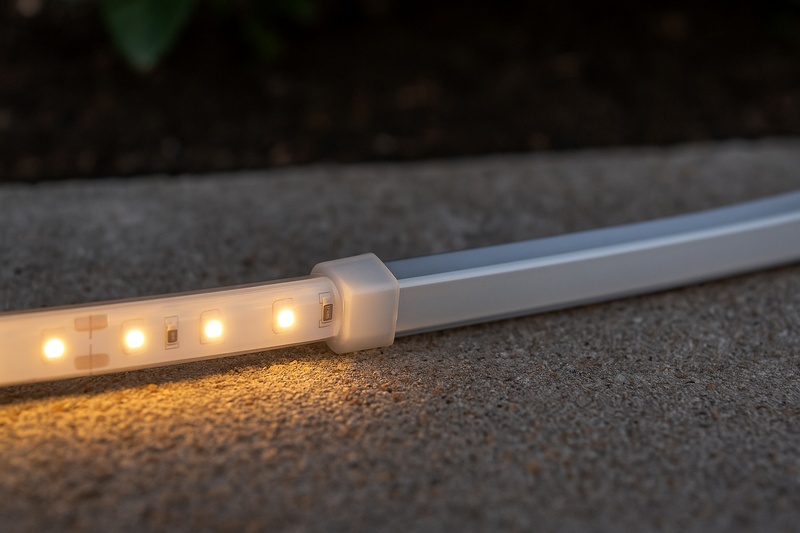
This is a major concern for any outdoor electrical product. At Rhlite, our outdoor LED strips are designed with robust waterproofing. We know that clients like Tom, sourcing for varied international projects, cannot afford failures due to insufficient environmental protection. A supplier falsifying IP ratings is a huge pain point.
Understanding IP Ratings and Encapsulation
Protecting against the elements involves several aspects:
- IP Ratings Explained4:
- First Digit (Solids):
6means dust-tight (no ingress of dust). This is standard for quality outdoor strips. - Second Digit (Liquids):
IP65: Protected against water jets from any direction (e.g., rain, sprinklers).IP67: Protected against temporary immersion in water (up to 1 meter for 30 minutes). Suitable for areas prone to puddling or occasional submersion.IP68: Protected against continuous immersion in water under conditions specified by the manufacturer (e.g., depth and duration). Best for underwater or very wet locations.
- First Digit (Solids):
- Encapsulation Materials & Methods:
- Silicone Tubing/Sleeving (IP65/IP67): The strip is inserted into a silicone tube, and endcaps are sealed. Cost-effective but the air gap can sometimes lead to condensation internally if seals aren’t perfect.
- Silicone Coating/Extrusion (IP65/IP67)5: Silicone is directly coated or extruded over the strip. Offers good protection and flexibility. Quality of silicone (UV resistance, non-yellowing) is key.
- Polyurethane (PU) Potting/Encapsulation (IP67/IP68)6: The strip is fully encased in PU. Offers excellent protection, often better UV resistance and chemical resistance than some silicones, but can be less flexible.
- Silicone Injection Molding (IP68): For connectors and specific parts, creating a seamless, fully molded seal.
- Potential Failure Points:
- End Caps & Connectors: These are the most common points of water ingress if not sealed properly with high-quality waterproof connectors or adhesives.
- Material Degradation: Low-quality encapsulation can crack, yellow, or become brittle over time, compromising the seal.
- Rhlite’s Quality Assurance:
- We use high-grade, UV-stabilized silicone and PU materials.
- Our manufacturing processes include rigorous sealing techniques and testing for IP compliance.
- We offer a range of IP67 and IP68 connectors specifically designed for our outdoor strips.
A client in a coastal area of North America once had issues with salt spray corroding their previous LED strips, despite claims of being "waterproof." The Rhlite IP67 strips with PU encapsulation we supplied have performed flawlessly for years in the same environment due to superior material quality and sealing. This is the kind of reliability Tom seeks.
| Protection Aspect | Description | Impact of Failure Outdoors | Rhlite’s Solution |
|---|---|---|---|
| IP Rating | Defines level of protection against dust and water ingress. | Incorrect rating leads to moisture damage, shorts, corrosion. | Offering true IP65, IP67, IP68 rated strips. |
| Encapsulation Type | Material (Silicone, PU) and method (tube, extrusion, potting). | Poor material can crack, yellow, or fail to seal. | Using high-grade, durable, UV-stable encapsulation. |
| Sealing Integrity | Effectiveness of seals at end caps, connectors, and along the strip body. | Primary path for water entry if compromised. | Precision manufacturing, quality waterproof connectors. |
| Material Quality | Resistance to yellowing, cracking, chemical exposure. | Degraded material compromises the IP rating. | Selecting materials for long-term outdoor stability. |
Choosing the correct IP rating and ensuring quality encapsulation are fundamental for outdoor LED strip survival.
Can UV Exposure Degrade Outdoor LED Strips Over Time?
The sun is a powerful force. Beyond just heat, its ultraviolet (UV) radiation can be detrimental to many materials. How does this affect outdoor LED strips?
Prolonged UV exposure can degrade the protective encapsulation materials (like some silicones or plastics) and even the PCB of an outdoor LED strip, causing yellowing, brittleness, cracking, and reduced light output. Using UV-stabilized materials is essential.
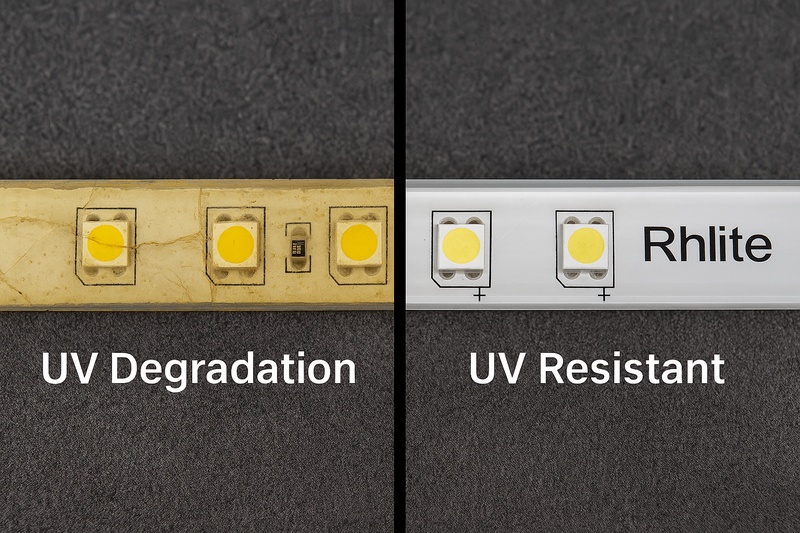
This is a slow but steady process that can significantly shorten the effective lifespan and aesthetic appeal of outdoor lighting. At Rhlite, we specifically select encapsulation materials with high UV resistance because we know our strips are used in sunny locations like Singapore or southern US states where UV exposure is intense.
Dive Deeper: The Battle Against Ultraviolet Radiation
UV degradation is a chemical process:
- How UV Damages Materials: UV photons have enough energy to break down the molecular bonds in polymers (plastics, silicones). This leads to:
- Yellowing/Discoloration: The material changes color, often becoming yellow or brownish. This not only looks bad but can also alter the color temperature of the emitted light.
- Embrittlement & Cracking: The material loses its flexibility and becomes brittle, eventually leading to cracks. These cracks then become pathways for moisture and dust ingress, compromising the IP rating.
- Reduced Light Transmission: A yellowed or clouded encapsulation will transmit less light from the LEDs, reducing overall brightness.
- PCB Degradation: While less common if well-encapsulated, direct UV on the PCB substrate or solder mask over very long periods can also cause degradation.
- Material Matters:
- Standard Silicones: Some basic silicones have poor UV resistance and can yellow/crack relatively quickly.
- UV-Stabilized Silicones: High-quality silicones incorporate UV inhibitors that absorb or reflect UV radiation, significantly slowing down degradation.
- Polyurethane (PU): Many PU formulations offer inherently good UV resistance, often superior to standard silicones, making them a good choice for demanding outdoor applications.
- Other Plastics (e.g., for lenses or housings): Materials like PMMA (acrylic) can have good UV resistance, while others like polycarbonate (PC) often require UV-stabilized coatings.
- Rhlite’s Material Selection:
- We prioritize materials specifically formulated for outdoor and UV exposure. This includes high-grade silicones with UV stabilizers and quality PU compounds.
- Our datasheets often specify the type of encapsulation and its properties, so clients like Tom can make informed decisions.
I recall an OEM client who was developing an outdoor fixture. Their initial prototypes used a generic clear silicone for sealing, which yellowed badly within months during field tests in Arizona. Switching to Rhlite’s UV-stabilized silicone encapsulated strips resolved the issue, maintaining clarity and performance. This attention to material detail is crucial for product longevity.
| UV Factor | Consequence of UV Exposure | Rhlite’s Protective Measure |
|---|---|---|
| Encapsulation Material | Yellowing, clouding, loss of light transmission. | Using high-grade UV-stabilized silicones or PU. |
| Physical Integrity | Embrittlement, cracking, leading to IP rating failure. | Selecting materials known for long-term flexibility and stability. |
| Aesthetic Appeal | Strips look old and degraded prematurely. | Materials that maintain clarity and original appearance longer. |
| PCB Exposure (if severe) | Potential degradation of PCB substrate or solder mask. | Robust primary encapsulation protects underlying components. |
For true outdoor durability, specifying UV-resistant materials is not a luxury but a necessity.
How Does Component Quality (LEDs, PCB) Influence the Lifespan of Outdoor Strips?
An LED strip is more than just its protective shell. The quality of the core components – the LEDs themselves, the Printed Circuit Board (PCB), and resistors – plays a massive role in its longevity.
High-quality LED chips from reputable manufacturers, robust PCBs with adequate copper thickness, and correctly rated resistors are fundamental. Poor quality components lead to premature dimming, color inconsistency, dead sections, and overall shorter operational life.
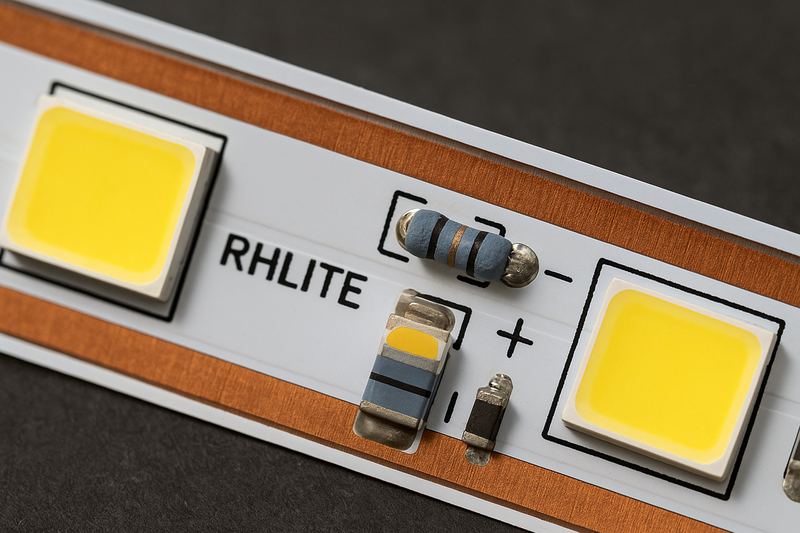
This is where a factory like Rhlite can truly differentiate. We have control over the sourcing and quality control of these critical internal parts. For a buyer like Tom, who has faced issues with suppliers providing strips with inconsistent brightness or early failures, understanding our commitment to component quality is reassuring.
The Building Blocks of Durability
Let’s break down the key internal components:
- LED Chips:
- Manufacturer Reputation: Chips from established brands (e.g., Nichia, Cree, Samsung, Epistar – depending on product tier) generally have better reliability, lumen maintenance (LM-80 data), and color consistency.
- Binning: LEDs are sorted ("binned") by brightness, color temperature, and forward voltage. Tight binning ensures uniformity along a strip and between batches – crucial for large projects. Rhlite adheres to strict binning criteria (e.g., 3-step MacAdam ellipse).
- Phosphor Quality: The phosphor coating that converts blue LED light to white light can degrade over time, especially with heat, affecting color stability. Quality phosphors are more resilient.
- Printed Circuit Board (PCB):
- Material: FR-4 is a common standard, but the quality within that standard can vary.
- Copper Thickness: Measured in ounces (oz). Thicker copper (e.g., 2oz, 3oz, or even 4oz for high-power strips) means better electrical conductivity (less voltage drop) and significantly better heat dissipation. This is a key factor often skimped on by low-cost manufacturers. Rhlite uses appropriately thick copper for its different strip series.
- Thermal Vias: For some high-power LEDs, small holes (vias) under the LED pad, filled with conductive material, can help draw heat to the back of the PCB.
- Resistors:
- These control the current to the LEDs. Using correctly valued and adequately power-rated resistors is essential. Undersized resistors can overheat and fail, leading to dead LED segments.
- Solder Joints:
- Reliable solder connections between all components are vital. Poor soldering can lead to intermittent faults or open circuits, especially with temperature cycling outdoors. Rhlite employs automated soldering processes and rigorous QC.
I’ve seen "bargain" outdoor LED strips where the manufacturer used very thin PCBs and low-grade LED chips. They looked fine initially, but within months, sections started dimming unevenly, and some LEDs showed significant color shifts. This is exactly the kind of problem Tom wants to avoid, which is why Rhlite’s focus on quality components, like specifying 2oz copper as a minimum for many of our outdoor strips, is a key selling point.
| Component | Importance for Lifespan | Rhlite’s Quality Standard |
|---|---|---|
| LED Chips | Lumen maintenance, color stability, overall reliability. | Sourcing from reputable manufacturers, strict binning (e.g., 3-Step MacAdam). |
| PCB Copper | Heat dissipation, electrical conductivity (voltage drop). | Using 2oz or thicker copper for better thermal & electrical performance. |
| PCB Material | Stability, resistance to environmental factors. | Quality FR-4 or other suitable substrates. |
| Resistors | Current regulation, preventing LED overdriving. | Using appropriately rated, reliable resistors. |
| Solder Joints | Electrical integrity, resistance to thermal stress. | Automated soldering processes, quality control inspections. |
Investing in strips with quality internal components is investing in long-term performance.
What Role Does Power Supply Quality and Electrical Stability Play in Outdoor LED Strip Longevity?
The LED strip itself might be top quality, but if it’s powered by an unstable or inappropriate power supply, its lifespan can be severely compromised. This is an often-overlooked system aspect.
A high-quality, stable LED power supply (driver) that provides the correct voltage (e.g., 12V or 24V DC) and has adequate wattage capacity (with 20% headroom) is crucial. Poor power quality (voltage spikes, ripple, incorrect current) can stress and damage LEDs and other components, leading to premature failure.
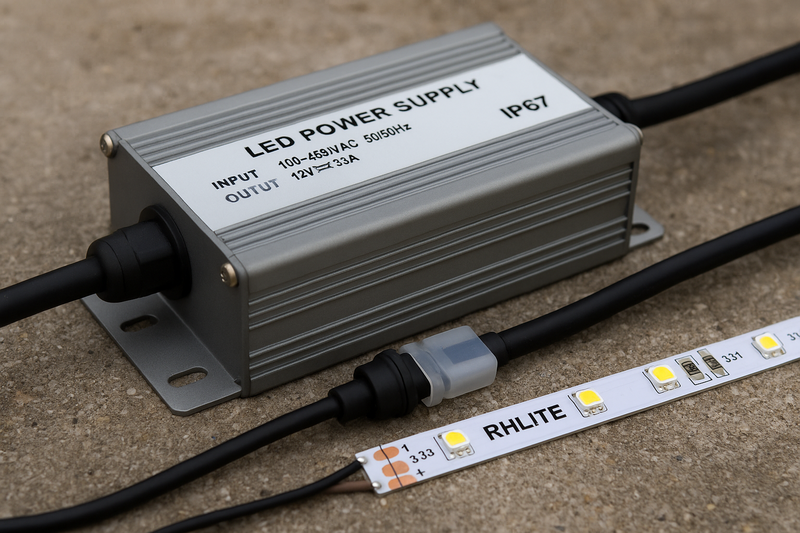
At Rhlite, we offer a range of quality LED power supplies designed to work optimally with our strips. We always advise clients like Tom that the power supply is not an area to cut corners, as a cheap PSU can easily destroy a much more expensive strip light investment, besides being a safety hazard.
The Heart of the System
The power supply’s role is critical:
- Stable Voltage Output: LED strips require a constant DC voltage (typically 12V or 24V). Fluctuations, ripple (AC remnants), or over-voltage can stress the LEDs and resistors.
- Correct Current Limiting (for some types): While most LED strips use onboard resistors for current control, the PSU must not deliver excessive current that could overwhelm these.
- Sufficient Wattage Capacity: The PSU must be rated for at least 20% more than the total wattage of the connected LED strips. An undersized PSU will overheat, operate inefficiently, and fail prematurely, potentially damaging the strips in the process.
- Protections: Quality power supplies include protections against:
- Over-voltage (OVP)
- Over-current (OCP)
- Short-circuit (SCP)
- Over-temperature (OTP)
These protections safeguard both the PSU and the connected LED strips.
- Outdoor Suitability: For outdoor use, power supplies themselves should also have an appropriate IP rating (e.g., IP65, IP67) and be able to operate reliably across a wide temperature range.
- Consequences of Poor Power:
- Flicker: Visible instability in light output.
- Reduced Lifespan: Constant electrical stress shortens the life of LEDs.
- Overheating: Both the strip and PSU can overheat.
- Catastrophic Failure: Voltage spikes can instantly destroy LEDs.
A common issue I see is when clients try to use cheap, uncertified power supplies sourced independently. They might save a little initially, but then they call us because their Rhlite strips are failing prematurely. Often, the culprit is the PSU. This is why we advocate for a system approach, providing or recommending compatible, high-quality power supplies. Tom, who values efficiency, would recognize that troubleshooting and replacing failed strips due to bad PSUs is a false economy.
| Power Supply Factor | Impact on Strip Lifespan | Rhlite Recommendation |
|---|---|---|
| Voltage Stability | Fluctuations stress LEDs and components, causing failures. | Use high-quality PSUs with stable, clean DC output. |
| Wattage Sizing | Undersized PSU overheats, fails, and can damage strips. | Ensure PSU wattage is total strip wattage + 20% headroom. |
| Built-in Protections | Lack of OVP, OCP, SCP can lead to strip damage from faults. | Select PSUs with comprehensive safety protections. |
| Outdoor Rating (PSU) | PSU itself failing due to weather compromises the system. | Use IP-rated, weatherproof PSUs designed for outdoor conditions. |
| Ripple & Noise | Can cause flicker and stress components over time. | Choose PSUs with low ripple and noise specifications. |
A reliable power supply is fundamental to achieving the rated lifespan of your outdoor LED strips.
How Can Installation Practices Affect the Lifespan of Outdoor LED Strips?
Even with the best quality outdoor LED strip and power supply, incorrect installation can drastically shorten its life. This is where the installer’s skill and attention to detail come in.
Proper installation, including respecting bend radius, ensuring secure and waterproof connections, providing adequate heat sinking if needed, and avoiding physical stress, is vital. Poor installation can lead to immediate damage or create weak points that fail over time.
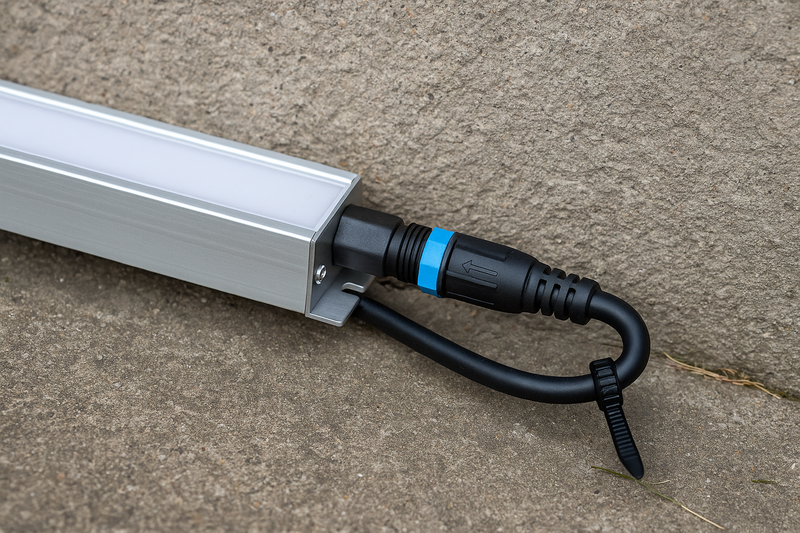
At Rhlite, we provide installation guidelines, but ultimately, the execution is in the hands of the contractor or end-user. For clients like Tom who manage or oversee installations, ensuring their teams are well-trained in best practices is key to protecting their investment and reputation.
The Installer’s Role in Longevity
Common installation pitfalls that affect lifespan:
- Exceeding Bend Radius7: LED strips have a minimum bend radius. Bending them too sharply can crack the PCB, damage solder joints, or break LED chips. This is especially true for side-bending strips if not designed for it.
- Physical Stress/Damage: Pulling on wires, stepping on strips, or improperly securing them can cause physical damage.
- Poor Connections8:
- Soldering: Cold solder joints or insufficient solder can create high resistance points that heat up or fail. Soldered joints outdoors must be meticulously waterproofed (e.g., with adhesive-lined heat shrink).
- Connectors: Using non-waterproof connectors outdoors is a guaranteed failure point. Even with waterproof connectors, ensuring they are correctly and fully engaged is critical. Rhlite offers a range of IP67/IP68 connectors.
- Inadequate Heat Sinking9: As discussed under heat management, failing to mount higher-power strips on a suitable heat sink (like an aluminum profile) in warm environments will lead to overheating and premature failure.
- Water Pooling: Even IP67 strips are not designed for continuous submersion unless they are IP68 and specifically stated for that use. Ensure strips are not installed in locations where water will permanently pool on them if they are not rated for it.
- Strain Relief: Connections between the strip and power cables should have strain relief to prevent wires from being pulled out or stressing the solder pads on the strip.
I once consulted on a project where an installer had sharply creased 12V outdoor strips to go around tight corners. Several of these corners failed within weeks because the PCB traces had cracked. Using appropriate corner connectors or respecting the bend radius would have prevented this. Educating installers on these details, something Tom would value for his teams, is crucial.
| Installation Aspect | Potential Problem from Poor Practice | Best Practice Recommendation |
|---|---|---|
| Bend Radius | Cracked PCB, damaged LEDs/solder joints. | Adhere to manufacturer’s specified minimum bend radius; use corner connectors. |
| Connections | Water ingress, corrosion, high resistance, open circuits. | Use IP67/IP68 connectors or properly soldered & waterproofed joints. |
| Heat Sinking | Overheating, reduced lifespan for higher wattage strips. | Mount on aluminum profiles or other suitable heat sinks as recommended. |
| Physical Handling | Broken components, torn encapsulation. | Handle with care, avoid undue stress, secure properly. |
| Strain Relief | Wires pulled from strip, damaged solder pads. | Ensure cables are secured so no tension is placed on strip connections. |
Careful and correct installation is the final crucial step in ensuring a long and reliable life for outdoor LED strips.
Conclusion
The lifespan of outdoor LED strips depends on a combination of quality manufacturing (heat management, components, IP/UV protection), a stable power supply, and correct installation. Prioritize these for lasting performance.
Learn how Junction Temperature impacts LED efficiency and lifespan, ensuring optimal lighting solutions. Click to discover more. ↩
Understanding Lumen Depreciation is crucial for maintaining LED performance and longevity. Explore this link for in-depth insights. ↩
Explore Rhlite’s innovative strategies to manage heat in LEDs, enhancing performance and durability. A must-read for lighting professionals! ↩
Understanding IP ratings is crucial for selecting the right lighting for outdoor use, ensuring durability and safety against elements. ↩
Explore the benefits of silicone coating for electronics, including flexibility and protection against moisture and UV damage. ↩
Learn how PU potting provides superior protection for electronics, ensuring longevity and resistance to harsh conditions. ↩
Understanding the impact of bend radius on LED strips can help prevent costly installation mistakes and ensure longevity. ↩
Exploring the effects of poor connections can guide you in making better installation choices for durable LED setups. ↩
Learning about heat sinking can significantly enhance the lifespan and performance of your LED installations. ↩