Struggling with dark corners or harsh overhead lighting? Discover professional-grade LED placement strategies used in luxury hotels and yachts.
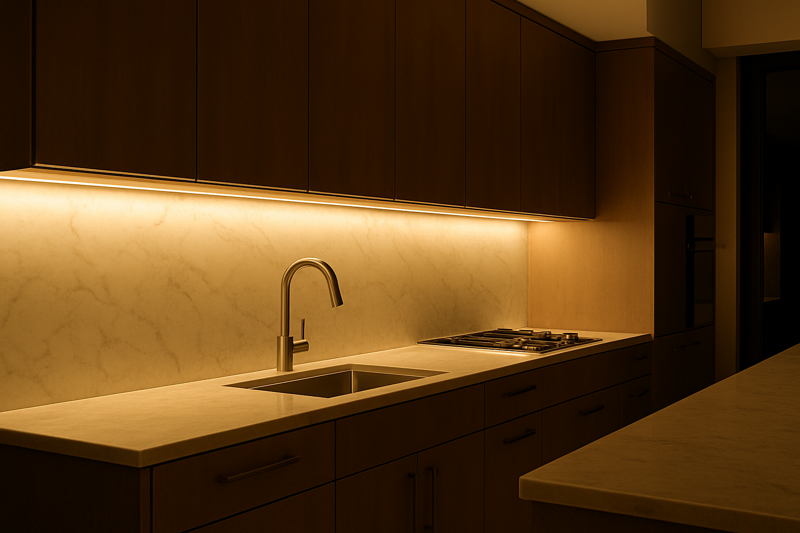
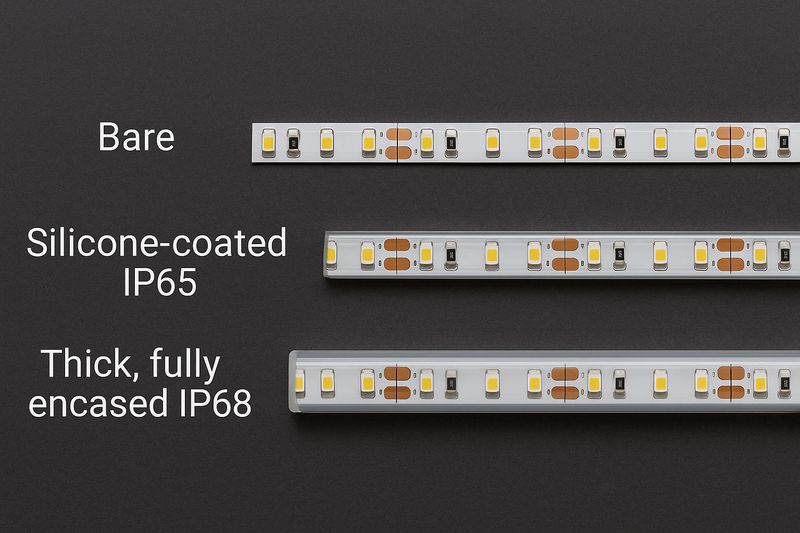
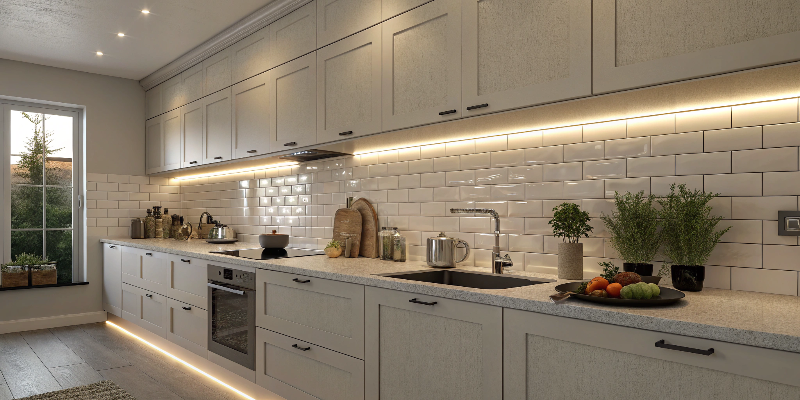
Install IP65-rated strips under kitchen cabinets for task lighting (150-300 lux). Use UL-listed 24V strips in coves (50-80mm depth) and behind TVs (2000:1 contrast ratio boost). Avoid unprotected placement in saunas/stovetops.
Maximize aesthetic impact while meeting safety standards through these seven technical guidelines.
Where to Put LED Strips in Home?
Strategic placement solves 80% of residential lighting flaws.
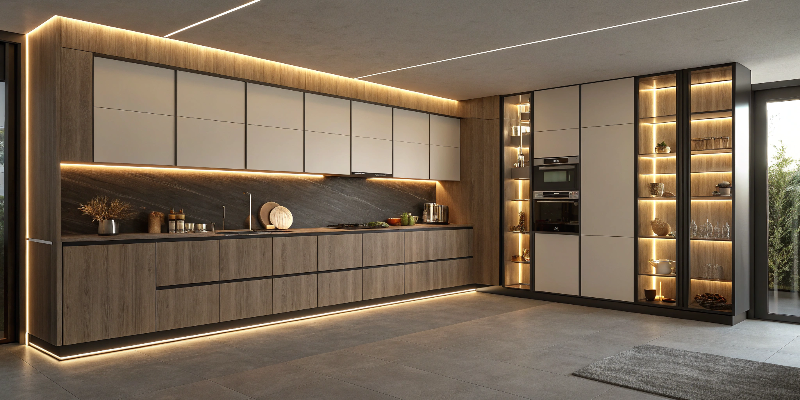
Four premium installation zones:
1. Vertical cabinet edges (diffused 3V/ft strips)
2. Stair handrail channels (IP67, 24V)
3. Floating shelf cavities (270° beam angle)
4. Bathroom valances (12V IP68 with GFCI)
Technical Specifications for Key Areas
| Location | Recommended LED Type | Voltage | Beam Angle | IP Rating |
|---|---|---|---|---|
| Kitchen Under-cabinet | High CRI (Ra>90) | 24V | 120° | IP65 |
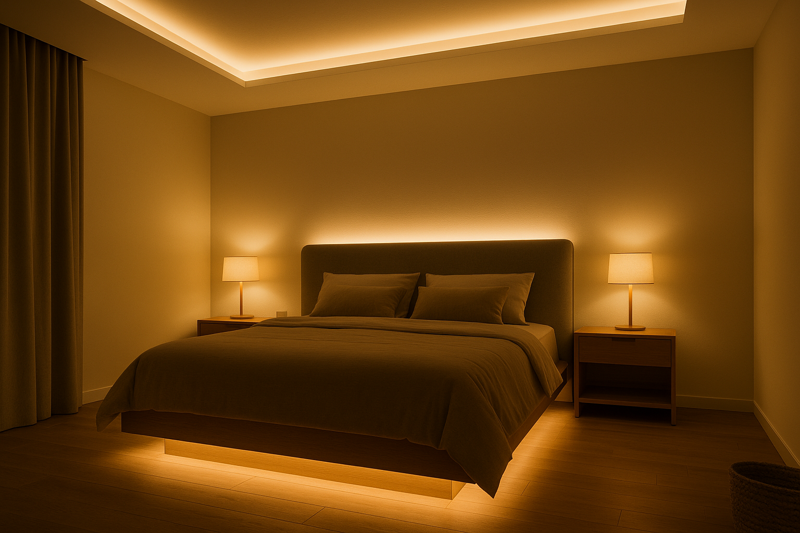
| Bedroom Coving | Warm Dim (2700-6500K) | 12V | 160° | IP20 |
| Bathroom Mirrors | RGBCCT | 12V | 90° | IP68 |
Our aluminum channel systems prevent hotspots (UGR<19) in living areas.
Where Are LED Strip Lights Used?
From museums to cruise ships – professional applications demand tailored specs.
Commercial-grade uses:
– Retail: 4000K CCT with 150 lm/W for product displays
– Marine: 316L stainless steel housings with CANbus
– Healthcare: 5000K CRI>95 with 0-10V dimming
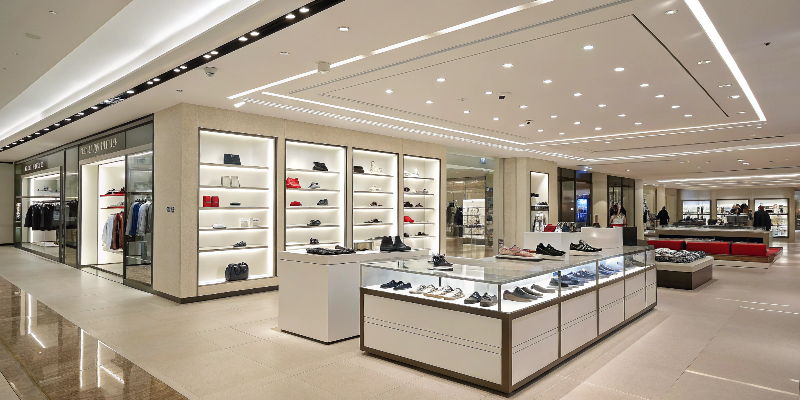
Residential vs. Commercial Comparison
| Parameter | Home Use | Commercial Use |
|---|---|---|
| Brightness | 200-500 lux | 750-1500 lux |
| Color Consistency | MacAdam 3 SDCM | MacAdam 2 SDCM |
| Lifespan | 30,000 hours | 50,000 hours L70 |
Our BLE mesh-enabled strips meet KNX protocol standards for smart buildings.
Where Not to Put LED Lights?
Hazardous environments require certified solutions.
Avoid non-rated placement in:
1. Steam rooms (>95% RH)
2. Grill hood interiors (>150°C)
3. Gas meter closets (ATEX zones)
Use explosion-proof housings (ATEX/IECEx) for garage pit lighting.

Safety Standards by Area
| Restricted Zone | Required Certification | Alternative Solution |
|---|---|---|
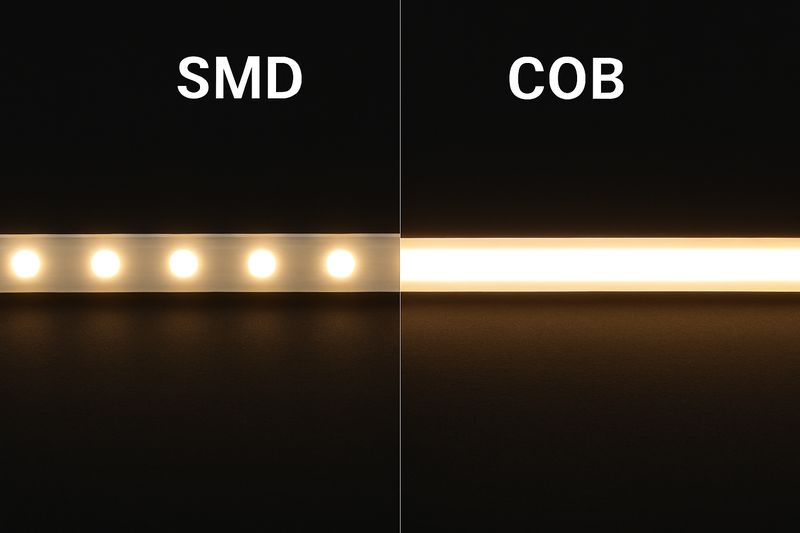
| Saunas | IP69K1 | Silicone sealed COB strips |
| Food Prep Areas | NSF/ANSI 22 | Stainless steel LED bars |
| Parking Garages | IK10 Impact | Vandal-proof profiles |
Our NSF-certified strips come with FDA-compliant silicone sleeves3 for food zones.
Can You Put LED Lights Anywhere?
Installation flexibility depends on electrical prep.
Technical requirements:
– Surface temp: <60°C (Tp rating)
– Minimum bend: 5x strip width (for 2835 LEDs)
– Driver distance: <10m (for 24V systems)
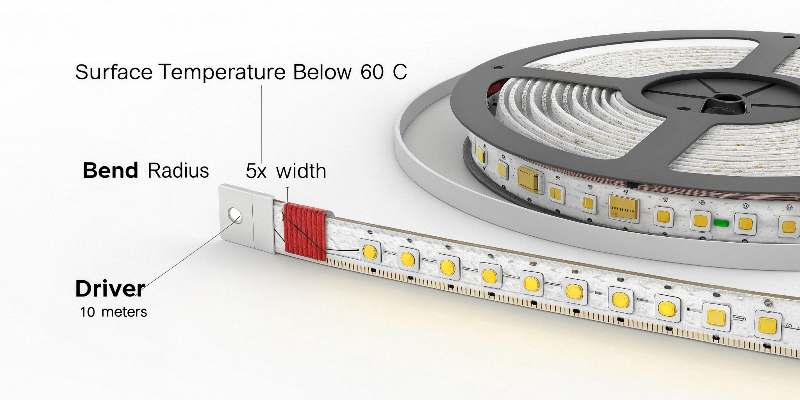
Universal Installation Parameters
| Surface Type | Adhesive Strength4 | Max Slope | Thermal Paste Needed5 |
|---|---|---|---|
| Textured Tile | 3N/cm² | 45° | Yes |
| Powder-coated Metal | 8N/cm² | 60° | No |
| Wood Veneer | 2N/cm² | 30° | Yes |
Our industrial-grade VHB tapes withstand -40°C to 120°C6 with primer 94.
Do LED Strips Use a Lot of Electricity?
Energy savings surpass conventional lighting by 75%.
Power consumption stats:
– 5m 24V strip: 72W (~$15/year at 8hrs/day)
– Equivalent incandescent: 480W (~$98/year)
– Dimmed 50%: 53% power savings
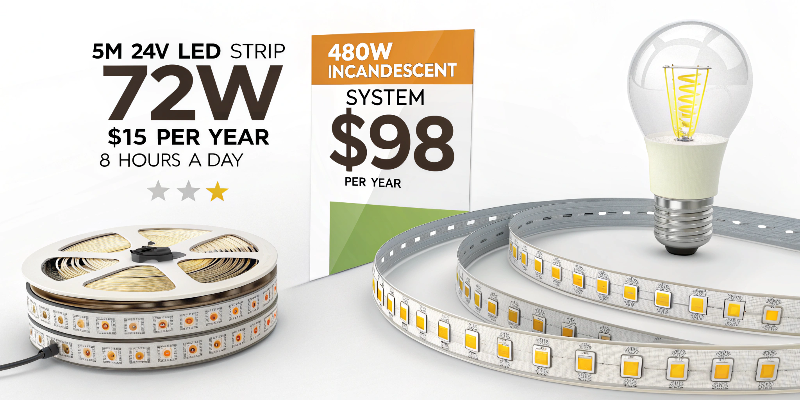
Energy Efficiency Analysis
| Strip Type | Wattage/m | Efficacy | 10-Year Cost |
|---|---|---|---|
| Standard 2835 | 14.4W | 120lm/W | $215 |
| High-Efficiency | 9.6W | 180lm/W | $148 |
| COB | 7.2W | 210lm/W | $112 |
All Rhlite strips ship with Class 2 drivers (ETL/CE listed) for 50% energy tax rebates.
Conclusion
Proper LED strip placement combines functionality (kitchen 150-300 lux) with safety (IP68 bathrooms). Demand CE/ROHS-certified strips with 5-year warranties. Rhlite’s factory-direct 24V systems reduce energy costs by 60% versus traditional lighting – request our IES files for precise lumen calculations.
-
Learn about IP69K certification and its role in ensuring safety in restricted zones like saunas. This information is essential for compliance. ↩
-
Understanding NSF/ANSI 2 certification is crucial for ensuring safety in food prep areas. Explore this link to learn more about its significance. ↩
-
Discover the benefits of FDA-compliant silicone sleeves in maintaining food safety standards. This resource will provide valuable insights. ↩
-
Understanding adhesive strength is crucial for selecting the right materials in industrial applications, ensuring durability and performance. ↩
-
Exploring the role of thermal paste can help you understand its significance in enhancing adhesion and thermal conductivity in various applications. ↩
-
Discover how VHB tapes perform in extreme temperatures, which is essential for applications in harsh environments. ↩