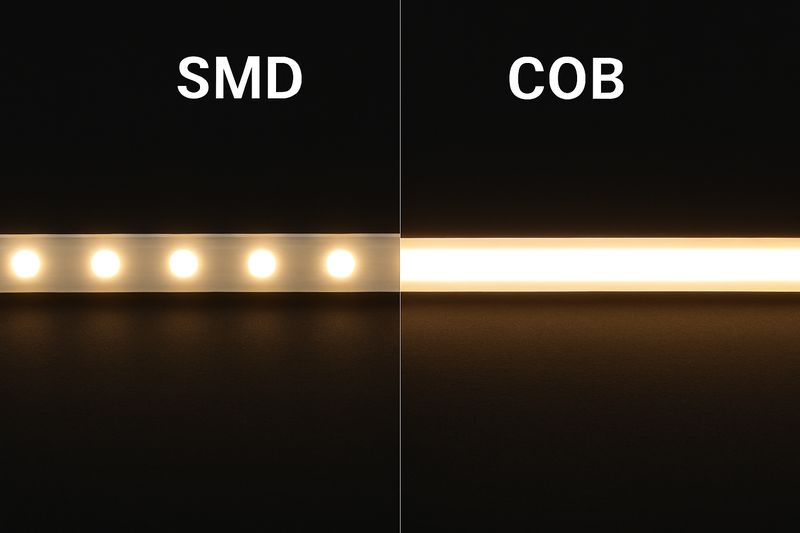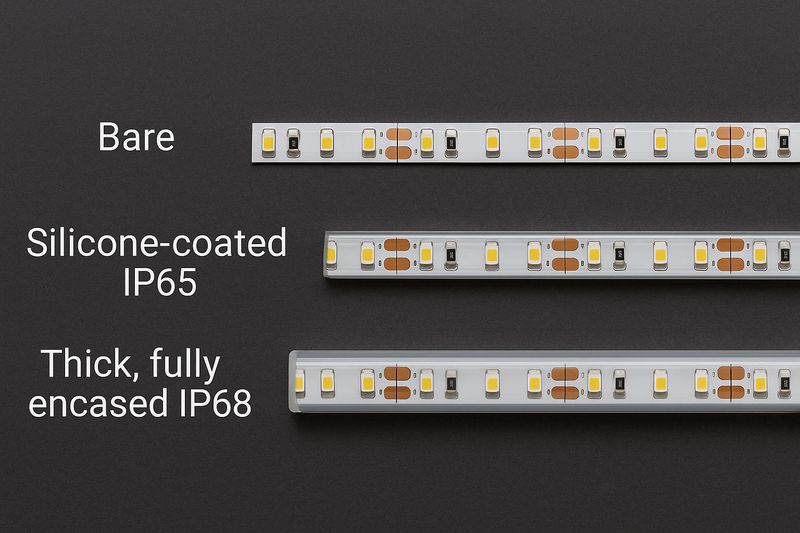
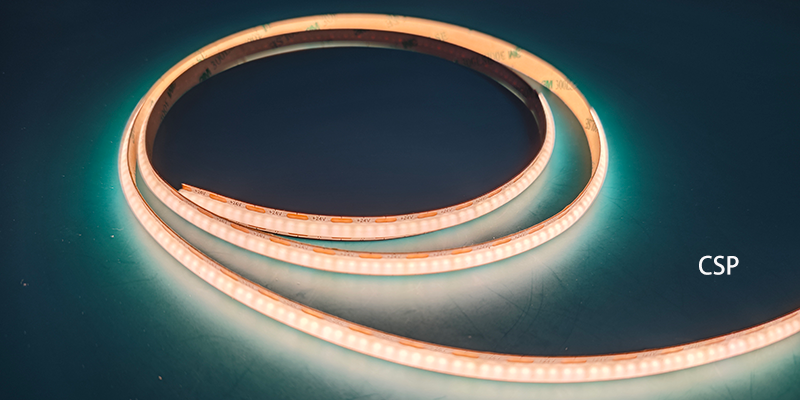
Struggling to choose between LED chip types? CSP might be the answer.
CSP is a compact LED chip technology offering better thermal control and design flexibility.
Curious how CSP compares to COB or why it matters? Let’s break it down step by step.
What does CSP mean LED?
CSP sounds technical, but it solves real-world design headaches.
CSP in LED means "Chip Scale Package," a compact LED with no traditional housing.
Understanding CSP in LED Terms
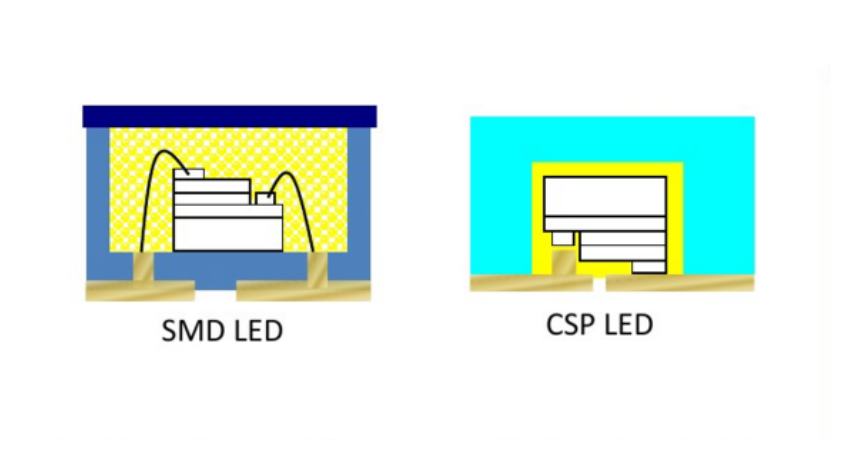
CSP stands for Chip Scale Package. It refers to an LED package that is almost the same size as the LED chip itself. Unlike traditional SMD (Surface Mounted Device) packages, CSPs don’t use lead frames or bulky plastic casings. This makes them extremely compact.
Why It Matters
Because there’s no extra packaging, CSP chips are better for small or space-constrained designs. I often use CSPs when I need thin, bright, and thermally stable solutions. This is especially useful in modern strip light projects where aesthetics and efficiency go hand in hand.
| Feature | CSP LED | Traditional SMD LED |
|---|---|---|
| Size | Ultra-compact | Larger with package |
| Heat Dissipation | Excellent | Good but not optimal |
| Design Flexibility | High | Moderate |
| Cost | Higher initially | Lower |
| Complexity to Assemble | Higher | Lower |
Are CSP LED chips good?
Yes, they fix many LED design problems I used to face.
CSP LED chips offer high efficiency, better thermal performance, and improved light distribution.
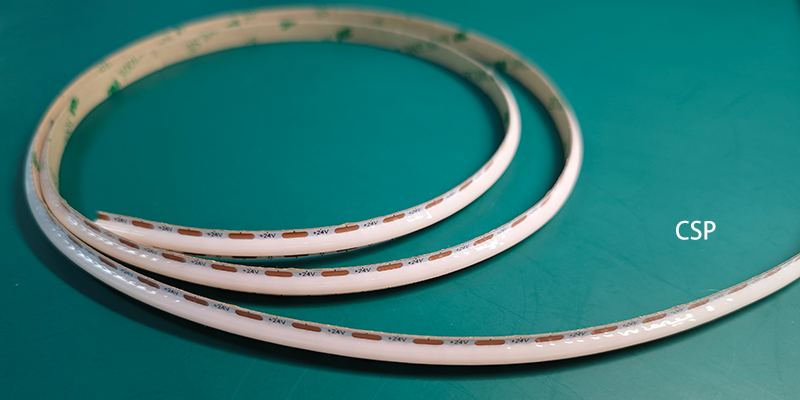
Advantages of CSP LEDs
From my experience, CSP LED chips1 are excellent in demanding applications. They shine (literally) in environments where space, heat, and durability are critical factors.
Deeper Insight: Pros and Cons
The small size means better integration into compact designs. The lack of a bulky case improves heat transfer, which boosts lifespan. However, CSP LEDs are more complex to handle during assembly, and the initial cost is slightly higher.
| Advantages | Disadvantages |
|---|---|
| High brightness per mm²2 | Requires precision in assembly |
| Low thermal resistance3 | Higher initial cost |
| Thin and compact | Sensitive to handling damage |
| No lens = broader beam angle | Less control over beam direction |
Real Use Example
In one of my indoor architectural projects, we used CSPs in a low-profile strip to maintain sleekness. They delivered strong light with low heat, which helped avoid bulky heat sinks.
What is CSP used for?
CSP chips are not just about size. They serve real commercial goals.
CSP LEDs are used in automotive, architectural lighting, displays, and LED strip lights.
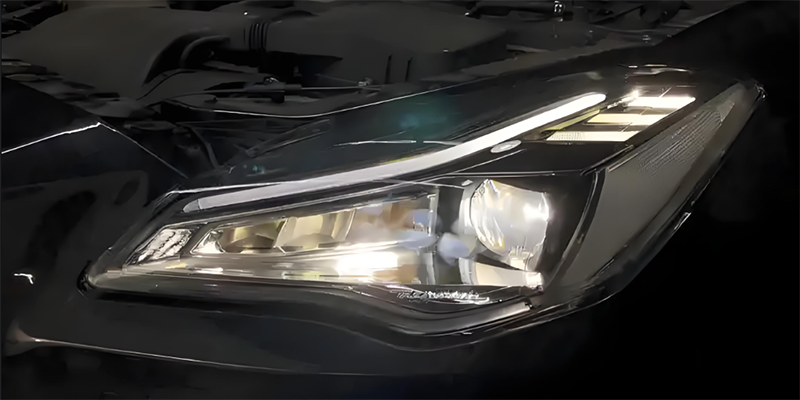
Applications in the Real World
CSPs4 are especially suited for areas requiring slim, powerful, and long-lasting lighting. In my line of work, I’ve seen CSPs used across a variety of lighting products.
Where CSP Shines
Automotive Headlights
High brightness and compact size make CSP ideal for headlamp assemblies. Thermal control is also crucial under the hood.
LED Strip Lights5
In ultra-thin or flexible strips, CSPs allow tight spacing and more uniform illumination without hotspots.
Display Backlighting
Because CSPs provide good uniformity, they’re used behind LCD panels and large digital displays.
| Application Area | Why CSP Works There |
|---|---|
| Automotive Lighting6 | Compact, strong, durable |
| Strip Lights | Thin, even light distribution |
| Display Panels | Uniformity and low profile |
| Architectural Lighting | Aesthetic, space-saving designs |
What is the purpose of a CSP?
CSP exists to make lighting smaller, cooler, and more powerful.
The purpose of a CSP is to eliminate packaging bulk, reduce thermal resistance, and simplify optical design.
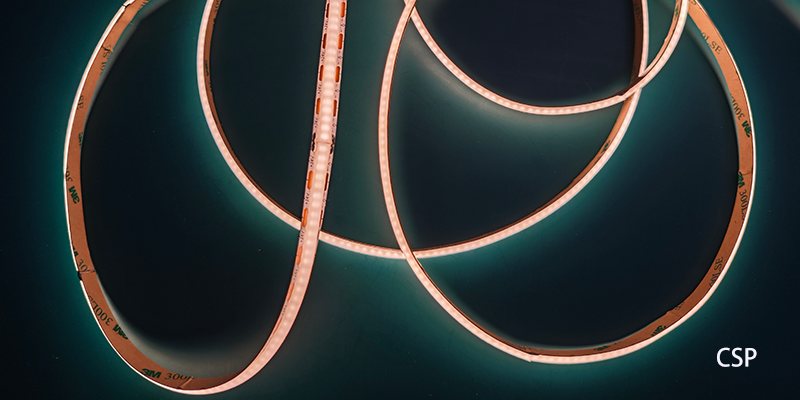
Getting to the Core Purpose
CSP isn’t just a feature—it solves core problems in modern lighting. By eliminating packaging, CSP chips bring the emitter closer to the heat sink and lens.
Design Benefits I’ve Seen
Better Heat Flow
No package means the chip can be mounted directly to a thermally conductive surface.
Lower Optical Loss
With no lens, there’s nothing absorbing or deflecting the light.
Easier to Scale
I can fit more LEDs into tighter spaces, ideal for high-density strip lights.
| Purpose | Benefit |
|---|---|
| Eliminate bulk | Smaller designs |
| Improve heat transfer | Longer LED life |
| Remove lens barrier | Brighter, more uniform lighting |
How many devices can use CSP?
CSP isn’t niche—it’s widely adopted in many lighting systems.
Many devices use CSP, including flashlights, phones, cars, TVs, and LED strips.
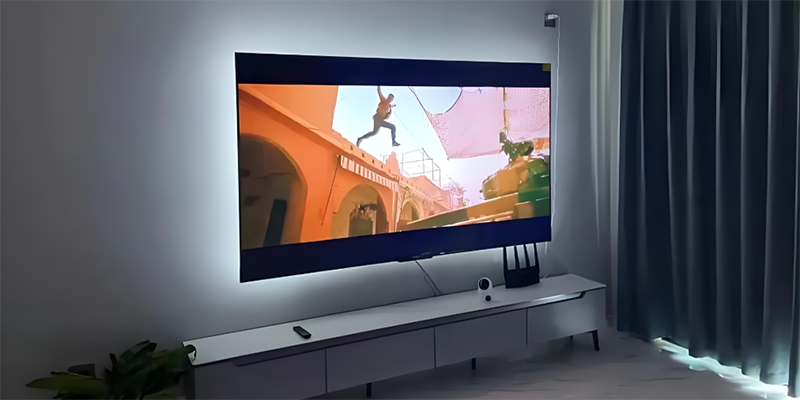
Where CSP LEDs Show Up
You’ll find CSP in both high-end and everyday lighting devices. Its broad utility comes from size and performance advantages.
Common CSP Use Cases
Consumer Electronics
Smartphones and tablets use CSP in flash modules due to space constraints.
Commercial Lighting
Retail, hospitality, and architecture industries use CSP in linear and panel lighting systems.
Specialty Products
Medical devices, wearable lights, and signage benefit from CSP’s compact size.
| Device Type | Why CSP is Chosen |
|---|---|
| Mobile Phones | Compact flash modules |
| Flashlights | High lumen density |
| TVs and Monitors | Uniform backlight |
| LED Strip Systems | Slim form factor |
| Auto Lighting | Harsh environment durability |
What is a CSP pin?
CSP pin means fewer steps during mounting, but requires precision.
A CSP pin refers to the small pads on the chip base used for surface mounting.
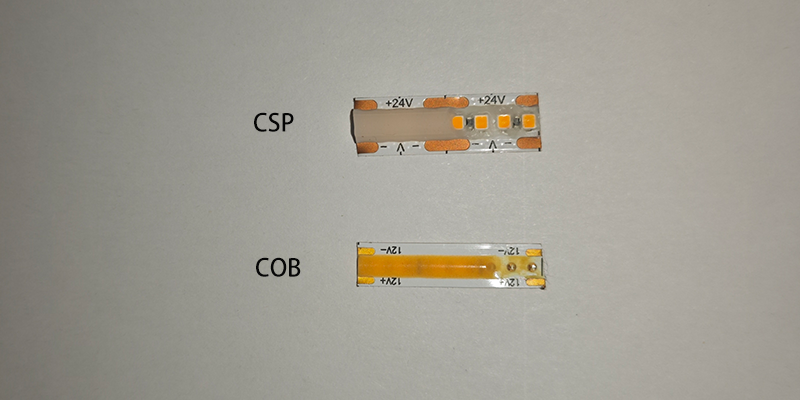
The Structure Behind CSP
CSP LEDs don’t have external leads like traditional chips. Instead, they have metal solder pads (often called "pins" informally) directly beneath the chip. These pads connect directly to the PCB.
What It Means for Production
Requires Accurate Placement
Since CSP chips are so small, soldering them takes special care.
Lower Electrical Resistance
Direct connection means less energy loss.
| Feature | Detail |
|---|---|
| Number of Pins | 2 to 4 typically |
| Placement Style | Surface-mount |
| Assembly Challenge | High precision needed |
| Impact on Performance | Low resistance, compact footprint |
I’ve seen cases where incorrect placement or soldering led to performance issues, especially in automated lines not calibrated for CSP.
Which is better CSP or COB LED chip?
They’re both great—but they serve different goals.
CSP is better for compact, high-performance lighting, while COB suits broader, high-lumen applications.
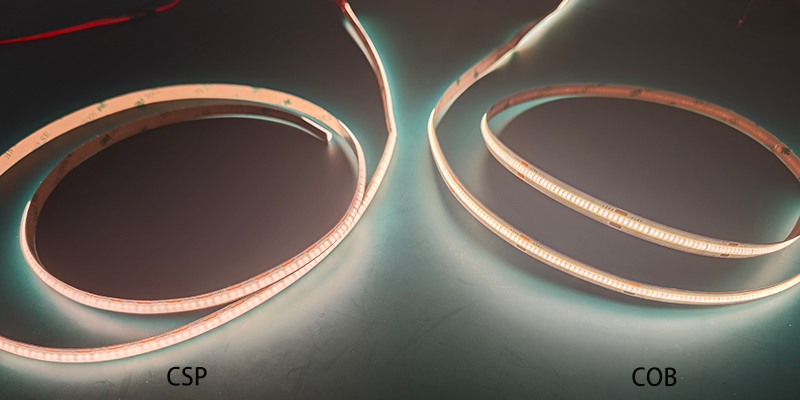
CSP vs COB: What I’ve Learned
CSP (Chip Scale Package) and COB (Chip On Board) are two top LED chip technologies. I use both, but in different contexts.
When I Use CSP
- Need high thermal efficiency
- Want tighter control over beam size
- Need ultra-thin designs
When I Use COB
- Large area illumination
- Cost-sensitive projects
- Lower assembly complexity
| Feature | CSP | COB |
|---|---|---|
| Size | Very small | Larger with multiple chips |
| Brightness Control | Precise | Broad and soft |
| Assembly Difficulty | Higher | Easier |
| Use Case | Strip lights, backlight, auto | Floodlights, downlights |
Both have a role. But for strip lights or ultra-slim designs, CSP is a clear winner in my projects.
Conclusion
CSP offers compact size, better thermal control, and high efficiency—ideal for modern lighting challenges.
-
Explore this link to understand how CSP LED chips excel in various demanding environments, enhancing performance and efficiency. ↩
-
Learn why high brightness per mm² is crucial for effective lighting solutions, especially in compact designs. ↩
-
Discover the advantages of low thermal resistance in LED lighting, which can lead to longer lifespan and better performance. ↩
-
Explore this link to understand the significance of CSPs in various lighting applications and their advantages. ↩
-
Learn about the advantages of using CSP in LED strip lights for better illumination and design flexibility. ↩
-
Discover how CSP technology enhances automotive lighting, improving safety and efficiency in vehicles. ↩