Are your outdoor LED strips failing in extreme weather?
Many businesses struggle with LED strip failures caused by rain, dust, or extreme temperatures. Poor-quality strips lead to costly maintenance and frustrated clients.
If you’re a contractor, distributor, or lighting designer sourcing for outdoor projects, this guide will help you avoid common pitfalls and choose the best LED strip lights for harsh environments.
Why Harsh Weather Demands Specialized LED Strip Lights
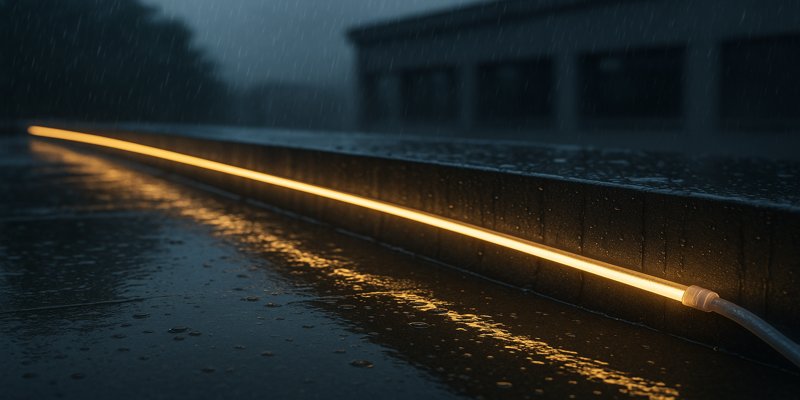
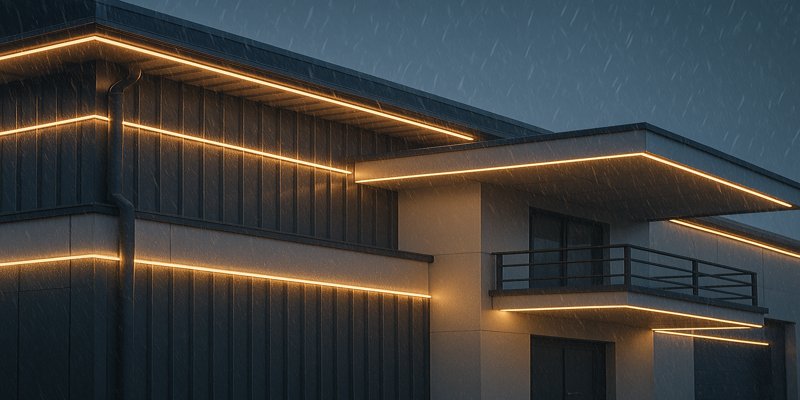
Standard LED strips may look the same on the outside, but in harsh outdoor conditions—such as coastal humidity, desert heat, snow, or heavy rain—they often fail prematurely. Moisture ingress1, UV damage, and extreme temperatures degrade the performance of unprotected strips.
In B2B lighting projects2, such as outdoor architecture, signage, or landscape lighting, lighting failure can damage your reputation and bring complaints. For instance, LED strips with poor sealing can suffer short circuits or color degradation within weeks.
Weatherproof outdoor LED strips3, on the other hand, are engineered with sealed housing, anti-UV coatings, and high-tensile materials to withstand:
- Rain and snow (IP67/IP68)
- UV exposure (UV-resistant PU/Silicone)
- Temperature swings (-25°C to +60°C)
- Dust and salt (corrosion-resistant)
If you’re planning long-term outdoor installations, you must select purpose-built LED strips with documented outdoor performance.
Key Specifications to Look for in Weather-Resistant LED Strips
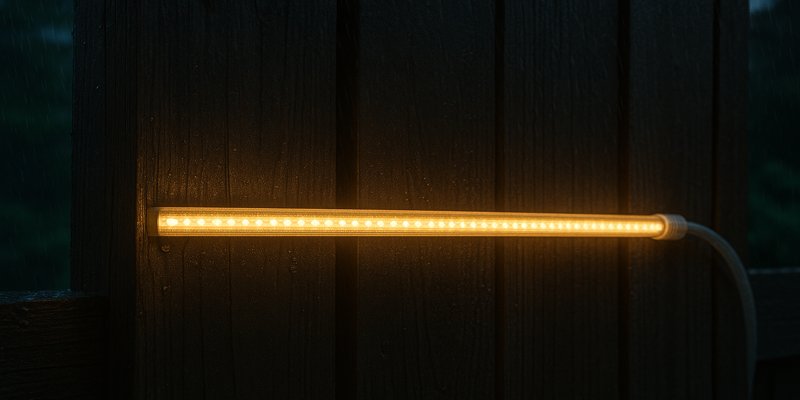
When evaluating LED strips for outdoor use, specifications are your strongest filter. Without reading beyond the datasheet, you may miss key differences that impact performance.
Here are the specs that matter most:
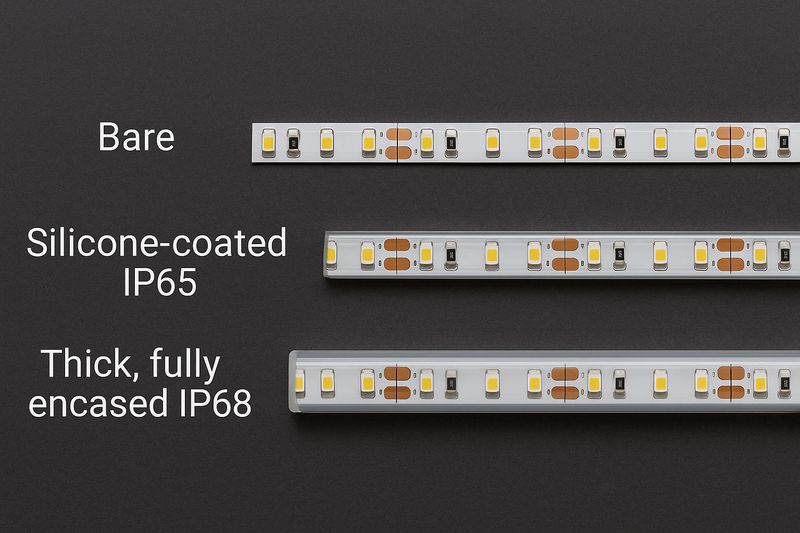
- IP Rating4: Choose IP65 for splash zones, IP67 for full weather exposure, and IP68 for submersion.
- UV Resistance5: Silicone or polyurethane (PU) with UV inhibitors is essential for sun-exposed areas.
- Operating Temperature: Look for -25°C to +60°C or better.
- Voltage: 24V is preferred for long runs; low-voltage ensures safety and efficiency.
- LED Binning: 3-step MacAdam or tighter ensures color consistency.
- Color Rendering (CRI)6: 80+ for commercial, 90+ for design applications.
Also consider cable exit direction, silicone caps vs injection-molded ends, and whether dimming or smart control is needed. These features affect ease of installation and client satisfaction.
Top Materials That Enhance Outdoor Durability
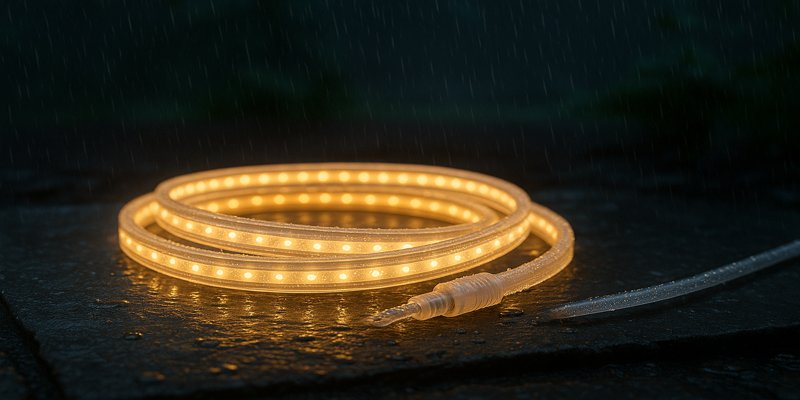
Not all LED strips use the same protective materials—and in harsh weather, material quality makes or breaks your installation.
Here are common material types and how they compare:
- PVC Sleeves: Basic protection but prone to yellowing and cracking over time.
- PU (Polyurethane): Flexible, UV-resistant, and weatherproof—great for façades or signage.
- Silicone Extrusion: Excellent optical clarity and long-term durability. Withstands extreme cold and heat.
- TPU (Thermoplastic Polyurethane): Offers high elasticity and abrasion resistance, ideal for flexible designs.
When selecting products, ask the manufacturer about the aging process and yellowing rate. Also check whether the strip is fully sealed or just surface-coated—a common issue with low-cost suppliers.
A one-piece silicone extrusion or injection-molded housing offers superior protection over hand-glued or clip-on solutions.
The Best LED Technologies for Reliable Outdoor Performance
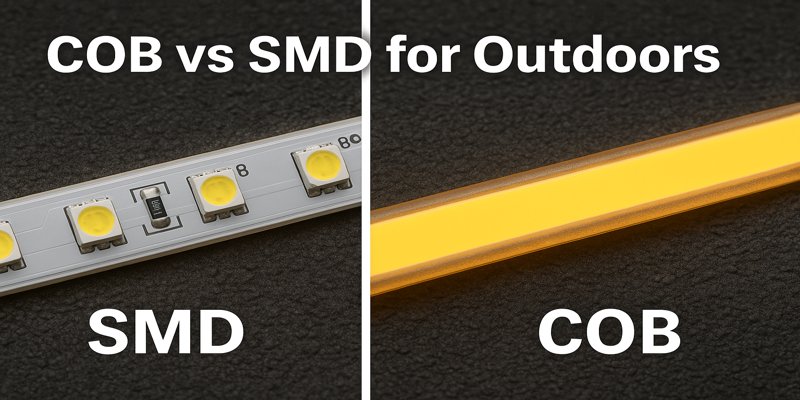
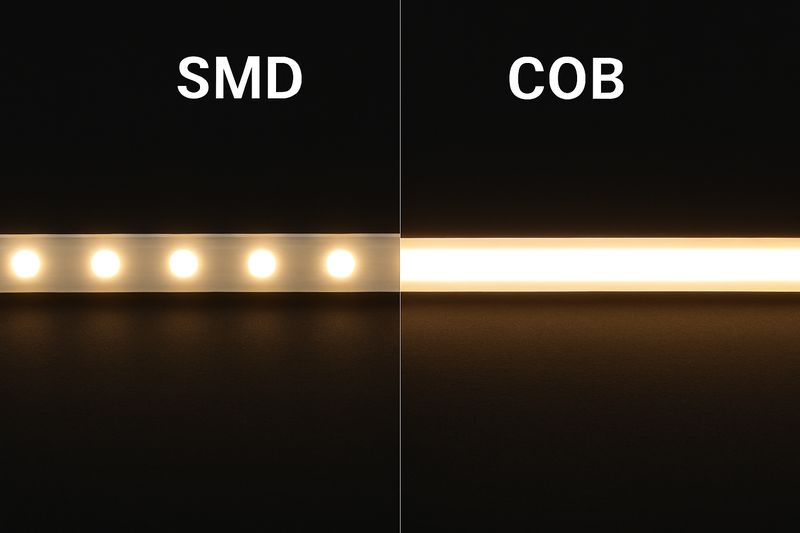
Technology selection also plays a role in outdoor reliability. The two main options are SMD (Surface-Mounted Device) and COB (Chip-on-Board).
SMD Strips
- More affordable
- Easy to repair
- Slightly visible LED dots
- Common models: 2835, 5050, 3528
COB Strips
- Dot-free light output
- Sealed more uniformly
- Slightly higher cost
- Great for design-forward installations
For outdoor use, COB strips are gaining popularity because their continuous phosphor layer adds an extra seal. Additionally, their dot-free glow looks more elegant for hotels, signage, and garden architecture.
Also consider constant current systems to ensure even brightness across long runs. This is critical for professional-grade projects like bridges or building outlines.
Certifications That Ensure Long-Term Outdoor Reliability
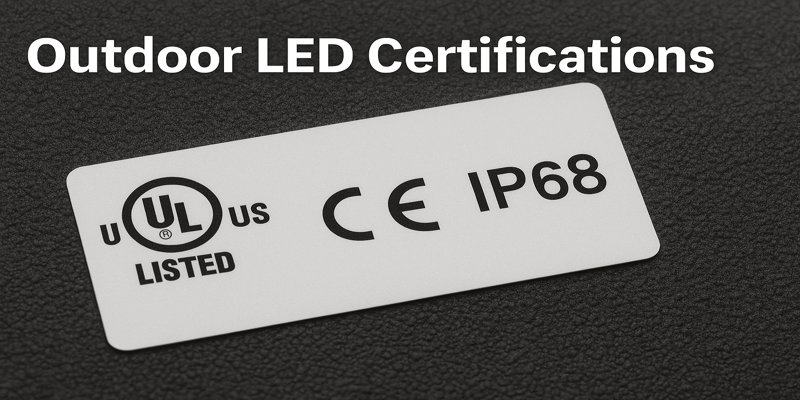
In export and B2B lighting, certifications do more than satisfy regulations—they assure clients that the products are safe, reliable, and built to last.
Look for these key certifications:
- IP65/IP67/IP68: Water and dust resistance
- IK08–IK10: Impact resistance for public spaces
- CE / RoHS: Environmental safety for EU markets
- UL / ETL: Required for the North American market
- LM-80 / TM-21: Proves LED longevity through lab testing
High-end manufacturers also perform salt spray tests, UV aging tests, and thermal cycling to validate durability.
If your project involves public installations or infrastructure, using certified outdoor LED strips is essential to pass inspections and reduce liability.
Top-Rated Outdoor LED Strip Light Models for Your Projects
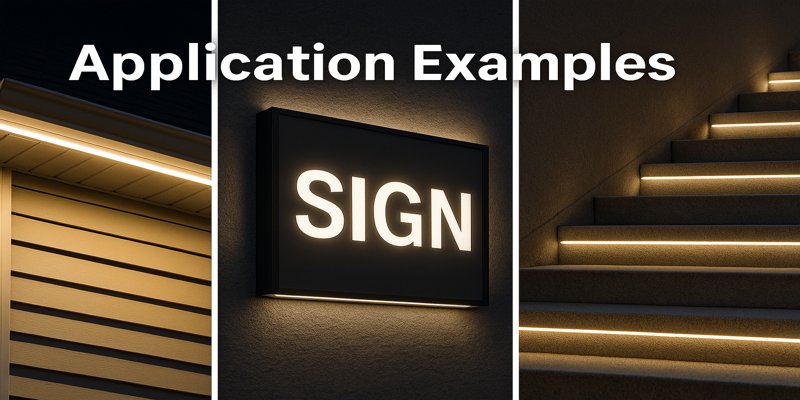
To wrap up, here are some real-world tested models you can explore for your business:
-
IP67 Flexible Strip with Silicone Extrusion (COB)
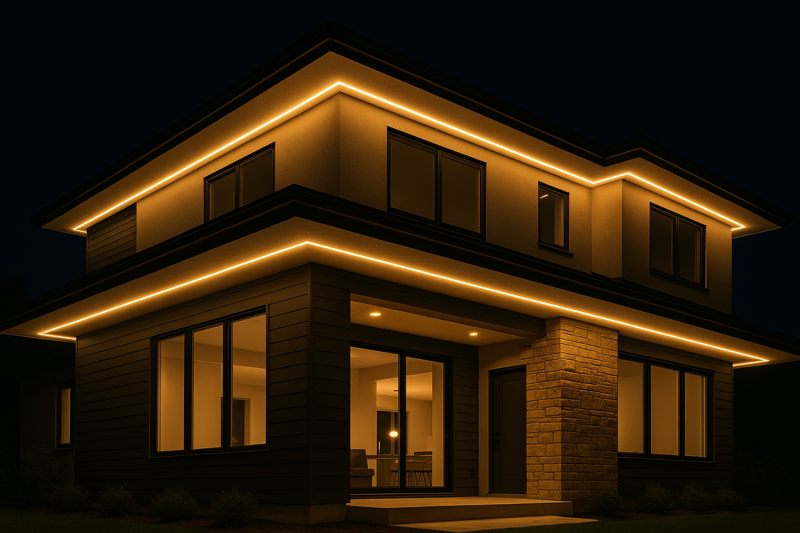
Ideal for hotel outlines, signage, or eaves. -
PU Encased IP68 SMD Strip with Side Cable Entry
Used in wall washing and bridge outlines. -
Rigid Aluminum Profile Strip with Epoxy Seal
For heavy-duty outdoor lighting like tunnels or loading docks. -
Dual-White Tunable Strip (IP65) with Smart Control
For parks, outdoor retail zones, and mood lighting.
When sourcing from China, verify that your supplier offers custom lengths, OEM logo printing, and test reports. This gives you a competitive edge with your end customers.
Final Thoughts
The best LED strip lights for harsh outdoor environments must go beyond brightness—they need to survive nature. Whether you’re a wholesaler, contractor, or designer, investing in the right specs, materials, and certifications will ensure your projects shine year-round.
Need help choosing the right model for your next project? Let’s talk.
-
Learn about the impact of moisture ingress on LED lighting to ensure your installations are protected and long-lasting. ↩
-
This resource will provide insights into the specific challenges faced in B2B lighting projects, helping you make informed decisions. ↩
-
Explore this link to understand how weatherproof outdoor LED strips can enhance durability and performance in harsh conditions. ↩
-
Understanding IP Ratings helps you choose the right LED strip for your outdoor needs, ensuring durability and performance. ↩
-
Exploring UV Resistance can guide you in selecting LED strips that withstand sun exposure, enhancing their lifespan. ↩
-
Learning about CRI will help you choose LED strips that provide accurate color representation, crucial for design applications. ↩