Your client needs lighting for an entire project—kitchen, living room, bathroom, and outdoors. You’re faced with a catalog of hundreds of strips. Choosing the wrong one for any room can lead to an unhappy client and a damaged reputation.
The "best" LED strip is the one whose specifications perfectly match the room’s function. Prioritize high CRI for kitchens, smoothness for living rooms, and IP ratings for bathrooms and outdoors. This guide provides a clear blueprint for making the right choice every time.
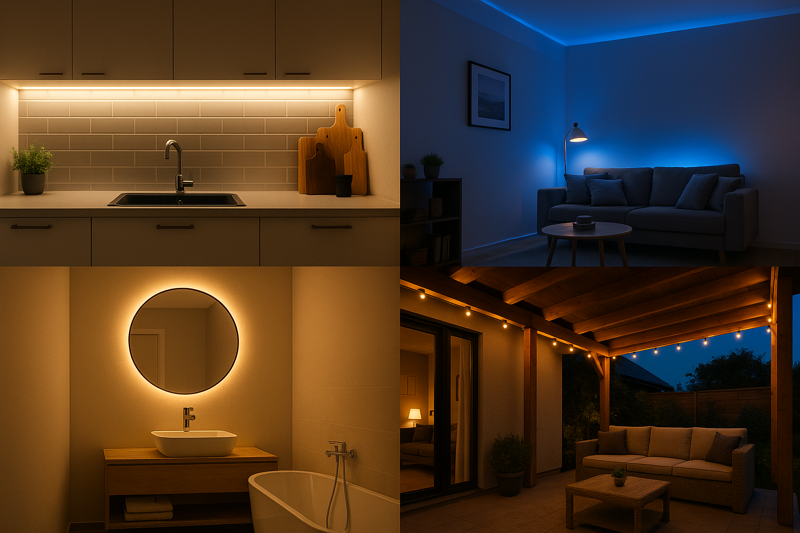
I once walked a project with a lighting designer who was completely overwhelmed. He was working on a high-end custom home and had a list of 20 different strips from various suppliers. He said, "Jermey, I know what I want it to look like, but I don’t know how to choose the right product." We sat down and went through it room by room, not talking about prices, but about function. What is the light doing in this space? Is it for chopping vegetables? Is it for creating a relaxing mood? Is it going to get wet? By the end, we had replaced his confusing list with just four perfect Rhlite products. He had a clear, justified specification for every area. This article is that conversation, turned into a practical guide you can use to equip your clients and win more projects.
What Are the Best Strips for Kitchen Under-Cabinet Lighting?
The client complains that the light under their expensive new cabinets is dim and makes their food and countertops look dull and lifeless. The cheap strip you supplied has failed to deliver the "wow" factor, and now the whole kitchen feels flat.
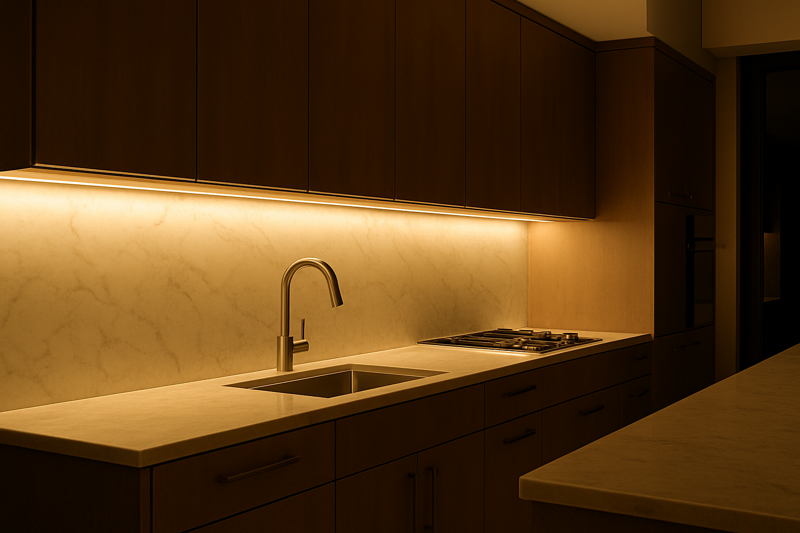
For kitchens, function is everything. The best strips have a high Color Rendering Index (CRI 90+) to make food look fresh and high brightness (1000+ lumens/meter) for task visibility. This is non-negotiable for a functional and beautiful kitchen.
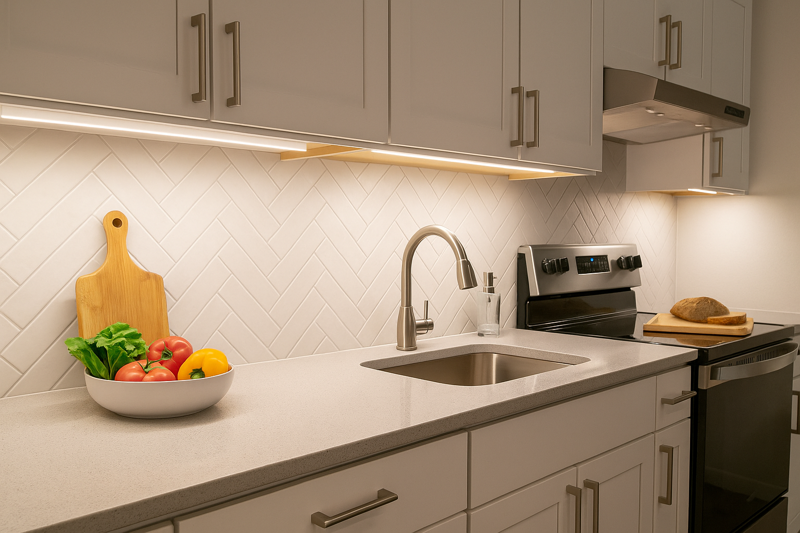
A contractor I supply had a client who was a professional chef. They were renovating his home kitchen, and the lighting was the most important element for him. He said, "I need to see the true color of the food I’m preparing. I need to know if the salmon is fresh or if the steak is perfectly seared." The contractor knew a standard CRI 80 strip wouldn’t be good enough. He called me, and we specified our CRI 95+ strip at 4000K. The result was incredible. The light was bright and clean, vegetables looked vibrant, and the marble countertop’s subtle veining was perfectly clear. The chef was thrilled. He said it was better than the lighting in his restaurant. That’s the power of specifying for the room’s function first.
Blueprint for Kitchen Lighting: Function First
The kitchen is a workspace. The lighting must be bright, accurate, and reliable.
- Color Rendering (CRI)1: This is the most critical spec in a kitchen. It determines how accurately the light reveals the color of food, cabinets, and countertops. Low CRI makes everything look washed out and unappetizing.
- Brightness (Lumens)2: Under-cabinet lighting is primarily for tasks like chopping and cleaning. It needs to be bright enough to work safely without casting shadows from ceiling lights.
- Color Temperature (CCT): This sets the overall feel. 3000K (Warm White) works well for traditional kitchens, while 4000K (Neutral White) provides a cleaner, more modern look for contemporary spaces.
Here are your good and best options:
| Specification Tier | "Good" Budget-Conscious Choice | "Best" Premium Performance Choice | Why This Matters for Tom’s Business |
|---|---|---|---|
| CRI | 80+ | 95+ with high R9 | The upsell feature for kitchens. Sells the "wow" factor of vibrant colors. |
| Brightness | ~800 lumens/meter | 1200 – 1800 lumens/meter | Provides superior task lighting, a clear functional benefit for the homeowner. |
| LED Density | 120 LEDs/meter | 240 LEDs/meter or COB | Reduces "dotting" reflections on glossy granite or quartz countertops. |
| Voltage | 12V or 24V DC | 24V DC | Better for the longer, continuous runs often found in larger kitchens. |
For a basic project, a CRI 80 strip is functional. But for any client who cares about design and food, upselling to a CRI 95+ strip is one of the easiest ways to provide massive value and increase your margin.
Which Strips Create the Best Atmosphere in a Living Room?
You’ve installed LED strips in a living room cove or behind a TV, but the result is disappointing. You can see distracting individual dots of light, and the dimming is choppy and unnatural, ruining the cozy, high-end atmosphere the client wanted.
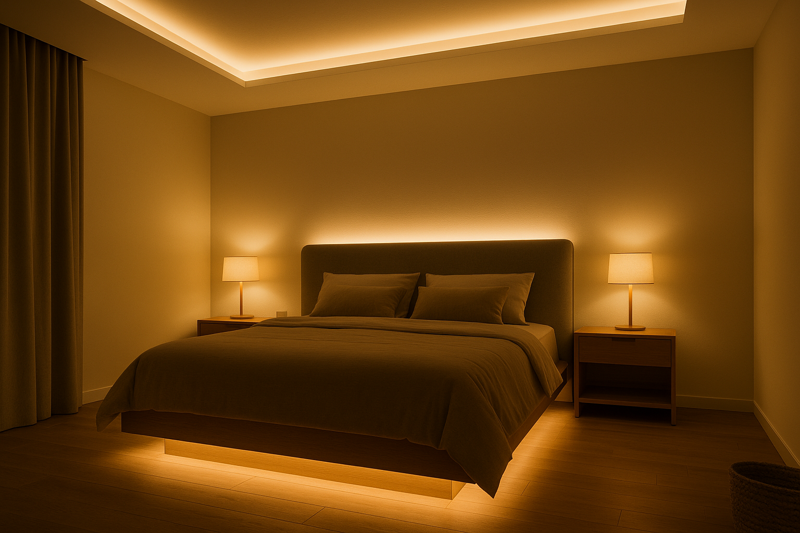
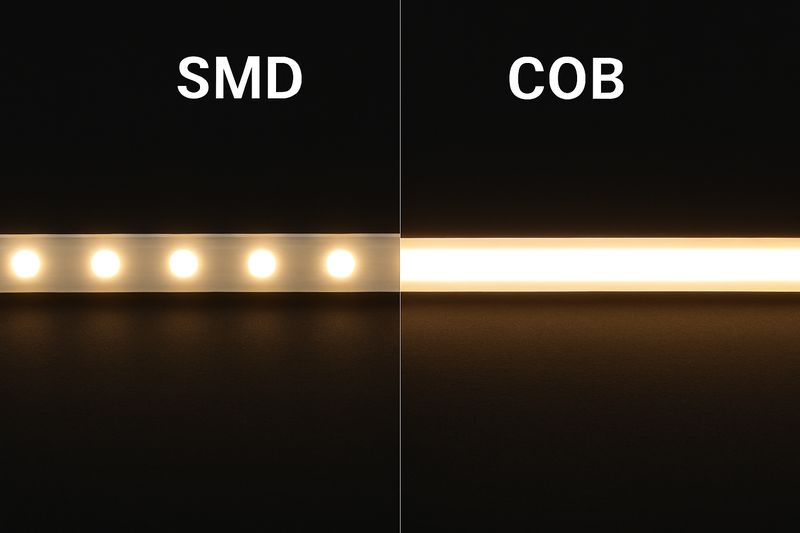
For living rooms, the goal is a smooth, warm, and inviting glow. The best strips are seamless COB (Chip on Board) models that create a flawless line of light. They must also be paired with a quality power supply and dimmer for smooth, flicker-free control.
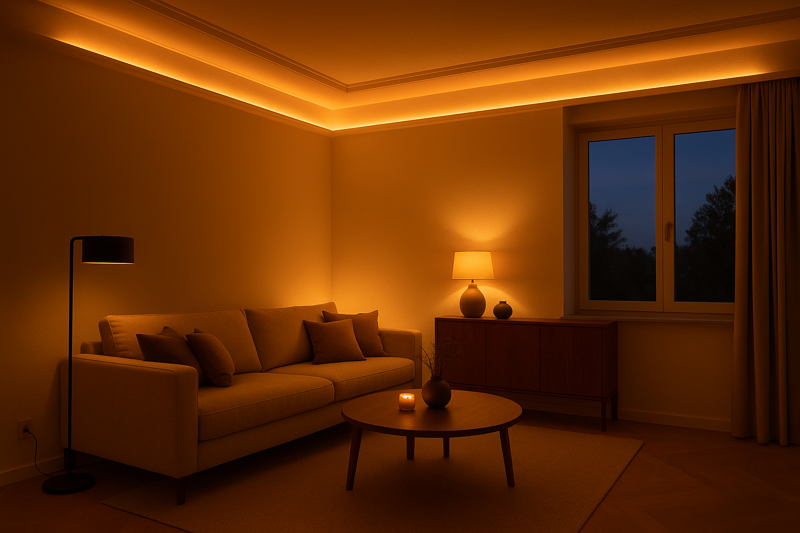
An interior designer I work with for hospitality projects is absolutely obsessed with dimming quality. She believes the way a light dims is a key part of the guest experience. For a hotel lounge project, she was creating feature walls with vertical slots of light. She told me, "Jermey, I cannot have any dots. And when the bartender dims the lights for the evening, it must be as smooth as a theater. No steps, no flickering." The answer was a system. We paired our 2700K COB strips (for perfect smoothness) with high-quality, 0-10V dimmable drivers. The result was exactly what she envisioned: a flawless line of warm light that dimmed down to almost zero without a single flicker. She sold the client not just a light, but an atmosphere.
Blueprint for Living Rooms: Mood and Smoothness
Here, the light is a decorative element. The quality of the light is more important than the quantity.
- Smoothness: Visible dots (spotting) look cheap and completely ruin an indirect lighting effect. The goal is a line of light that looks like a part of the architecture.
- Color Temperature (CCT)3: Warmth creates relaxation. Stick to the lower end of the Kelvin scale for spaces meant for comfort. 2700K is the gold standard for a cozy, incandescent feel.
- Dimming: The ability to change the light level is essential for a multi-purpose room. The entire system (strip, driver, dimmer) must be compatible to ensure smooth performance.
Here are your good and best options:
| Specification Tier | "Good" Budget-Conscious Choice | "Best" Premium Performance Choice | Why This Matters for Tom’s Business |
|---|---|---|---|
| LED Technology | High-Density (180+ LEDs/m) in a channel | COB (Chip on Board) Strips | COB is the ultimate solution for "dot-free" light. A massive aesthetic upgrade. |
| Color Temperature | 3000K | 2700K | Delivers that warm, premium, "luxury hotel" feel that clients desire. |
| CRI | 80+ | 90+ | Renders skin tones, artwork, and fabrics more naturally and richly. |
| Dimming System4 | Standard PWM Dimmable Driver | 0-10V or DALI Dimmable Driver | Provides smoother, more reliable dimming performance demanded in high-end projects. |
In living rooms, you are selling an emotion. Upselling from a standard strip to a seamless COB strip is a visual upgrade that clients can immediately see and appreciate.
What Specs Are Essential for Bathroom LED Strips?
A client calls you six months after a beautiful bathroom renovation. The LED strip you installed around their vanity mirror or in the shower niche is failing. Sections are dead, and you can see corrosion on the strip because of the constant humidity.
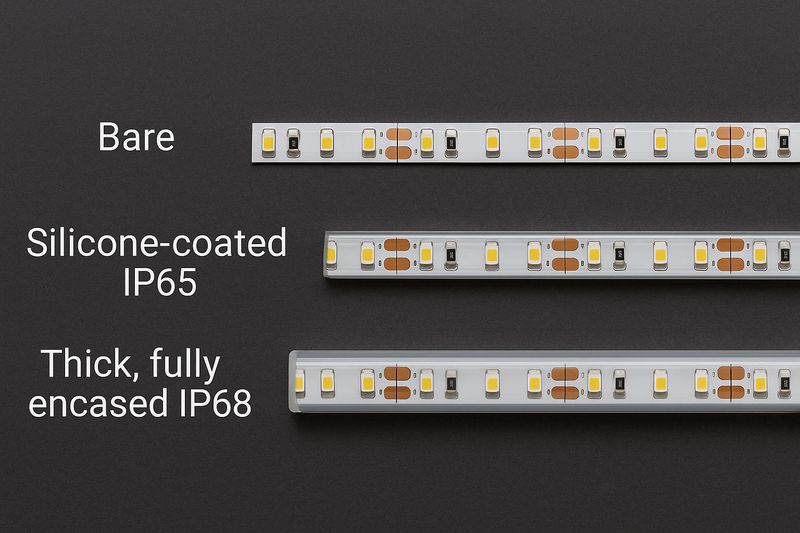
For bathrooms, safety and durability are the top priorities. The absolute minimum specification is an IP65 rating to protect against moisture. For areas like showers or wet rooms, you must use an IP67 rated strip that is fully encased in silicone.
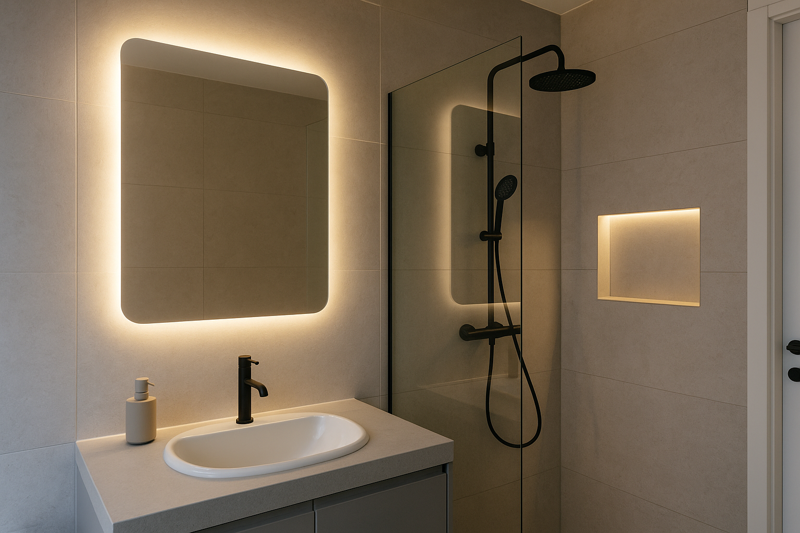
One of my distributor’s clients, a custom home builder, learned this lesson the hard way. He installed standard, non-waterproof LED strips inside an aluminum channel with a plastic cover for a shower niche, thinking the channel would protect it. For a few months, it looked great. Then, condensation inevitably formed inside the channel. The strip’s PCB corroded, and the light failed. It was a costly and difficult repair that involved ripping out tile. He called me after that, and I explained that for any "wet zone," you cannot take chances. We provided him with our IP67 silicone-extruded strips for his next project. They are a solid, sealed unit—water has nowhere to get in. It’s a slightly higher upfront cost that prevents a massive downstream failure.
Blueprint for Bathrooms: Safety and Durability
The bathroom is a harsh environment for electronics. You must specify a product designed to survive it.
- Ingress Protection (IP Rating)5: This is a non-negotiable safety feature. It measures the product’s seal against solids (first digit) and liquids (second digit).
- Damp Zones (e.g., above a vanity): IP65 is the minimum. It protects against splashes.
- Wet Zones (e.g., inside a shower): IP67 is required. It can withstand temporary immersion.
- Construction6: The way it’s waterproofed matters. A full silicone extrusion is far superior to a simple spray-on coating as it won’t peel and provides better heat dissipation.
Here are your good and best options:
| Specification Tier | "Good" Damp Zone Choice (Vanity) | "Best" Wet Zone Choice (Shower) | Why This Matters for Tom’s Business |
|---|---|---|---|
| IP Rating | IP65 (Silicone Coated) | IP67 (Full Silicone Extrusion) | This is a safety and liability issue. Selling the right IP rating protects your client and your business. |
| Voltage | 12V or 24V DC | 24V DC | Low voltage is safer in wet environments. 24V is always a solid choice. |
| Brightness | ~1000 lumens/meter | ~1000 lumens/meter | Vanity lighting needs to be bright and functional for grooming tasks. |
| CRI | 80+ | 90+ | High CRI is crucial for vanity lighting to render skin tones accurately for makeup application. |
Never compromise on the IP rating in a bathroom. Selling an IP67 strip for a shower isn’t an upsell; it’s a requirement for a safe, professional, and lasting installation.
Conclusion
Stop thinking about a generic "best" LED strip. Instead, guide your clients to the best strip for the job. By matching the specs to the room’s function, you transform from a product seller into a trusted lighting expert.
-
Understanding CRI is essential for achieving vibrant and accurate colors in your kitchen, enhancing both aesthetics and functionality. ↩
-
Exploring lumens helps you choose the right brightness for safety and efficiency in kitchen tasks, ensuring a well-lit workspace. ↩
-
Understanding color temperature helps create a cozy atmosphere, essential for relaxation in living spaces. ↩
-
Exploring dimming systems reveals how they improve ambiance and functionality, crucial for versatile living areas. ↩
-
Understanding IP ratings is crucial for ensuring safety and durability in bathroom electronics, making this resource invaluable. ↩
-
Exploring construction methods will help you choose the best waterproofing solutions for long-lasting bathroom installations. ↩