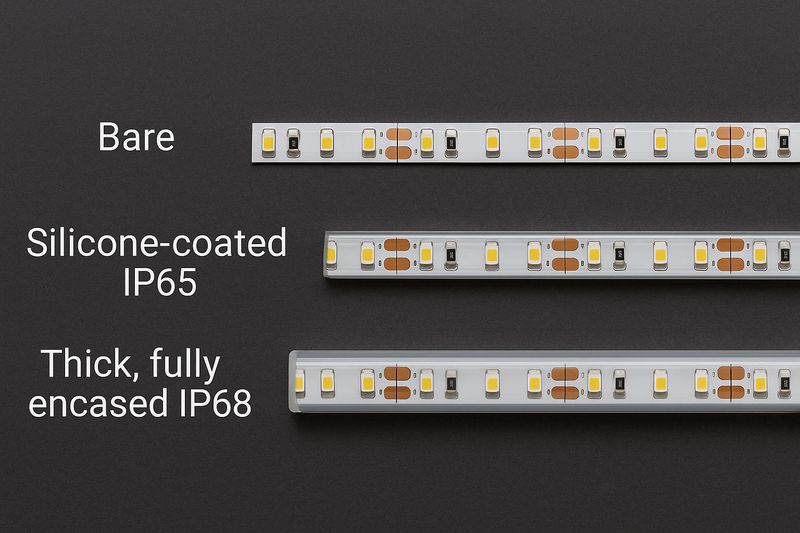
Struggling to light curved surfaces like arches or cabinets? Flexible LED strips solve spatial limitations traditional bulbs can’t address.
Flexible LED strips are bendable lighting circuits with surface-mounted diodes. They adhere to curved surfaces using 3M backing and operate on 12/24V DC power. Current flows through parallel circuits, enabling custom length cutting while maintaining functionality.
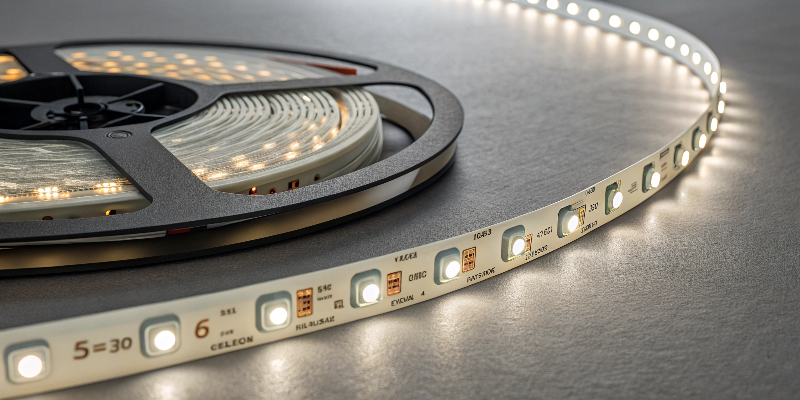
Understanding their construction reveals why these strips outperform rigid alternatives in challenging installations.
How Do Flexible Strip Lights Work?
The secret lies in a multi-layer design engineered for flexibility.
Four core components work together:
1. Flexible copper circuit board
2. Surface-mounted LEDs
3. Current-limiting resistors
4. Protective silicone coating
Voltage flows through parallel circuits allowing cutting at marked intervals. Standard density is 60-120 LEDs per meter.
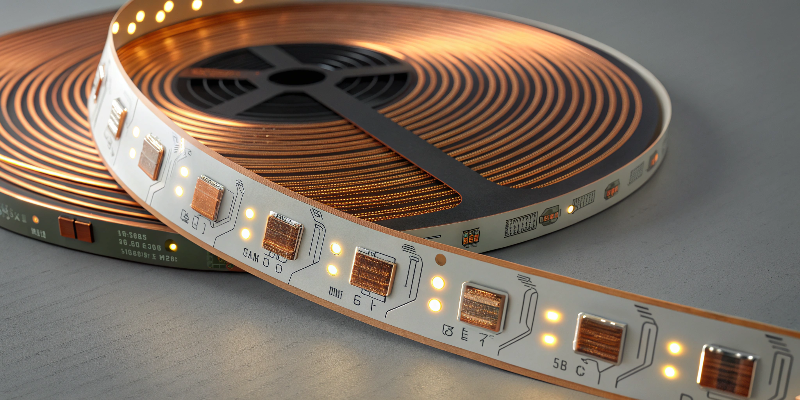
Key Design Features
| Component | Purpose |
|---|---|
| Polyimide substrate1 | Bendable base material |
| Parallel circuits2 | Enable custom cutting |
| Silicone coating3 | Water/dust protection (IP65+) |
Parallel wiring allows continuous operation even if individual LEDs fail, unlike Christmas lights’ series circuits. Voltage drop requires power injection every 5 meters for consistent brightness.
How Does LED Strip Light Work?
Semiconductor physics enables energy-efficient light emission.
When DC current passes through the LED chip’s semiconductor layers, electrons release photons. Resistors regulate current flow to maintain stable operation. High-quality strips use 2835/5050 SMD LEDs for optimal light output.

Basic Operation Chain
Input Power ➔ Constant Voltage Driver ➔ PCB Circuits ➔ LED Chips ➔ Light Emission
Proper heat dissipation4 through aluminum channels5 extends lifespan to 50,000 hours. Without cooling, junction temperatures degrade performance up to 30% faster.
What Is Flexible LED?
"Flexibility" refers to physical pliability and versatile installation.
True flexible LED strips must:
Bend 150+ degrees without damage
Maintain circuit integrity after 10,000+ bends
Adhere to uneven surfaces
Rigid variations use epoxy resin instead of silicone, limiting applications.
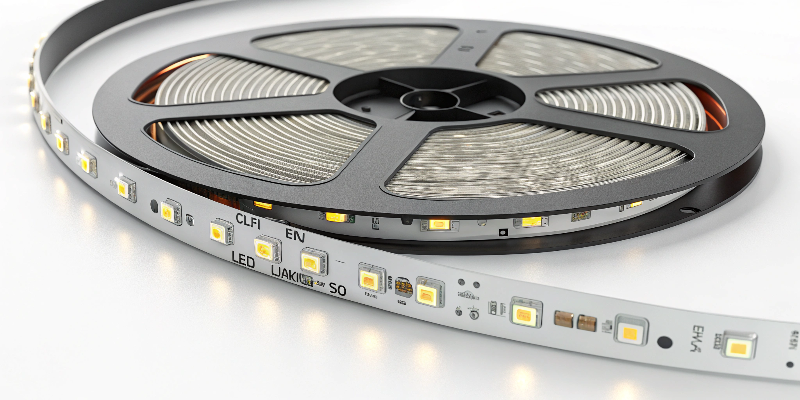
Installation Comparison
| Surface Type | Flexible | Rigid |
|---|---|---|
| Curved cornices | ✅ Yes | ❌ No |
| Straight cabinets | ✅ Yes | ✅ Yes |
| Outdoor use | IP67+ versions | Not advised |
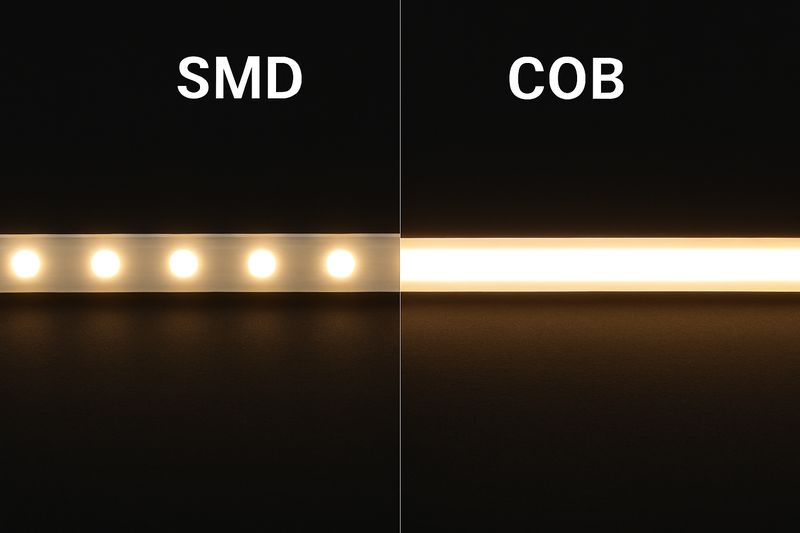
What Are the 2 Types of LED Light Strips?
Choose based on lighting requirements and budget.
-
SMD (Surface-Mounted Device)
- Visible individual LEDs
- Lower cost
- Standard for home use
-
COB (Chip-on-Board)
- Continuous light line
- Higher brightness
- Professional applications
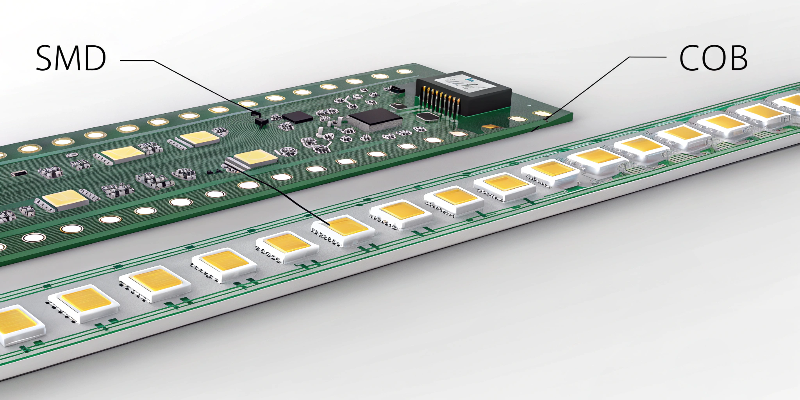
Selection Guidelines
| Factor | SMD Recommendation | COB Recommendation |
|---|---|---|
| Budget | Under $3/m | Over $5/m |
| Light Diffusion | Good | Excellent |
| Viewing Angle | 120° | 180° |
Do LED Light Strips Have to Be Plugged In to Work?
Wired systems dominate, but wireless options exist.
Main power solutions:
- Plug-in Adapters: Most common
- Hardwired Drivers: Commercial use
- Battery Packs: Temporary setups (requires 5V strips)
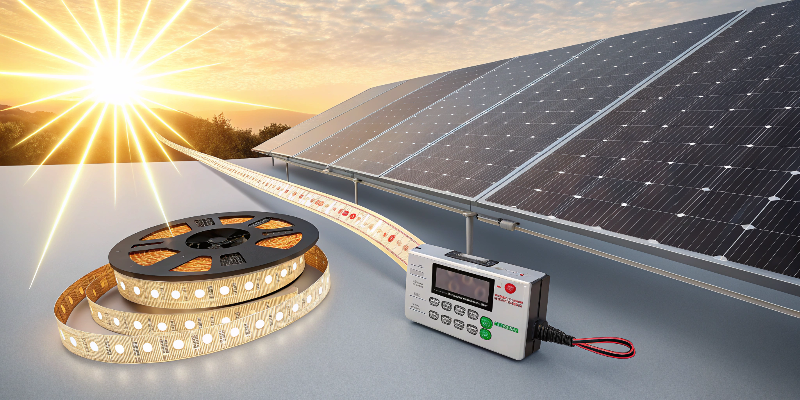
Solar power requires compatible controllers and sufficient daylight exposure.
Voltage Requirements
| Strip Type | Input Voltage | Power Source Examples |
|---|---|---|
| Low Voltage | 12V/24V DC | Wall adapters, drivers |
| Ultra-Low | 5V DC | USB, batteries |
What Are the Cons of LED Strip Lights?
Three key limitations demand consideration:
1. Installation complexity – requires clean surfaces, proper spacing
2. Voltage drop over long runs – needs power injection
3. Heat management – requires aluminum channels
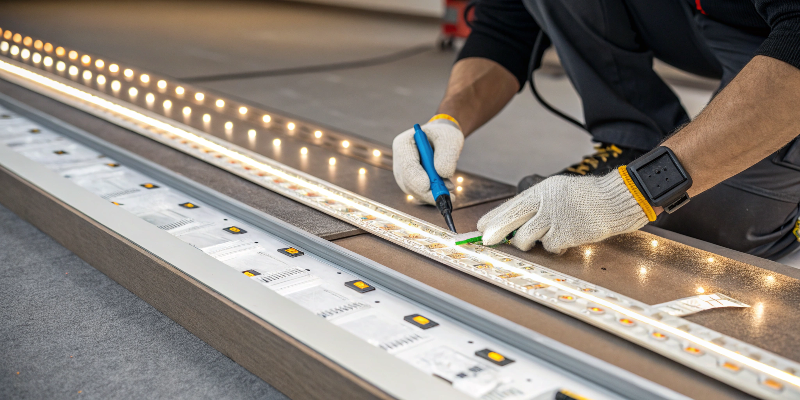
Quality Control Factors
| Production Stage | Inspection Focus |
|---|---|
| Soldering | Circuit continuity |
| Coating | Waterproof integrity |
| Packing | ESD protection |
Our factory implements automated optical inspection (AOI) and sample bend tests to ensure compliance with IEC 60598 standards.
Conclusion
Flexible LED strips enable creative lighting solutions through innovative engineering. For bulk orders requiring certifications (UL/CE/RoHS), request our product specifications and test reports.
-
Explore the advantages of Polyimide substrate, a key material in flexible electronics, for better design and performance. ↩
-
Learn how parallel circuits enhance LED reliability and brightness, crucial for effective lighting solutions. ↩
-
Discover how silicone coating provides essential protection against water and dust, ensuring durability in electronics. ↩
-
Understanding heat dissipation techniques can significantly enhance LED performance and lifespan. Explore this resource for effective strategies. ↩
-
Aluminum channels play a crucial role in LED lighting by improving heat management. Discover their benefits and applications in this informative link. ↩