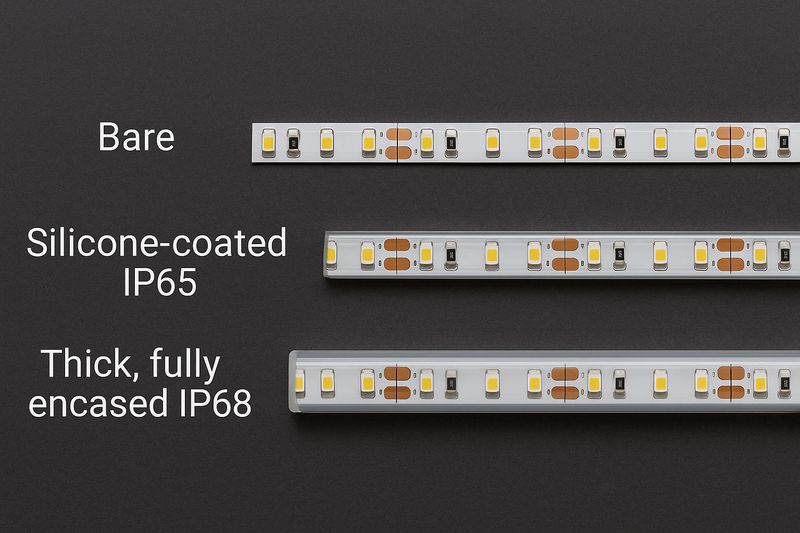
Your lighting projects look fine, but they lack that "wow" factor clients see on social media. You know LED strips are versatile, but you keep using them for the same two or three applications, leaving money and opportunity on the table.
Use LED strips for indirect cove lighting, under-cabinet task lighting, TV backlighting, floating shelves, and staircase safety. Also consider creative uses like bed frames, mirror backlighting, closets, pantries, and outdoor architectural accents to add value and a premium feel to any space.
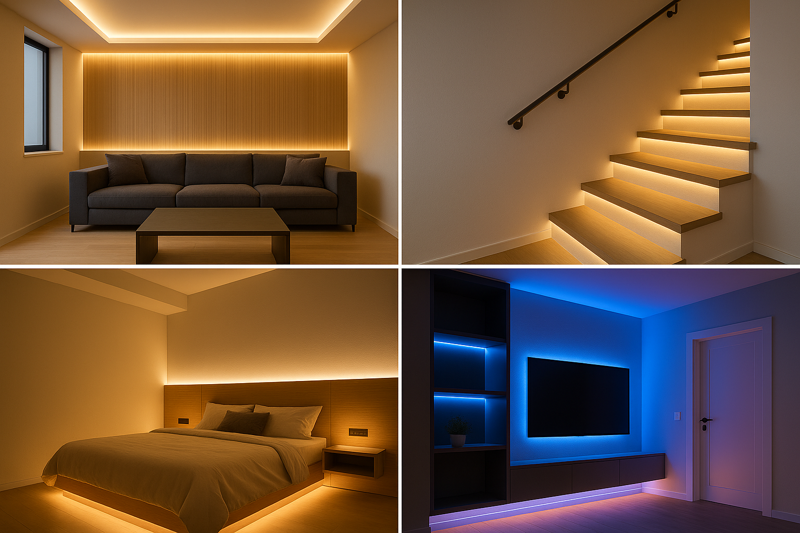
I often talk to my clients, experienced pros like Tom, who are looking for ways to stand out. The market is competitive. The secret isn’t always a lower price; it’s a better idea. I once walked a project with a contractor who was about to lose a kitchen remodel bid. The design was generic. I suggested he add toe-kick and under-cabinet lighting to the island. It was a small addition, but it made the island look like it was floating. It created a high-end, architectural feature. He re-quoted the job with that one change, showed the client a picture, and won the project. These creative applications aren’t just "ideas"; they are billable features that solve client problems and make you look like a design genius. Let’s explore 15 of them.
1. How Can You Create Dramatic Ceiling Cove Lighting?
A room feels boring and flat, lit by a single, harsh overhead fixture. You want to add a sense of height, luxury, and soft, indirect illumination that makes the whole space feel more inviting.
Install LED strips facing upwards inside a ceiling cove or tray ceiling. This technique washes the ceiling with a soft, even glow, eliminating glare and making the room feel larger and more luxurious.
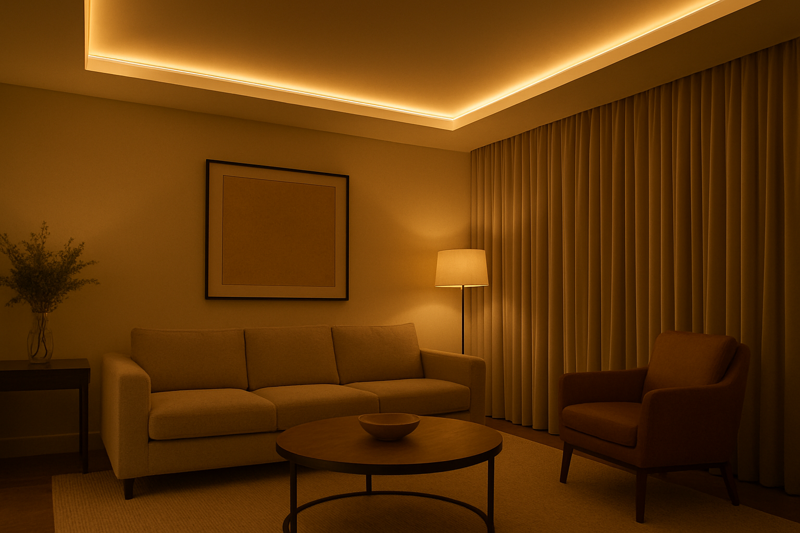
Ceiling coves are the classic architectural application for LED strips. It’s the first thing many designers think of. The trick is to get it right. An old client of mine used a low-density strip, and you could see the "scalloping" effect—uneven pools of light—on the ceiling. It looked unprofessional. I explained to him that for coves, light distribution is everything. We switched him to a high-density SMD strip, and the light became perfectly even. Now he also offers his clients our RGBWW strips for coves. They can have a perfect, high-CRI warm white for elegant entertaining, then change it to a deep blue for a movie night. It’s a simple upsell that delivers a huge impact.
Achieve the Perfect Glow
The goal of cove lighting is to hide the source and show the effect. The light should be perfectly diffused and indirect.
| Aspect | Recommendation | Why it Matters |
|---|---|---|
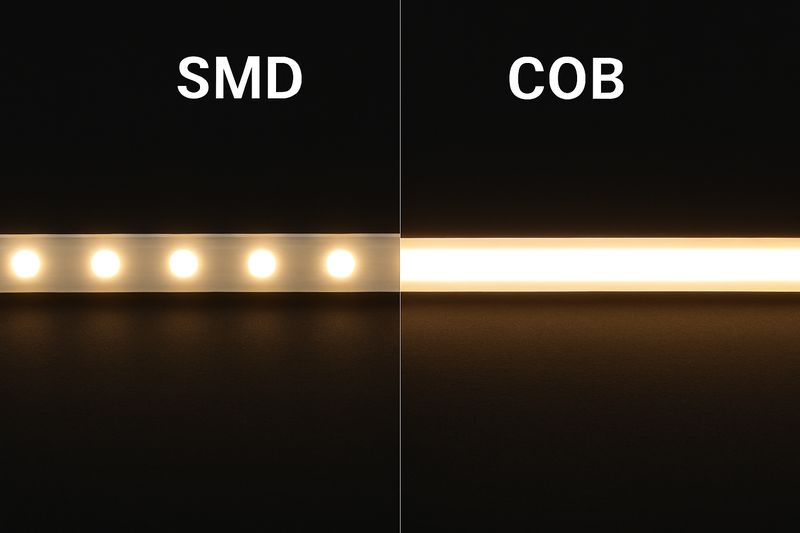
| Strip Choice | High-Density SMD (e.g., 2216) or COB1. | A higher density of LEDs (or the continuous nature of COB) is crucial to avoid hotspots and scalloping, creating a smooth, even wash of light on the ceiling. |
| Brightness | 4-6 watts/foot (12-20 watts/meter). | A medium brightness is usually sufficient. Too bright can be overwhelming. Always use a dimmer for full control and to set the perfect mood. |
| Color | RGBWW or Tunable White2. | This offers maximum versatility. Clients can have high-quality task light, cozy warm light, and vibrant colors all from the same fixture. It’s a powerful selling point. |
2. How Do You Master Under-Cabinet Task Lighting?
The countertops in a kitchen are dark and shadowed by the upper cabinets. It’s difficult to see while chopping vegetables, reading a recipe, or performing other tasks. You need bright, clear, and pleasant light.
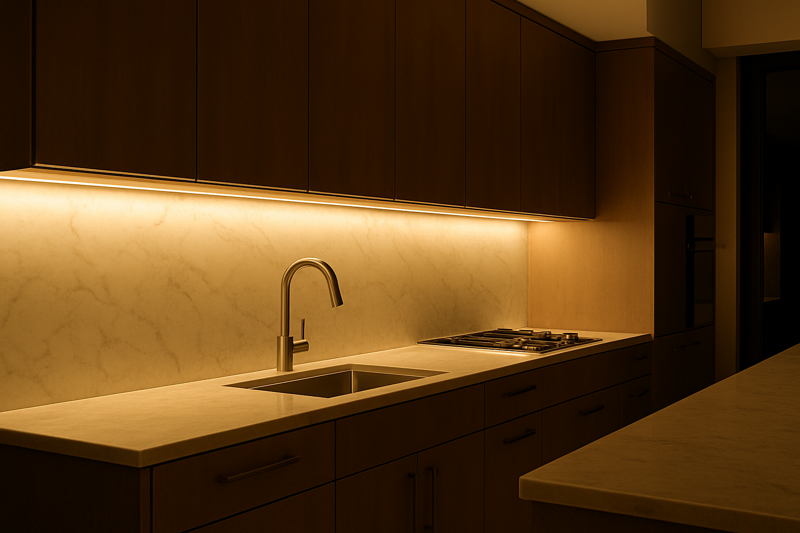
Mount LED strips on the underside of the upper cabinets, positioned toward the front. This directs clean, even light down onto the countertop, eliminating shadows and creating a functional and beautiful workspace.
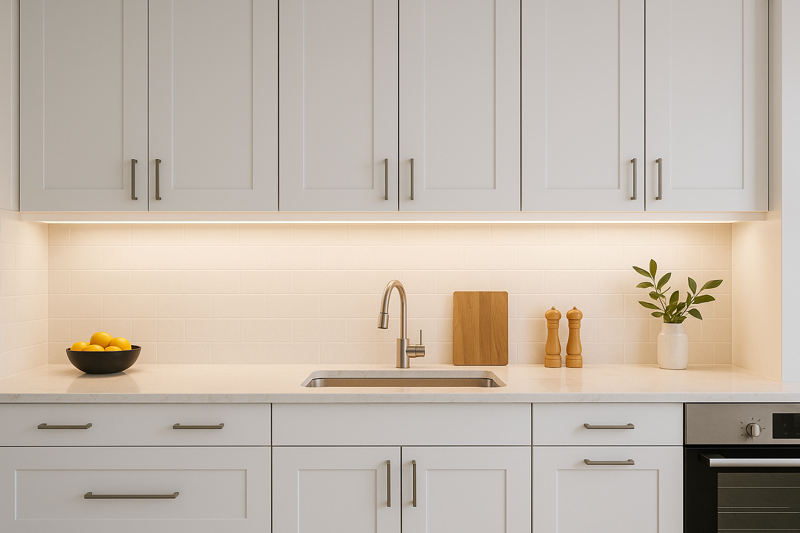
This is arguably the most valuable and requested application for LED strips in a home. I had a client, a kitchen builder, who was using cheap, encased puck lights. His customers complained about the glare and the pools of light on their new granite countertops. I showed him a COB strip inside one of our shallow, 45-degree angled channels. The light was perfectly uniform—no dots, no glare. Just a clean, functional wash of high-CRI light that made the food and countertop material look amazing. He switched immediately. He now sells it as his "premium lighting package." It solved his customers’ problems and increased his profit on every job.
From Shadowy to Stunning
The details matter for perfect under-cabinet lighting. It’s a task area, so light quality is as important as brightness.
| Aspect | Recommendation | Why it Matters |
|---|---|---|
| Strip Choice | COB (Chip on Board)3. | This is the rule. Glossy countertops will reflect the light source. COB provides a 100% dot-free reflection, which looks professional and high-end. SMD will create ugly dotted reflections. |
| CRI | 90+ or 95+. | High Color Rendering Index4 is non-negotiable in a kitchen. It makes food look fresh and appetizing and renders colors of the backsplash and countertop accurately. |
| Profile | 45-Degree Angled Aluminum Channel. | Mounting the strip in an angled channel at the front of the cabinet directs the light towards the center of the workspace and away from the user’s eyes, reducing glare. It also acts as a heat sink. |
3. How Can You Reduce Eye Strain with TV Backlighting?
Watching TV in a dark room creates high contrast between the bright screen and the dark wall behind it. This forces your eyes to constantly readjust, leading to eye strain, fatigue, and headaches.
Place an LED strip on the back of your television, facing the wall. This creates a soft, ambient glow around the screen, which reduces the perceived contrast and makes viewing more comfortable for your eyes.
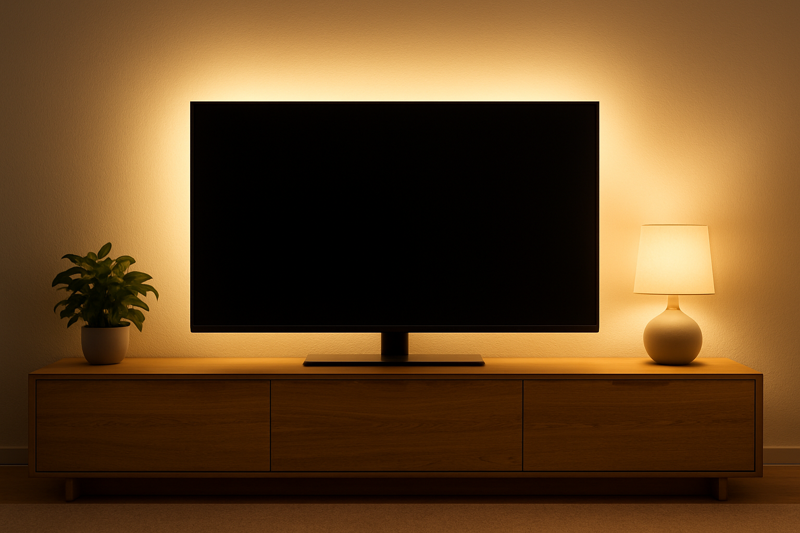
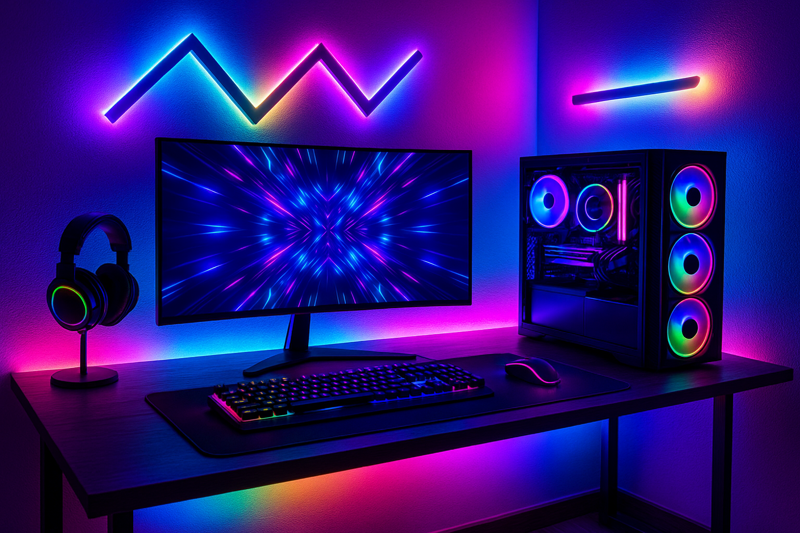
A client of mine builds custom home theaters. For years, he just focused on the screen and speakers. I sent him a sample of our 95 CRI Tunable White strip. I told him to build a simple frame behind the screen and install the strip. He was skeptical. When he turned it on and calibrated it to a neutral 6500K (the industry standard for "bias lighting"), he was blown away. He said it made the blacks on the screen look deeper and the colors more vibrant. It didn’t just reduce eye strain; it improved the perceived picture quality. Now, bias lighting is a standard feature in every home theater he builds.
More Than Just a Cool Effect
Proper TV backlighting, or "bias lighting5," is based on science. It’s not just about aesthetics.
| Aspect | Recommendation | Why it Matters |
|---|---|---|
| Strip Choice | High-CRI Tunable White6 or SMD. | For purists, a high-CRI white light set to 6500K is technically correct. For most users, any warm-to-neutral white is great. RGB is fun but can distort colors. |
| Brightness | Low. Dimmer is essential. | The backlight should be subtle, around 10% of the screen’s maximum brightness. It should not be a distracting light source itself. |
| Installation | Mount 2-3 inches from the edge of the TV. | This provides a soft, wide glow. You can buy pre-made kits or simply use a reel of strip light and a small power supply for a custom fit. |
4. How Do You Create Elegant "Floating Shelves"?
You’ve installed beautiful open shelving in a living room or kitchen, but the items on the shelves are lost in shadow. The shelving unit looks heavy and lacks a high-end, integrated feel.
Rout a channel into the back or underside of a shelf and install an LED strip. The light washes the wall behind it or the objects below it, making the shelf appear to "float" while highlighting decor.
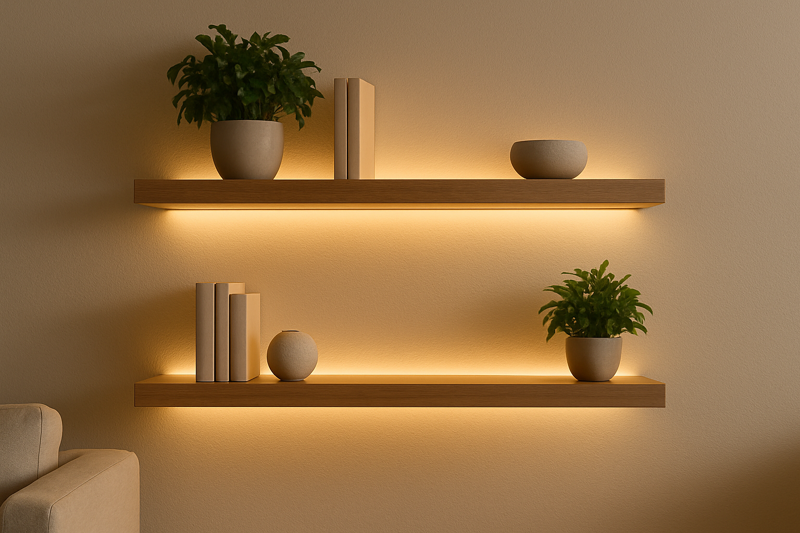
A millwork specialist I work with has made this his signature feature. He builds custom bookshelves and display units for high-end homes. For one client, he built a floor-to-ceiling library wall. We worked together to specify a thin, low-wattage SMD strip to be embedded in a channel at the front of each shelf, casting light downwards. The light grazed the book spines and objects, turning a simple storage unit into a stunning architectural feature wall. He told me that adding the lighting component doubled the perceived value of his work.
Highlighting Your Decor
This technique turns standard shelving into a dynamic display.
| Aspect | Recommendation | Why it Matters |
|---|---|---|
| Strip Choice | COB or high-density SMD (e.g., 2216). | Since the light source is close to a surface (the wall or items below), a uniform line of light is critical to avoid hot spots. |
| Channel/Profile | Recessed or surface-mount aluminum channel. | A channel is essential. It protects the strip, acts as a heat sink, and provides a clean, finished look, even if it’s hidden on the underside of the shelf. |
| Brightness | Low to Medium (2-4 watts/foot). | The goal is accent lighting, not general illumination. You want to draw attention to the display, not overwhelm it. A dimmer is highly recommended. |
5. How Do You Add Safety and Style to Staircases?
Stairs can be a hazard, especially at night. Temporary nightlights are a clumsy solution, and leaving the main overhead lights on is wasteful and can be unpleasantly bright.
Install LED strips under the tread nosing of each step or along the stringer (side wall). This clearly defines each step in the dark, adding a huge measure of safety and a dramatic, high-end architectural look.
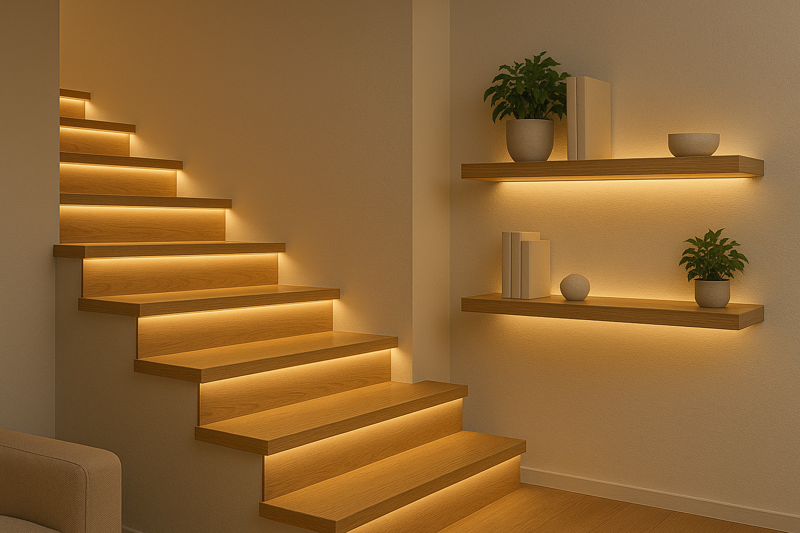
I consulted on a boutique hotel renovation, and the designer wanted a signature moment in the main lobby. We settled on lighting the grand, open-riser staircase. I recommended our ultra-slim COB strips fitted into a recessed channel under each wooden tread. When they turned it on for the first time, it was breathtaking. The light cascaded down the staircase, making each step appear to float in mid-air. It became the hotel’s most photographed feature. It’s a perfect example of how lighting can be both a safety feature and a powerful design statement.
Lighting the Way
Stair lighting needs to be robust, discreet, and effective.
| Aspect | Recommendation | Why it Matters |
|---|---|---|
| Strip Choice | COB or high-density SMD. | Since the light source is often close to the riser, a smooth line of light is essential to avoid a cheap, dotted appearance. |
| Durability | Strips inside a robust aluminum channel with a diffuser. | The channel protects the strip from being kicked or hit by vacuums. The diffuser provides both protection and a more finished look. |
| Control | Connect to a motion sensor. | This is the ultimate upgrade. The stairs light up automatically as you approach from the top or bottom and turn off after a set time. It’s safe, energy-efficient, and has a huge "wow" factor. |
6. How Can You Make a Kitchen Island Float?
A large kitchen island is a fantastic, functional centerpiece, but it can also look like a heavy, solid block in the middle of the room. You want to give it a lighter, more modern, and custom-designed feel.
Install an LED strip under the lip of the countertop or in a recessed channel at the base of the island (the toe-kick). This creates a boundary of light that makes the heavy island appear to float above the floor.
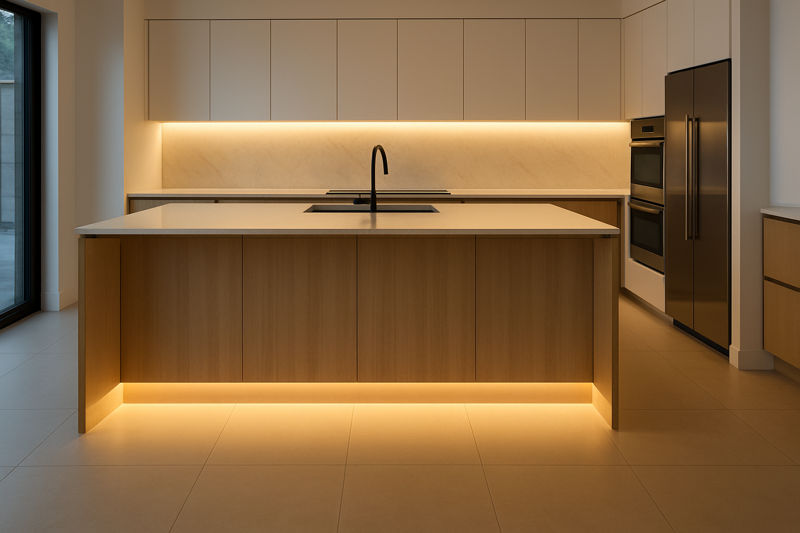
This is one of my favorite "tricks" to share with contractors like Tom. It’s a relatively simple, low-cost addition that completely transforms the look of the most important element in the kitchen. For a toe-kick, the strip is completely hidden. All you see is the glow on the floor. I recommend using an RGBW strip here. The client can set it to a clean white for everyday use, or change it to a colored light for parties and entertaining. It turns the kitchen island from just a workspace into the hub of the party.
The Floating Effect Explained
This works by creating visual separation between the dark base of the cabinet and the floor.
| Aspect | Recommendation | Why it matters |
|---|---|---|
| Strip Choice | Any standard SMD strip (IP20). | Since the strip is completely hidden from view and is not reflected, you don’t need to spend extra on COB. A standard SMD strip works perfectly and is cost-effective. |
| Placement | Recessed into the toe-kick or on the underside of the cabinet base. | Placing the strip back from the front edge of the toe-kick hides the source and creates a softer glow. A simple L-shaped channel can help direct the light down and out. |
| Control | Connect to the main kitchen light switch or a separate switch. | Tying it into the main lighting controls makes it feel integrated. Having a separate switch allows it to be used as a low-level night light. |
7. How Can You Finally See Inside Your Pantry and Cabinets?
Deep cabinets and pantries are dark voids. Finding what you’re looking for requires digging around, using a phone flashlight, or temporarily turning on all the main kitchen lights. It’s inefficient and frustrating.
Install vertical LED strips just inside the door frame of a pantry or cabinet. When you open the door, the entire space is instantly and evenly illuminated, from top to bottom.
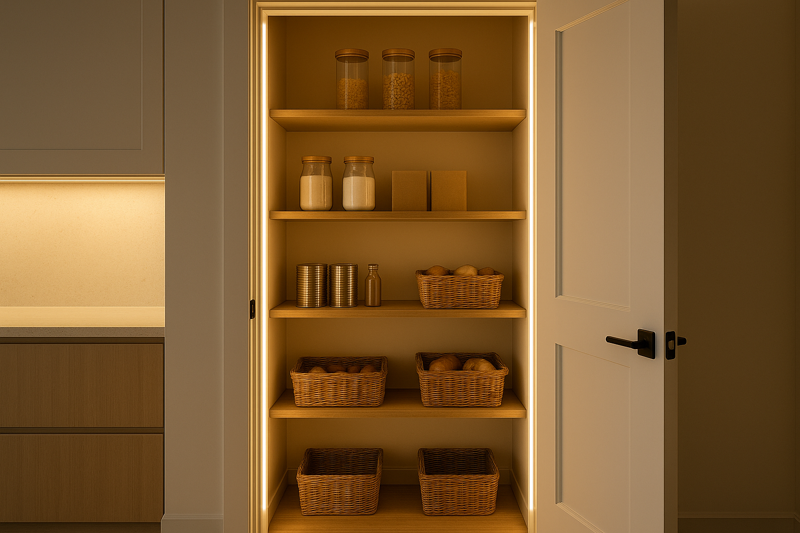
I worked with a custom cabinet maker who was building a high-end pantry for a client. He was planning to put a single dome light at the top. I suggested he try a different approach. We used our slim aluminum channels and a medium-brightness SMD strip and ran them vertically on both sides of the door frame. We connected it to a simple door-jamb switch. The effect was transformative. Opening the pantry door felt like opening a luxury refrigerator. Every single item on every shelf was perfectly visible. The client was ecstatic.
Light Where You Need It, When You Need It
This is a functional upgrade that adds a touch of luxury.
| Aspect | Recommendation | Why it Matters |
|---|---|---|
| Strip Choice | Medium-density SMD (e.g., 2835). | You don’t need COB here, as the source is indirect. A standard SMD strip provides plenty of bright, even light for this application and is very cost-effective. |
| Control | Door-jamb switch or IR sensor. | A mechanical door switch or an infrared sensor that detects when the door is open is key. The light comes on automatically and, more importantly, turns off automatically, saving energy. |
| Placement | Vertically, just inside the cabinet frame. | Vertical placement is superior to a single light at the top. It ensures that light reaches every shelf level, not just the top one. |
8. How Do You Design a "Floating" Bed Frame?
A bed frame is a large, bulky piece of furniture that can dominate a bedroom. You want to create a relaxed, dream-like atmosphere and make the bed feel like a lighter, more inviting centerpiece.
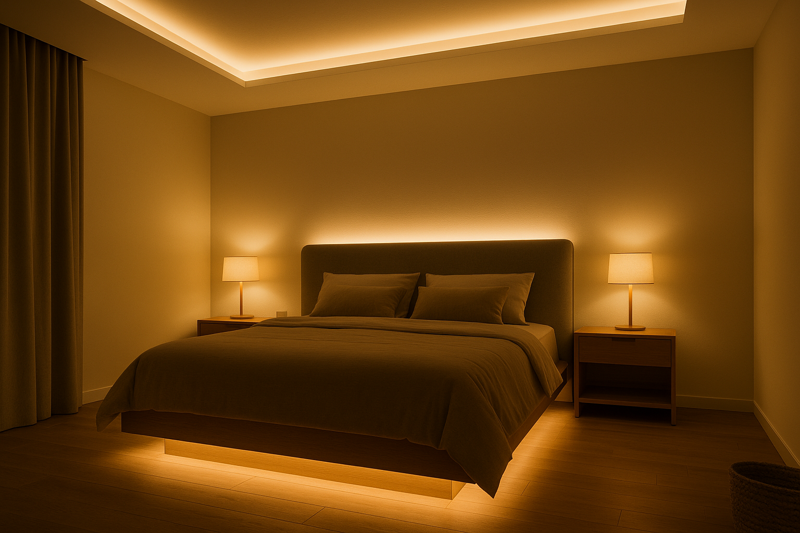
Attach LED strips to the underside of the bed frame, set back a few inches from the edge. The light spills out from under the bed, creating a soft glow on the floor and making the bed appear to float.
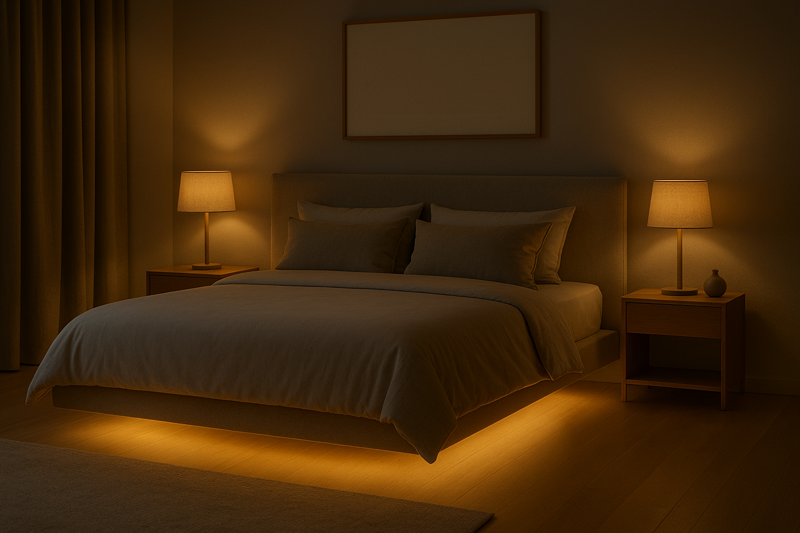
This is a very popular project for a reason—it looks incredible and is surprisingly easy to do. A designer I partner with does this in all the kids’ rooms she designs. She uses our RGB strips. The kids love being able to change the color of their "floating" bed with a remote control. For master bedrooms, she uses a warm white dimmable strip connected to a motion sensor. If someone gets out of bed in the middle of the night, a soft, low-level light automatically illuminates the floor, guiding their way without disturbing their partner. It’s a brilliant combination of style and function.
Dreamy and Practical
This effect adds a serious "wow" factor to any bedroom.
| Aspect | Recommendation | Why it matters |
|---|---|---|
| Strip Choice | SMD RGB or Warm White. | The strip will not be visible, so a standard, cost-effective SMD strip is perfect. RGB is great for kids and mood lighting; dimmable warm white is sophisticated and practical for master bedrooms. |
| Placement | Mount on the underside of the frame rails, 4-6 inches in from the edge. | Setting the strip back from the edge hides the light source completely and creates a softer, more diffuse glow on the floor. |
| Control | Motion sensor or remote control. | A motion sensor provides incredible functionality as an automatic night light. A remote control provides the fun and flexibility of changing colors or dimming levels from bed. |
9. How Do You Create a Stunning Headboard Backlight?
A headboard can be a beautiful focal point, but against a plain wall, it can lack impact. You want to frame the headboard, add depth to the wall, and create a soft, ambient light perfect for reading or relaxing.
Mount LED strips to the back of the headboard, facing up and/or to the sides. This creates a halo of light on the wall behind the bed, framing the headboard and providing beautiful, indirect ambient light.
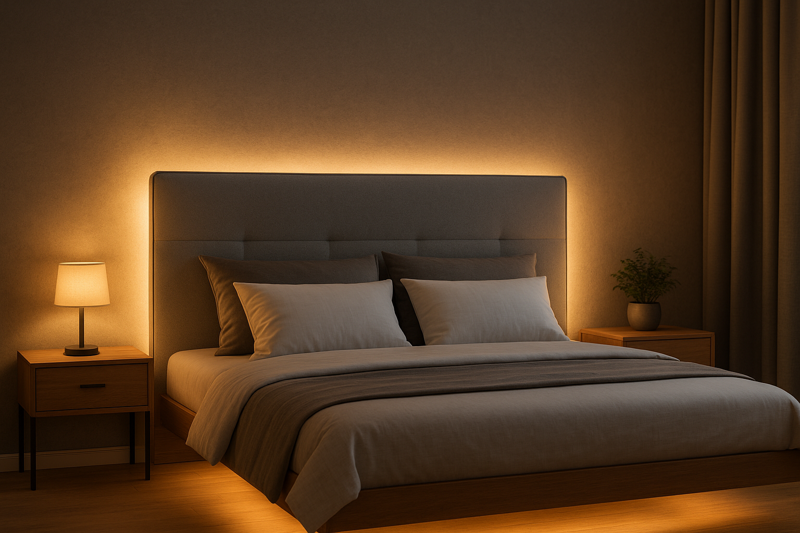
An interior designer client of mine does this to add a touch of hotel luxury to his residential projects. He had a client with a beautiful, live-edge wood slab headboard. It was a piece of art. He attached our high-CRI, warm white COB strip to the back. The light washed the wall behind it, highlighting the natural, raw edge of the wood and creating a warm, enveloping glow in the room. It was the perfect reading light—no glare, just soft, indirect ambience. It took a beautiful headboard and made it the undisputed centerpiece of the room.
Your Personal Halo
This technique adds depth and creates a perfect, low-glare reading light.
| Aspect | Recommendation | Why it matters |
|---|---|---|
| Strip Choice | COB or high-density SMD. | Since the light is washing a wall at a very close distance, a smooth, dotless light source is essential for a high-end look. |
| Brightness | Medium, and always dimmable. | It needs to be bright enough for reading but also able to dim down to a subtle accent. A wall-mounted dimmer or a remote is a must-have. |
| Color Temperature | Warm White (2700K-3000K). | For a bedroom, a warm, cozy color temperature is best for promoting relaxation and preparing for sleep. Cool white light can be disruptive to circadian rhythms. |
10. How Can You Finally Organize Your Closet?
Closets are often dark and poorly lit by a single, bare bulb overhead that casts shadows everywhere. Finding clothes, matching colors, and getting organized is a daily frustration.
Install LED strips along the top-front interior of the closet or vertically alongside the door. This floods the closet with bright, clear light, making it easy to see all your clothes and colors accurately.
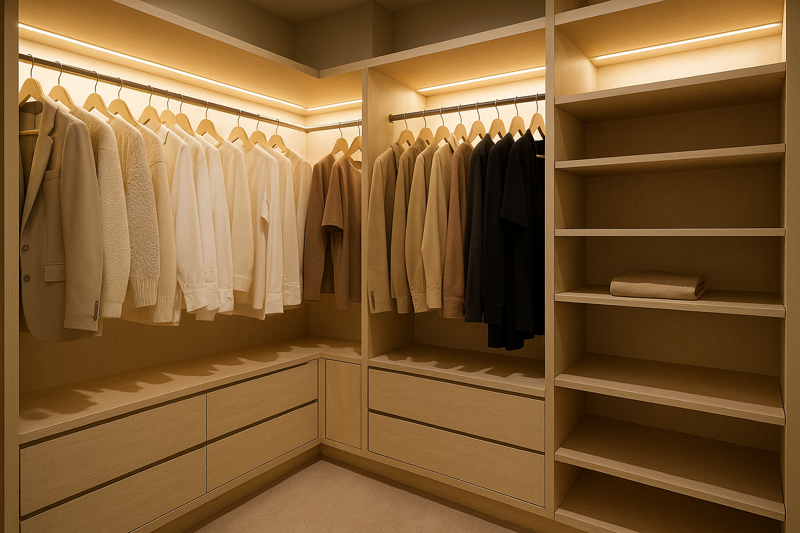
I work with a professional organizer who calls high-CRI closet lighting a "life-changing" upgrade for her clients. She had a customer with a closet full of dark suits—blacks, navys, charcoals. With his old yellow-ish bulb, they all looked the same. We installed our 95 CRI SMD strips in a channel above the clothing rod. The difference was immediate. The light was so clean and accurate that he could easily distinguish between a navy and a black suit. It sounds simple, but for someone who has to dress professionally every day, it solved a major daily frustration.
See Your Colors Clearly
Good closet lighting is about function and color accuracy.
| Aspect | Recommendation | Why it matters |
|---|---|---|
| Strip Choice | High-CRI SMD (90+). | This is the most important factor. High Color Rendering Index ensures that the colors of your clothes look the same in the closet as they do out in the daylight. No more mismatched socks or mistaking navy for black. |
| Placement | Above and in front of the clothing rod. | Placing the light in front of the clothes, angled slightly back, illuminates the fronts of the garments, not just the tops of the hangers. |
| Control | Door-jamb switch or motion sensor. | Automatic on/off is a must for convenience and energy savings. Open the door, and the entire wardrobe is presented to you in perfect light. |
11. How Do You Get Flawless Bathroom Mirror Lighting?
Typical vanity lighting from above casts harsh shadows on your face, making tasks like shaving or applying makeup difficult. You need even, shadowless light that illuminates your face perfectly.
Mount LED strips vertically on either side of the bathroom mirror, or create a "halo" effect by mounting them on the back of the mirror. This provides even, cross-illumination that eliminates shadows.
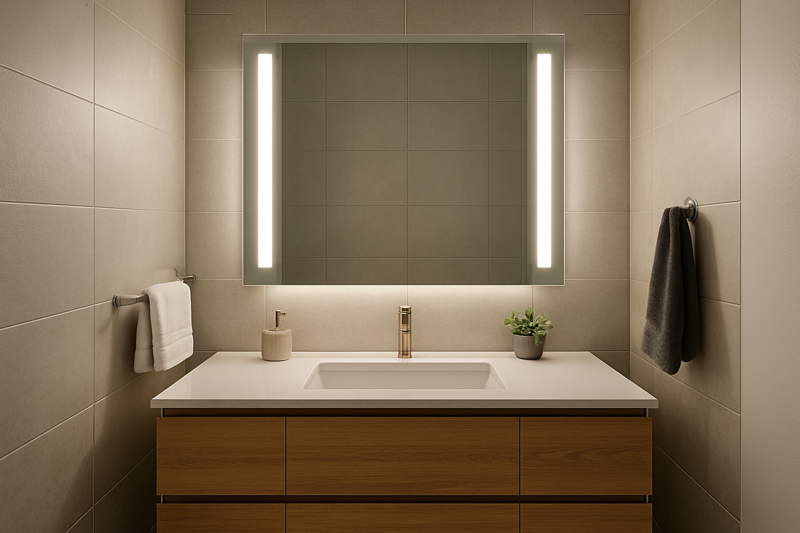
A hotel developer I supply, a very sharp guy like Tom, now uses backlit mirrors as a standard feature to make his bathrooms feel more luxurious. He used to buy pre-made, expensive units. I showed him how he could build them himself for a fraction of the cost. We use our IP65 water-resistant COB strips and attach them to the back of the mirror, which is mounted on a small frame to hold it off the wall. The light creates a beautiful, soft glow. It’s a decorative feature, a vanity light, and a night light all in one. It saves him money and gives his bathrooms a five-star feel.
Shadow-Free Illumination
This is how professional makeup studios light their mirrors.
| Aspect | Recommendation | Why it matters |
|---|---|---|
| Waterproofing | IP65 Water-Resistant. | A bathroom is a damp environment with steam and splashes. A silicone-coated IP65 strip is essential to protect against moisture and ensure a long, safe lifespan. |
| Strip Choice | High-CRI COB. | High CRI is crucial for accurate skin tones and makeup colors. COB is preferred for a smooth, uniform glow, especially if a frosted acrylic diffuser is used in front. |
| Placement | Vertical on the sides, at face height. | This is the key. Light coming from the sides cancels out shadows under the eyes, nose, and chin. Backlighting is beautiful for ambience but less effective for tasks. |
12. How Can You Highlight Your Home’s Architecture at Night?
During the day, your home has texture and dimension from its trim, eaves, and rooflines. At night, it becomes a dark, flat shape. You want to accentuate its architectural features and add curb appeal after sundown.
Install weather-proof LED strips under the soffits or eaves, washing the walls with a gentle "grazing" light. This technique highlights texture, creates depth, and gives the home a sophisticated presence.
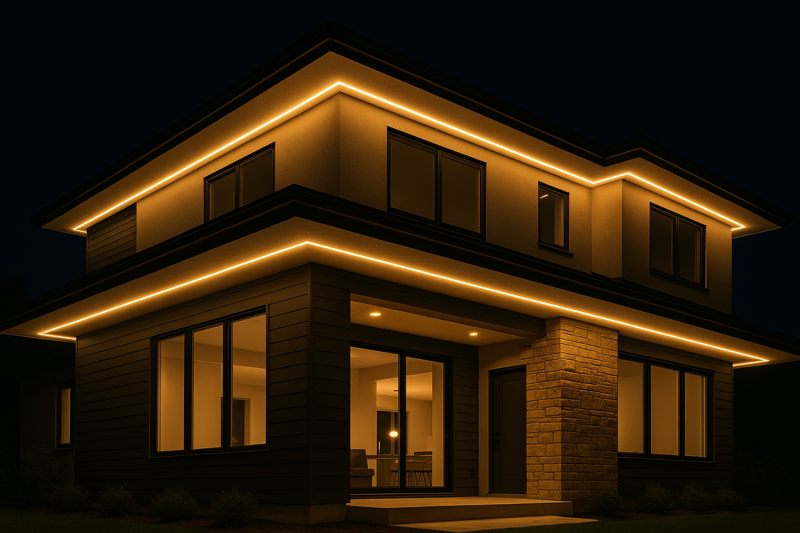
A high-end home builder I work with was looking for a way to distinguish his homes from the competition. Everyone was using the same few landscape spotlights. I suggested he try architectural downlighting using our IP67 waterproof channels and strips. He installed them under the soffits of his model home. The result was stunning. The light grazing down the stone and stucco walls brought out all the texture. It looked less like "landscape lighting" and more like an integrated part of the architecture. He said more customers commented on that one feature than anything else.
Painting with Light
This technique turns your home’s facade into a canvas.
| Aspect | Recommendation | Why it matters |
|---|---|---|
| Waterproofing | IP67/IP68 Waterproof. | This is non-negotiable. The strips will be exposed to rain, snow, and humidity. A fully jacketed or encased IP67/68 strip is required for safety and longevity. Use strips inside a waterproof aluminum channel for best results. |
| Strip Choice | Medium-brightness SMD. | COB is generally not available in high IP ratings. A robust SMD strip is the professional standard for outdoor applications. Brightness should be enough to wash the wall but not create light pollution. |
| Color Temperature | Warm White (2700K-3000K). | Warm white light is almost always the best choice for residential architecture. It feels inviting and complements most building materials like stone, brick, and wood. |
13. How Do You Light Up Art and Photos Without Damage?
You have a beautiful piece of art or a gallery wall of family photos, but it’s lit by a harsh overhead light that creates glare, or it’s not lit at all. Traditional picture lights are expensive and require complex wiring.
Create a "light box" frame behind the art, or install a discreet LED strip on the wall or ceiling above it, angled down. This provides a soft, even wash of light that makes the art pop without hot spots or damaging UV.
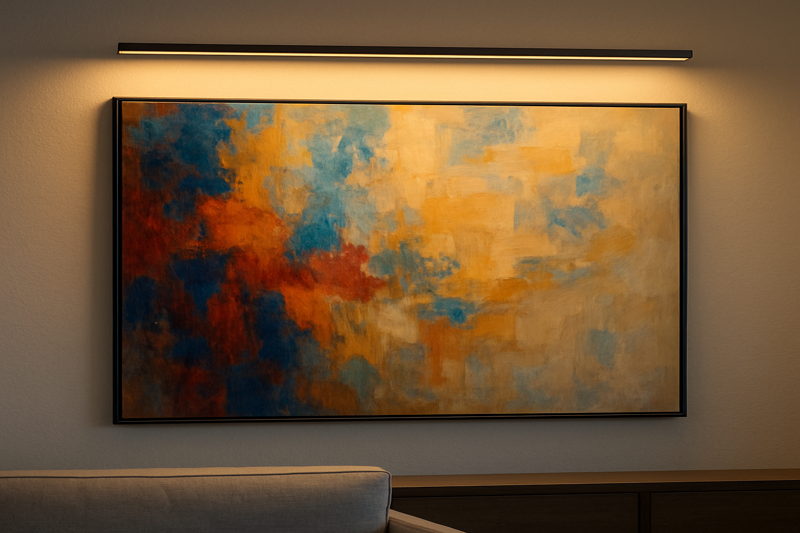
I worked with an art gallery owner to refit his space. He needed perfect light that wouldn’t damage the paintings. We used our highest-CRI 98+ SMD 2216 strips. The most important thing for him was the lack of UV radiation. I explained that unlike old halogen lights, LEDs produce virtually no UV, making them perfectly safe for illuminating priceless art. We built custom linear fixtures for each piece. He was amazed at how the true colors of the paintings came to life under the high-CRI light.
Museum-Quality Display
Lighting art is all about the quality of light, not the quantity.
| Aspect | Recommendation | Why it matters |
|---|---|---|
| Strip Choice | Ultra High-CRI (95+) SMD. | This is the most crucial factor. You need the highest color rendering possible to show the artist’s intended colors accurately. Our SMD 2216 strips are perfect for this. |
| UV Output | LED (Virtually Zero). | This is a major selling point. You can assure clients that LED strips will not cause fading or damage to their valuable art and photos over time. |
| Angle and Position | 30-degree angle from above. | The "museum standard" is to light a piece of art from a 30-degree angle to eliminate glare on the canvas or glass for the viewer. |
14. How Can You Make Your Deck or Patio Safer at Night?
A deck or patio is a wonderful extension of your living space, but it becomes a dark, unusable area at night. Steps are a tripping hazard, and the perimeter is undefined, making it feel unsafe.
Install waterproof LED strips under railings, along the edge of the deck, or recessed into the steps. This provides essential safety lighting and creates a beautiful, resort-like ambiance for outdoor entertaining.
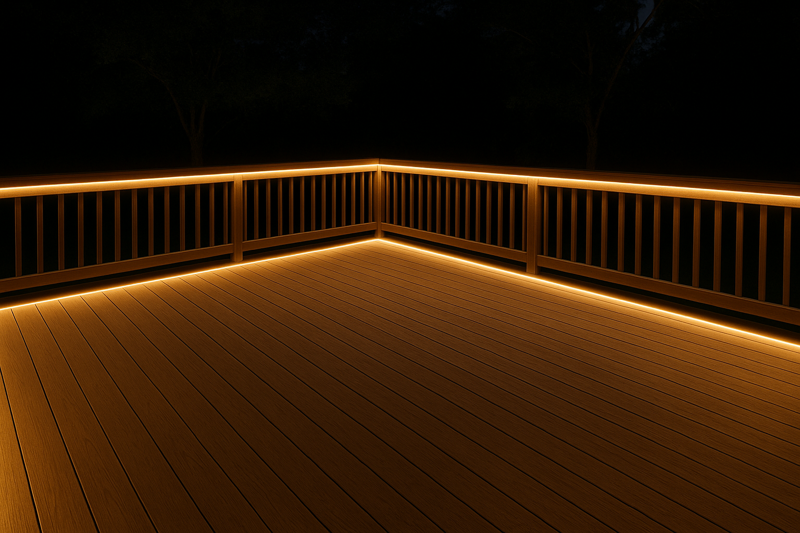
A landscape contractor who buys from me has made this his go-to upsell on every deck project. He explains to his clients that it’s not just about looks; it’s about extending the use of their investment into the evening. We supply him with our IP67-rated SMD strips and channels. He installs them under the top rail of the deck, casting light down onto the deck floor. It defines the space, highlights the railings, and lights the way without any harsh glare. His clients love it because they can enjoy their deck for hours after the sun goes down.
Outdoor Resort Living
Outdoor lighting must be durable, safe, and beautiful.
| Aspect | Recommendation | Why it matters |
|---|---|---|
| Waterproofing | IP67/IP68 Waterproof. | Essential for any outdoor installation. These strips are designed to withstand rain, sprinklers, and snow. Ensure all connections are also fully waterproofed. |
| Durability | Use inside a dedicated outdoor aluminum channel. | The channel provides physical protection from bumps, scrapes, and tampering, while also helping with heat dissipation and creating a more finished, professional look. |
| Voltage | 12V or 24V DC. | Low voltage is much safer for outdoor environments where moisture is present. Always use an appropriate outdoor-rated power supply. |
15. How Do You Create Magical Pathway and Garden Lighting?
Your garden and walkways disappear at night. Using traditional, bulky stake lights can create a "runway" effect of bright spots and dark patches, which often looks cluttered and unnatural.
Embed IP68 waterproof LED strips along the edges of pathways, at the base of retaining walls, or tucked under the caps of garden beds. This creates a continuous, indirect glow that guides the way and highlights the landscape’s contours.
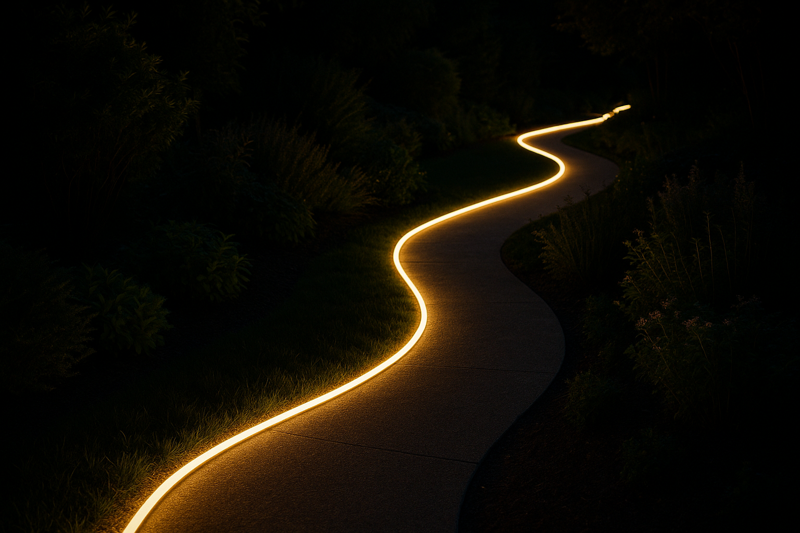
A landscape architect I work with was designing a meditative Zen garden for a client. He wanted the light to feel like it was coming from the earth itself. The chunky stake lights he normally used would ruin the minimalist aesthetic. I suggested our most robust, fully jacketed IP68 SMD strip. It’s designed to be directly buried or exposed to constant moisture. He installed it along the base of a low stone wall that bordered the gravel path. The result was pure magic. A soft, unbroken line of light that seemed to emanate from the stone itself, guiding the way without a single visible fixture.
A Landscape Transformed
This technique integrates light into the landscape itself.
| Aspect | Recommendation | Why it matters |
|---|---|---|
| Waterproofing | IP68 (Submersible/Direct Burial). | This is the highest level of protection. You need a strip that can handle being wet for long periods, being in contact with soil, and surviving the elements. IP68 is the only choice for this application. |
| Strip Choice | Robust, fully-jacketed SMD strip. | These strips are built for toughness. The thick silicone or PVC jacket provides maximum physical and water protection. |
| Installation | Plan your power feeds carefully. | The biggest challenge is running low-voltage wire to the strip locations. All connections must be made with waterproof wire nuts or specialized kits and be 100% sealed against moisture. |
Conclusion
LED strips are more than just lights; they are a versatile design material. Use them creatively to solve problems, add value, and transform ordinary spaces into stunning, functional, and modern environments for your clients.
-
Explore this link to understand how High-Density SMD and COB lighting can enhance your space with smooth, even illumination. ↩
-
Discover the versatility of RGBWW and Tunable White lighting, perfect for creating the ideal ambiance in any setting. ↩
-
Explore the advantages of COB lighting to achieve a professional and high-end look in your kitchen. ↩
-
Learn how a High Color Rendering Index enhances food presentation and color accuracy in your kitchen. ↩
-
Learn about bias lighting and its scientific basis to enhance your TV viewing experience effectively. ↩
-
Explore this link to understand the benefits of High-CRI Tunable White lighting for optimal viewing experiences. ↩