Feeling overwhelmed by choices for outdoor LED strip lights? Picking the wrong ones means wasted money, safety risks, and a project that fails to impress. This guide simplifies your decision.
The best LED strip lights for outdoor use feature high IP ratings (IP65-IP68) for weatherproofing, durable UV-resistant materials, appropriate brightness, and suitable color temperatures. Quality components ensure longevity and performance.
Navigating the world of outdoor LED strip lights can be tricky. As the owner of Rhlite, a factory specializing in LED strip solutions, I’ve helped countless clients, from lighting designers to wholesalers like Tom, find the perfect fit for their projects. This guide will break down everything you need to know, making your next outdoor lighting purchase an informed one.
What are the Must-Have Features for Any Outdoor LED Strip Light?
Are you unsure what makes an LED strip truly "outdoor-ready"? Choosing based on price alone or misleading claims can lead to lights that dim, flicker, or fail entirely after just one season. Let’s clarify the essential features you absolutely need.
Key features for any outdoor LED strip include a robust IP rating (IP65 minimum, IP67/IP68 preferred for exposed areas), UV-resistant housing material (like high-grade silicone or PU), good heat dissipation, and reliable, certified components.
When I’m consulting with a serious buyer like Tom, who is looking for reliable lighting solutions for the North American or Japanese markets, we don’t just skim the surface. We dive deep into the specifications that guarantee performance and longevity. For outdoor applications, cutting corners on core features is a recipe for disaster. This is where understanding the technical details becomes critical for making a sound investment.
IP Rating: Your First Line of Defense
The Ingress Protection (IP) rating is non-negotiable for outdoor lighting. It tells you how well the strip is sealed against solids (like dust – the first digit) and liquids (like rain or sprinklers – the second digit).
- First Digit (Solids): You’ll almost always want a ‘6’ here, meaning "Dust Tight." No dust getting in means better performance and longer life.
- Second Digit (Liquids): This is where it gets more specific for outdoor use:
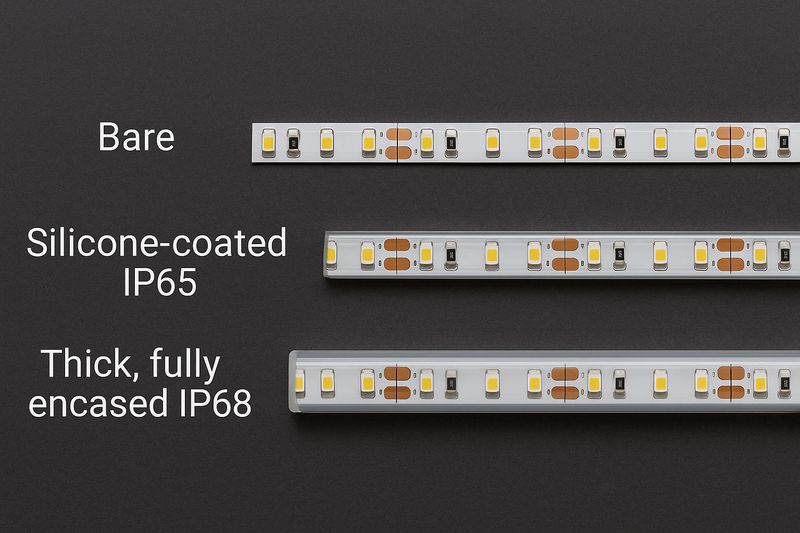
- IPX5 (e.g., IP65): Protected against low-pressure water jets from any direction. Suitable for sheltered outdoor areas like under eaves or covered patios.
- IPX7 (e.g., IP67): Protected against temporary immersion in water (up to 1 meter for 30 minutes). This is a good all-around choice for most exposed outdoor applications like garden lighting, deck perimeters, and pathways. At Rhlite, we often recommend IP67 as a solid baseline for our wholesale clients because it covers many common scenarios and provides good peace of mind.
- IPX8 (e.g., IP68): Protected against continuous immersion under conditions specified by the manufacturer. Ideal for areas near pools, ponds, or in very wet climates where strips might be submerged for extended periods.
I always stress the importance of genuine certification for these ratings. As Tom knows, dealing with suppliers who falsify certificates is a major pain point. We ensure our products are properly tested and certified.
Material Durability and UV Resistance
The material encasing the LEDs1 is vital.
- Silicone: High-grade, UV-stabilized silicone is an excellent choice. It’s flexible, offers great waterproofing, and resists yellowing or cracking from sun exposure. Cheap silicone will degrade quickly.
- Polyurethane (PU): Often considered a premium option, PU offers exceptional UV resistance2 and clarity. It’s very durable.
- Avoid: Uncoated strips or those with simple epoxy resin coatings are generally not suitable for long-term outdoor use as they offer minimal protection.
Construction and Heat Dissipation
The internal build quality matters too.
- PCB Quality: A thicker copper Printed Circuit Board (PCB) helps with heat dissipation. LEDs generate heat, and if not managed, this heat shortens their lifespan.
- LED Chip Quality: Reputable LED chip manufacturers (e.g., Epistar, San’an, or higher-end brands for specific needs) provide better efficiency, color consistency, and longevity.
As a factory, we have direct control over these components. This allows us to offer customizable solutions with top-quality parts, which is a key advantage for our B2B clients who require reliability.
| Feature | Why It’s Essential Outdoors | What to Look For | Rhlite’s Standard |
|---|---|---|---|
| IP Rating | Protection against dust and water ingress. | IP65 (sheltered), IP67 (exposed), IP68 (submersible). | IP67/IP68 for most outdoor products. |
| Housing Material | Resistance to moisture, UV rays, and temperature changes. | High-grade Silicone, Polyurethane (PU). | UV-stabilized Silicone, PU options. |
| UV Resistance | Prevents yellowing, brittleness, and cracking of the casing. | Specifically stated UV-resistant materials. | Yes, for all outdoor strip casings. |
| LED Chip Quality | Affects brightness, efficiency, color consistency, lifespan. | Reputable brands, good lumen maintenance (L70 rating). | Quality chips, specified L70. |
| PCB Construction | Heat dissipation, durability. | Thicker copper (e.g., 2oz or 3oz). | Min. 2oz copper, customizable. |
| Certifications | Safety, quality assurance, market compliance. | CE, RoHS, UL (for North America), etc. | Relevant certifications provided. |
Getting these fundamental features right is the cornerstone of any successful outdoor LED strip light installation. It’s the difference between a light that lasts for years and one that fails prematurely.
How Do You Choose the Right Brightness and Color for Outdoor LED Strips?
Are your outdoor spaces too dark, too glaring, or is the color just "off"? Selecting the wrong brightness (lumens) or color temperature (Kelvin) can ruin the ambiance and functionality of your outdoor lighting design. Let’s illuminate the path to perfect outdoor lighting.
Choose brightness based on the task: lower lumens for ambient/accent lighting, higher for security/task areas. For color, warm white (2700K-3000K) creates a cozy feel; cooler whites (4000K+) are for functional or modern looks.
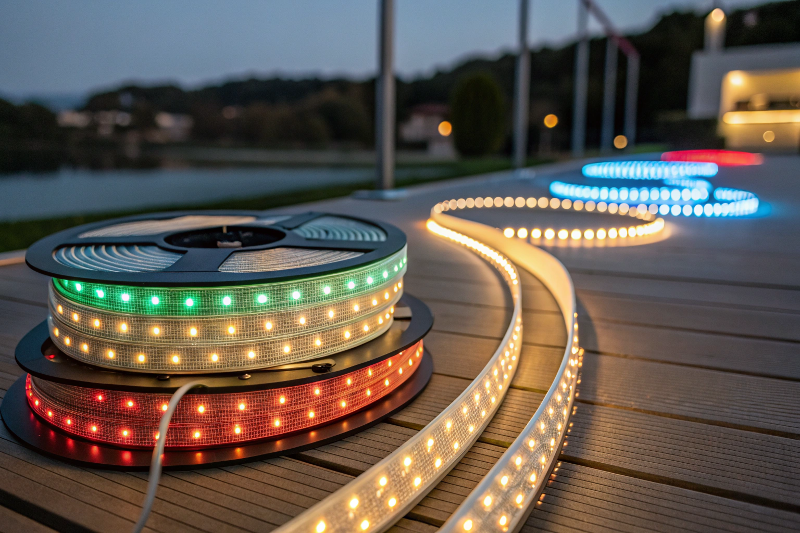
Once you’ve nailed down the durability features, the next big considerations are brightness and color. These are what truly bring your outdoor spaces to life and define their atmosphere. For someone like Tom, who might be sourcing for diverse projects from high-end residential to commercial applications, understanding these nuances is key to satisfying his own clients.
Understanding Brightness (Lumens)
Brightness for LED strips is measured in lumens per meter3 (lm/m) or lumens per foot (lm/ft). The amount of brightness you need depends entirely on the application:
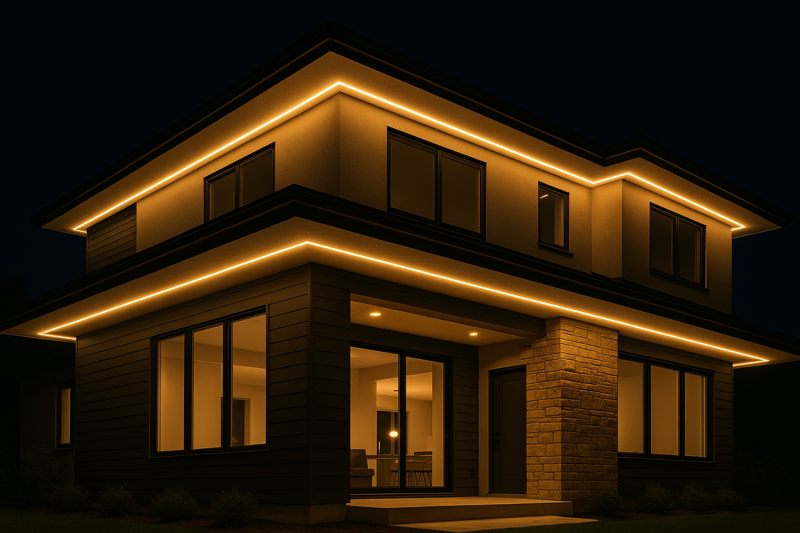
- Accent Lighting (e.g., highlighting plants, architectural details, under railings): Lower brightness is often better here to create subtle effects. Typically, 200-500 lm/m is sufficient. Too much brightness can be overpowering.
- Ambient/General Lighting (e.g., patio illumination, walkways): Moderate brightness is needed to provide enough light to see comfortably and move around safely. Around 400-800 lm/m might be appropriate.
- Task or Security Lighting (e.g., illuminating large areas, building facades, signage): Higher brightness is required for visibility and impact. This could range from 800 lm/m to 2000 lm/m or even more, depending on the scale and desired effect.
As a factory, Rhlite can produce strips with a wide range of lumen outputs. We can customize this based on project requirements, which is a benefit for clients needing specific light levels.
Choosing Color Temperature (Kelvin)
Color temperature, measured in Kelvin (K), describes the appearance of the light, from warm to cool.
- Warm White (2200K – 3000K): This range produces a cozy, inviting glow similar to traditional incandescent bulbs or candlelight. It’s excellent for residential patios, gardens, restaurant outdoor seating, and creating a relaxing atmosphere. My personal preference for most outdoor living spaces is around 2700K.
- Neutral White (3500K – 4500K): This provides a cleaner, more balanced light. It can be good for general outdoor lighting where good visibility is needed without being too stark, or for contemporary architectural styles.
- Cool White (5000K – 6500K): This light is bright and crisp, often appearing bluish. It’s generally used for commercial, industrial, or security lighting where high visibility is paramount. It can feel quite clinical in residential settings.
- RGB/RGBW4/Tunable White: For dynamic lighting, consider:
- RGB: Allows for a full spectrum of colors, great for themed environments or mood lighting.
- RGBW: Adds a dedicated white chip (often warm white or neutral white) to RGB, providing better quality white light than mixing R, G, and B.
- Tunable White: Allows you to adjust the white color temperature5 from warm to cool. This is fantastic for versatile spaces.
Color Rendering Index (CRI)
CRI measures how accurately a light source reveals the true colors of objects. A CRI of 80+ is generally good for outdoor use. However, for applications where color accuracy is very important (e.g., lighting up artwork, high-end landscaping, retail displays), aim for CRI 90+ or even CRI 95+. We offer high CRI options because we know that for lighting designers and architects, true color representation is often critical.
| Lighting Effect Desired | Typical Lumen Range (per meter) | Recommended CCT Range | CRI Consideration |
|---|---|---|---|
| Subtle Garden Accents | 200-400 lm/m | 2700K-3000K | 80+ |
| Pathway Illumination | 300-600 lm/m | 2700K-4000K | 80+ |
| Patio/Deck Ambient | 400-800 lm/m | 2700K-3500K | 80+ (90+ for luxury) |
| Under Cabinet/Soffit | 300-700 lm/m | 2700K-4000K | 80+ |
| Commercial Facade | 800-2000+ lm/m | 3000K-5000K | 80+ (90+ if needed) |
| Signage Backlighting | 500-1500 lm/m | 3000K-6500K | 80+ |
Considering these aspects carefully will ensure the lighting not only functions well but also creates the desired visual impact and atmosphere for any outdoor project.
What are the Key Installation Considerations for Outdoor LED Strip Lights?
Have you bought the best outdoor LED strips, only to have them fail due to poor installation? Water ingress at connections, overheating, or physical damage can ruin your investment, regardless of strip quality. Learn the vital installation steps to ensure longevity.
Proper installation involves using mounting channels, ensuring all connections are IP-rated and meticulously sealed, creating drip loops for cables, and housing drivers in weatherproof enclosures. Correct handling prevents damage.
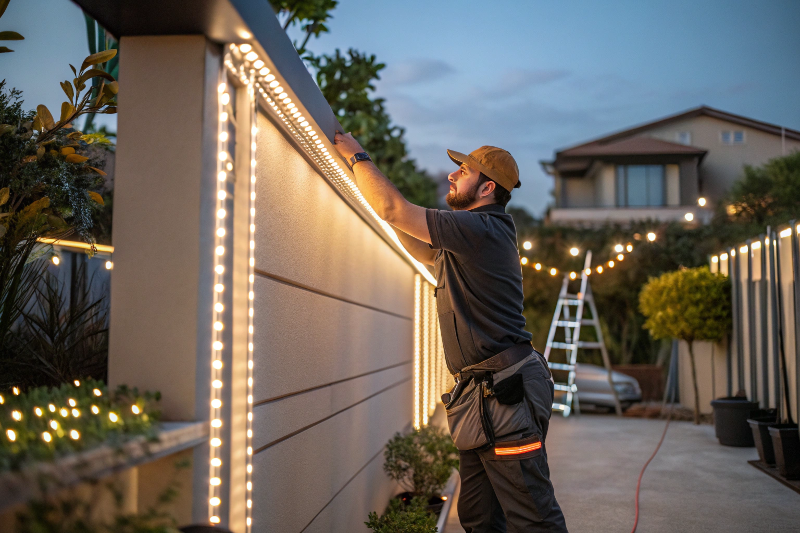
Even the highest quality, most waterproof LED strip light can fail if it’s not installed correctly. For B2B clients like Tom, whose customers (contractors, installers) will be handling the final setup, providing clear guidance or ensuring the products are easy to install correctly is crucial. This helps avoid common pain points like inefficient communication or blame for product failure when installation is the issue.
Mounting for Protection and Heat Dissipation
- Aluminum Channels/Profiles6: I almost always recommend using aluminum channels for outdoor LED strip installations.
- Protection: They shield the strip from physical damage, direct weathering, and being stepped on.
- Heat Sink: Aluminum is an excellent heat conductor, drawing heat away from the LEDs, which is vital for their lifespan and performance, especially for higher-power strips.
- Diffusion: Many channels come with diffusers (opal, frosted) which help create a more even, dot-less light output and reduce glare.
- Professional Look: They provide a much cleaner, more integrated finish.
- Secure Fastening: Ensure strips are securely fastened using the channel’s mounting clips, high-quality adhesive backing (though often insufficient alone outdoors), or silicone adhesive. Movement can stress connections.
Waterproofing Connections – The Achilles’ Heel
This is where many outdoor installations go wrong. Every cut, join, or connection to a power supply is a potential entry point for moisture.
- Factory-Sealed Custom Lengths: If possible, ordering strips cut to the exact required lengths with factory-sealed ends from a supplier like Rhlite is the most reliable option. This minimizes field connections.
- IP-Rated Connectors7: If field connections are necessary, use specifically designed IP67 or IP68 waterproof connectors. These typically have O-rings or gaskets and screw-tight mechanisms.
- Soldering and Adhesive Heat Shrink: For a very robust and permanent connection, soldering wires and then sealing the joint with marine-grade adhesive-lined heat shrink tubing is an excellent method. The adhesive melts and creates a watertight barrier.
- Silicone Sealant: Use high-quality, neutral-cure outdoor silicone sealant to further protect end caps and connector junctions.
Power Supply and Wiring
- Outdoor-Rated Power Supplies8 (Drivers): The LED driver must be suitable for outdoor use (IP65 or higher) or housed within a dedicated weatherproof enclosure. Never leave an indoor-rated driver exposed to the elements. We at Rhlite also manufacture and supply IP-rated LED power supplies.
- Correct Voltage and Wattage: Ensure the power supply matches the voltage of the LED strip (e.g., 12V or 24V DC) and has sufficient wattage capacity (typically allow 20% overhead). Overloading a driver will cause it to fail.
- Drip Loops: When wiring, always create drip loops before a connection point. This means the wire dips down and then comes up to the connector, so water running along the wire drips off at the lowest point rather than into the connection.
- Cable Type: Use outdoor-rated, UV-resistant cable for any exposed wiring runs.
Avoiding Common Mistakes
- Exceeding Bend Radius: Don’t bend LED strips too sharply, especially near soldered points, as this can damage the PCB or connections. Check the manufacturer’s specified minimum bend radius.
- Covering Strips Incorrectly: Don’t embed strips directly in materials that don’t allow for heat dissipation or could chemically react with the strip housing unless the strip is specifically designed for such an application.
- Poor Surface Preparation: If using adhesive backing, ensure the surface is clean, dry, and smooth. However, for outdoor use, adhesive alone is rarely a permanent solution; mechanical fastening is recommended.
A quick checklist for robust installation:
| Installation Step | Importance | Key Action |
|---|---|---|
| Mounting Choice | Protection, Heat Dissipation, Aesthetics | Use Aluminum Channels with Diffusers |
| Securing the Strip | Prevents movement, stress on connections | Clips, Outdoor Silicone Adhesive (supplement with channels) |
| Connection Waterproofing | Critical to prevent water ingress | IP-Rated Connectors, Soldering + Adhesive Heat Shrink, Sealant |
| Power Supply | Safety, Longevity of system | Outdoor-Rated Driver or Weatherproof Enclosure, Correct Specs |
| Wiring Technique | Prevents water entry, ensures proper power delivery | Drip Loops, Outdoor-Rated Cable |
| Handling | Prevents physical damage to strip | Adhere to Bend Radius, Gentle Handling |
| Testing | Verify functionality before final fixing | Test strip and connections before fully installing/concealing |
By paying close attention to these installation details, you can significantly extend the life and maintain the performance of your outdoor LED strip lights, ensuring a successful project and satisfied clients. This is the kind of detailed support we aim to provide to our partners.
Conclusion
Choosing the best outdoor LED strip lights involves checking IP ratings, material quality, brightness, color, and ensuring proper installation. This guide empowers you to make an informed decision for stunning, durable outdoor lighting.
-
Learning about the best materials for LED encasings can significantly impact the performance and durability of your outdoor lighting solutions. ↩
-
Exploring UV resistance helps you choose materials that enhance the lifespan of outdoor lighting, ensuring better investment. ↩
-
Understanding lumens per meter is crucial for selecting the right brightness for your lighting needs. Explore this link for detailed insights. ↩
-
RGBW lighting offers dynamic color options and improved white light quality. Learn more about its advantages for your projects here. ↩
-
Color temperature significantly affects the ambiance of a space. Discover more about its impact on lighting choices by following this link. ↩
-
Aluminum Channels not only protect LED strips but also improve heat dissipation and aesthetics. Discover more about their benefits here. ↩
-
Understanding IP-Rated Connectors is crucial for ensuring moisture protection in outdoor LED setups. Explore this link for detailed insights. ↩
-
Using Outdoor-Rated Power Supplies is essential for safety and performance in outdoor lighting. Learn more about their importance and specifications. ↩