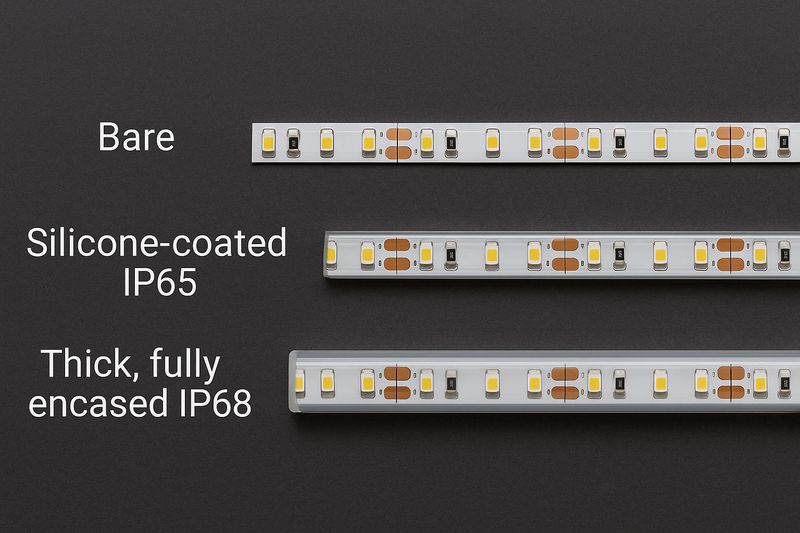
Choosing outdoor LED strips and overwhelmed by acronyms like RGB, RGBW, and RGBWW? Selecting the right type is crucial for achieving your desired lighting effect, from vibrant colors to functional white light.
RGB strips offer color-changing light only. RGBW adds a dedicated white LED for better white quality. RGBWW (or RGBCCT) includes both dedicated cool white and warm white LEDs, offering the most color and white temperature versatility for outdoor applications.
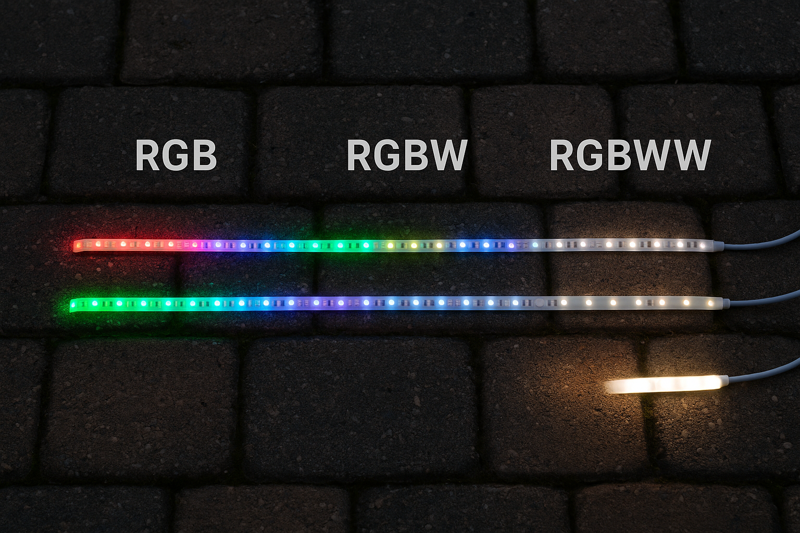
As a factory owner at Rhlite, providing a wide array of LED strip light solutions, I often guide clients through these options. For professionals like Tom, who might be specifying lights for significant architectural projects in North America or designing ambient lighting in Japan, understanding the nuances between RGB, RGBW, and RGBWW is key to meeting precise aesthetic and functional requirements, especially in demanding outdoor environments. Let’s break down the technology.
What is an RGB LED Strip Light and How Does It Produce Colors Outdoors?
Let’s start with the most common color-changing option: RGB. What exactly does it mean, and how does it create that spectrum of colors you see illuminating outdoor spaces?
An RGB LED strip light uses a 3-in-1 LED chip containing separate Red, Green, and Blue diodes. By mixing the intensity of these three primary colors, it can produce a wide spectrum of colors. However, its "white" light is a mix and often has a bluish or purplish tint.
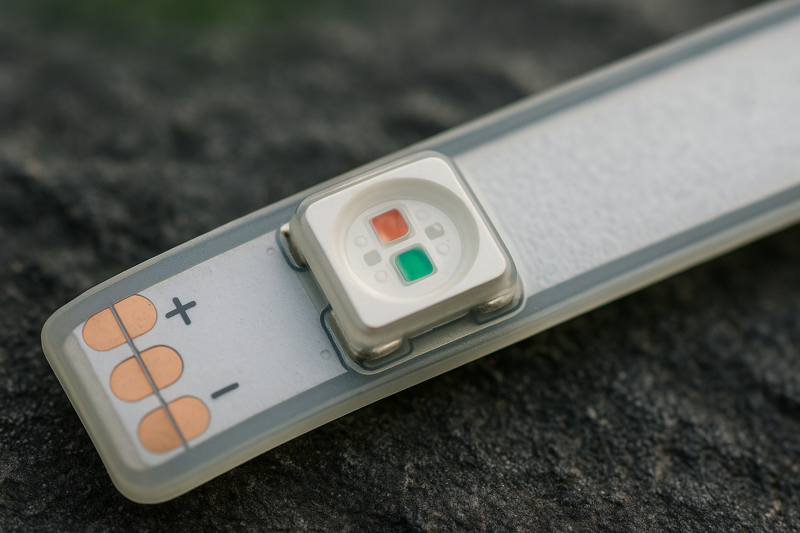
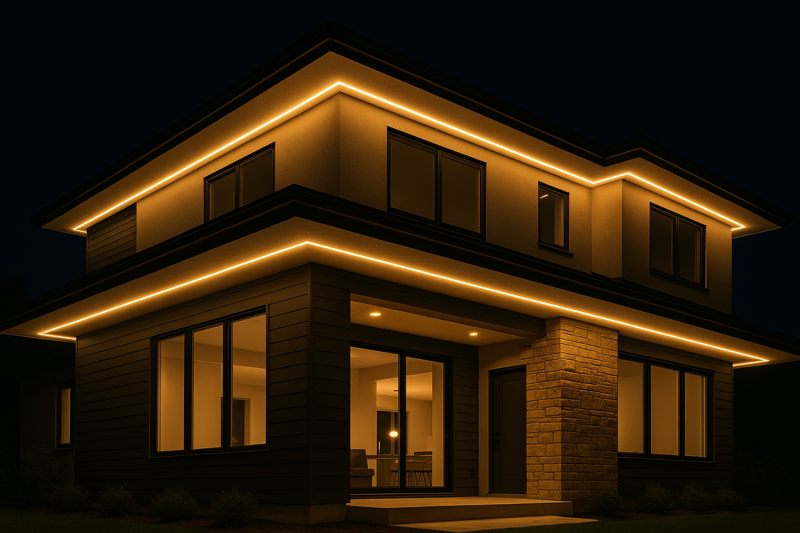
RGB strips are fantastic for dynamic, colorful accent lighting outdoors – think landscape features, building outlines, or festive decorations. At Rhlite, our outdoor RGB strips are popular for creating vibrant scenes. However, it’s crucial for clients like Tom to understand their limitations, especially when true white light is also a requirement.
The Mechanics of RGB Color Mixing1
The magic of RGB lies in additive color mixing:
- The 3-in-1 Chip: Each "LED" point on an RGB strip is typically a single Surface Mounted Device (SMD) chip that houses three smaller, individual LED emitters: one red, one green, and one blue. Common RGB chip sizes are 5050 (5.0mm x 5.0mm).
- Color Creation: By varying the electrical current sent to each of these R, G, and B diodes independently (usually via a controller), you can achieve different colors:
- Red only = Red light
- Green only = Green light
- Blue only = Blue light
- Red + Green (at full intensity) = Yellow
- Red + Blue = Magenta
- Green + Blue = Cyan
- Red + Green + Blue (at full intensity) = Simulated White
- The "RGB White" Issue: When all three R, G, and B diodes are on at full power, the light produced appears white to the human eye. However, this "RGB white" is often not a pure, clean white. It can have a noticeable bluish or sometimes pinkish/purplish tinge. The Color Rendering Index (CRI)2 of this mixed white is also typically lower than that of dedicated white LEDs, meaning colors of illuminated objects might not appear as natural.
- Outdoor Considerations: For outdoor RGB strips, the encapsulation (e.g., silicone tubing or coating for IP67/IP68 rating) must not significantly distort the colors or degrade under UV exposure. Rhlite uses high-quality, UV-stabilized encapsulation3 for its outdoor RGB products.
A client once wanted vibrant color-changing effects for a hotel’s exterior but also needed a pleasant white light for general pathway illumination using the same fixtures. They initially considered RGB, but after seeing a demo, realized the RGB-generated white wasn’t suitable for the pathways. This highlights the importance of understanding RGB’s white light limitations.
| RGB Feature | Description | Outdoor Implication | Rhlite Outdoor Focus |
|---|---|---|---|
| LED Composition | 3-in-1 chip (Red, Green, Blue diodes) | Produces a wide range of mixed colors. | High-quality 5050 SMD chips. |
| Color Mixing | Additive: R, G, B intensities varied by controller. | Allows for dynamic color scenes, fades, chases. | Compatibility with various controllers. |
| White Light Quality | Simulated white (R+G+B); often bluish/purplish, lower CRI. | May not be suitable if high-quality white is needed. | Transparency on white light limitations. |
| Primary Use | Accent lighting, decorative effects, mood lighting. | Great for creating visual impact on facades, landscapes. | Durable, weatherproof construction. |
| Control Channels | Typically 3 channels (R, G, B). | Requires an RGB controller. | Offering compatible control systems. |
RGB strips are excellent for colorful dynamic lighting, but if natural white light is a key requirement for your outdoor project, you’ll need to look further.
How Does an RGBW LED Strip Improve on RGB for Outdoor Lighting?
If RGB’s white light isn’t quite up to par for your outdoor needs, the next step up is RGBW. What does that extra "W" bring to the table, and why is it often a better choice?
An RGBW LED strip light includes the standard Red, Green, and Blue diodes, PLUS a dedicated, separate White LED chip. This allows for much purer, higher-quality white light output compared to the mixed white from an RGB strip, alongside the full color spectrum.
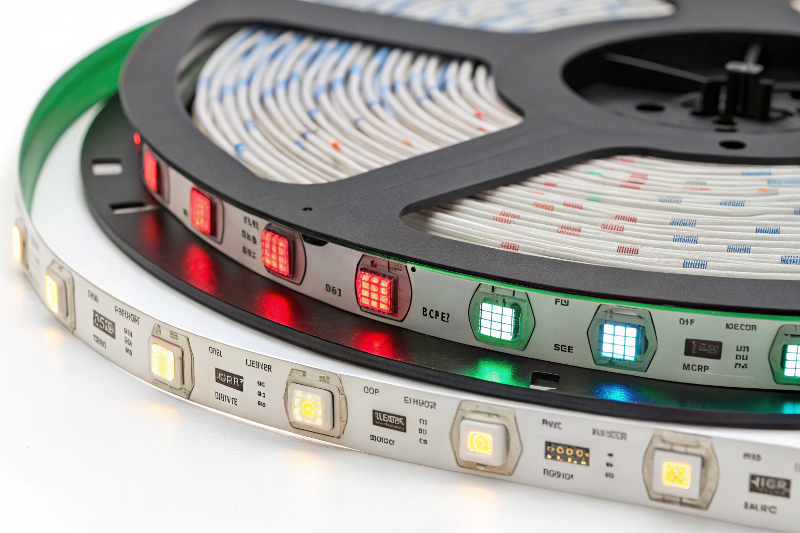
The addition of that dedicated white LED makes a significant difference, especially for applications where both vibrant colors and functional white light are desired from the same outdoor fixture. At Rhlite, we see many clients like lighting designers and architects opting for RGBW when versatility is key. Tom, for instance, might need strong color effects for a building’s branding but also good quality white for general illumination or safety lighting.
Dive Deeper: The Advantage of the Dedicated White Channel
The "W" in RGBW isn’t just an afterthought; it fundamentally changes the strip’s capabilities:
- LED Configuration: RGBW strips typically use either:
- A 4-in-1 LED chip (RGBW all in one SMD).
- Alternating RGB chips and separate White LED chips along the strip. Rhlite often uses this approach for better thermal management and white light consistency in outdoor strips.
- The "W" LED Type: The dedicated white LED4 can come in various color temperatures, most commonly:
- Warm White (WW): ~2700K-3500K (cozy, yellowish, similar to incandescent)
- Neutral White / Natural White (NW): ~4000K-4500K (clear, balanced white)
- Cool White / Pure White (CW): ~5000K-6500K (crisp, bluish, good for task lighting)
- It’s important to specify which white temperature you need when ordering RGBW strips5.
- Improved White Light Quality:
- Higher CRI: The dedicated white LED generally has a much higher Color Rendering Index (CRI >80 or >90) than the mixed white from an RGB strip. This means colors of objects illuminated by this white light appear more natural and true.
- Purer White: No unsightly blue or purple tints. The white is clean and consistent.
- Brighter White: Often, the dedicated white channel can produce a brighter white light than trying to mix R+G+B.
- Full Color Spectrum Still Available: You still get all the color-mixing capabilities of an RGB strip by using the R, G, and B channels. The white channel is controlled independently.
- Control: RGBW strips require a 4-channel controller (R, G, B, W).
Consider an outdoor patio area. With RGBW, you could have vibrant blue lighting for a party atmosphere, then switch to a pleasant warm white for relaxed evening dining, all from the same LED strip installation. This versatility is a major selling point.
| RGBW Feature | Description | Outdoor Implication | Rhlite Outdoor Focus |
|---|---|---|---|
| LED Composition | RGB diodes + a separate, dedicated White LED chip (WW, NW, or CW). | Offers true white light in addition to full color spectrum. | Quality white LEDs with high CRI. |
| White Light Quality | Significantly better CRI, purer white tone, often brighter. | Suitable for functional white lighting tasks outdoors. | Offering choices in white CCT (e.g., 3000K, 4000K, 6000K). |
| Versatility | Combines color-changing effects with high-quality white light. | Ideal for multi-purpose outdoor spaces. | Durable, IP-rated construction. |
| Control Channels | Typically 4 channels (R, G, B, W). | Requires an RGBW controller. | Ensuring compatibility with advanced controllers. |
| Common "W" Options | Warm White (~3000K), Neutral White (~4000K), Cool White (~6000K). | Choice depends on desired ambiance for white light. | Clear labeling of white CCT. |
RGBW is often the sweet spot for many outdoor projects, offering a great balance of colorful fun and functional white light.
What is RGBWW (RGBCCT) and When is it the Best Choice for Outdoor LED Strips?
If RGBW gives you one dedicated shade of white, what if you need more flexibility in your white light – to change from a cozy warm white to a crisp cool white on demand, in addition to all the colors? This is where RGBWW, also known as RGBCCT, shines.
RGBWW (Red, Green, Blue, Warm White, Cool White), also called RGBCCT (RGB + Correlated Color Temperature), includes dedicated Warm White AND Cool White LEDs alongside the RGB diodes. This provides the widest range of colors and tunable white light, from very warm to very cool.
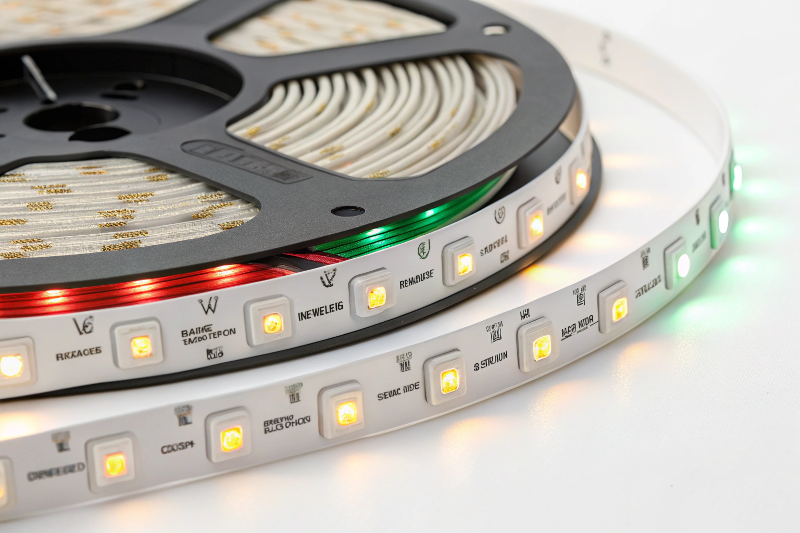
This is the premium option for ultimate lighting control outdoors. For sophisticated projects where the exact shade of white light needs to be adjusted to match moods, times of day, or specific activities, RGBWW/RGBCCT is unbeatable. Tom might specify this for a high-end residential landscape where the client wants to shift from a vibrant party mode to a soft, warm candle-like glow, or a bright, cool white for security.
Dive Deeper: The Power of Tunable White + Color
RGBWW6 or RGBCCT (the terms are often used interchangeably, with CCT being more technically descriptive of the tunable white function) takes lighting to another level:
- LED Configuration: These strips typically use either:
- A 5-in-1 LED chip (R, G, B, WW, CW all in one SMD).
- Alternating RGB chips with separate Warm White and Cool White LED chips. Rhlite often employs robust multi-chip configurations for its outdoor high-performance RGBWW strips.
- Tunable White Light7:
- By having both dedicated Warm White (e.g., ~2700K) and Cool White (e.g., ~6500K) LEDs, you can blend their outputs.
- This allows you to select any color temperature between the warm and cool extremes, creating various shades of white: soft warm, neutral, daylight, crisp cool.
- This is highly desirable for mimicking natural daylight changes (circadian rhythm lighting) or setting very specific ambiances.
- Full RGB Color Control8: You still retain all the color-mixing capabilities of the RGB diodes.
- How it Works: The controller independently manages the R, G, B channels, plus the Warm White channel and the Cool White channel. By varying the intensity of the WW and CW LEDs, different white color temperatures are achieved. For example:
- WW on, CW off = Warmest white
- CW on, WW off = Coolest white
- WW and CW both on at varying intensities = intermediate white shades.
- Control: Requires a 5-channel controller (R, G, B, WW, CW).
- Applications: Perfect for outdoor areas used for multiple purposes: patios, pergolas, entertainment areas, architectural highlighting where the white light needs to adapt.
Imagine an outdoor restaurant terrace. With RGBWW, staff could set a bright, neutral white for setup and cleaning, a warm, inviting white for dinner service, and then switch to slow color fades for a late-night lounge atmosphere. This level of control is what RGBWW offers.
| RGBWW/RGBCCT Feature | Description | Outdoor Implication | Rhlite Outdoor Focus |
|---|---|---|---|
| LED Composition | RGB diodes + dedicated Warm White LED + dedicated Cool White LED. | Full color spectrum AND tunable white light from warm to cool. | High CRI for both WW and CW LEDs. |
| White Light Control | Variable CCT by mixing WW and CW outputs. | Ultimate flexibility in white light ambiance for any outdoor setting/time of day. | Precise CCT range (e.g., 2700K-6500K). |
| Complexity & Cost | Most complex and generally highest cost among the three. | Investment for projects requiring maximum lighting versatility. | Offering robust, reliable outdoor-grade versions. |
| Control Channels | Typically 5 channels (R, G, B, WW, CW). | Requires a 5-channel RGBCCT controller. | Providing advanced compatible control systems. |
| Best Use Cases | High-end residential, hospitality, dynamic architectural lighting. | When precise control over both color and white temperature is critical. | Durability for demanding outdoor conditions. |
RGBWW/RGBCCT is the top-tier choice for those who want no compromises in their outdoor color and white lighting control.
Technical Specification Showdown: RGB vs RGBW vs RGBWW Outdoors
To make the differences crystal clear, especially for a technically-minded buyer like Tom comparing options for a project, let’s summarize the key specifications side-by-side for outdoor applications.
RGB offers basic color. RGBW adds a fixed good-quality white. RGBWW/RGBCCT provides full color and a wide range of tunable white temperatures, offering the most comprehensive outdoor lighting control.
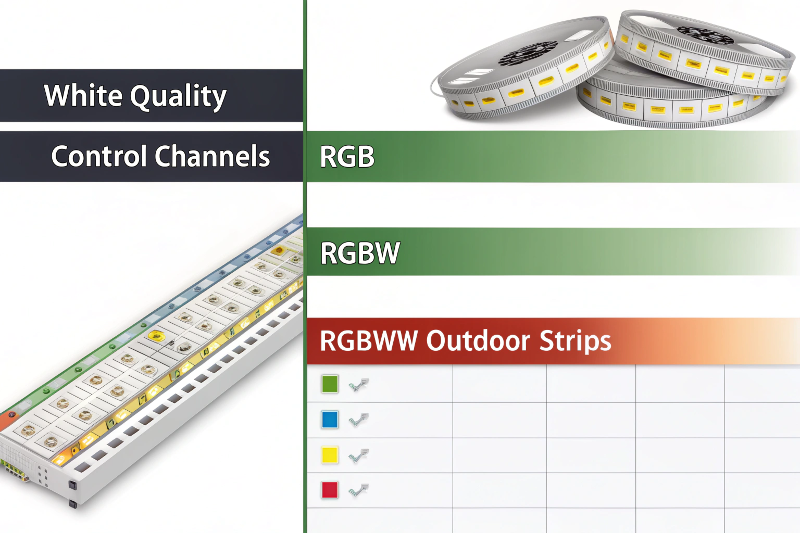
Understanding these distinctions helps in making an informed decision that aligns with project goals and budget. At Rhlite, we aim to provide the best option for every scenario, backed by quality manufacturing for outdoor durability.
Dive Deeper: Comparative Analysis for Outdoor Use
Here’s how they stack up on critical points for outdoor deployment:
| Feature | RGB Outdoor Strip | RGBW Outdoor Strip | RGBWW/RGBCCT Outdoor Strip |
|---|---|---|---|
| LED Diodes per Point | Red, Green, Blue (3-in-1 chip) | Red, Green, Blue + 1 White (e.g., WW, NW, or CW) (4-in-1 or separate chips) | Red, Green, Blue + 1 Warm White + 1 Cool White (5-in-1 or separate chips) |
| Color Output | Full spectrum of mixed colors | Full spectrum of mixed colors | Full spectrum of mixed colors |
| White Light Output | Simulated white (R+G+B); often poor quality/tinted | Dedicated single CCT white (e.g., 3000K or 6000K); good quality | Tunable white (e.g., 2700K-6500K); excellent quality & flexibility |
| White Light CRI | Generally Low (<70) | Generally Good/High (>80, often >90) | Generally Good/High (>80, often >90 for both WW & CW ranges) |
| Typical Controller Channels | 3 Channels (R, G, B) | 4 Channels (R, G, B, W) | 5 Channels (R, G, B, WW, CW) |
| Primary Outdoor Use | Colorful accent lighting, dynamic effects where true white isn’t critical. | Projects needing both color effects AND good quality functional white light (fixed CCT). | Premium projects needing color effects AND full control over white CCT. |
| Complexity | Simplest | Moderate | Most Complex |
| Relative Cost | Lowest | Mid-range | Highest |
| Rhlite Outdoor Suitability | Good for decorative, IP67/IP68 rated versions available. | Very popular for versatile outdoor spaces, IP67/IP68 rated. | Top choice for high-end, adaptable outdoor lighting, IP67/IP68 rated. |
For example, if Tom is specifying lighting for a modern building facade that needs to display company brand colors accurately but also provide clean, neutral white security lighting at night, an RGBW strip (with a ~4000K white LED) would be an excellent, cost-effective choice. If, however, it’s a luxury resort’s outdoor lounge that needs to shift from daytime bright cool white, to sunset warm amber, to evening vibrant party colors, then an RGBWW/RGBCCT strip would be the ideal investment to meet those diverse demands.
The choice really depends on the specific needs of the outdoor space and the desired level of control over both color and white light.
Conclusion
RGB is for color, RGBW adds good fixed white, and RGBWW/RGBCCT offers full color plus tunable white. Choose based on your outdoor project’s need for white light quality and versatility.
-
Understanding RGB color mixing is essential for anyone interested in lighting design or digital art. Explore this link to deepen your knowledge. ↩
-
The CRI is crucial for evaluating light quality. Learn more about its significance in lighting applications by exploring this resource. ↩
-
Discover the benefits of UV-stabilized encapsulation for outdoor RGB products to ensure durability and color integrity. ↩
-
Exploring the advantages of dedicated white LEDs can help you make informed decisions for better lighting quality and efficiency. ↩
-
Learning about RGBW strips can enhance your understanding of modern lighting solutions and their versatile applications. ↩
-
Discover the advantages of RGBWW lighting systems and how they can enhance your lighting design. ↩
-
Explore this link to understand the science behind Tunable White Light and its benefits for creating the perfect ambiance. ↩
-
Learn about Full RGB Color Control and how it allows for versatile lighting options in various settings. ↩