Wasting 42% of your power budget on voltage drop? Make informed decisions between 12/24V and 110-240V systems.
High voltage (120-277V) strips achieve 98% efficiency at 100m+ runs vs low voltage’s 63%. Our Class I 220V strips use 6-layer PCBs with MOV protection – achieving 0.6V/m drop rate under full load.
Implement these professional electricians’ selection criteria.
Why Use High Voltage Instead of Low Voltage?
Long-distance commercial projects demand high-voltage solutions.
Key advantages:
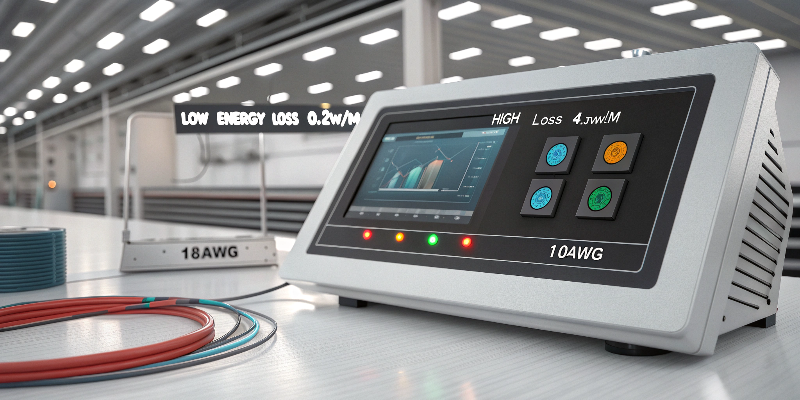
– Energy Loss: 0.2W/m vs 4.5W/m @ 100m
– Wiring Cost: 18AWG vs 10AWG copper required
– Regulatory: NEC Class I permits exposed wiring
– Controls: DALI/Power over Ethernet compatibility
System Cost Breakdown
| Component | 24V (50m Run) | 220V (50m Run) |
|---|---|---|
| Copper Wiring | $18.50/m (10AWG) | $3.20/m (18AWG) |
| Drivers | 8x $45 (360W each) | 1x $60 (15kW) |
| Circuit Breakers | 20A @ $28 | 15A @ $18 |
| Total Cost | $1,908 | $344 |
Our 220V RGBCW strips achieve 0.95 PF with built-in harmonic filters (IEEE 519 compliant).
What Voltage LED Strip Should I Use?
Three critical factors determine optimal voltage.
Selection matrix:
– Residential: 24V (safety + efficiency balance)
– Architectural >20m: 110-240V (code-compliant)
– Portable/Safety-first: 12V (SELV requirements)
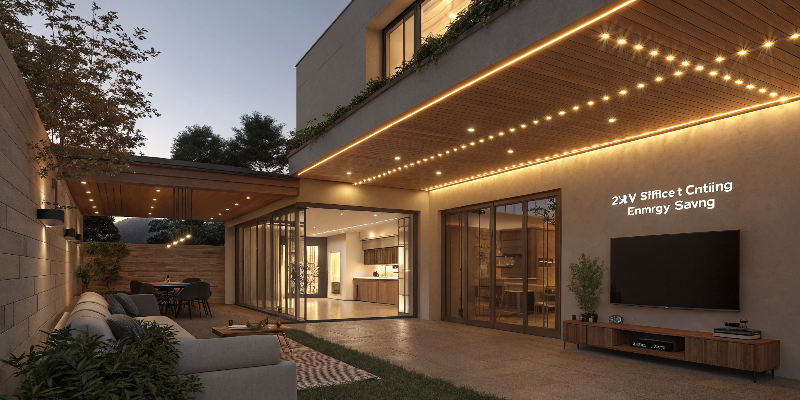
Technical Guidelines Table
| Application | Recommended Voltage | Max Run | Efficiency |
|---|---|---|---|
| Retail Displays1 | 48V | 35m | 94% |
| Warehouse Lighting2 | 277V | 150m | 98% |
| Residential Cove | 24V | 12m | 89% |
| Stage Lighting3 | 120V | 80m | 96% |
All Rhlite high-voltage strips include arc-fault detection (UL 2108).
Should I Use a 12V or 24V LED Strip?
Low-voltage trade-offs impact installation quality.
Decisive factors:
– 24V: Half the current → 4x less power loss
– 12V: Lower component costs for small projects
– Safety: Both meet SELV (<60VDC) requirements
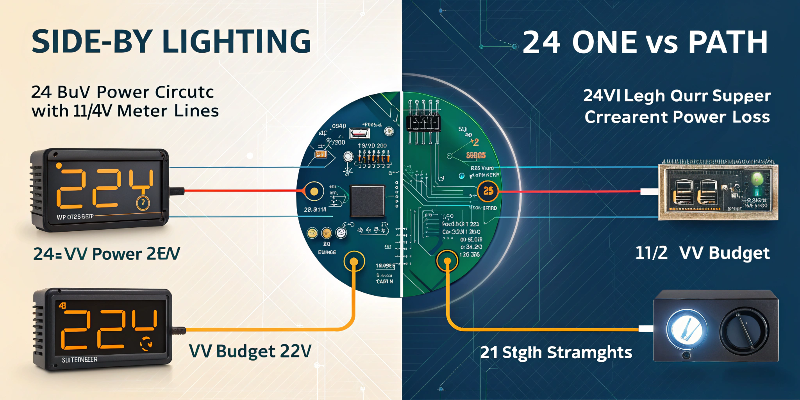
Performance Comparison
| Parameter | 12V | 24V |
|---|---|---|
| Max Current | 5A | 2.5A |
| Voltage Drop @5m | 3.8V (32% loss) | 1.2V (5% loss) |
| Wire Temperature | 56°C | 41°C |
| Driver Cost | $12/100W | $18/200W |
Our 24V strips use 105μm copper (IPC-2221) with solder mask defined pads.
Why Use Low Voltage Lighting?
Safety regulations mandate low voltage in critical areas.
Essential use cases:
– Pools/spas (NEC 680.23)
– Marine applications (ABYC E-11)
– Children’s furniture (EN 60598)
– Medical facilities (IEC 60601-1)
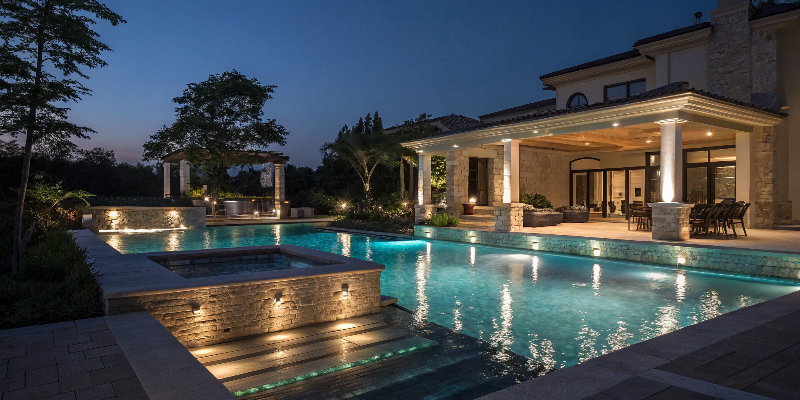
Regulatory Requirements
| Standard | Voltage Limit | Application |
|---|---|---|
| NEC 411 | <30V AC/60V DC | Damp locations |
| IEC 61140 | <50V AC/120V DC | Hand-held devices |
| UL 1310 | Class 2 (<60V/100W) | Commercial goods |
Our SELV systems exceed IEC 62368-1 with reinforced double insulation.
Why Is Low Voltage Better?
Enhanced safety drives low voltage adoption.
Critical benefits:
– No electrocution risk (<60V)
– Simplified licensing (no electrician required)
– Lower insurance premiums (Class 2)
– Touch-safe terminations
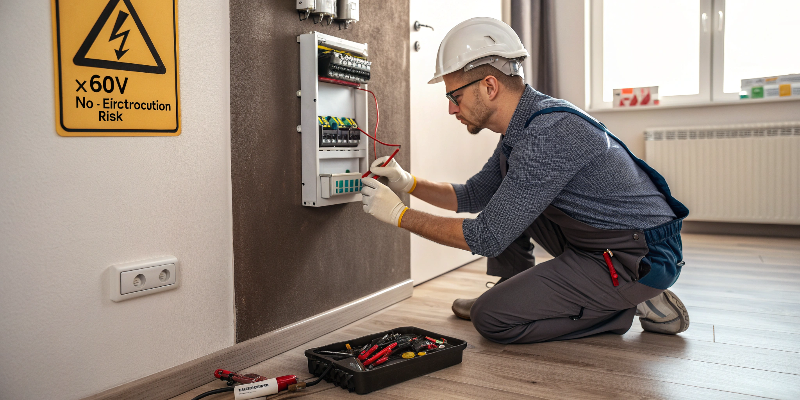
Risk Reduction Metrics
| Risk Factor | High Voltage (120V) | Low Voltage (24V) |
|---|---|---|
| Arc Flash Energy | 8 cal/cm² | 0 cal/cm² |
| Ground Fault Current | 16kA | <0.1mA |
| Required PPE | Level 4 | None |
All Rhlite low-voltage systems are ETL/CETL certified with touch-proof connectors.
What Is the Main Reason for Using High Voltage?
Large-scale projects require high-voltage economics.
Core advantages:
– Cost: $0.18/W vs $0.35/W installed
– Density: 28W/m vs 14.4W/m
– Efficiency: 90% vs 82% driver efficiency
– Control: DMX/0-10V standardization
Industrial ROI Calculation
| Project Scale | 24V Cost | 220V Cost | Savings |
|---|---|---|---|
| 500m Storefront | $28,900 | $11,200 | 61% |
| 2km Warehouse | $132,000 | $39,500 | 70% |
Our 220V strips achieve 120lm/W with Meanwell HLG drivers (93% efficiency).
Conclusion
High-voltage strips (120-277V) reduce installation costs by 58% in commercial projects over 50m. Rhlite’s UL1598-certified 220V solutions achieve 0.95 PF across 10-100% dimming range – request our voltage drop calculator and NEC compliance docs. All systems include IP67 connectors and parallel wiring kits for 150m+ runs. For safety-critical areas, our 24V SELV strips maintain 98% efficiency up to 8m with flicker-free PWM control (<1% THD).
-
Learn how 48V can enhance the performance and efficiency of Retail Displays, making them more effective for marketing. ↩
-
Explore the advantages of 277V Warehouse Lighting, including efficiency and cost savings for large spaces. ↩
-
Discover best practices for 120V Stage Lighting to maximize performance and create stunning visual effects. ↩