Worried about water, wiring, or adhesion outdoors?
Installing outdoor LED strip lights is easy if you follow the right steps, use the right tools, and choose the right strip.
Follow this guide to avoid common mistakes and achieve long-lasting results.
What should you prepare before installation?
Many outdoor installs fail before they begin—during planning.
Check your power supply, layout, connectors, and IP rating.
Make a checklist before starting:
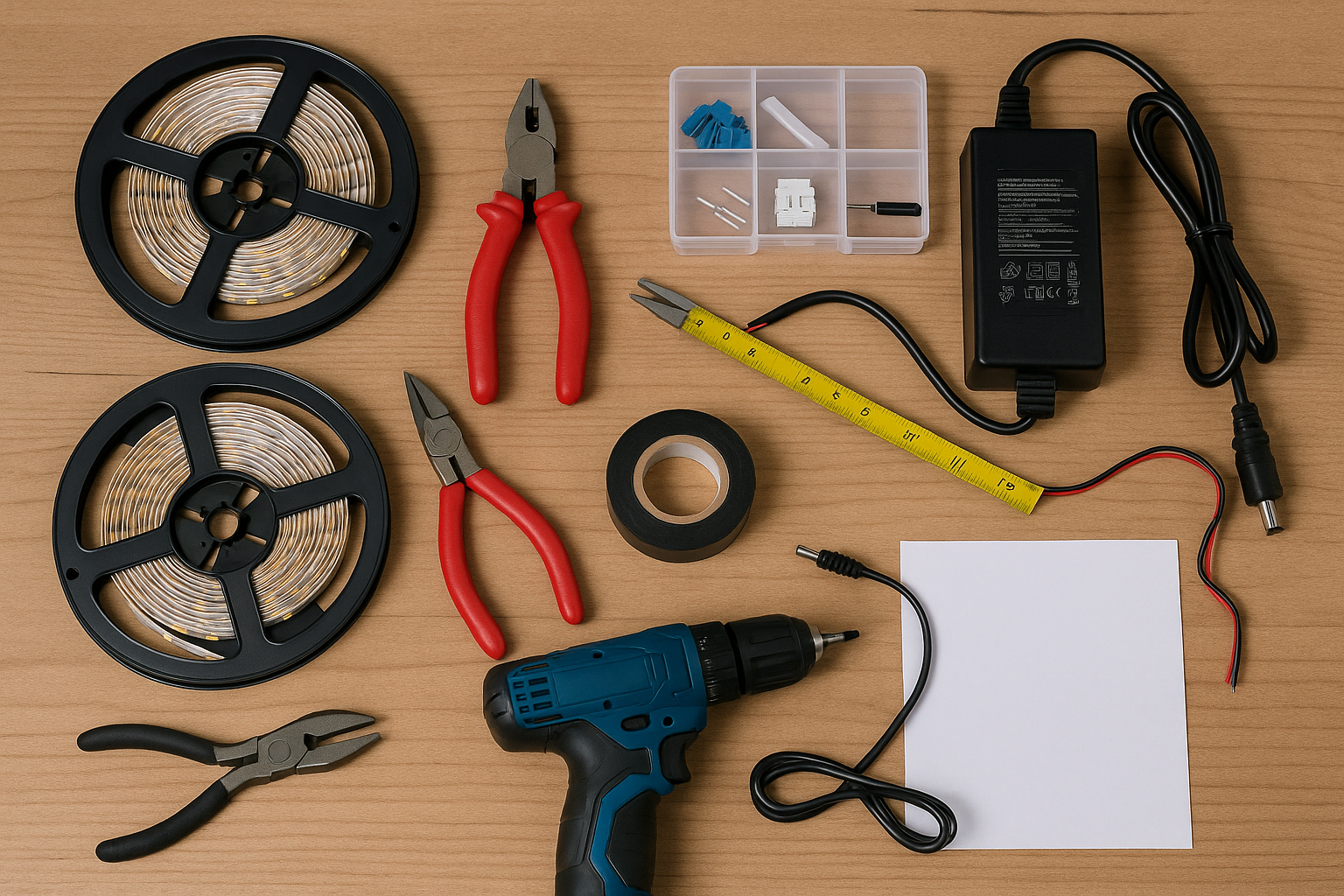
Before I start any outdoor LED project1, I always lay out a full checklist. Skipping this step often leads to delays and unexpected costs. I learned that outdoor lighting faces more threats—water leaks, unsteady voltage, poor surfaces. So, my rule is: plan hard, then install easy.
The first thing I do is draw a rough layout. I measure the full length of areas to light and calculate the power needs. If I use 12V strips, I try to keep runs under 5 meters. For 24V, I go up to 10 meters max per segment.
Then I prepare this checklist:
| Task | Why it matters |
|---|---|
| Measure strip length | Avoid underordering or gaps |
| Choose IP rating2 | Match rain or splash resistance |
| Decide on brightness level | Depends on ambient and task lighting needs |
| Select driver size | Prevent overload or flicker |
| Confirm mounting type | Clips, tape, channels—based on surface |
| List connectors needed | Corners, splitters, extension cables |
I also think about future repairs. I label each power supply3 and connection. That way, if a section fails next year, it’s easier to trace and fix. Preparation is 50% of success.
How do you cut and connect LED strip lights?
Poor cuts and bad connections cause most lighting failures.
Always cut along the marked lines and seal the ends if outdoors.
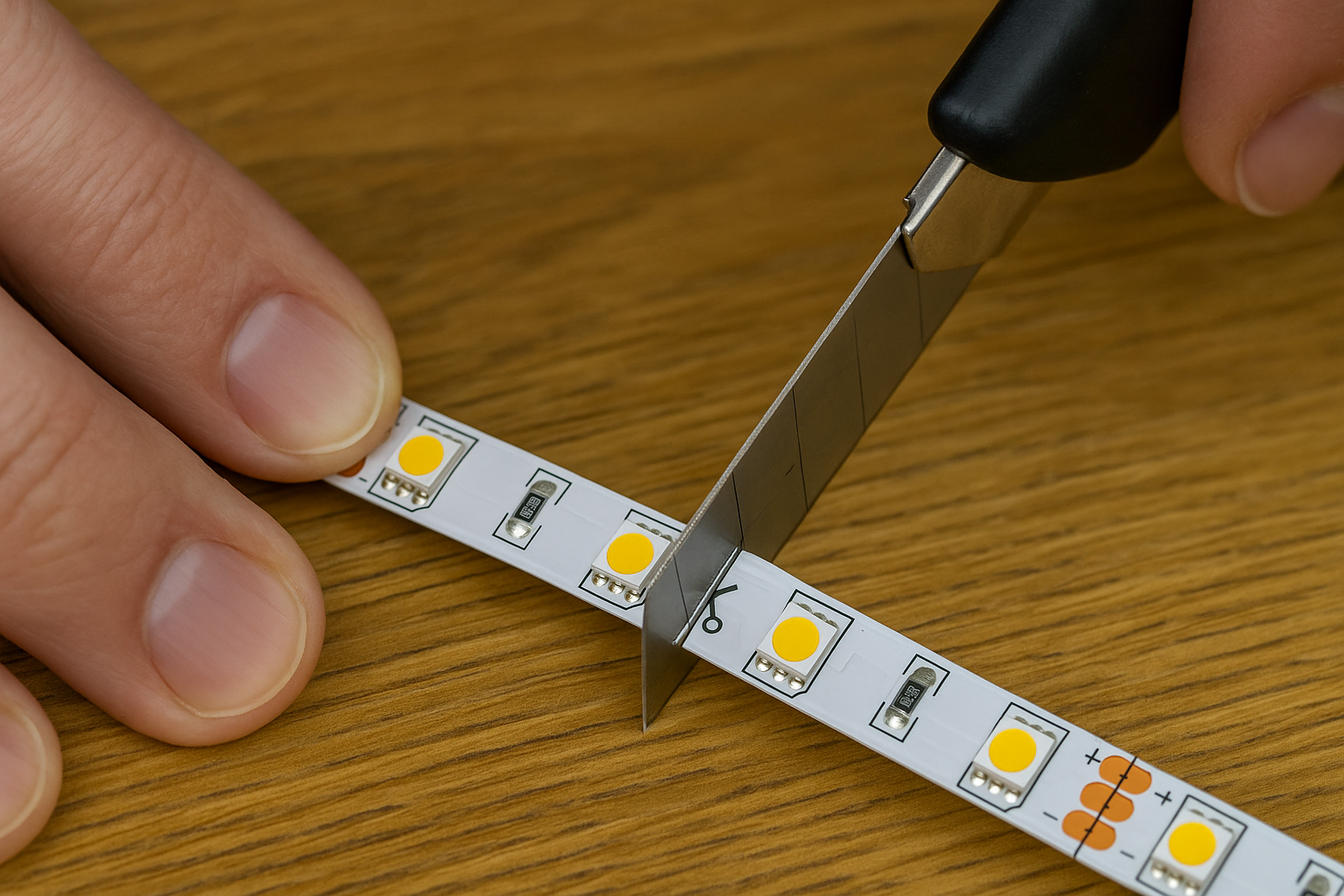
My method to avoid faulty connections:
When I work on outdoor strips, I treat every cut like a risk. One wrong cut ruins the whole section. I only cut on the copper marks. No guessing. I use a clean utility blade. Not scissors, since that sometimes warps the PCB.
After cutting, I seal both ends immediately—even before connecting. Outdoor strips need sealed ends to avoid water creeping in and shorting the circuit. I use silicone glue1 and factory-molded caps. If those are not available, I make my own with glue and heat-shrink tubing.
For joins, I prefer soldering. It’s slower but more secure. I tin the wires, then solder onto the pads, then cover with clear heat shrink. When clients need faster assembly, I use waterproof clip connectors2—but only with IP67-rated models.
Here’s my tool checklist:
| Tool | Use case |
|---|---|
| Sharp blade | Clean cut at copper pad |
| Silicone sealant | Seal ends of strip |
| Soldering iron | Secure join between strip sections |
| Heat shrink tubing | Protect joints from moisture |
| Multimeter | Check voltage before final install |
I always test each cut section before mounting. I plug it in, watch for even light, and bend it slightly. If it flickers, something’s loose. Better to fix now than after install.
What’s the best way to mount the strips?
Good mounting ensures your lights stay straight and secure.
Use mounting channels, clips, or outdoor tape depending on surface.
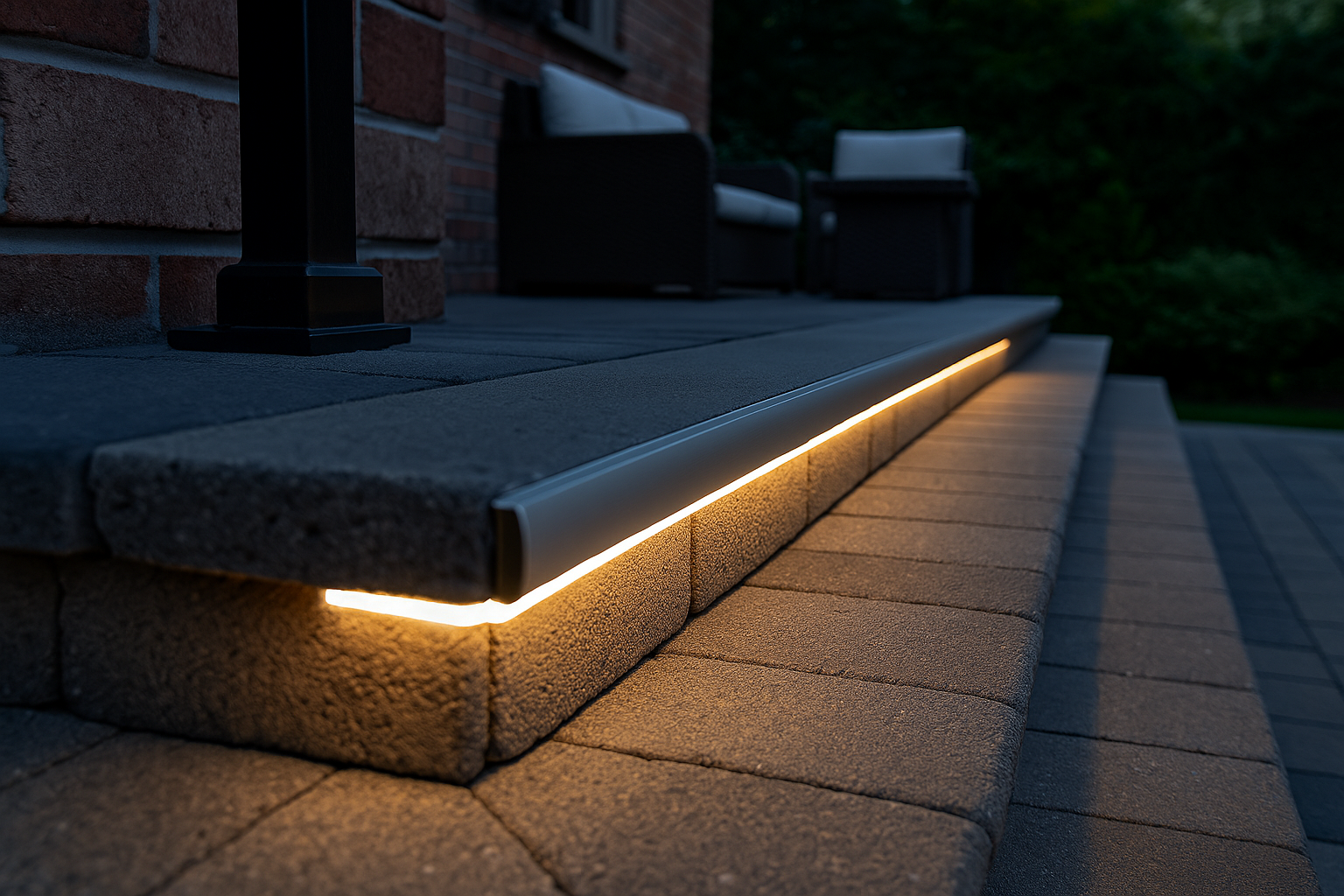
Surface decides structure:
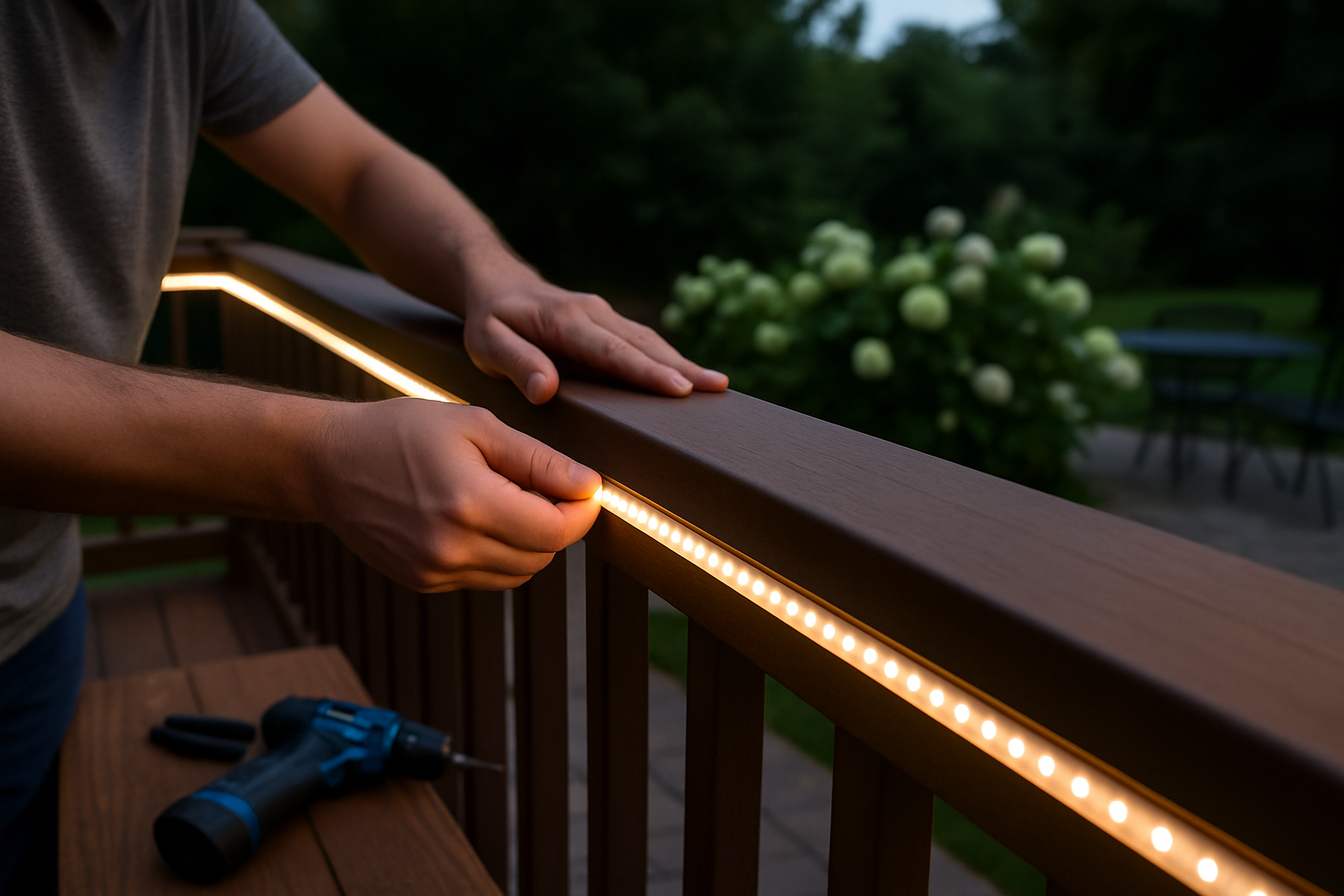
I’ve mounted LED strips4 on brick, wood, metal, glass—even plastic panels. Each one behaves differently. Adhesion strength, thermal expansion, moisture—all affect how well the strip holds.
Here’s my quick matrix:
| Surface Type | Method | Tip |
|---|---|---|
| Brick or cement | Clips + anchors | Drill pilot holes first |
| Wood (treated) | Outdoor 3M VHB tape | Clean with alcohol |
| Metal railing | Magnetic strip + clips | Use rust-proof accessories |
| Plastic awning | Silicone glue or channels | Allow curing time before lighting |
| Tile or glass | Double-sided gel pads | Avoid condensation spots |
I use aluminum profiles5 when appearance matters—like on restaurant terraces or hotel stairs. They give a straight edge, protect from touch, and help dissipate heat. RHLITE’s channels include curved, cornered, and recessed types.
On my last job for a garden stairway, I combined U-channel and waterproof tape6 for the risers. Even after two typhoons, it stayed in place. That’s why method matters.
How do you power outdoor LED strips safely?
Powering outdoor LEDs needs waterproof and low-voltage safety.
Use a 12V or 24V driver in a weatherproof enclosure.
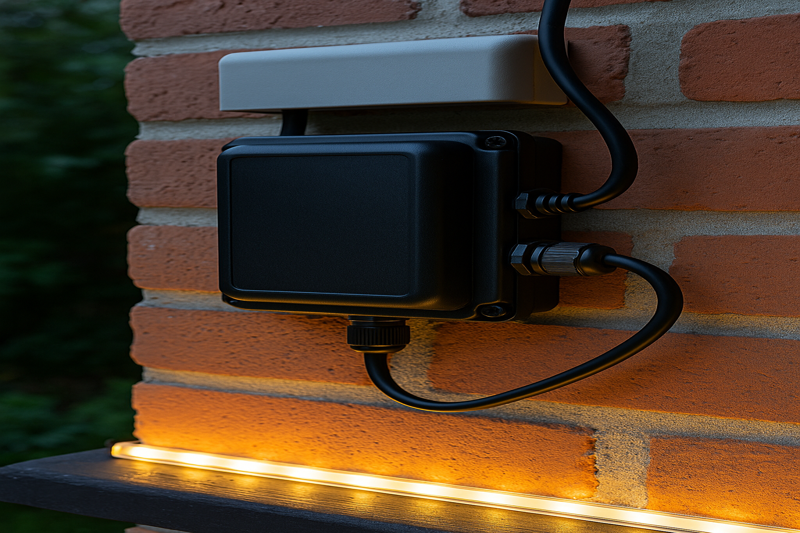
My checklist to avoid shocks and failures:
I always use low-voltage DC for outdoor strips—usually 24V. It reduces current and allows longer runs. More importantly, it’s safer. I mount drivers inside IP-rated enclosures. If that’s not possible, I at least use a cover plate with silicone edges.
On one client site near a beach, salt spray corroded an exposed terminal in 3 months. I replaced it, added a marine-grade cover, and the issue never came back. Lesson learned.
Here’s my safe power setup:
| Item | Rating or detail |
|---|---|
| Driver output | 12V or 24V constant voltage |
| Enclosure | IP65+ with cable glands |
| Cable gauge | 18AWG or 2.5mm² |
| Fuse (DC side) | Inline 2A–5A fuse |
| Surge protector (AC) | Optional but recommended |
I label each cable end and test output voltage before connecting strips. That way, I know what goes where. If someone else takes over maintenance later, they won’t have to guess.
How do you test and maintain after install?
One mistake after installation? No testing until it’s too late.
Always test each zone before final mounting and again after weather exposure.
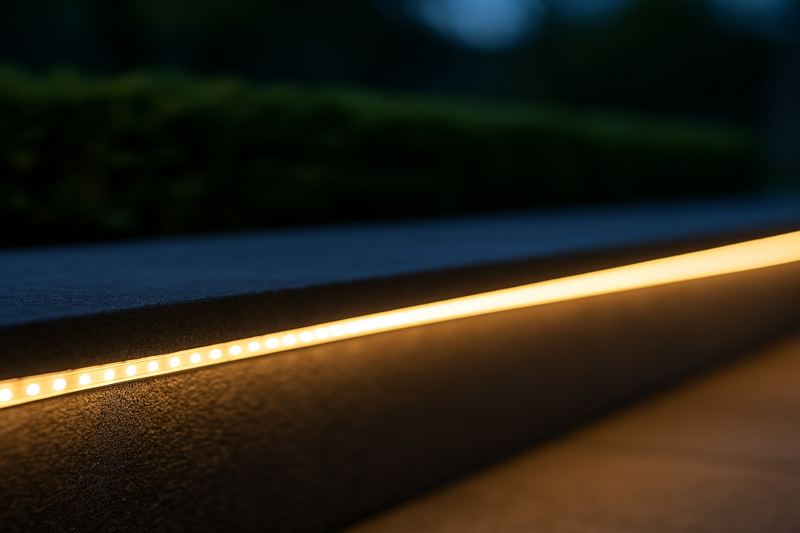
What I do before leaving the site:
After every install, I stay 30 minutes to test. I power each zone on and let it run. I check for flicker, dull spots, hot wires. I use a spray bottle to lightly mist the surface, simulating rain. If water causes flicker, I check seals again.
Clients often ask how to maintain LED strips. I give them a printed checklist:
| Task | Frequency |
|---|---|
| Wipe dust/leaves | Monthly |
| Check driver casing | Quarterly |
| Look for loose wires | Annually |
| Measure voltage drop | After 6 months |
| Test waterproofing | After storms |
I also mark the install date on the driver box and strip housing. This helps track warranty and performance.
When possible, I include a user guide with photos. That way, even non-tech clients can handle basic maintenance.
How to choose the right LED strip model for outdoor use?
Choosing the wrong type of LED strip leads to early failure.
Always match the model to environment, length, brightness, and mounting needs.
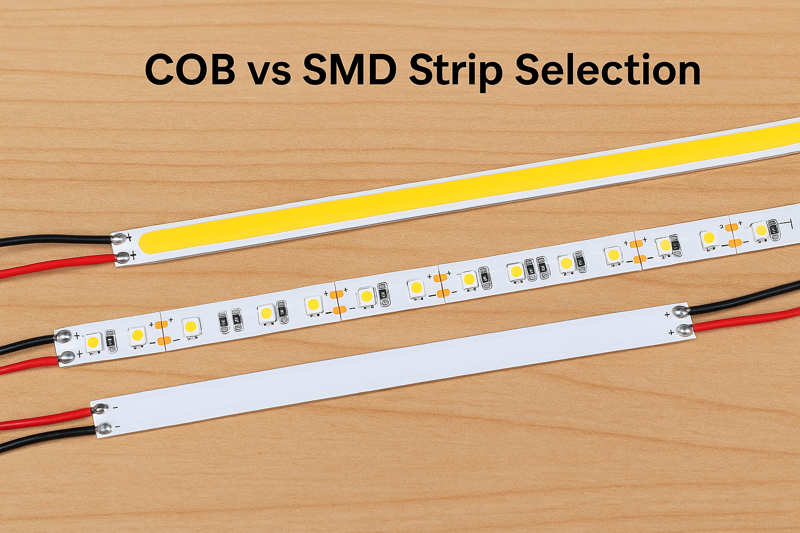
Compare before you install:
I’ve installed LED strips in humid gardens, windy balconies, and dusty industrial yards. In every case, the wrong choice cost more than the right one. So I always ask: What does this project really need?
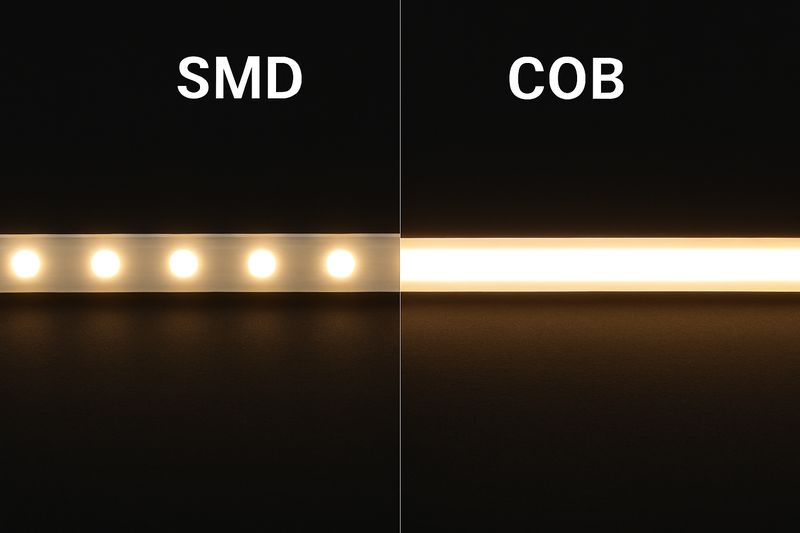
Let’s start with the basics. If a client wants a glowing line with no visible dots—like a designer hotel logo—I go with COB (Chip On Board). It gives that clean neon look. But if the project is more functional, like warehouse lighting or long fence borders, I use SMD strips like 2835 or 5050. They’re brighter, cheaper, and easier to repair.
Here’s how I explain it to customers:
| Application Type | Best Strip Type | Reason |
|---|---|---|
| Decorative signage | COB | Dot-free, flexible |
| High brightness area | SMD 5050 | High lumen output |
| Budget-sensitive job | SMD 2835 | Cost-effective, reliable |
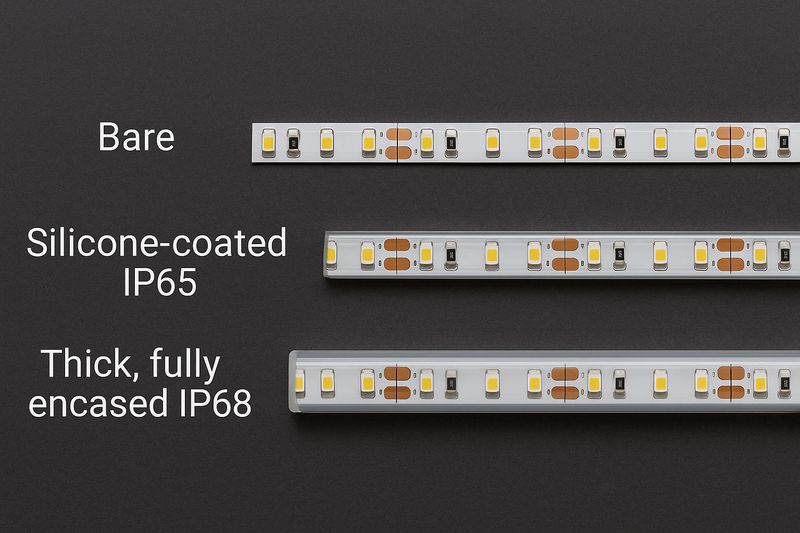
| Wet or submerged zones | IP68-rated COB | Better sealing, fewer failures |
| Long linear runs | 24V SMD | Lower voltage drop |
I also factor in mounting type. COB strips bend better, but not all fit in aluminum channels. SMD strips need diffusion for aesthetics but are easier to cut and extend.
When OEM clients ask what to stock, I suggest they start with 3 SKUs: 24V SMD 5050, IP67 COB, and a flexible RGB strip with controller. That setup covers 80% of use cases.
Conclusion
Plan carefully, cut precisely, mount securely, and protect power—then your outdoor strip lighting will shine for years.
-
Exploring best practices can help you avoid common pitfalls and ensure a successful installation of outdoor LED lighting. ↩ ↩
-
Understanding IP ratings is crucial for selecting the right lighting that can withstand environmental conditions, ensuring durability and safety. ↩ ↩
-
Choosing the correct power supply is essential for optimal performance and longevity of your LED lights, preventing issues like flickering or overload. ↩
-
Explore this resource to learn effective techniques for mounting LED strips on various surfaces, ensuring durability and performance. ↩
-
Discover the advantages of aluminum profiles in LED installations, including aesthetics and heat dissipation, to enhance your projects. ↩
-
Find out how waterproof tape can ensure the longevity and reliability of your outdoor LED strip installations, especially in harsh weather. ↩