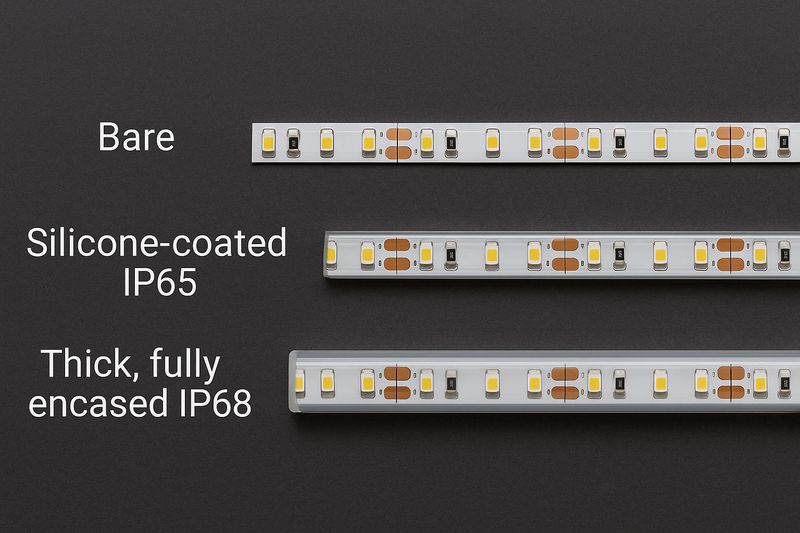
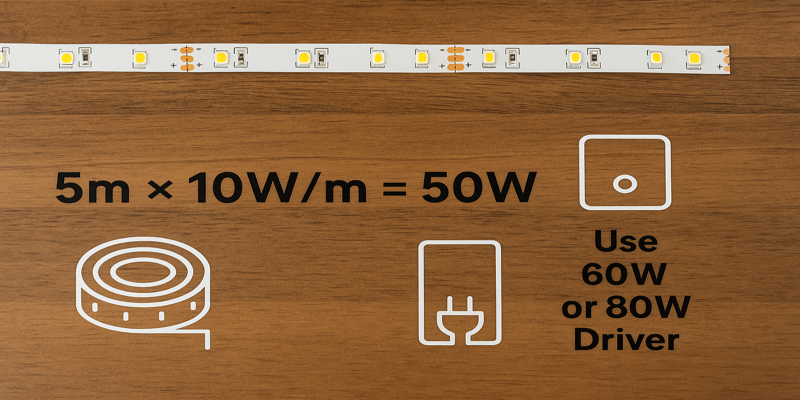
Choosing the correct power supply is essential to ensure your LED strip lights operate safely, efficiently, and with full brightness. This guide will walk you through how to calculate power needs, understand battery use, and select the right driver for dimmable and portable applications.
1. How to Calculate LED Strip Power Requirements
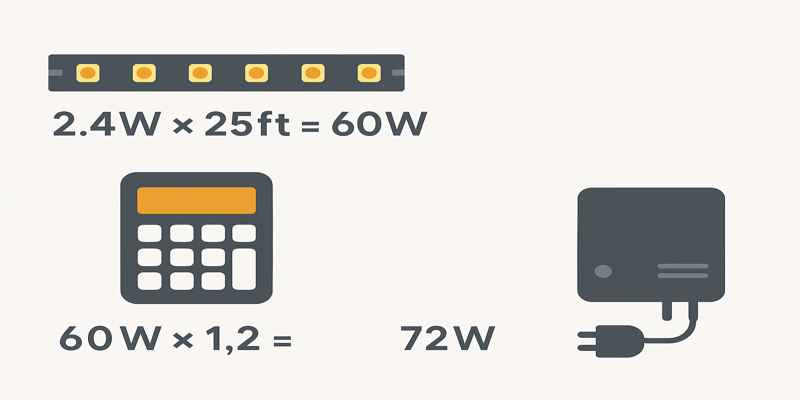
To determine the total power your LED strip lights require, use the following formula:
Total Power (Watts) = Power per Foot (W/ft) x Total Length (ft)
Example:
If your LED strip consumes 2.4W per foot and you plan to use 25 feet:
2.4W x 25ft = 60W
Add a 20% safety buffer to account for power fluctuations:
60W x 1.2 = 72W (Recommended power supply wattage)
✅ Always select a power supply with at least 20% more capacity than your calculated total to avoid overloading.
Real-World Use Case:
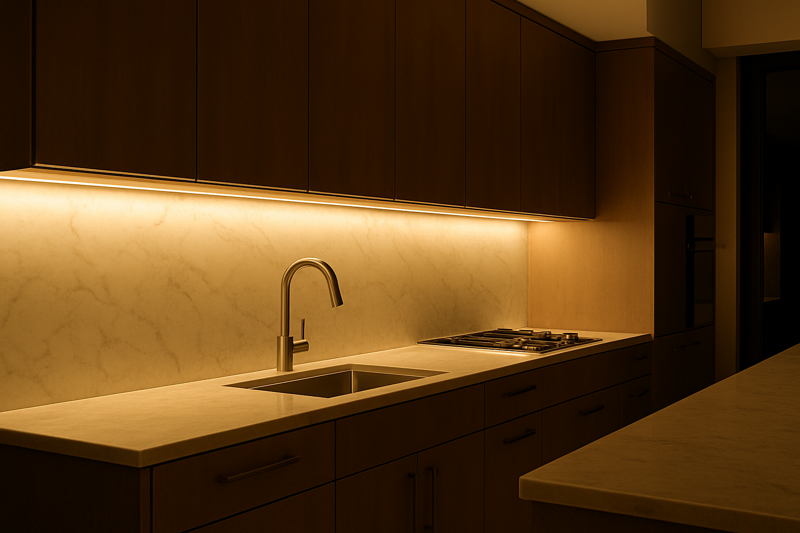
A customer installs 15 meters of high-density 24V LED strip under kitchen cabinets. With 14.4W/m, total demand = 216W. Adding 20%, a 250W–300W UL-certified power supply is ideal for safe operation.
2. Using Dimmable Wall Switches with LED Strips
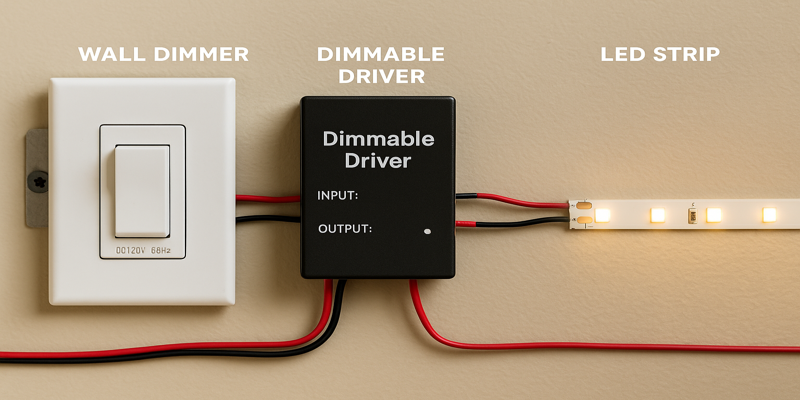
If you want to control brightness using a wall dimmer:
- Use a dimmable LED driver (not a standard adapter)
- Hardwire the driver to a wall dimmer switch
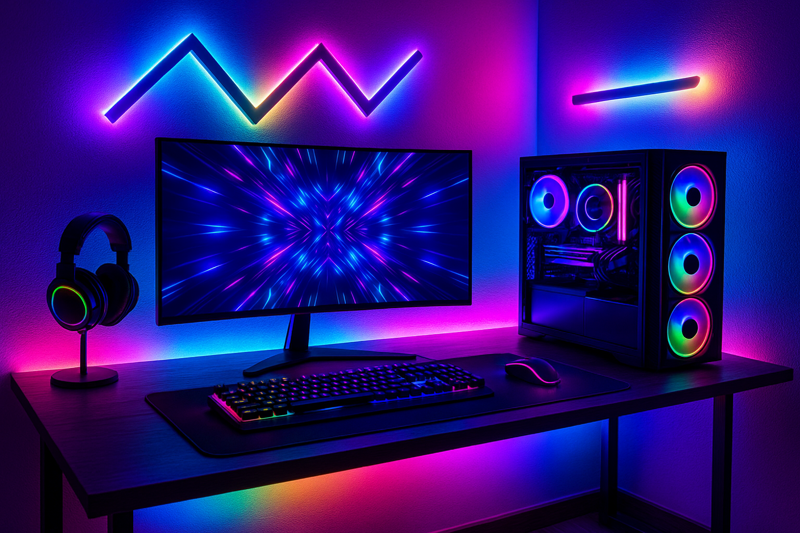
- Note: RGB LED strips typically cannot be controlled by traditional wall dimmers. Use an RGB controller instead.
⚠️ Dimmable drivers require a direct wired connection. Make sure installation follows local electrical codes.
3. Powering LED Strips with a Battery Pack
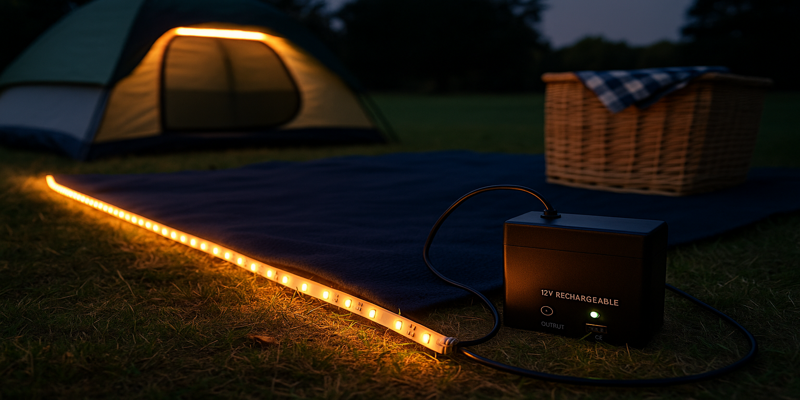
LED strip lights are perfect for mobile or outdoor applications like:
- Light-up bikes
- Outdoor events and displays
- Picnic lighting
- Boat lighting (ensure waterproof rating)
- Van or camper interior lighting
- Emergency backup lighting
Use a 12V rechargeable battery pack that meets or exceeds your power needs. For rugged conditions, select waterproof strips with IP65 or higher ratings.
4. How to Calculate Battery Runtime
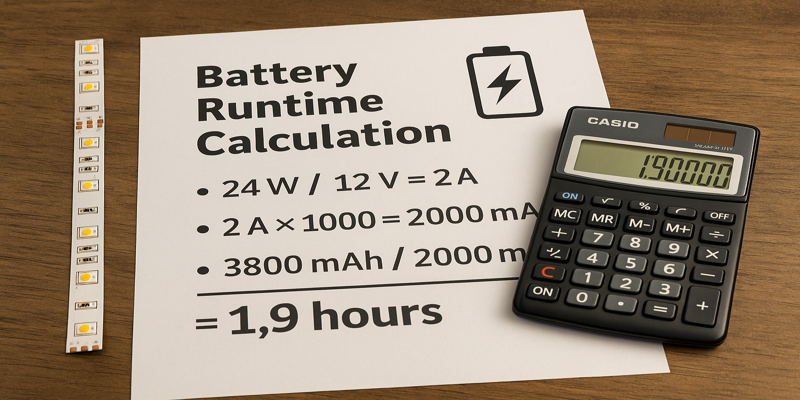
To estimate how long your battery will last:
Step 1: Divide the total wattage by 12V to get current (in amps)
Step 2: Convert amps to milliamps (× 1000)
Step 3: Divide battery mAh by the result to get hours
Example:
LED strip draws 24W
- 24W / 12V = 2A
- 2A x 1000 = 2000mA
- 3800mAh battery ÷ 2000mA = 1.9 hours of usage
🧮 Formula: (W ÷ 12) × 1000 = mA → Battery mAh ÷ mA = Runtime (hours)
5. Common Mistakes to Avoid
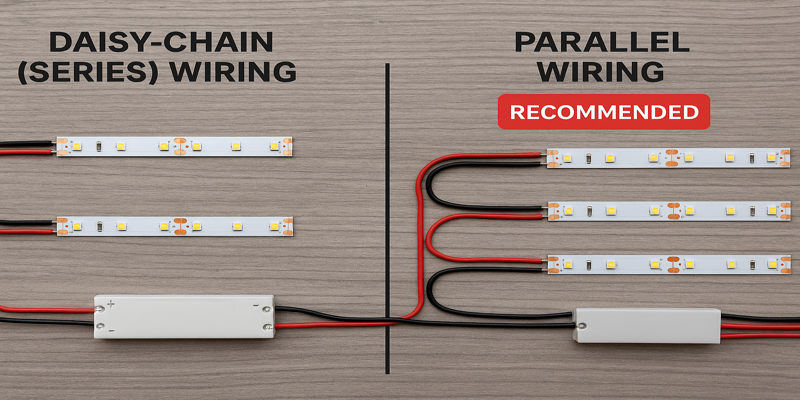
- Underpowered supplies: Will cause flickering, dimming, or early failure
- Wrong voltage: Never use a 24V supply on a 12V strip and vice versa
- Thin wires: Can lead to voltage drop, heat, and efficiency loss
⚠️ Always check strip voltage, wattage, and certification requirements before installation.
6. Choosing the Right Connector and Cable
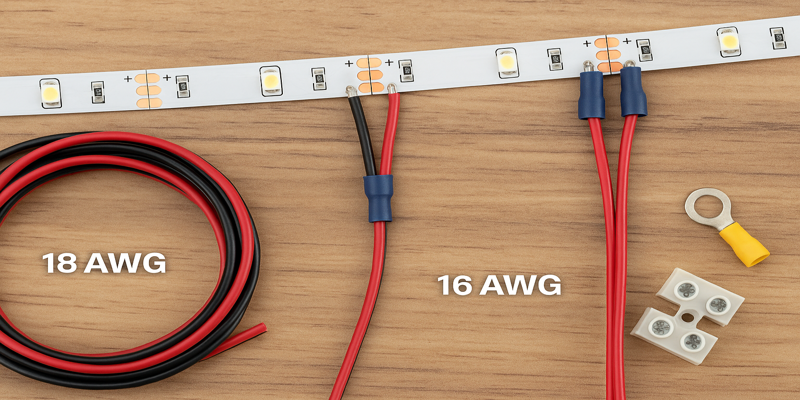
- Use 18 AWG for typical 12V systems up to 5A
- Use 16 AWG or 14 AWG for long runs or higher currents
- Use screw terminals or soldered joints for permanent installs
Avoid clip-on connectors in high-temperature environments or where vibration is expected.
Summary
- ✅ Calculate your total wattage before choosing a power supply
- ✅ Add 20% headroom to protect your power supply
- ✅ Use dimmable drivers if installing with a wall switch
- ✅ Choose the right battery for portable or outdoor lighting
- ✅ Use the correct wire gauge and connectors
Frequently Asked Questions (FAQ)
1. What size power supply do I need for my LED strip lights?
Multiply the wattage per meter (or foot) by the total length, then add 20% for safety. Choose a power supply with at least that output.
2. Can I use any power supply with LED strips?
No. Always match voltage (e.g., 12V strip → 12V driver). Overvoltage can burn out your LEDs.
3. Can I dim LED strip lights with a wall switch?
Yes, but only if you’re using a compatible dimmable driver. RGB strips should use a remote/controller, not a wall dimmer.
4. How long will a 12V battery run my LED strips?
Use: (W ÷ 12) × 1000 = mA → battery mAh ÷ mA = hours of runtime.
5. Can I connect multiple LED strips to one power supply?
Yes, if the combined wattage stays within 80% of the driver’s rated output and the wiring is done in parallel.
Looking for more technical tips? Stay tuned for more LED strip lighting guides tailored to installers, designers, and resellers.