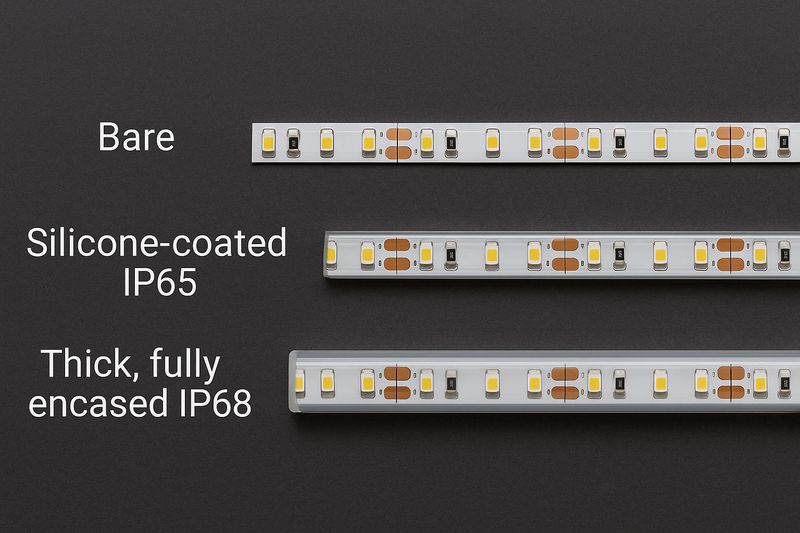
Your client’s beautiful garden is full of stunning features—stone pathways, mature trees, and elegant structures. But at night, harsh, bulky spotlights wash everything out, killing the mood and creating more glare than grace.
Outdoor LED strips revolutionize garden design by providing discreet, flexible, and continuous light. They allow you to integrate illumination directly into landscapes and structures, creating sophisticated, glare-free effects that traditional fixtures simply cannot achieve.
As a manufacturer, I’ve seen designers and contractors like Tom completely transform outdoor spaces with our products. The magic isn’t just in the light itself, but in where you can put it. Forgetting the old rules of landscape lighting opens up a new world of creativity. Let’s explore some innovative applications, grouped by how they solve common design challenges.
How Can You Use LED Strips to Create Safer and More Dramatic Pathways?
A dark pathway is a liability, and a line of cheap solar stake lights can make an expensive landscape look cheap. You need a solution that is both elegant and functional, guiding feet safely without disturbing the garden’s ambiance.
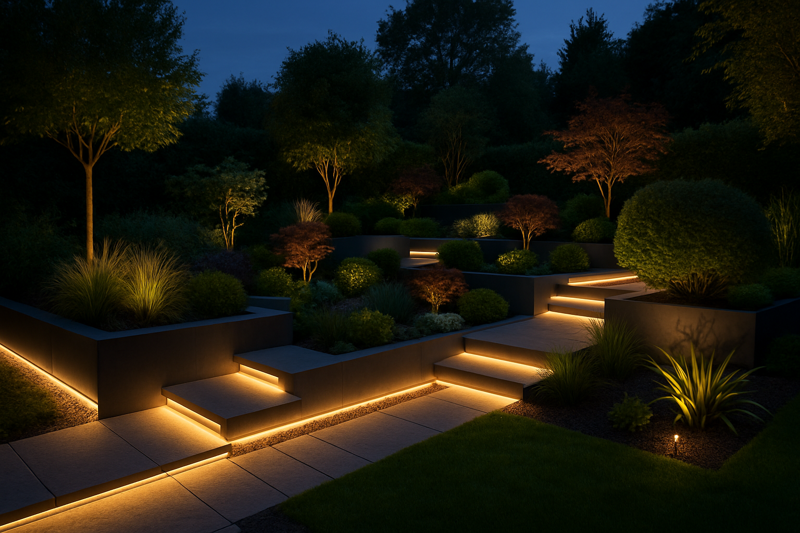
Integrate LED strips directly into the hardscaping. By installing them under stair treads, along the low edge of a path, or within a handrail, you create a seamless, glare-free guide light that enhances both safety and architectural beauty.

This approach turns a purely functional element into a core design feature. Instead of adding light to the path, the path becomes the light. For a designer, this level of integration is what separates a good project from a great one. It’s a signature touch that clients notice and admire, and it’s surprisingly straightforward to achieve with the right IP-rated product.
Integrating Light into Hardscapes
The key is to think about light as a building material. Let’s break down the most effective techniques.
Under-Tread Illumination1
Mounting a waterproof LED strip in a channel under the lip of each step is a classic for a reason. It casts light down onto the tread below, clearly defining each step to prevent trips and falls. Visually, it creates a stunning "floating" effect, making heavy stone or concrete stairs appear weightless.
Pathway Edging2
For ground-level paths, installing a strip along one or both edges provides a clear visual boundary. Tucked under the edge of a paver or along a low retaining wall, it creates a ribbon of light that guides guests through the garden. This is far more sophisticated than spacing out spotlights.
Integrated Handrail Lighting3
For a truly modern and high-end finish, routing a channel into the underside of a staircase or ramp handrail provides perfect task lighting. It keeps the light focused where it’s needed, eliminates glare, and adds an element of sleek architectural detail.
| Application | Key Benefit | Best Rhlite Product Tip |
|---|---|---|
| Under-Tread Lighting | Safety & "Floating" Effect | Use a durable, IP67-rated strip for protection. |
| Pathway Edging | Guidance & Visual Flow | A lower-lumen strip provides ambiance without glare. |
| Handrail Integration | Glare-Free Task Lighting | Choose a slim profile strip to fit into the rail. |
What’s the Best Way to Highlight Plants and Garden Structures?
Spotlighting a tree creates harsh shadows and a bright "hotspot." You want to reveal the texture of foliage and the form of a pergola without blinding your guests. The goal is a subtle, natural-feeling luminescence.
Use the versatility of LED strips for backlighting and indirect lighting. Place them behind planters, along the inner beams of a pergola, or uplighting the undersides of large leaves to create soft glows and halo effects that showcase form and texture.

This is about painting with light. Instead of a brute-force approach, you’re using soft, indirect light to create depth and mystery. A project manager like Tom can use these techniques to bring his architectural and landscaping features to life after the sun goes down, effectively doubling their impact for the client.
Creating Depth with Indirect Light
The magic is in hiding the source and letting the glow do the work.
Backlighting and "Halo" Effects
Placing an IP67 LED strip on the back of a large planter or behind a trellis creates a beautiful halo of light. This separates the object from its background and turns a simple garden element into a dramatic focal point. This works wonderfully with translucent planter materials.
Uplighting Foliage
Conceal a short piece of waterproof LED strip at the base of a large, broad-leafed plant like a hosta or philodendron. The light grazes up the leaves, revealing intricate textures and veins that are invisible during the day. It’s a far more organic effect than a harsh spotlight.
Architectural Tracing4
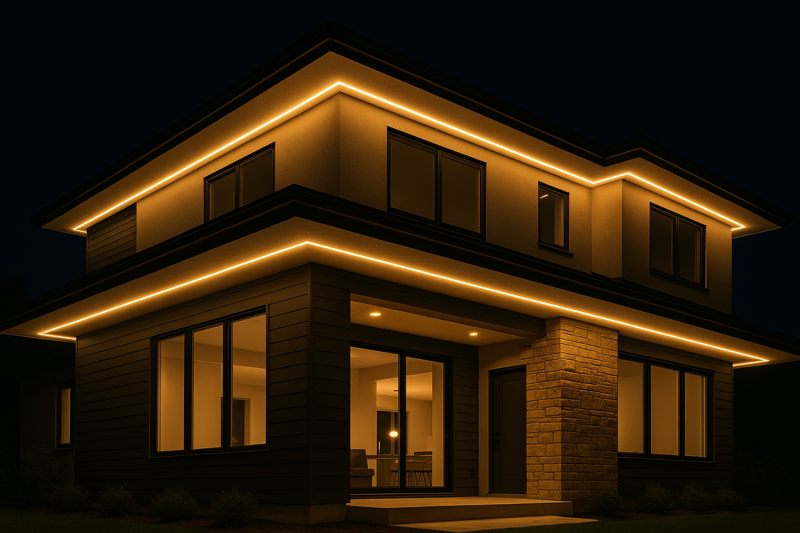
For pergolas, gazebos, or arbors, tracing the lines of beams and rafters with LED strips5 is a game-changer. It emphasizes the structure’s geometry and create an "outdoor room" feeling at night, extending the home’s living space.
| Technique | Visual Effect | Important Consideration |
|---|---|---|
| Planter Backlighting | Creates a "halo" and depth. | The surface behind the planter will affect the glow. |
| Foliage Uplighting6 | Reveals intricate leaf texture. | Requires a high IP rating (IP67/IP68) due to soil. |
| Architectural Tracing | Defines structure and form. | Use channels for a clean, professional finish. |
How Do You Safely Illuminate Patios and Water Features for Entertainment?
The patio is the heart of nighttime entertainment, but it needs functional, mood-setting light. Water features, from fountains to ponds, are black holes in the landscape at night, and can even be a safety concern.
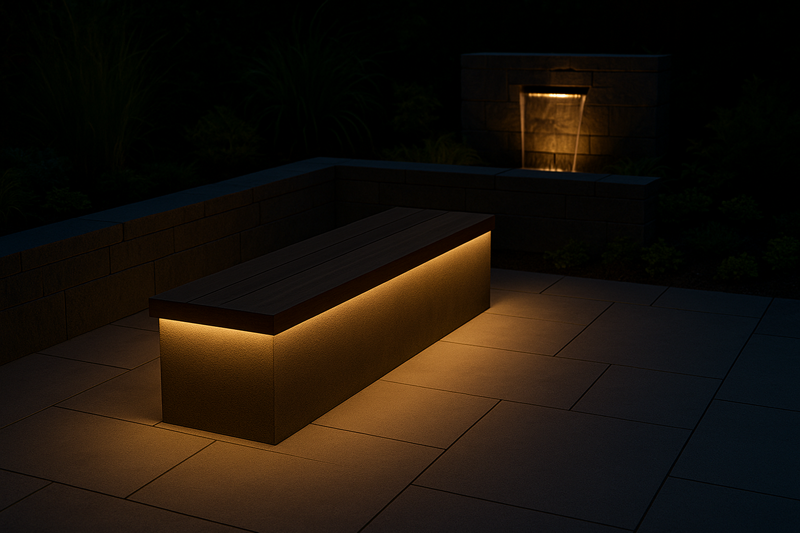
Use fully waterproof (IP67 or IP68) LED strips to create a resort-like atmosphere. Install them under bench seating and countertop overhangs for a floating effect, and use submersible IP68 strips to make water features glow from within.
This is where quality and safety are non-negotiable. For any application near water or for seating people will interact with, using a certified, high-quality, low-voltage LED system is essential. When done right, it transforms a simple patio into a high-end entertainment zone and a dark pond into a magical centerpiece.
Ambiance and Safety in Wet Areas
Light and water are a powerful combination, but they demand the right product.
"Floating" Seating and Counters
Tucking an LED strip under the overhang of a built-in bench or an outdoor kitchen counter is a simple way to add a touch of high-end design. It provides indirect, useful light for the patio floor and creates a dramatic visual that makes heavy elements feel light.
Submersible Pond & Fountain Lighting7
This is where IP68 strips8 are essential. A truly submersible strip can be placed along the bottom of a pond to illuminate fish, or at the base of a fountain to catch the moving water. The effect is mesmerizing, bringing the sound of water to life with dynamic, shimmering light.
Deck Perimeter Lighting9
Define the edge of a deck or raised patio by installing strips under the railing or along the fascia board. This clearly marks the boundary for safety and creates the feeling of an illuminated platform, visually anchoring the entertainment space.
| Application | Primary Goal | Required IP Rating (Crucial) |
|---|---|---|
| Under-Seating Glow | Atmosphere & Indirect Safety Light | IP67 (Protected from rain) |
| Submersible Fountain | Dramatic Visual & Water Animation | IP68 (Continuous submersion) |
| Deck Perimeter | Edge Safety & Zone Definition | IP67 (Protected from rain) |
Can You Use Light to Define Garden Boundaries and Create Art?
A standard wooden fence can look imposing and dark at night, making a garden feel smaller. How can you turn these functional boundaries into features and add a truly custom touch to a project?
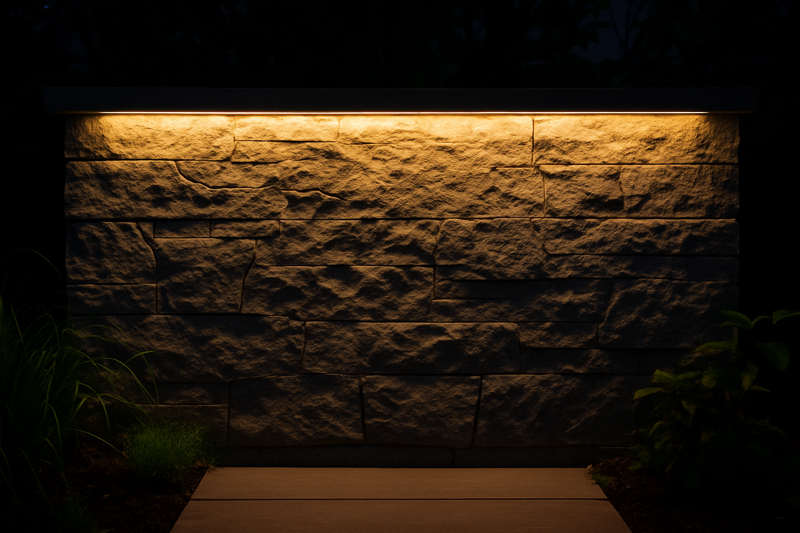
Treat vertical surfaces and garden edges as canvases. Use LED strips to "wash" light down a feature wall or fence to highlight its texture, or embed them directly into custom art pieces and planters for a unique signature look.
This is where lighting elevates itself from illumination to art. For a creative client or a high-end project, these techniques show that you are a forward-thinking designer. Instead of just lighting the garden, you are shaping the nighttime perception of the space itself.
Advanced Concepts and Artistic Applications
These ideas require more planning but have the biggest "wow" factor.
Fence & Wall Washing
Mounting an LED strip at the top of a fence or wall, aimed downwards, creates a "wall wash" or "grazing" effect. This technique is fantastic for highlighting beautiful materials like stacked stone, textured concrete, or fine woodwork. It turns a boring boundary into a dramatic backdrop and can make the space feel larger.
Defining Garden Beds
Instead of traditional edging, install an LED strip inside a metal or composite landscape edge. This creates a clean, ultra-modern line of light that defines the shapes of flower beds and lawns, bringing a clear, geometric order to the nighttime garden.
Light as Sculpture
For the ultimate custom feature, embed waterproof LED strips into other materials. Route a channel into a large piece of reclaimed wood to create a glowing bench. Set a strip into a groove in a custom-poured concrete planter. This integration of light and material is the pinnacle of bespoke garden design.
| Concept | Design Principle | Pro Tip |
|---|---|---|
| Wall Washing | Highlighting Texture & Surface | The closer the strip is to the wall, the more texture is revealed. |
| Bed Definition | Creating Clean, Geometric Lines | Use a diffused cover on the channel for a seamless, dot-free look. |
| Light Sculpture | Integrating Light into a Material | Work with a fabricator to plan channels and wiring paths in advance. |
Conclusion
Outdoor LED strips offer limitless creative potential, moving beyond simple illumination to become a fundamental tool for landscape and architectural design. By integrating light, you can craft safer, more dramatic, and truly unique garden experiences.
-
Explore this link to understand how Under-Tread Illumination enhances safety and aesthetics in outdoor spaces. ↩
-
Discover how Pathway Edging can transform your garden’s ambiance and guide guests effectively. ↩
-
Learn about Integrated Handrail Lighting to enhance safety and style in your staircases and ramps. ↩
-
Explore this link to understand how Architectural Tracing enhances outdoor spaces and creates stunning visual effects. ↩
-
Discover the transformative power of LED strips in outdoor design and how they can redefine your space. ↩
-
Learn about Foliage Uplighting and how it can highlight the beauty of your garden while ensuring durability. ↩
-
Explore this link to learn how to effectively illuminate ponds and fountains, enhancing their beauty and safety. ↩
-
Discover the importance of IP68 strips for outdoor lighting, ensuring durability and safety in wet environments. ↩
-
Find out how to properly install deck perimeter lighting to enhance safety and create a beautiful outdoor space. ↩