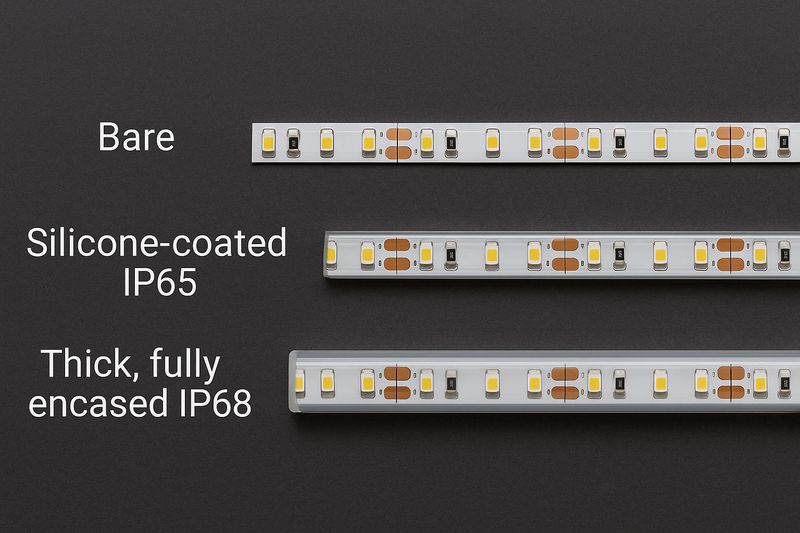
You installed a beautiful LED strip under a cabinet with a glossy countertop, but all the client can see is the reflection of ugly, individual light dots. You need a perfectly smooth line of light, but your traditional strips are failing you.
Choose COB (Chip on Board) LED strips for a completely dotless, seamless line of light, especially in reflective areas or shallow channels. Use SMD (Surface Mounted Device) strips for general-purpose applications, high-brightness needs, and color-changing (RGB/RGBWW) functionality.
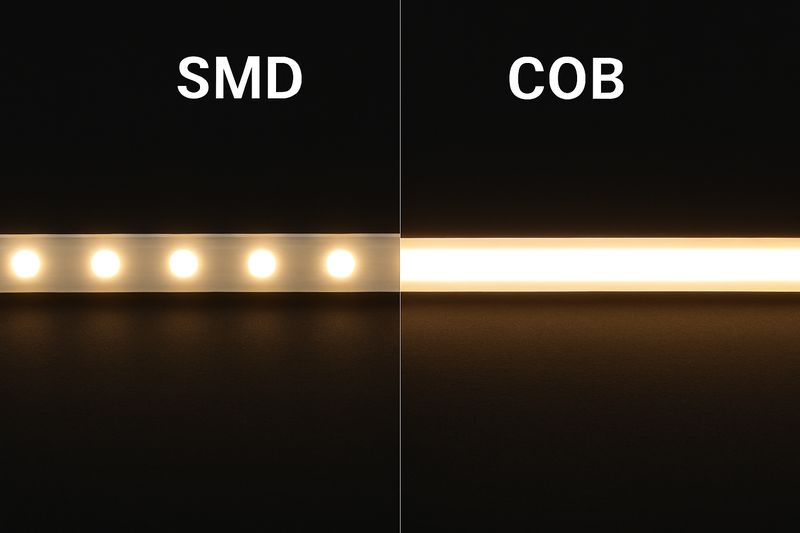
I was on-site at a luxury hotel project, consulting with the architect. He had designed these minimalist rooms with floating nightstands that had a polished stone top. The first installer used a standard SMD LED strip for the under-glow effect. When we turned it on, the reflection on the stone looked like a dotted runway landing strip. It was awful. The architect was ready to scrap the whole lighting element. I told him to wait. I overnighted a reel of our high-density COB strip. We installed it the next day in the exact same spot. When he saw that smooth, flawless line of light reflected on the stone, his entire demeanor changed. He said, "This is what I designed. This is the look." COB technology saved that design element and won us the entire hotel project. It’s a problem-solver.
What is a COB LED Strip?
You need a perfectly uniform line of light, with no hotspots or dots, for a high-end application. You’re working with reflective surfaces, very shallow aluminum channels, or a direct-view installation where the strip itself is visible.
A COB (Chip on Board) LED strip packs hundreds of tiny, un-encapsulated LED chips directly onto a flexible circuit board. They are then covered by a continuous layer of phosphor, creating a single, uninterrupted line of light.
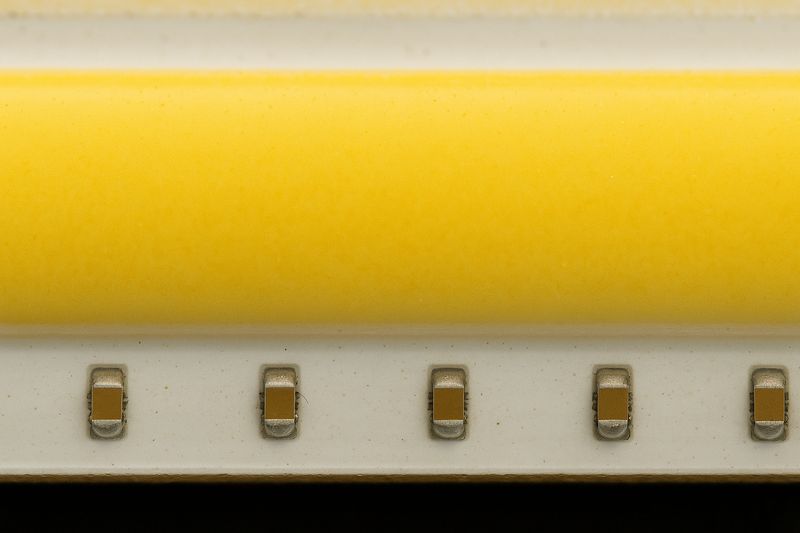
One of my best clients, a lighting designer who specializes in high-end retail, now specifies COB for almost all of his direct-view applications. He used to rely on deep aluminum channels with thick, frosted diffusers to try and smooth out the light from SMD strips. It was a bulky and expensive solution. Now, he uses our slimmest, most minimalist surface-mount profiles with a COB strip inside. He gets a perfect, seamless line of light without the bulk. He told me it completely changed how he designs with linear light. He saves money on the profiles, the installation is sleeker, and the final look is more premium. He sees COB not just as a different type of strip, but as a tool that gives him more design freedom.
The Technology of Seamless Light
COB technology1 represents a fundamental shift in how an LED strip is manufactured. Instead of soldering individual, packaged LEDs (the "dots" you see on SMD strips) onto the PCB, COB manufacturing places tiny, bare semiconductor chips directly onto the flexible board. We’re talking about hundreds of chips per meter—typically between 320 and 512, or even more. These chips are then covered in a continuous, blended layer of phosphor, which is the material that converts the blue light from the chips into the beautiful, high-quality white light you see. Think of it like this: SMD is a string of individual light bulbs, whereas COB is a continuous neon-like tube. This core difference is what eliminates the hotspots, or "Fremont effect," that plague traditional SMD strips, especially when viewed up close or reflected on a surface.
| Feature | COB (Chip on Board) | SMD (Surface Mounted Device) | Why it Matters to a Pro Installer (Tom) |
|---|---|---|---|
| Light Appearance | Perfectly uniform and dotless. Creates a seamless, continuous line of light. | Visible hotspots or "dots." Spacing between chips creates a dotted appearance. | In high-end residential or commercial projects, clients are paying for a premium look. Dots are often seen as cheap or unfinished. COB delivers that flawless architectural aesthetic. |
| Flexibility2 | Highly flexible. The small size of the chips and the board design allow for better flexibility and a tighter bend radius without damaging the light source. | Good flexibility, but… Bending can put stress on the larger SMD chip’s solder joints, which is a potential point of failure. | For installations with tight curves or complex shapes, COB’s superior flexibility reduces the risk of damaging the strip during installation, preventing callbacks. |
| Heat Dissipation3 | Good. The chips are bonded directly to the circuit board, allowing heat to transfer efficiently away from the source to the PCB. | Good to Excellent. The larger footprint of SMD chips and their solder pads provides a good thermal pathway, especially in higher-quality strips. | Both are good, but COB’s direct-bonding can offer a more efficient thermal path in a smaller package. As with any LED, mounting on an aluminum channel is always best practice. |
| Beam Angle4 | Very Wide (180°). The flat, continuous surface of the phosphor emits light in a very wide, diffuse pattern. | Typically 120°. The lens on a standard SMD chip focuses the light into a slightly narrower beam. | COB’s wider beam angle provides a softer, more even wall wash effect. This is ideal for coves and indirect lighting where you want a broad, even glow. |
What are SMD LED Strips?
You need a versatile, powerful, and cost-effective lighting solution. The project requires very high brightness, specific colors (RGB), or tunable white (RGBWW) functionality. The strip will be hidden in a deep channel or indirect location where dotting is not a concern.
An SMD (Surface Mounted Device) strip is the traditional style of LED strip, built by soldering individual LED packages (like the 2835, 5050, or 2216 chips) onto the flexible circuit board at regular intervals.
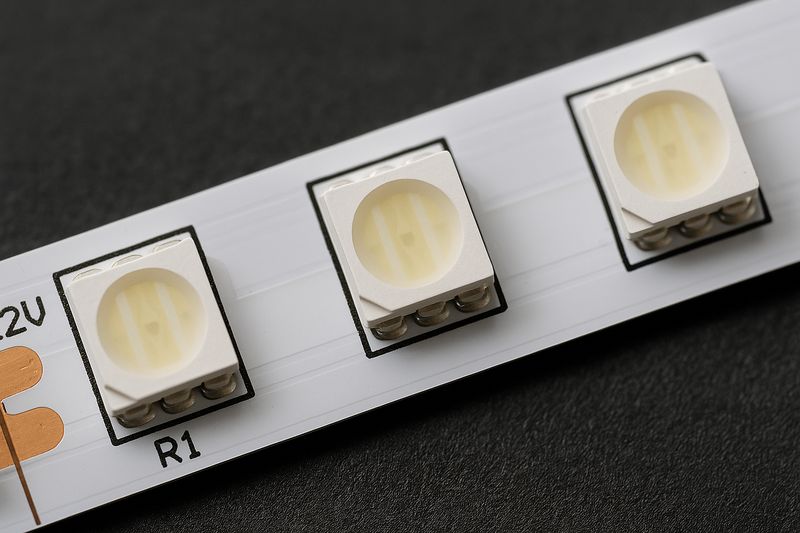
I still sell huge volumes of SMD strips, and for good reason. I was working with Tom, a large-scale OEM client, who was building thousands of commercial light fixtures. He needed a super high-output, high-CRI white light solution. For this industrial application, our high-density SMD 2835 strip was the perfect a tool for the job. It offered higher lumen-per-watt efficiency than COB at the time, was extremely cost-effective at scale, and its proven reliability was rock-solid. The "dots" didn’t matter at all because the strips were being installed inside a fixture with a heavy diffuser. SMD technology is mature, powerful, and incredibly versatile. It’s the workhorse of the LED strip industry.
The Industry Workhorse: Power and Versatility
SMD5 has been the dominant technology in linear lighting for over a decade. The "SMD" refers to the method of manufacturing: the pre-packaged LED component is picked up by a machine and soldered onto the surface of the circuit board. These packages, or chips, come in various sizes, denoted by numbers like "2835" (2.8mm x 3.5mm) or "5050" (5.0mm x 5.0mm). This modular, single-component approach is what has made SMD so incredibly versatile. It’s relatively easy to create a huge variety of products by simply changing the size, density, and type of SMD chip used on the board. This is especially true for color-changing applications6. The classic SMD 5050 chip, for example, could house three smaller diodes (a red, a green, and a blue one) within its single package, making it the perfect building block for RGB lighting7.
| Feature | SMD (Surface Mounted Device) | COB (Chip on Board) | Why it Matters to a Pro Installer (Tom) |
|---|---|---|---|
| Brightness & Efficiency | Excellent. Can achieve very high lumen outputs. The mature technology often leads to higher lumen-per-watt efficiency in high-power white strips. | Good to Very Good. Brightness is improving rapidly, but ultra-high-output applications may still favor specialized SMD strips. | For jobs requiring intense general illumination, like high-ceiling coves, a high-output SMD strip might still provide more raw power for the money. |
| Color Options | Full Range. The modular nature of SMD chips makes it the dominant technology for color-changing strips like RGB, RGBW, and RGBWW (5-in-1). | Mostly White, Limited Color. COB color-changing technology is newer, more complex to manufacture, and currently less common and more expensive than its SMD counterparts. | If your project requires tunable white or full RGB color control, SMD is the more mature, reliable, and cost-effective choice right now. |
| Cost | More Cost-Effective. As a mature and high-volume technology, SMD strips are generally more affordable, especially for standard specifications. | Higher Cost. The manufacturing process for COB is more complex, involving more chips and a specialized phosphor coating process, making it a premium product. | For large-scale projects where budgets are tight and dotting is not an aesthetic issue (e.g., hidden coves), SMD offers a better balance of performance and price. |
| Proven Reliability | Rock Solid. SMD technology has been field-tested for over a decade. Its failure modes and performance characteristics are extremely well understood. | Very Good, but Newer. COB is a newer technology. Long-term reliability is proving to be excellent, but it doesn’t have the same decade-long track record as SMD. | For massive, mission-critical projects, some conservative clients or engineers may prefer the long, proven track record of SMD technology. |
Which Technology is Right for Your Project?
The final choice is not about which technology is "better" overall, but which is the right tool for the specific job in front of you. A professional installer needs to have both in their toolkit and know when to use each one.
Use COB when aesthetics are paramount. Use SMD when performance, color-changing, and budget are the primary drivers. The application dictates the choice.

Think of it like this: you wouldn’t use a hammer to drive a screw. Both COB and SMD are excellent tools, but they are designed for different tasks. I guide my clients, including experienced professionals like Tom, through a simple decision-making process. First question: "Will the strip or its reflection be visible?" If the answer is yes, we immediately lean towards COB. Think under-cabinet lighting on granite, retail displays, direct-view applications, or in very shallow channels. Second question: "Do you need high-output general lighting, RGB color-changing, or is budget the primary constraint?" If the answer is yes, we often find that a high-quality SMD strip is the more practical and efficient choice. A smart professional doesn’t have a favorite; they have a deep understanding of which tool to pull out of the bag to make the client happy and the project a success.
Head-to-Head Application Guide
Let’s break it down into common real-world scenarios. Choosing the right technology at the planning stage can save you enormous headaches and cost during and after the installation.
| Application | Recommended Technology | Why? |
|---|---|---|
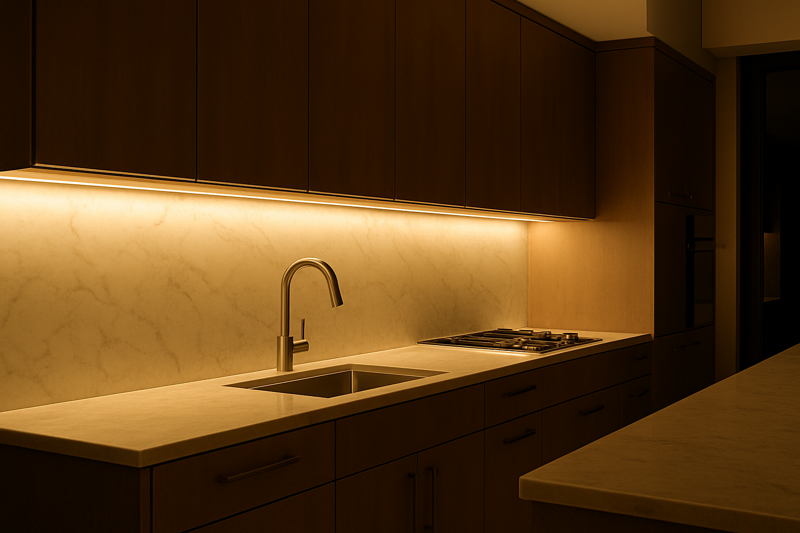
| Under-Cabinet Lighting | COB8 | Countertops, especially stone and quartz, are highly reflective. COB eliminates the ugly dotted reflection, providing a clean, high-end look. This is COB’s killer application. |
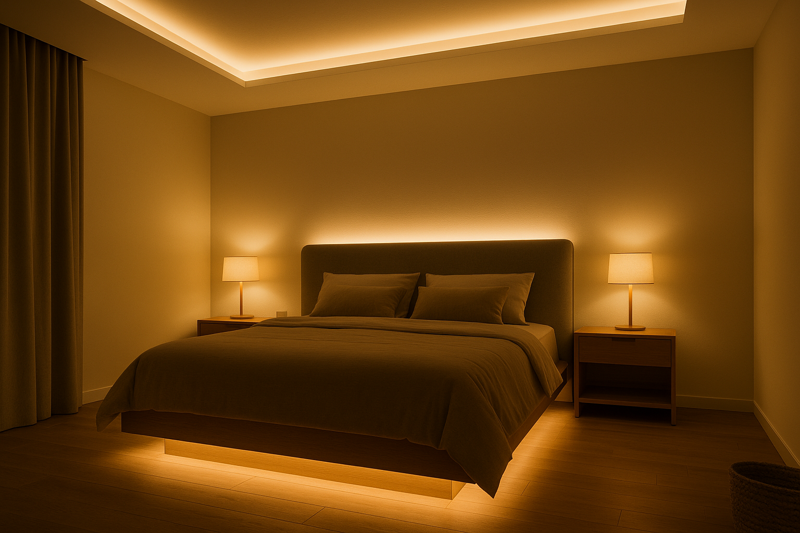
| Ceiling Cove Lighting | SMD9 (usually) | In most cove applications, the light source is hidden, and the light is bouncing off a ceiling. Dotting is not an issue. A high-efficiency SMD strip provides excellent brightness and is more cost-effective for the long runs involved. |
| Retail & Display Cases | COB | Products are viewed up close. A seamless line of light makes the product look premium and avoids distracting hotspots. It provides a more even illumination on the merchandise. |
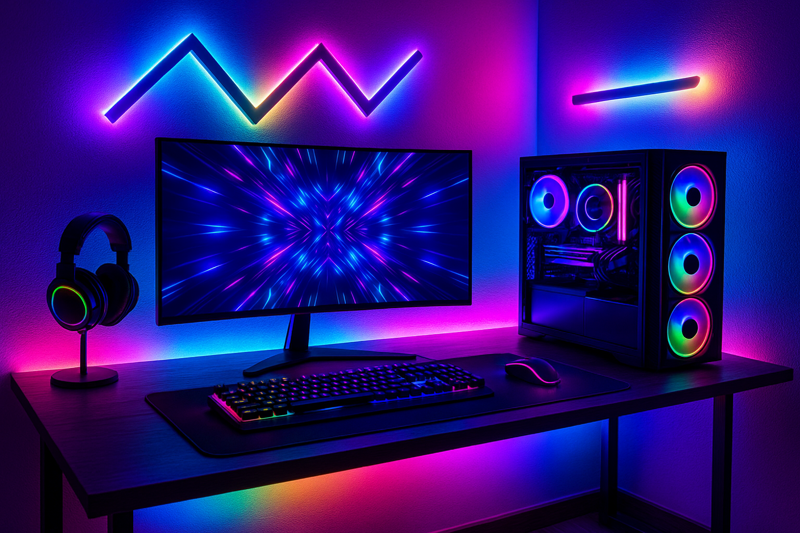
| General Color Changing (RGB) | SMD | SMD 5050 technology is the industry standard for RGB and RGBWW. It is mature, reliable, and supported by a vast ecosystem of controllers. Color-changing COB is still an emerging, more expensive technology. |
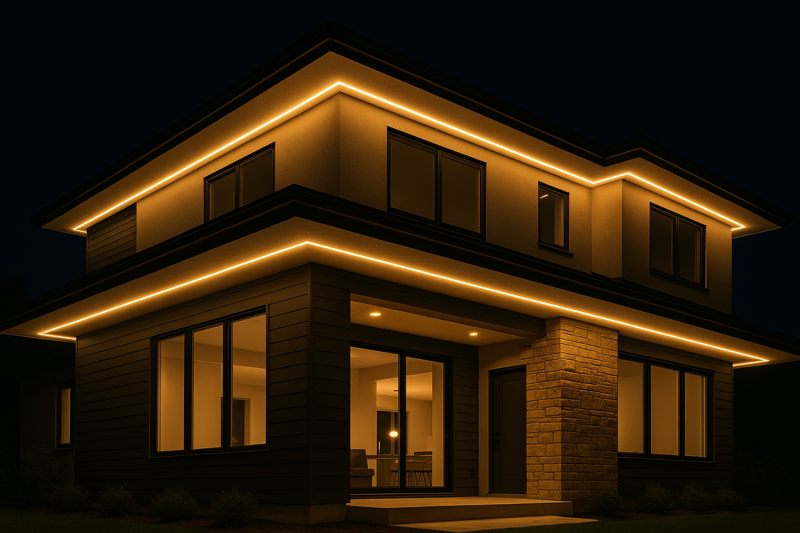
| Outdoor & Landscape | SMD | Outdoor waterproof strips (IP67/68) are almost exclusively made with SMD technology. The robust encapsulation methods are better suited to the larger, more durable SMD packages. |
| Stair & Handrail Lighting | COB | These are often direct-view or semi-direct-view applications. COB provides a safe, glare-free, and continuous line of light that looks far more architectural and integrated. |
| Budget-Conscious Projects | SMD | For large-scale projects where the budget is the primary driver and the strips are hidden from view, SMD provides the best performance for the price. |
Conclusion
COB strips offer a flawless, dot-free line of light, ideal for visible installations. SMD strips provide a powerful, versatile, and cost-effective solution, especially for color-changing and high-brightness applications. Choose based on your project’s specific aesthetic and functional needs.
-
Explore this link to understand how COB technology revolutionizes LED lighting with its seamless design and efficiency. ↩
-
Learn about the importance of flexibility in LED strips and how it affects installation in complex spaces. ↩
-
Discover the differences in heat dissipation between COB and SMD LEDs to make informed choices for your projects. ↩
-
Understanding beam angle is crucial for achieving the desired lighting effect; explore this resource for detailed insights. ↩
-
Explore this link to understand the fundamentals of SMD technology and its applications in LED lighting. ↩
-
Find out about innovative color-changing applications and how they can enhance your lighting designs. ↩
-
Discover how RGB lighting functions and its versatility in creating vibrant color displays. ↩
-
Explore the advantages of COB lighting, especially for applications like under-cabinet and retail lighting, to enhance your projects. ↩
-
Learn why SMD technology is favored for outdoor applications and budget projects, ensuring efficiency and cost-effectiveness. ↩