Frustrated by LED strips that don’t fit your space perfectly? Discover how strategic cutting maintains functionality while achieving custom lengths.
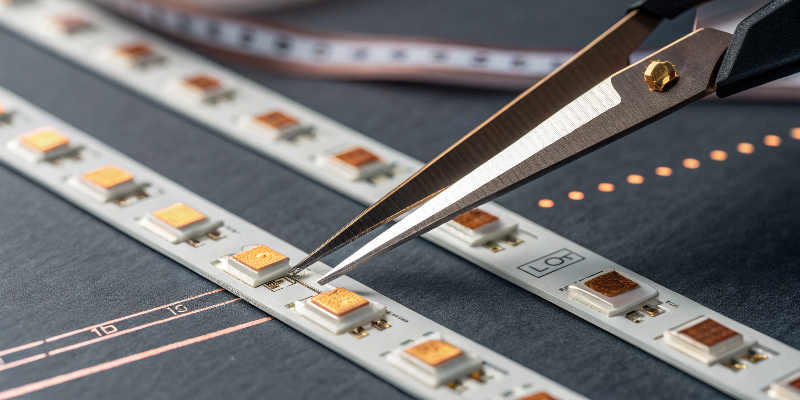
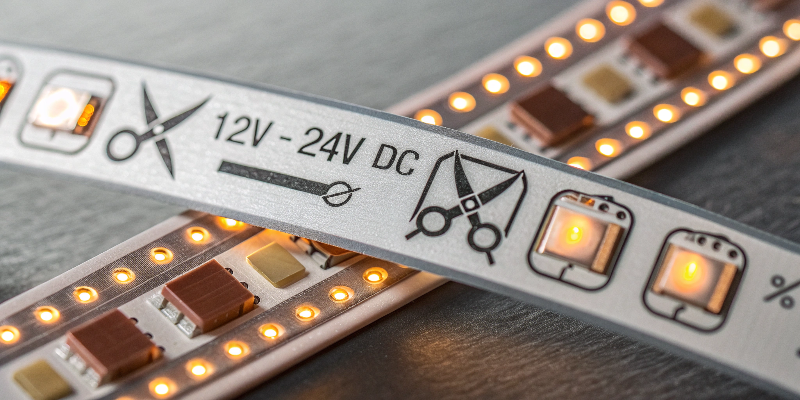
Yes, properly cut LED strips continue working if severed at designated points marked by copper pads or scissor symbols. These cut points preserve circuit integrity at 3-4 LED intervals.
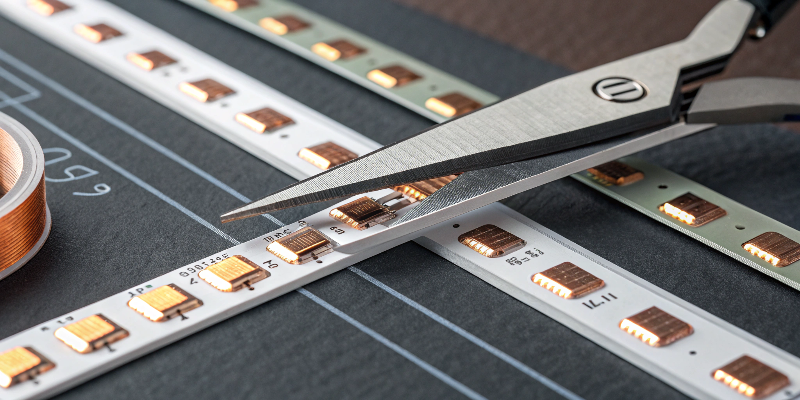
Mastering professional cutting techniques requires understanding these essential technical details and common pitfalls.
Will LED Strips Still Work If You Cut Them?
The answer depends entirely on your cutting precision and strip design.
LED strips function post-cutting when:
1. Cut through copper connection pads
2. Follow manufacturer’s scissor markings
3. Maintain polarity during reconnection
Parallel circuit architecture keeps remaining segments operational.
Technical Specifications
| Feature | Cut-Compatible Strips | Non-Cuttable Strips |
|---|---|---|
| Circuit Type | Parallel | Series |
| Voltage | 12V/24V DC | 120-240V AC |
| Cut Intervals | Every 1-6 LEDs | N/A |
| Copper Pad Markings1 | Visible | Absent |
How to Make LED Lights Work After You Cut Them
Revive severed strips through proper termination or reconnection.
After cutting:
1. Cleanly expose copper terminals
2. Apply solder or connectors**
3. Insulate with silicone glue
4. Test with multimeter**
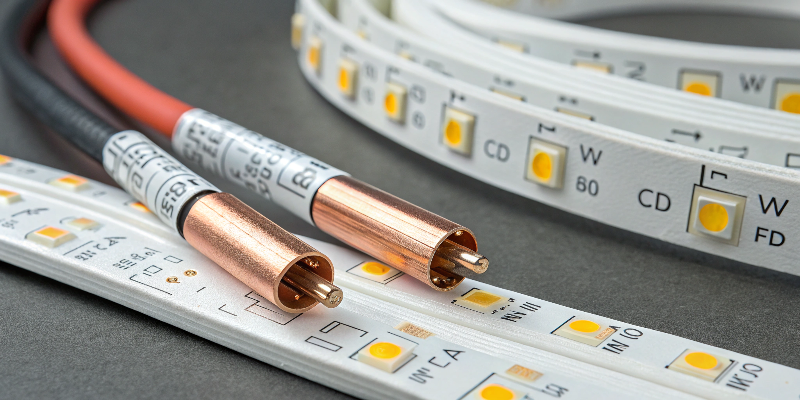
Required Tools
Step 1: Diagonal cutters
Step 2: 60W soldering iron
Step 3: Lead-free solder (Sn96Ag4)2
Step 4: Heat shrink tubing
Proper termination3 prevents short circuits and voltage drop. For commercial installations, use IP68-rated waterproof connectors4.
Where to Cut LED Lights So They Still Work?
Identifiable physical markers ensure successful segmentation.
Valid cutting locations show:
– Copper dots/pads spaced regularly
– Scissor icon embossing
– Black diagonal lines
– Visible circuit breaks between segments
Cutting Position Guidelines
| Measurement Type | Distance |
|---|---|
| 12V Strip Cut Interval | Every 3 LEDs |
| 24V Strip Cut Interval | Every 6 LEDs |
| Between Pads | 10mm |
Always cut perpendicular to the strip’s length using sharp shears. Angled cuts risk damaging adjacent circuits.
How to Fix LED Strip Lights When Half Are Out?
Circuit interruptions cause partial outages – here’s systematic troubleshooting.
Restore functionality by:
1. Checking cut alignment
2. Testing voltage continuity
3. Re-soldering broken joints
4. Replacing damaged sections
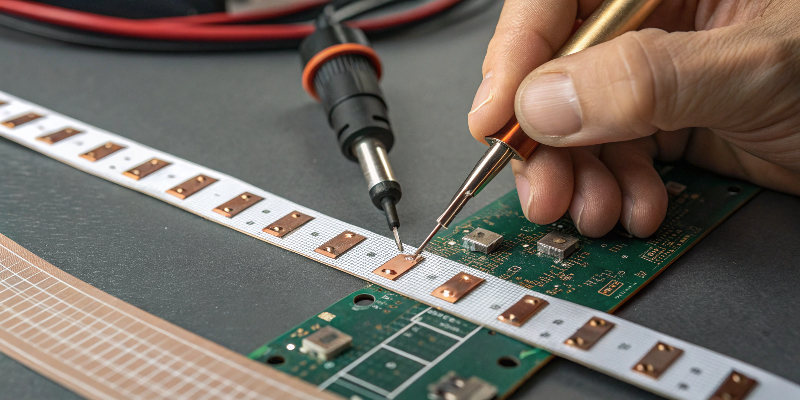
Diagnostic Process
- Test Power Supply5: Confirm 12V/24V output
- Inspect Cut Points6: Verify complete copper pad separation
- Check Connections: 0.3Ω max resistance between segments
- Evaluate Load7: 80% rated capacity maximum
Damaged sections exceeding 16.4ft (5m) require replacement due to cumulative voltage drop.
Why Does My LED Strip Not Work After Cutting?
Five common errors explain most post-cutting failures.
Primary failure causes:
– Cutting between instead of through copper pads
-Reversing polarity during reconnection
-Overheating circuits during soldering
– Insufficient voltage for shortened strips
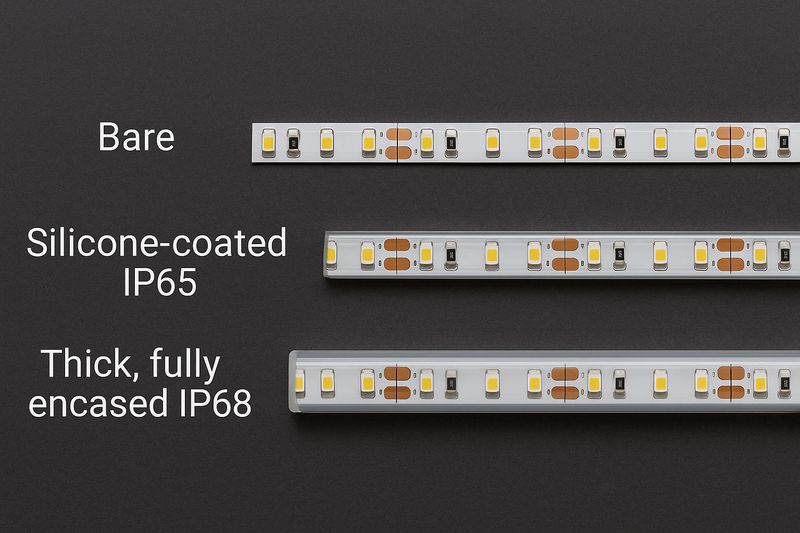
– Damaged waterproof coating
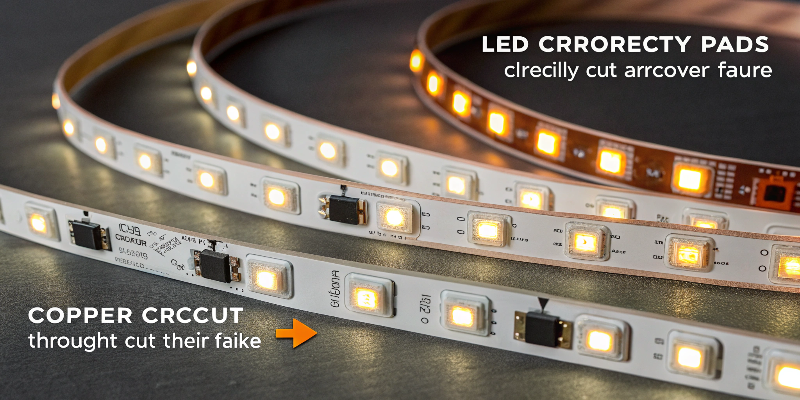
Failure Analysis
| Error Type | Solution |
|---|---|
| Circuit Damage | Replace 6" segment |
| Polarity Reversal | Swap +/- connections |
| Voltage Insufficiency | Add parallel power feed |
For 24V systems, each cut segment requires ≥4 LED groups to maintain voltage stability.
How Do I Know If I Can Cut My LED Strip Lights?
Physical and electrical indicators reveal cutting compatibility.
Cuttable strips exhibit:
1. Printed scissor symbols
2. Visible copper pads
3. Voltage ratings (12V/24V DC)
4. "Cut here" in manual
5. Parallel circuit layout
Non-Cuttable Models
- AC-powered strips (120/240V)
- Rigid PCB variants
- Single-circuit designs
- Unmarked/cheap generic brands
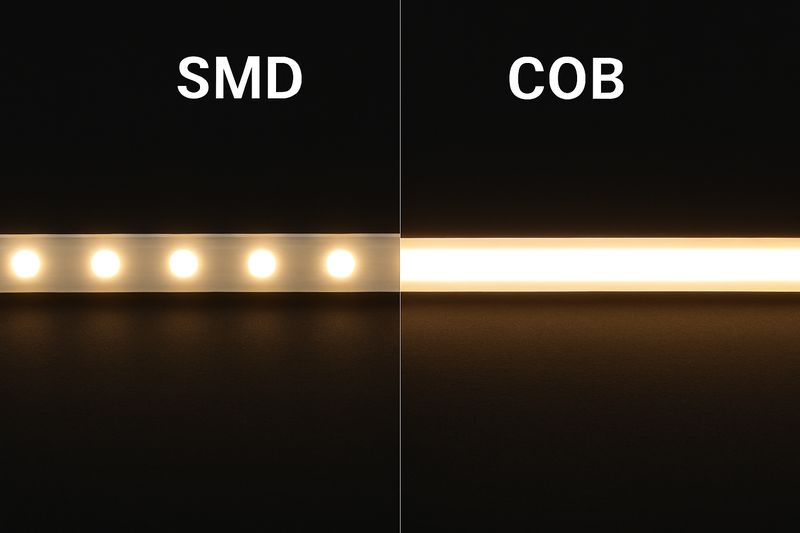
- High-density COB strips
Our factory-produced strips include laser-etched cutting guides every 3 LEDs (12V) or 6 LEDs (24V).
Conclusion
Proper cutting techniques preserve LED strip functionality when following manufacturer guidelines. For bulk orders requiring customized lengths, contact our team for pre-cut solutions with reinforced termination points.
-
Discover the significance of Copper Pad Markings in LED strips, which can impact installation and performance. ↩
-
Learn about Lead-free solder (Sn96Ag4) to understand its benefits and applications in electronics. ↩
-
Discover the significance of proper termination in preventing short circuits and ensuring safety in electrical work. ↩
-
Explore this link to understand the importance and advantages o ↩
-
Understanding how to properly test a power supply can enhance your troubleshooting skills and ensure reliable performance. ↩
-
Learning the correct methods for inspecting cut points can prevent future issues and ensure circuit integrity. ↩
-
Evaluating load is crucial for system efficiency and safety; explore this to optimize your electrical setups. ↩