You’re trying to win a competitive bid, but your material costs are too high. Your local supplier is convenient, but you know their prices are eating into your margins, limiting your ability to grow your business.
For small, urgent needs, a local wholesaler (in-store) is practical. For larger projects, better pricing, and customization, professionals should source directly from a vetted overseas factory online. This is the key to maximizing profitability and control.
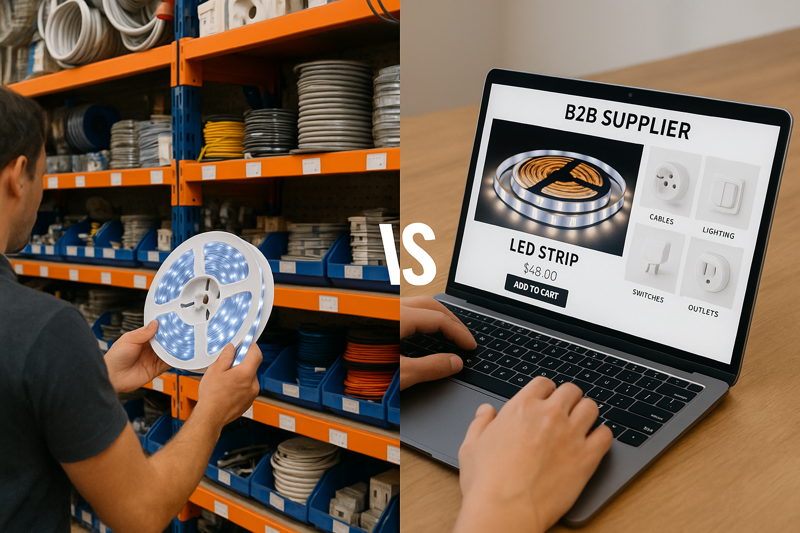
I’ve been in this business for a long time, and I’ve seen it from both sides. I have clients who used to buy exclusively from their local electrical wholesalers in the US. They valued the convenience. But as their projects grew, they hit a wall. They couldn’t get the specific color temperature they needed, they couldn’t get custom lengths, and on big orders, they could see the thousands of dollars in profit they were leaving on the table. Making the switch to direct sourcing can feel like a leap, but it’s the single most impactful business decision a lighting professional can make. Let’s break down the real-world pros and cons of each path, so you can choose the right one for your next project.
What Are the True Costs of Buying from a Local Wholesaler?
The project deadline is tight, and your local supplier has the strips you need on the shelf. It’s a tempting, easy solution. But you can’t shake the feeling that this convenience comes at a steep price, limiting your design options and profitability.
The true cost of a local wholesaler is not just the higher price per foot. It’s the cost of limited selection, zero customization, and having a middleman’s technical knowledge instead of a factory expert’s. It’s a tax on convenience.
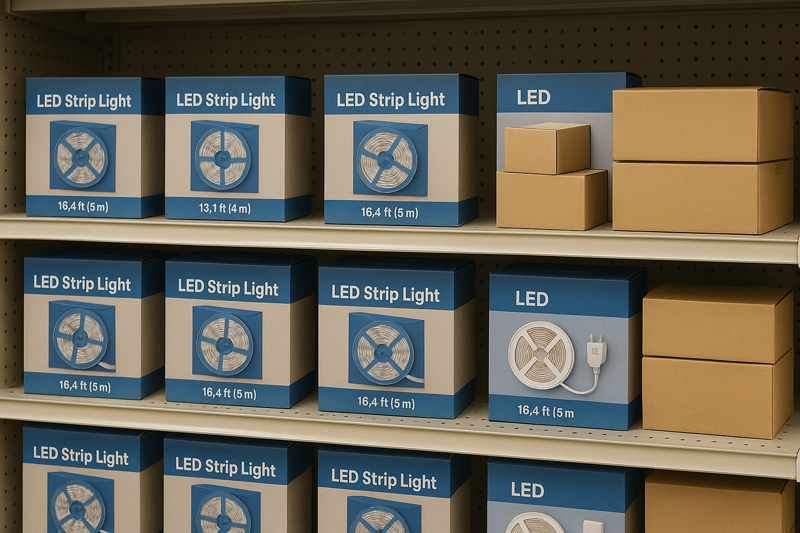
I had a client, a contractor named Tom, who was renovating a chain of boutique hotels. The designer specified a very particular 2800K CCT strip to match the brand’s warm, inviting aesthetic. His local wholesaler only stocked 2700K and 3000K. He spent days trying to convince the designer to compromise. The wholesaler’s "expert" just shrugged and said, "This is what we have." Tom was stuck. He was losing time and frustrating his client. He eventually contacted us. We were able to produce the exact 2800K CCT with a 95+ CRI that he needed, at a price that, even with shipping, was 40% lower than his wholesaler’s off-the-shelf product. He learned that local convenience can quickly become a major business obstacle.
The Wholesaler Value Equation
For a professional buyer, a local wholesaler serves a clear purpose: immediacy. They break bulk and hold inventory so you don’t have to. When you need 20 feet of strip today to finish a punch list, they are your best friend. However, relying on them as your primary source for every project is a strategic error. They are a middleman in the supply chain. They buy from an importer, who buys from a factory (like mine). Each step adds a margin. Understanding this dynamic is critical. You are paying for their warehouse space and their logistical services, which is fair, but it comes at the expense of price, selection, and direct access to the people who actually make the product.
| Feature | Local Wholesaler (In-Store) | Direct from Rhlite (Online Factory)1 | The Impact on Tom’s Business |
|---|---|---|---|
| Price | High. Includes multiple markups (factory, importer, distributor). | Low. Factory-direct pricing, no middlemen. | Direct sourcing immediately increases project profit margins or allows for more competitive bidding. |
| Customization | Almost None. You get the standard 5-meter reels in the CCTs and specs they decide to stock. | Fully Customizable2. Custom lengths, specific CCT/CRI, custom connectors, printing your brand on the strip. | You can deliver exactly what the architect or designer wants, without compromise. This makes you a more valuable partner. |
| Technical Support3 | Generalist. The staff are knowledgeable about a wide range of electrical products but are not LED strip specialists. | Specialist. You speak directly with engineers and product experts who live and breathe this technology every day. | When you have a complex problem (e.g., voltage drop on a long run, DMX control issues), you get a real, immediate solution, not a guess. |
| Available Stock | Limited to what’s popular and profitable for them to hold. Often, it’s basic, mid-quality products. | Unlimited. We manufacture what you need, when you need it. Access to the latest technology (COB, high-efficacy, etc.). | You are no longer constrained by the wholesaler’s inventory choices. You can offer your clients the absolute best and latest products. |
| Certification & QC4 | Assumed. You trust they have vetted their suppliers, but you rarely see original documents. | Transparent. We provide original UL, CE, and RoHS certificates and full photometric reports (IES files, TM-30) for your submittals. | You can bid on high-spec jobs with confidence, knowing you can provide the documentation to back up your product claims. This addresses the pain point of fake certificates. |
Is Sourcing from Online Marketplaces like Alibaba a Gamble?
You see unbelievable prices for LED strips on massive B2B marketplaces. The potential savings are huge. But the stories of poor communication, products not matching the photos, and outright scams make you hesitate. Is it worth the risk?
Yes, it can be a gamble if you don’t have a strict vetting process. These platforms are powerful tools for discovery, but you are responsible for separating the legitimate factories from the trading companies and the bad actors.
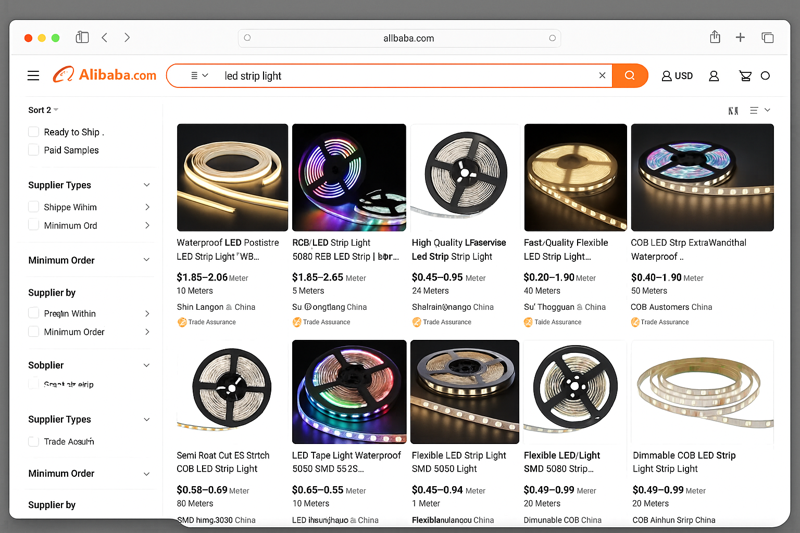
Early in my career, I wanted to understand what my clients experienced. I created a fake buyer profile and tried to source a product on a major platform. The experience was eye-opening. I found a supplier offering an incredibly low price for a UL-listed strip. I asked to see their UL certificate file. They sent me a PDF that was clearly altered. The company name didn’t match, and the file number was for a completely different product category. Another "factory" I messaged couldn’t answer a simple technical question about PWM frequency. I quickly realized they were just a trading company with a few staff in an office, reselling whatever was cheapest that week. These marketplaces are filled with both gems and traps. The price is the bait; your due diligence is the shield.
For a seasoned buyer like Tom, a platform like Alibaba is not a store; it is a giant, unfiltered directory. It’s a starting point for finding potential manufacturing partners. The key is to shift your mindset from "buying" to "qualifying." Never click "Buy Now" on a large order. Your goal is to use the platform to identify 5-10 potential suppliers, and then take the conversation offline to begin a rigorous verification process. A low price is a red flag just as often as it is an opportunity. Your job is to investigate why the price is so low. Is it because of factory efficiency, or is it because they use cheap LED chips, low-quality PCB, and have no real quality control?
| Signal Type | Red Flag (Warning!) | Green Flag (Good Sign) | Jermey’s Verification Tip (What I Do) |
|---|---|---|---|
| Supplier Identity5 | Vague "Trading Company" status. No factory photos or a generic address. They sell everything from LEDs to phone cases. | Verified "Manufacturer" or "Factory" status. Has on-site check videos. A clear, specific product focus. | Ask for a live video call. Say you want to see the production line, the SMT machine, and the integrating sphere. A real factory will be proud to show you. A trader will make excuses. |
| Price6 | Significantly lower than all other quotes. It seems too good to be true. | Competitive, but in a reasonable range. They can explain their price based on the components used (e.g., San’an vs. Epistar chips). | Suspect the lowest price. It almost always means a compromise on LED binning (color inconsistency), copper weight in the PCB (voltage drop), or CRI. Ask for a spec sheet and compare it line-by-line. |
| Communication7 | Sales rep uses vague language, can’t answer technical questions, and pushes for a quick sale. Response times are slow or inconsistent. | Sales rep speaks good English, asks smart questions about your project, and can discuss technical details like SDCM and R9 values. | Send them a technical challenge. For example, "I need to run 15 meters with minimal voltage drop. What is the copper weight of your PCB, and what driver do you recommend?" A good engineer/salesperson will give you a thoughtful answer. A bad one will ignore the question. |
| Certificates8 | They send a blurry JPEG of a certificate or a document that looks edited. They hesitate when you ask for the file number. | They provide a clear PDF of the certificate and give you the public file number (e.g., an E-file number for UL). | Go to the certification body’s public database (e.g., the UL Product iQ database) and search the file number yourself. Never trust a PDF alone. This is the way to avoid fake certificate fraud. |
How Do You Partner Directly with a Reputable Overseas Factory?
You’re done with wholesaler markups and marketplace gambles. You’re ready for the ultimate professional advantage: a direct relationship with a factory. But how do you find one you can trust and build a real, long-term partnership?
Building a direct partnership involves proactive discovery (trade shows, web searches), rigorous verification, and clear, constant communication. It shifts you from being a "customer" to being a "partner," unlocking the best in pricing, support, and innovation.
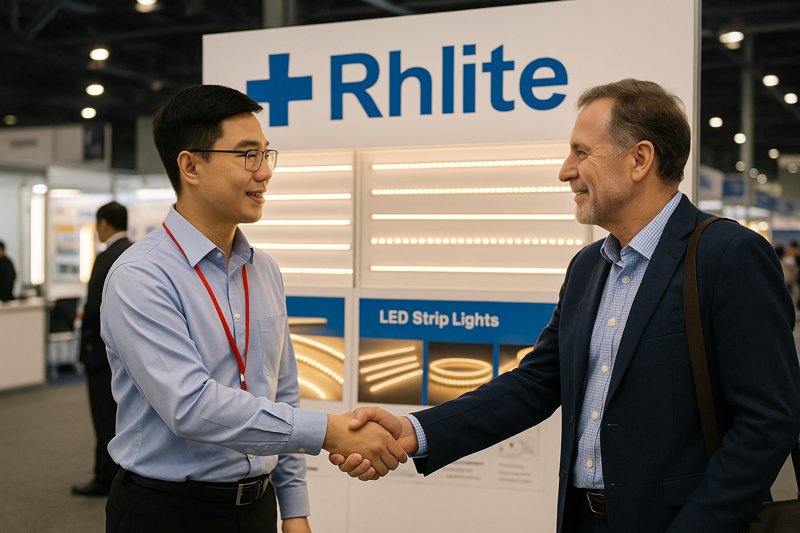
The best client relationships I have are partnerships. I have a client in California, let’s call him "Pro-Level Tom," who I first met at the LIGHTFAIR International trade show. He didn’t just ask for a price list. He spent an hour at our booth with our lead engineer, a sample of his current product, and a list of problems he was having with it. We talked about phosphor quality, heat dissipation, and polyurethane potting for IP67 ratings. He was vetting us, and we were understanding his needs. After the show, we sent him samples. He tested them rigorously. Now, years later, we are his production arm. We develop new products together. He tells us what the market in the US wants, and we tell him what’s possible with new technology. That is the end goal: not just to buy, but to collaborate.
The Direct Factory Partnership9 Blueprint
Finding and building a relationship with a factory partner is the most profitable and strategically sound sourcing method for any serious lighting business. It eliminates all middlemen, gives you complete control over your product, and provides access to a level of technical support you can’t get anywhere else. This process requires more work upfront than buying off the shelf, but the payoff in margin, quality, and competitive advantage is immense. This is how you build a resilient and profitable supply chain10. It’s a systematic process of discovery, verification, and relationship building.
| Step | Action Item | Why It’s Crucial | Jermey’s Pro Tip (Your Expertise) |
|---|---|---|---|
| 1. Discovery | Find potential factories through targeted Google searches ("high cri led strip factory China11"), industry trade shows (like LFI, Light + Building), and LinkedIn. Look for factories with professional, informative websites. | This moves beyond algorithm-driven marketplaces to find specialists who are actively marketing their expertise. Good factories invest in their brand presence. | Look at their "About Us" and "Factory Tour" pages. Do they show real photos of their equipment and team? A professional factory is proud of its facility and happy to show it off. It signals transparency. |
| 2. Qualification | Initiate contact with 2-3 of the most promising factories. Engage their sales and engineering teams with specific, technical questions about your needs. Use the "Red Flag/Green Flag12" method from the previous section. | This is your interview process. You are testing their knowledge, communication skills, and willingness to be a partner, not just a seller. | Don’t just email. After the initial contact, request a video call. Seeing the person you are dealing with and having a real-time conversation builds trust much faster than dozens of emails. |
| 3. Sampling & Testing | Once you have confidence in a factory, request paid samples of the specific products you need. Do not accept random, free samples. Pay for exactly what you want to test. | This is the only way to truly verify quality. Test the CCT and CRI with a spectrometer if you have one. Physically bend the strip. Check the quality of the 3M adhesive tape and the soldering pads. | Test for consistency. If you order a 3000K strip, do all samples look identical? Also, test their customization capability. Ask for one sample with a custom 2-foot lead wire. Their ability to handle a simple custom request tells you a lot about their process. |
| 4. First Order & Logistics | Start with a smaller, but still significant, trial order. Clearly define payment terms (e.g., 30% deposit, 70% upon completion/before shipping) and shipping terms (FOB, EXW, DDP). | This lets you test their production and logistics process with lower risk. It verifies their stated lead times and a hundred other small details that only appear during a real transaction. | For your first few orders, consider using a third-party inspection service13 in China before the final payment is made. It’s a small cost for great peace of mind and keeps the factory accountable. As trust builds, you may no longer need it. |
Conclusion
Choosing where to buy is a strategic decision. Local wholesalers offer speed for small jobs, but for growth, profit, and control, building a direct online partnership with a vetted factory is the winning move.
Explore how factory-direct purchasing can significantly reduce costs and improve project margins. ↩
Learn how customization can meet specific client needs and elevate your business value. ↩
Discover the importance of expert support for solving complex lighting issues effectively. ↩
Understand how proper certification can boost your credibility and win high-spec projects. ↩
Understanding supplier identity is crucial for ensuring you partner with legitimate manufacturers, avoiding scams. ↩
Evaluating prices helps you identify potential red flags and make informed purchasing decisions. ↩
Effective communication can reveal a supplier’s reliability and technical expertise, ensuring a successful partnership. ↩
Verifying certificates is essential to avoid fraud and ensure product quality, protecting your investment. ↩
Explore this link to understand how a Direct Factory Partnership can enhance your sourcing strategy and profitability. ↩
Explore strategies for creating a robust supply chain that enhances your business’s resilience and profitability. ↩
This resource will guide you on locating reputable high CRI LED strip factories in China for your lighting business. ↩
Discover how the Red Flag/Green Flag method can help you assess potential factory partners effectively. ↩
Find out how third-party inspection services can safeguard your investments and ensure product quality. ↩