Your project is complete, the lights look great, but the client calls you back. The remote is lost, the wall dimmer is confusing, and they can’t get the lights to do what they want. You’re losing valuable time on a callback that could have been avoided.
Choose regular LED strips for simple, set-and-forget applications controlled by a wall switch. Choose smart LED strips when your client demands remote access, voice control, automation, or easy control of complex lighting scenes. It’s about matching the control to the lifestyle.
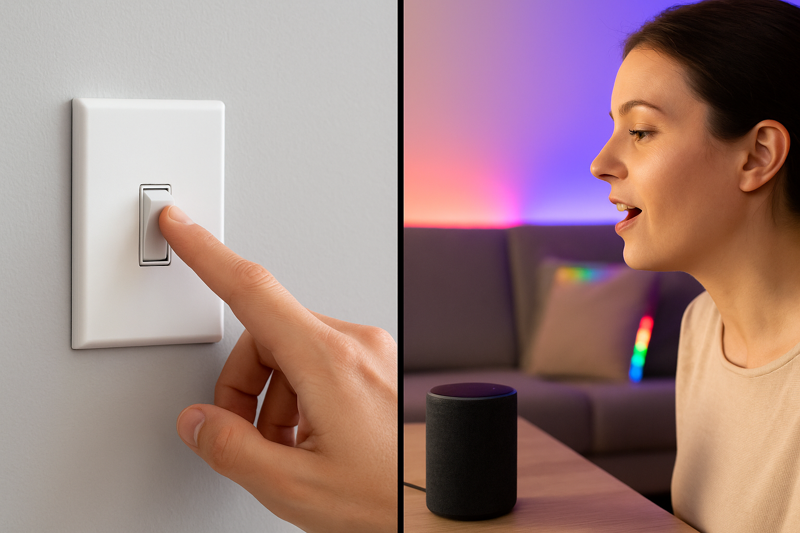
I learned this lesson the hard way early in my career. I was supplying strip lights for a new restaurant. The owner wanted simple, warm white light in the dining coves. We used regular, high-quality strips connected to a standard wall dimmer. A week after opening, he called me, frustrated. His staff kept setting the dimmers at different levels, making the room look uneven. Every night, he had to walk around and manually adjust each of the six zones to get the atmosphere just right. He just wanted to press one button at 5 PM to set the "Dinner Scene." He didn’t need voice control or fancy colors; he just needed simple, repeatable scene control. We ended up replacing the entire system with a basic smart setup that had a keypad with four programmed scenes: "Cleaning," "Lunch," "Dinner," and "Closed." The upfront cost was about 20% higher, but the owner said it saved him 15 minutes of hassle every single day. That experience taught me that "smart" isn’t just about flashy features; it’s about solving real-world operational problems.
When Does a Regular LED Strip System Make Sense?
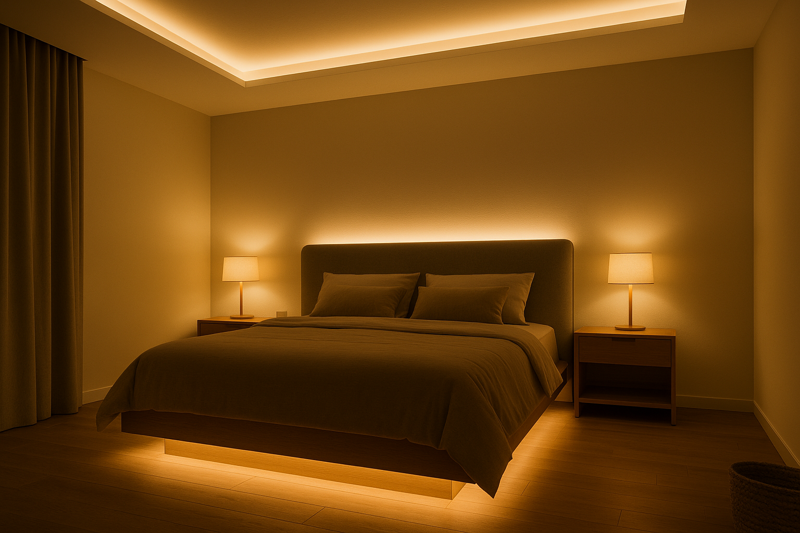
You’re specifying lighting for a project with a hundred identical hotel rooms. The goal is simple: provide reliable, high-quality accent light under the bed and behind the headboard, controlled by the main room switch. Adding smart controls would add cost, complexity, and another potential point of failure for no real benefit.
A regular LED strip system is the superior choice for high-volume, straightforward applications where simplicity, reliability, and cost-effectiveness are the highest priorities. It’s the workhorse for professional, repeatable results without unnecessary features.
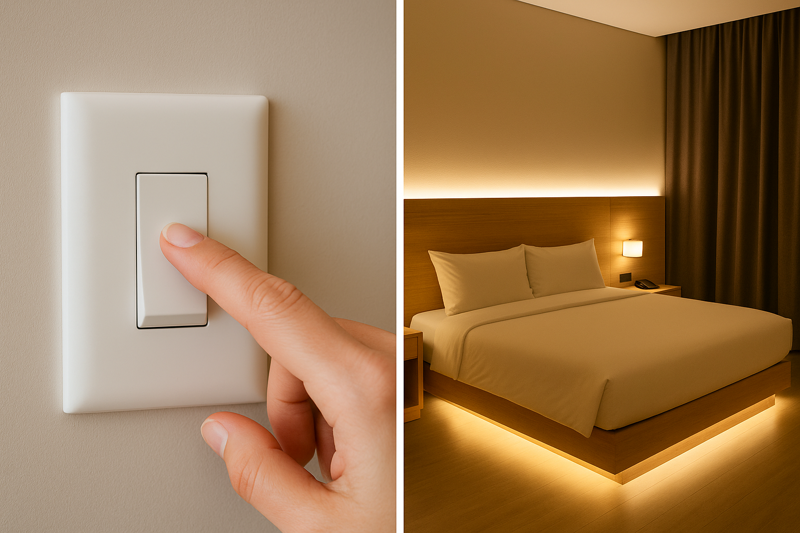
I work with a large contractor who specializes in renovating mid-range hotel chains. For him, every dollar counts, and reliability is everything. A single failed component can lead to a room being out of service, costing the hotel real money. For the cove and accent lighting in the guest rooms, we only use our regular 24V strips paired with a robust non-dimmable power supply, all wired to a standard wall switch. There are no dimmers to confuse guests, no apps to download, no Wi-Fi passwords to enter. The lights turn on, they provide a beautiful and consistent glow, and they turn off. That’s it. It just works, every single time. He once told me, "Jermey, the best technology in a hotel room is invisible. I don’t want guests calling the front desk because they can’t figure out the lights." In this context, the "smartest" choice was the simplest one.
Blueprint for Simplicity: The Hardwired System
A "regular" or "standard" LED strip lighting system is fundamentally simple. It’s a hardwired electrical circuit1. At its core, it consists of three key components:
- The LED Strip2: The light source itself.
- The Power Supply (Driver)3: This converts high-voltage AC power (like 120V in the US) to low-voltage DC power (typically 12V or 24V) that the strips need to operate.
- The Control Method4: This is usually a physical switch. It can be a simple on/off wall switch, or a dedicated wall dimmer that physically adjusts the power going to the strips.
The defining characteristic of this system is that it’s a closed loop. It does not connect to any external networks. There is no Wi-Fi, no Bluetooth, no Zigbee. Control is direct and physical. You flip a switch, and power flows. You turn a knob on a dimmer, and the voltage or current is modulated, changing the brightness. This simplicity is its greatest strength. It is inherently secure, extremely reliable, and easy for any qualified electrician to install and troubleshoot. There are no software updates, no compatibility issues, and no reliance on a homeowner’s Wi-Fi network. It’s the professional standard for applications where the lighting requirement is static and predictable.
| Feature | Regular LED Strip System | Smart LED Strip System |
|---|---|---|
| Control Method | Physical control: wall switches, remotes, wired dimmers. | Digital control: Smartphone apps, voice assistants, automation. |
| Connectivity | None. It is a closed, hardwired electrical system. | Networked via Wi-Fi, Bluetooth, Zigbee, or other protocols. |
| Core Functionality | On, Off, Dimming (with a compatible dimmer). | All regular functions PLUS scheduling, scenes, remote access, voice control. |
| Best Use Case | Set-and-forget accents, task lighting, large-scale commercial jobs. | Dynamic residential spaces, home theaters, convenience-focused clients. |
| Installation | Standard electrical wiring. Simple for any licensed electrician. | Requires network setup and configuration in addition to wiring. |
| Cost | Lower upfront hardware cost. | Higher upfront hardware cost. |
Why Upgrade to a Smart LED Strip System?
Your client is building their dream smart home. They already use Alexa to control their thermostat and door locks. They want their lighting to be part of this integrated ecosystem, allowing for voice commands, automated "Welcome Home" scenes, and the ability to check if lights are on when they’re away from home.
Upgrade to a smart LED strip system when your project requires integration, automation, and convenience. Smart systems transform lighting from a simple utility into an interactive part of a modern home’s central nervous system.
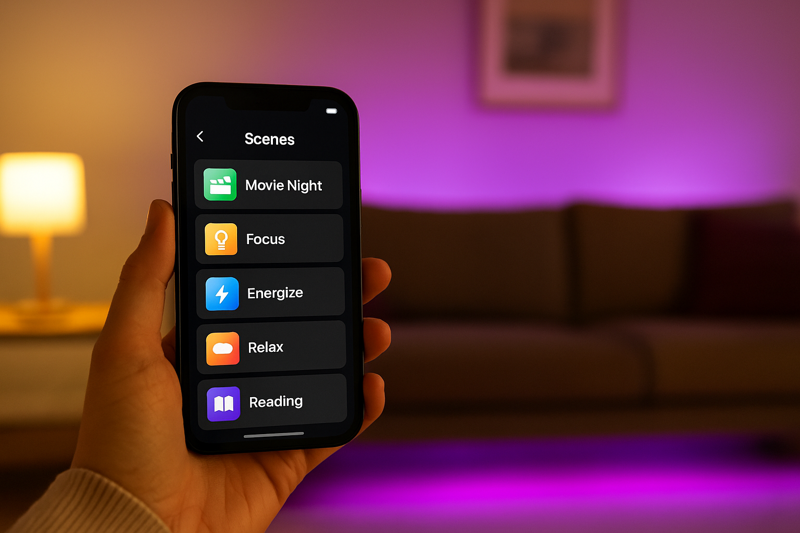
A designer I work with was creating a high-tech media room. The homeowner wanted a true "one-touch" experience. When he says, "Alexa, turn on Movie Night," a series of events needs to happen. The main lights dim down, the projector screen lowers, the AV equipment turns on, and the accent LED strips around the ceiling cove and behind the screen slowly fade up to a deep blue color. This kind of multi-system integration is impossible with a regular LED strip system. We supplied our Zigbee-controlled RGBW strips and a controller that integrates seamlessly with their home automation hub. Now, a simple voice command triggers a complex and impressive lighting scene that would otherwise require fumbling with four or five different remotes and switches. That’s the power of a smart system. It’s not just about controlling lights; it’s about orchestrating an entire experience.
Blueprint for Integration: The Connected System
A "smart" LED strip system adds a crucial fourth component to the traditional setup: a controller or receiver. This device sits between the power supply and the LED strip. While it still handles the basic job of delivering power, its primary role is to act as a communication hub. It contains a radio (Wi-Fi, Bluetooth, Zigbee, etc.) that allows it to receive digital commands wirelessly.
This opens up a world of control possibilities:
- App Control5: You can use a smartphone or tablet to control brightness, color, and set scenes.
- Voice Control6: By linking with platforms like Amazon Alexa, Google Assistant, or Apple HomeKit, users can control their lights with simple voice commands.
- Automation & Scheduling7: You can set lights to turn on automatically at sunset, wake you up gently in the morning by simulating a sunrise, or turn off all the lights at 11 PM every night.
- Remote Access: Because the system is connected to the internet (usually via a Wi-Fi or a Zigbee hub), you can control and check the status of your lights from anywhere in the world.
From an installer’s perspective, the key is choosing the right communication protocol.
- Wi-Fi: Easy to set up as it uses the existing home network, but can be less reliable if the Wi-Fi signal is weak.
- Bluetooth: Very simple pairing, but limited range. You generally need to be in the same room to control the lights.
- Zigbee/Z-Wave8: These create their own dedicated "mesh" network, which is extremely robust and reliable. They are the professional’s choice for whole-home smart lighting systems, but they do require a separate hub or bridge to connect to the home’s Wi-Fi router.
The decision to go smart is a decision to prioritize a dynamic, convenient, and integrated user experience over the raw simplicity of a hardwired system.
| Scenario | Choose Regular | Choose Smart | Key Decision Factor |
|---|---|---|---|
| Retail Shelf Lighting | ✓ | Simplicity and reliability are paramount. No need for complex controls. | |
| High-End Kitchen | ✓ | Client wants task, accent, and mood scenes. Voice control for when hands are full. | |
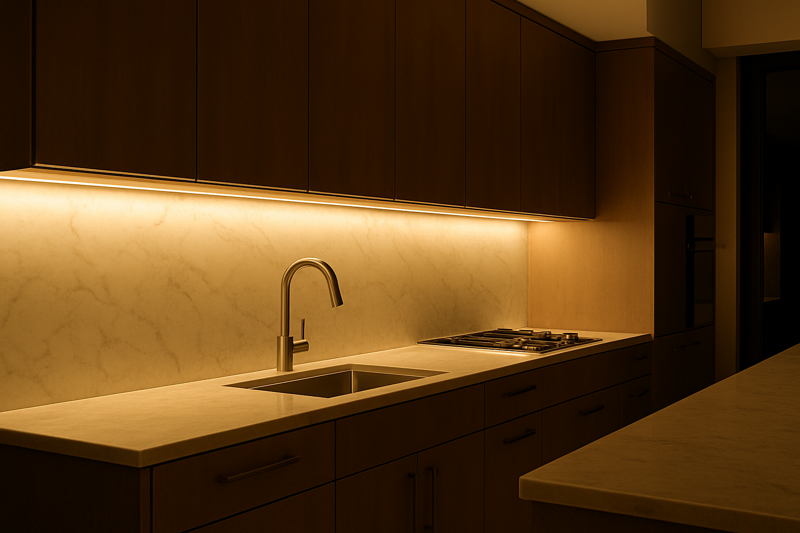
| Basic Under-Cabinet Light | ✓ | The goal is simple, functional task lighting controlled by a wall switch. | |
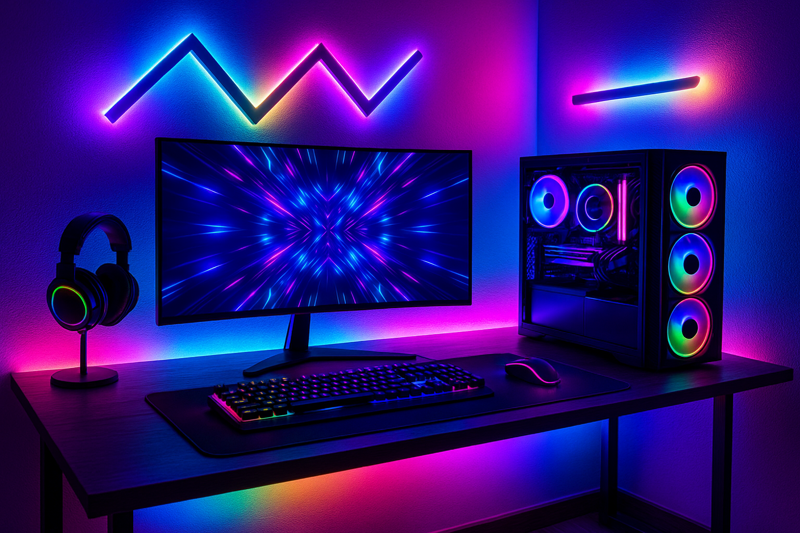
| Child’s Bedroom | ✓ | Fun colors, wake-up routines, and nightlight schedules add significant value. | |
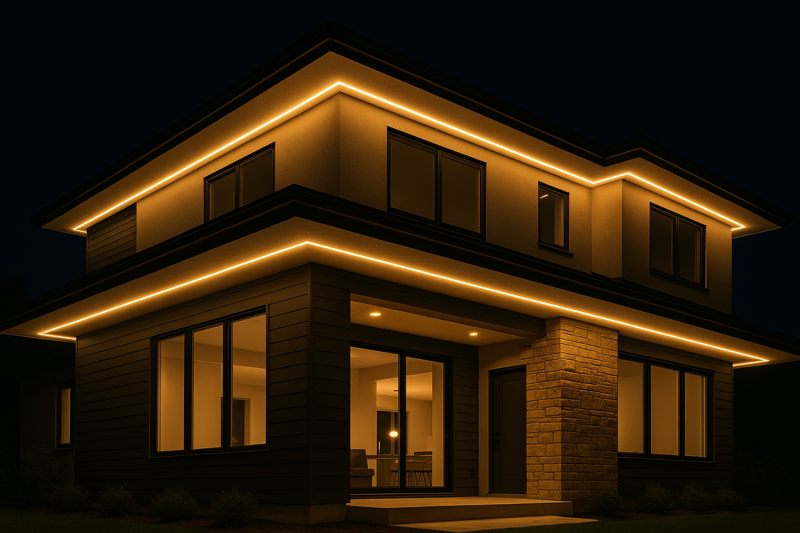
| Exterior Landscape Accents | ✓ | Automated scheduling (on at sunset, off at sunrise) is a huge convenience. | |
| Hallway and Stair Lighting | ✓ | Often tied to motion sensors for safety. A simple, reliable system is best. |
Conclusion
The choice is not about which is "better," but which is "right" for the job. Regular strips offer foolproof reliability for basic needs. Smart strips offer the integrated, automated experience modern clients increasingly demand. Understand the client’s lifestyle first.
Understand the benefits of hardwired electrical circuits, including reliability and security in lighting systems. ↩
Explore the advantages of LED Strip lighting, including energy efficiency and versatility in design. ↩
Learn about the crucial role of power supplies in LED systems and how they ensure optimal performance. ↩
Discover various control methods for LED lighting, from simple switches to advanced smart controls. ↩
Explore how app control enhances your smart lighting experience with convenience and customization. ↩
Discover the ease of managing your lights with voice commands through popular platforms. ↩
Learn how automation can simplify your daily routines and enhance your living space. ↩
Understand the strengths of these protocols for creating a reliable smart lighting network. ↩