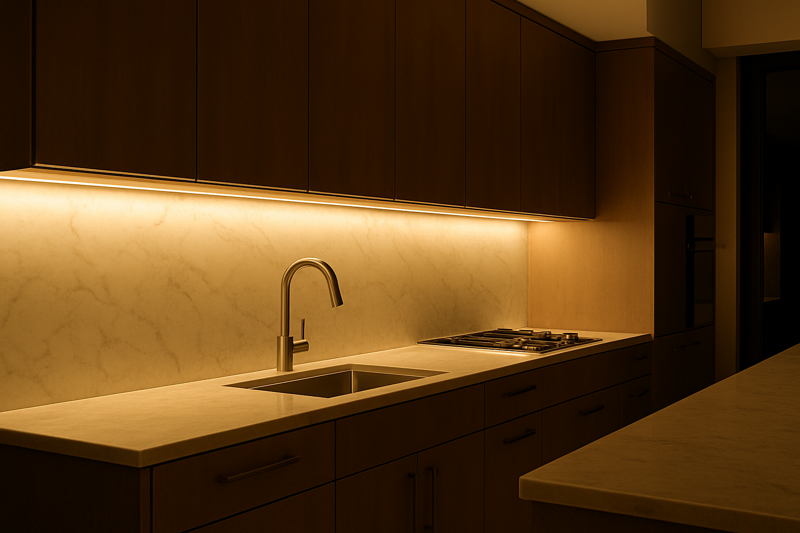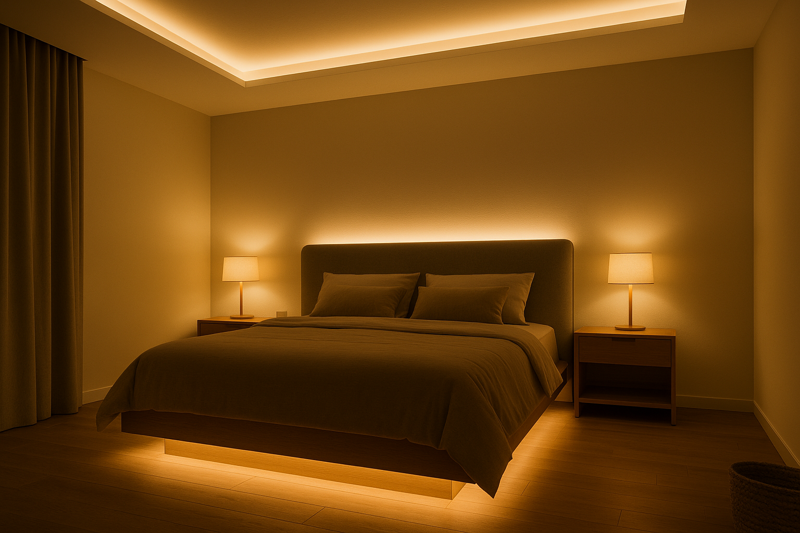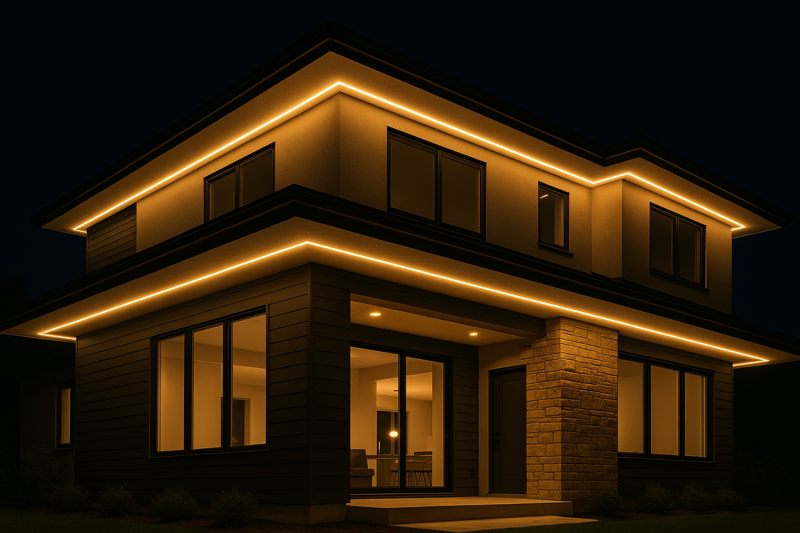
You’re trying to choose a strip for a project, but the list of specifications is endless. Picking the wrong lumens, CRI, or IP rating can turn a high-end installation into a costly failure, and you’re the one who will get the blame.
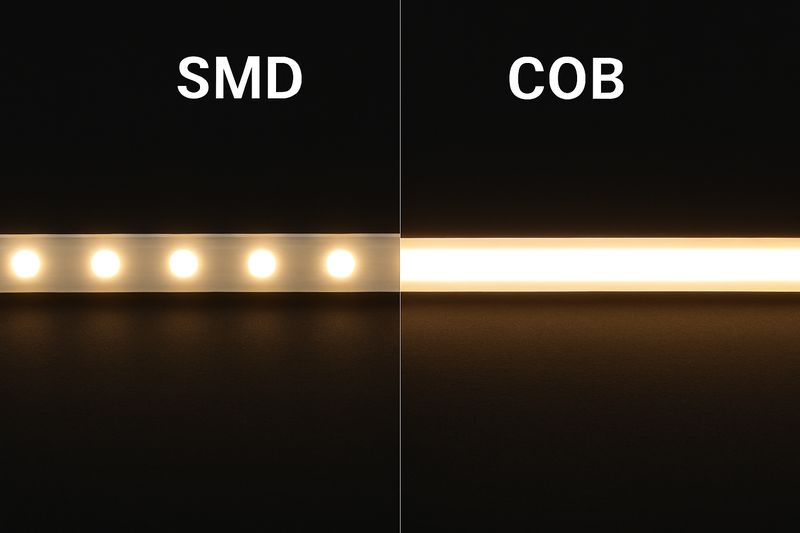
Start by defining the exact goal of the light: creating a mood, enabling a task, or withstanding the elements. Then, build your specification sheet around that single goal. For example, for seamless mood lighting, the priority specification is high LED density.
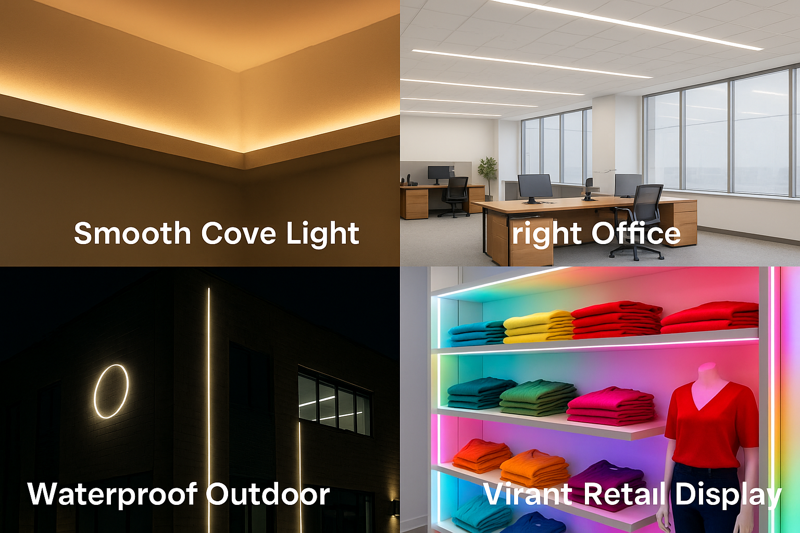
The difference between a good lighting professional and a great one is their ability to translate a design vision into a technical specification sheet. It’s a language. A client might say, "I want this hotel lobby to feel warm and luxurious." They don’t know what that means technically, but you should. It means a CCT of 2700K, a CRI above 90, and a COB strip inside a channel to create a flawless glow. I once worked with a contractor who lost a major bid because his proposal simply listed "white LED strips." His competitor won because their proposal specified "24V, 3000K, 95 CRI, 240 LEDs/meter strips to ensure dot-free, consistent lighting that renders interior finishes accurately." The client saw one as a commodity and the other as a solution. This guide will teach you how to speak that language of solutions, giving you four real-world blueprints you can use for your own projects.
What Specs Define Perfect Architectural Cove Lighting?
Your client wants the elegant, high-end "glowing ceiling" effect they see in magazines. You install standard strips, but they see ugly dots and uneven light, making their luxury space look cheap.
For flawless architectural coves, the most critical specification is smoothness. Prioritize COB strips for a completely dot-less line of light. If using standard strips, demand a minimum of 240 LEDs/meter inside a channel with a frosted diffuser.
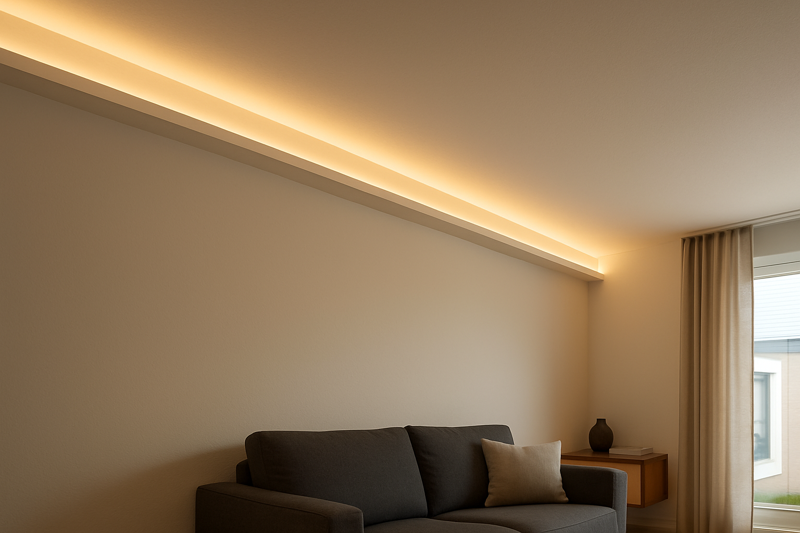
I remember a lighting designer I work with was designing the guest rooms for a 5-star hotel. Her vision was a soft, indirect "halo" of light around the ceiling perimeter. She knew that any hint of spotting or "dotting" would ruin the entire effect and look incredibly cheap. The reflection off the ceiling would magnify any imperfection. She didn’t ask me for a price on a "warm white strip." She sent me a specification: "Must be dot-less, 2700K, CRI 90+, 24V, at least 1000 lumens/meter." She was solving the primary problem—smoothness—first. We immediately sent her samples of our seamless COB strips. They produced a perfect, uninterrupted line of light, exactly what she envisioned. By prioritizing the most important specification for the application, she guaranteed a successful result and a happy hotel client.
Blueprint for High-End Coves and Indirect Lighting
The goal here is 100% aesthetic. The light should feel like a natural part of the architecture, not a series of tacked-on lights.
- The Smoothness Hierarchy: Your first and most important choice.
- Best: COB Strips1. This is the ultimate solution. They are inherently dot-free, creating a perfect line of light.
- Excellent: Ultra-High Density (240-720 LEDs/m). These minimize gaps between chips, creating a very smooth look, especially in a good channel.
- Unacceptable: Low Density (60-120 LEDs/m). Do not use these for exposed coves. The dotting will be obvious and will look unprofessional.
- Color Temperature (CCT)2: This sets the mood. For residential, hospitality, and restaurants, always lean warm.
- Standard: 2700K – 3000K. This range feels inviting, relaxing, and luxurious.
- Color Rendering (CRI)3: High CRI makes everything in the room look better.
- Minimum: CRI 90+. In a luxury space, this is non-negotiable. It makes wood tones, fabrics, and skin tones look rich and natural.
Here is the spec sheet you should build for this application:
| Specification | Priority Level | Recommended Value | Why It’s Critical for Tom’s Business |
|---|---|---|---|
| LED Technology | CRITICAL | COB or 240+ LEDs/m | This is the factor that prevents client complaints about "cheap-looking" dots. |
| Color Temperature | High | 2700K or 3000K | Creates the warm, inviting, premium atmosphere clients are paying for. |
| CRI | High | 90+ (High R9) | Ensures expensive interior finishes and decor look their absolute best. |
| Voltage | Medium | 24V DC | Standard for long runs common in coves, ensuring even brightness. |
| Brightness | Medium | 800 – 1500 lumens/meter | Bright enough for a strong ambient effect without being overpowering. |
| Accessories | High | Aluminum Channel with Frosted Diffuser4 | Further diffuses the light for a smoother finish and protects the strip. |
When you present a client with a proposal that includes these justified specs, you are not just selling a light strip; you are selling a guaranteed high-end result.
How Should You Specify Lighting for a Productive Office?
You’ve been tasked with lighting a new corporate office. If you choose light that is too warm and dim, productivity suffers. If it’s too harsh and glary, it causes eye strain and headaches.
For office and task lighting, prioritize function and visual comfort. Specify a neutral white CCT (4000K) for alertness, high lumens (1500+) for visibility, and pair it with a UGR<19 (Unified Glare Rating) diffuser to prevent eye strain.
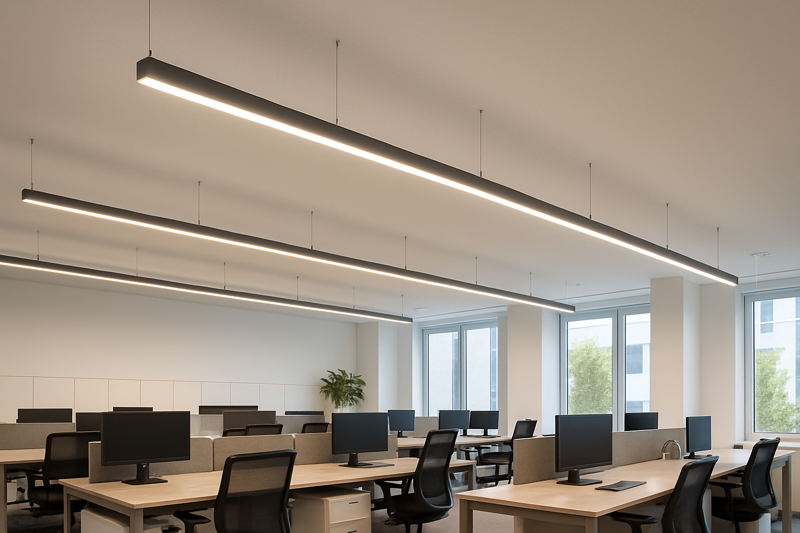
A large contractor who buys from us was bidding on a contract to fit out the new headquarters for a tech company. The facility manager was very knowledgeable and had clear requirements. His biggest concern was employee well-being and productivity. He said, "I don’t want a dim, sleepy office, and I absolutely can’t have glare on computer screens." The contractor worked with my team to develop a complete solution. We didn’t just quote a strip; we proposed a system: our high-efficacy, 4000K, 90 CRI strip inside a deep aluminum profile with a special prismatic, low-UGR diffuser. We provided the photometric data (IES files) to prove the system would deliver the required foot-candles on the work surfaces without creating glare. He won the contract because he addressed the client’s specific pain point directly with a documented solution, while his competitors just offered a price per meter.
Blueprint for Office, Workshop, and Task Lighting
The goal here is performance and human comfort. The light is a tool to help people work effectively and safely.
- Color Temperature (CCT)5: This drives alertness.
- Ideal: 4000K Neutral White. This CCT is widely regarded as the best for professional environments. It’s clean and clear without being cold or clinical. 5000K can also be used but can feel harsh to some.
- Brightness (Lumens)6: This is for pure function. Task areas need lots of light.
- Target: 1500 – 2500+ lumens/meter. The exact amount depends on the ceiling height and fixture design, but for task lighting, more is generally better. It can always be dimmed if needed.
- Glare Control (UGR)7: This is a critical but often overlooked spec for comfort.
- Target: UGR < 19. This isn’t a spec of the strip itself, but of the fixture it’s in. It requires using a deep profile and a specialized lens or diffuser designed to direct light downwards, not into people’s eyes.
Here is your spec sheet for high-performance task lighting:
| Specification | Priority Level | Recommended Value | Why It’s Critical for Tom’s Business |
|---|---|---|---|
| Color Temperature | CRITICAL | 4000K | Proven to improve alertness and concentration in a work environment. |
| Brightness | CRITICAL | 1500 – 2500+ lm/m | Delivers the high light levels needed for reading, typing, and other tasks. |
| Glare Control (Fixture) | CRITICAL | UGR < 19 Profile/Lens | Prevents employee complaints about eye strain and headaches, a key concern for corporate clients. |
| CRI8 | High | 85+ (90+ is better) | Ensures clear visibility and accurate color for documents and on-screen work. |
| Voltage | Medium | 24V DC | Efficient for the long, continuous runs common in office suspension lighting. |
| Efficacy | Medium | 120+ lumens/watt | Lowers the building’s long-term energy costs, a major selling point for facility managers. |
By specifying for CCT, lumens, and glare, you show the client you understand the science of workplace lighting, elevating you from a supplier to a trusted consultant.
What Are the Key Specs for Durable Outdoor LED Lighting?
You install beautiful LED strips on a building facade. After one year, they have yellowed, cracked, and sections are failing due to water ingress. The whole project looks terrible, and the client is threatening legal action.
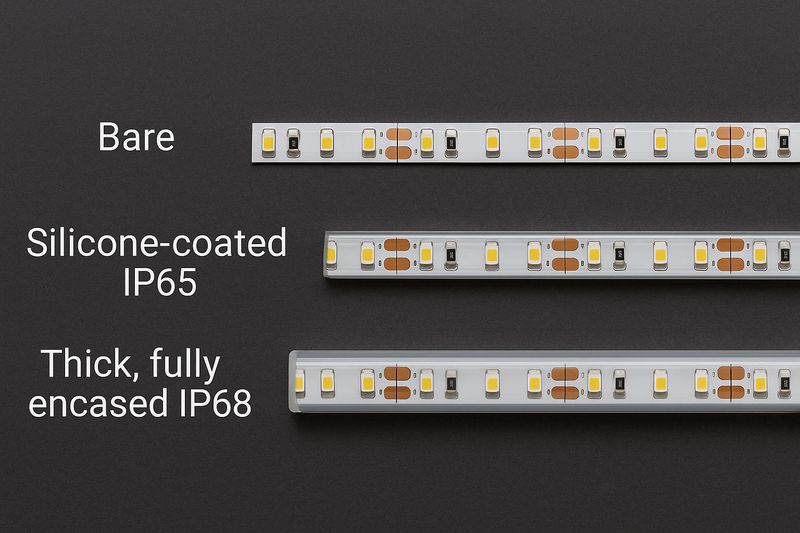
For outdoor use, the only priority is durability. The most critical specification is the IP (Ingress Protection) rating and the material used for waterproofing. Demand IP67 minimum, and choose full silicone extrusion over simple silicone coating for superior UV and water resistance.
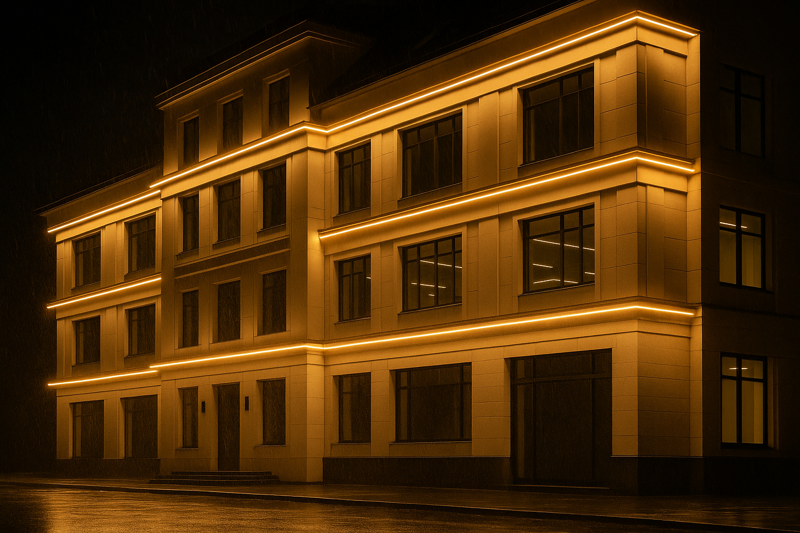
I had a call with a landscape architect in California. He was designing the lighting for a coastal resort and had been burned before. He told me, "I installed an IP65 strip from another company, and the salt air and sun destroyed it in 18 months. The silicone tube got cloudy and brittle." I knew his problem exactly. He had used a cheap, hollow silicone tube that just sleeved the strip. It wasn’t bonded and had poor UV stability. I explained our process: we use a co-extrusion method where the LED strip is completely encased in a solid block of high-grade, anti-UV silicone. There are no hollow gaps for moisture to collect. It’s a solid, ruggedized unit. I sent him a sample, and he could feel the difference in weight and density immediately. He specified our IP67 extruded strips for the resort, and years later, they still look and perform perfectly.
Blueprint for Outdoor Facades and Landscapes
The goal here is survival. The product must withstand water, UV rays, temperature swings, and physical impact.
- Ingress Protection (IP Rating)9: This is a two-digit number that tells you its resistance to solids and liquids.
- IP65: Protects against low-pressure jets of water. This is a very low level of protection, suitable only for areas that get splashed but are mostly sheltered.
- IP67: Protects against temporary immersion in water (up to 1 meter). This is the professional minimum for most outdoor and landscape applications.
- IP68: Protects against continuous submersion. Use this for pools, fountains, or areas with standing water.
- Waterproofing Method: How it achieves the IP rating matters more than the rating itself.
- Bad: Hollow Silicone Tube. Traps moisture and air, yellows quickly.
- Okay: Silicone Glue/Coating. Provides basic protection but can peel and discolor.
- Best: Full Silicone Extrusion. Encapsulates the strip in a solid, UV-stable block. This is the most robust and reliable method for long-term outdoor use.
Build your outdoor specification sheet with survival as the priority:
| Specification | Priority Level | Recommended Value | Why It’s Critical for Tom’s Business |
|---|---|---|---|
| Waterproofing Method10 | CRITICAL | Full Silicone Extrusion | The most reliable method to prevent failures, call-backs, and warranty claims. |
| IP Rating | CRITICAL | IP67 or IP68 | Guarantees the product is rated to survive real-world weather conditions. |
| UV Resistance11 | High | Specified Anti-UV Silicone | Prevents the strip from yellowing and cracking in sunlight, protecting the investment. |
| Voltage | High | 24V DC | Reduces voltage drop issues across the long outdoor runs needed for facades and paths. |
| CCT / Color | Medium | As per design (e.g., 3000K or RGBW) | The aesthetic choice, made only after durability is guaranteed. |
| Physical Protection12 | High | Solid extrusion provides impact resistance | Protects the strip from damage during installation and from public interaction. |
Selling a cheap outdoor product is one of the fastest ways to destroy your reputation. Specifying for durability with an IP67 extruded product is how you build a reputation for reliability.
Conclusion
Stop selling "LED strips" and start providing targeted solutions. By creating a specific blueprint for each application—prioritizing smoothness for coves, function for offices, and durability for outdoors—you deliver better results and become an indispensable partner.
Explore the advantages of COB Strips, the ultimate lighting solution for achieving a seamless and professional look in high-end spaces. ↩
Understanding Color Temperature is crucial for creating inviting atmospheres in residential and commercial spaces. ↩
Discover why high CRI is essential for enhancing the beauty of interior finishes and creating a luxurious ambiance. ↩
Learn how this accessory enhances light diffusion and protects LED strips, ensuring a smooth and elegant finish. ↩
Understanding CCT helps in creating a productive work environment, enhancing alertness and comfort. ↩
Exploring this will reveal how proper brightness levels can boost productivity and reduce eye strain. ↩
This resource will explain how glare control can prevent discomfort and improve employee satisfaction. ↩
Learning about CRI will help you understand its role in ensuring accurate color visibility in workspaces. ↩
Understanding IP ratings is crucial for selecting durable outdoor products that can withstand environmental challenges. ↩
Explore effective waterproofing methods to ensure long-lasting performance and reliability in outdoor settings. ↩
Learn about UV resistance to protect your outdoor investments from sun damage and ensure longevity. ↩
Discover why physical protection is essential for outdoor products to withstand impacts and ensure durability. ↩