Your client wants a stunning lighting effect for their new pool, but you know that water and electricity are a dangerous mix. Using the wrong product could lead to catastrophic failure, safety hazards, and legal nightmares.
Only use low-voltage (12V/24V) LED strips with an IP68 rating, specifically designed for full and continuous submersion. These strips are typically encased in solid, chlorine-resistant materials like silicone or polyurethane to ensure long-term safety and durability.
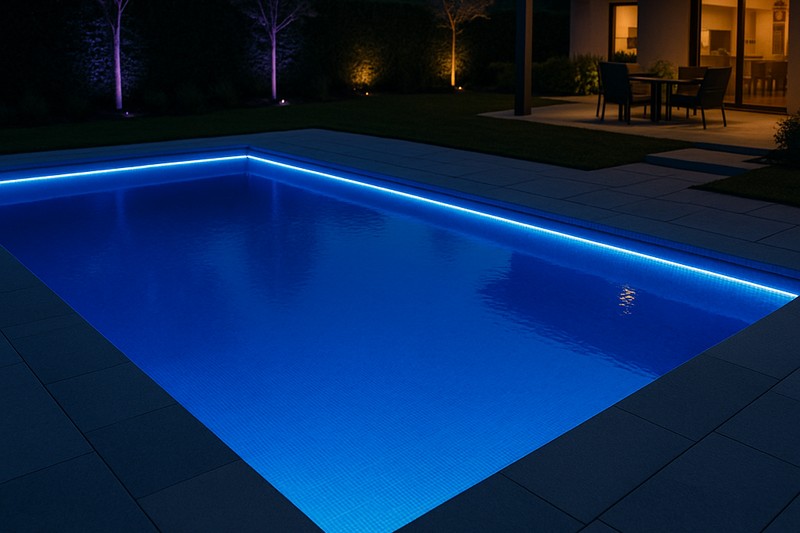
I cannot overstate the importance of getting this right. I once got a call from a landscape architect, a potential new client, who was in a state of panic. An installer he had hired used a standard "waterproof" IP65 strip to light a decorative fountain in a commercial courtyard. Within months, the lights were flickering, and a maintenance worker reported feeling a slight tingle in the water. It was a disaster waiting to happen. We had to explain that IP65 is only splash-proof; it’s completely unsuitable for submersion. The entire project had to be drained, ripped out, and redone with a proper IP68 product. It was a costly lesson for them, but it highlights a critical truth: when it comes to underwater lighting, there are no shortcuts. You are not just dealing with aesthetics; you are dealing with safety and liability.
Why Is the IP68 Rating Absolutely Non-Negotiable?
You see "waterproof" advertised on many LED strips, but the term is dangerously vague. How do you know which product will actually survive and remain safe when fully submerged in a pool for years?
The IP rating system is your guide. IP68 is the only rating that signifies a product is protected against continuous, long-term submersion in water under pressure. Anything less, like IP67 or IP65, will inevitably fail.
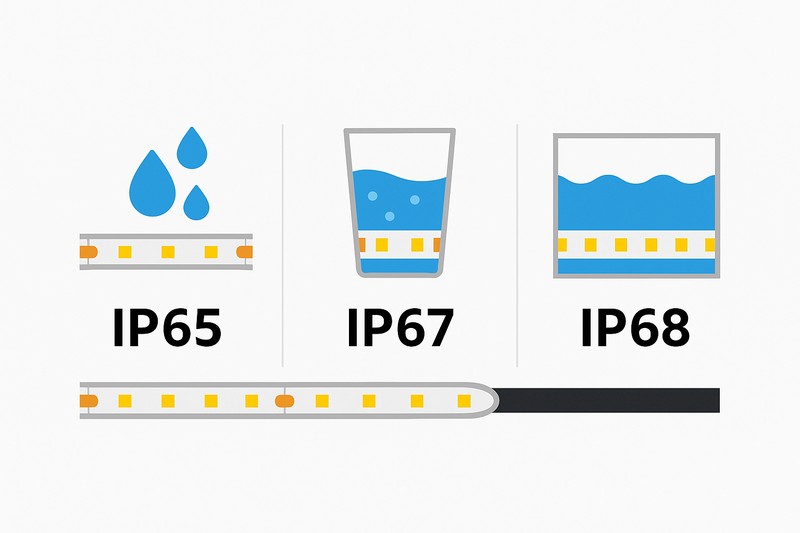
Tom, one of my most experienced distributors, tells his contractor clients, "If the product is going to live underwater, it needs to be able to breathe underwater, and only IP68 can do that." He learned this the hard way early in his career. He sold a large quantity of IP67 strips for a series of shallow decorative ponds. IP67 means it’s protected against temporary immersion up to 1 meter. He thought that would be enough. However, the constant presence of water, combined with temperature changes, created a pressure differential that slowly forced moisture past the seals. Within a year, over half the installations had failed due to water ingress. Since then, he has created a strict rule for his sales team: for any application involving submersion—pools, ponds, fountains, even water-logged ground—only sell IP68. It is the only way to guarantee a successful project and avoid costly callbacks.
Decoding the IP Numbers
The "IP" stands for Ingress Protection1. It’s a universal standard that classifies the degree of protection a product has against foreign bodies.
- The First Digit (Solids): The ‘6’ in IP6X means the product is completely dust-tight. This is standard for high-quality outdoor strips.
- The Second Digit (Liquids): This is the critical number for water features.
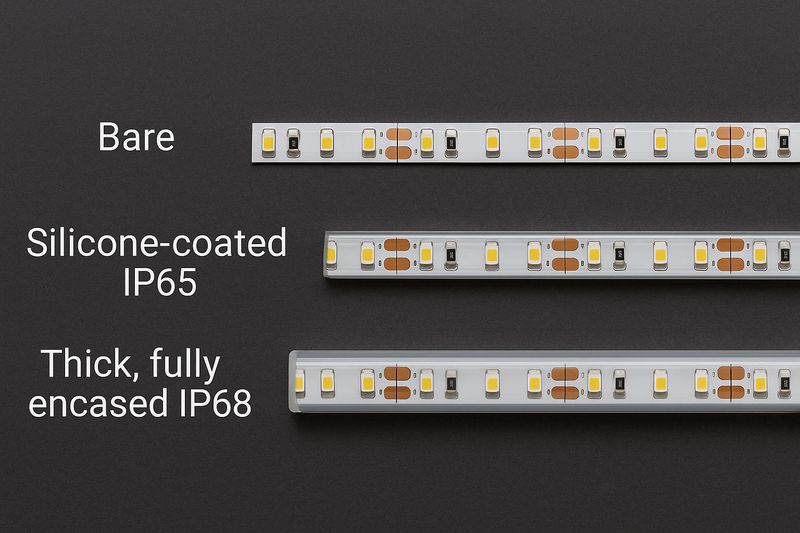
- IP65: Protected against low-pressure water jets from any direction. Think of it as "splash-proof." Good for general outdoor use where it might get rained on. Completely unsuitable for submersion.
- IP67: Protected against temporary immersion in water (up to 1 meter for 30 minutes). Will not survive long-term underwater.
- IP682: Protected against continuous, long-term immersion in water under conditions specified by the manufacturer (e.g., up to 3 meters deep). This is the ONLY acceptable rating for pool and fountain lighting.
Here’s why the difference is so critical for underwater applications:
| IP Rating | Level of Protection | Suitable Applications | Unsuitable Applications (High Risk) |
|---|---|---|---|
| IP65 | Splash and jet proof. | Decks, landscape accents, signage (above ground). | In-ground, puddles, ponds, pools. |
| IP67 | Temporary immersion (up to 1m). | Potentially in-ground in well-drained soil. | Fountains, ponds, pools, water features. |
| IP68 | Continuous Submersion. | Swimming pools, fountains, ponds, water walls. | None (when used within specified depth). |
Choosing an IP68-rated strip from a reputable manufacturer like Rhlite isn’t just a best practice; it is the fundamental requirement for a safe and durable underwater lighting project. Anything less is professional negligence.
What Materials Can Withstand Pool Chemicals and UV Rays?
You’ve installed a beautiful IP68 strip, but a few months later it’s turning yellow, becoming brittle, or the jacket is starting to look cloudy. The pool chemicals and sunlight are destroying the product from the outside in.
Always choose IP68 strips encapsulated in high-grade, UV-stabilized, and chlorine-resistant polyurethane (PU) or silicone. Cheaper materials like PVC or epoxy will rapidly degrade, yellow, and crack when exposed to pool environments.
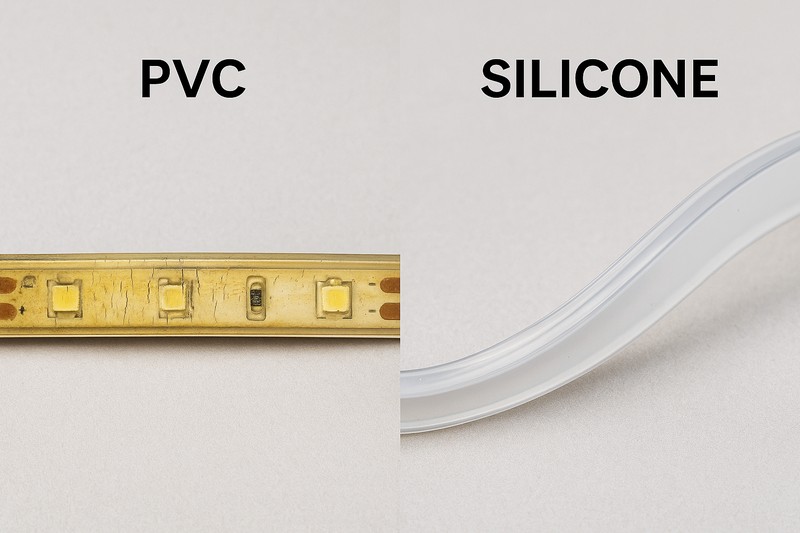
This is a lesson I learned directly from our R&D department. When we were first developing our IP68 line, we tested various encapsulation methods. We tried a clear epoxy resin, which was easy to work with. But after just a few hundred hours in our test tank with standard chlorine levels and UV exposure, the epoxy began to yellow and develop micro-cracks. We knew this would never survive in a real-world pool. We then moved to a high-grade polyurethane compound, which was much better, but our best results came from a specialized injection-molded silicone process. The silicone remained perfectly clear, flexible, and completely inert to the chemicals. It costs more to produce, but it’s the only way we can confidently offer a product for such a demanding application. When a client like Tom asks me why our IP68 strips are more expensive, I show them photos from these material tests. They immediately understand they are paying for long-term reliability.
The Battle of Materials: Why Your Choice Matters
The underwater environment is incredibly harsh. It’s not just water; it’s a chemical soup designed to kill organic matter, and it’s often blasted with direct sunlight.
- Epoxy/PVC: These are cheaper plastics. They are not inherently UV stable and are highly susceptible to damage from chlorine and other sanitizers. They will become brittle, discolor, and eventually crack, allowing water to reach the internal electronics. Avoid them at all costs.
- Polyurethane (PU)3: A high-quality PU encapsulation can be very effective. It offers excellent water resistance and durability. However, it’s crucial that it is a specific formulation designed for underwater and UV exposure, as not all PU is created equal.
- Silicone: This is the premium choice. Silicone4 is inherently waterproof, extremely resistant to UV radiation, and is chemically inert, meaning it doesn’t react with pool chemicals like chlorine or bromine. Its flexibility also helps it withstand the expansion and contraction from temperature changes.
Here’s a comparison of materials for pool lighting:
| Material | Chlorine Resistance | UV Resistance | Long-Term Clarity | Professional Recommendation |
|---|---|---|---|---|
| PVC / Epoxy | Poor | Poor | Becomes yellow and cloudy. | AVOID. Unsuitable, will fail. |
| Polyurethane (PU) | Good | Good (if UV stabilized) | Good, can slightly yellow over many years. | A strong, viable option. Must be from a quality supplier. |
| Silicone | Excellent | Excellent | Maintains clarity, does not yellow. | The superior choice. Offers the best longevity and reliability. |
For a project where failure is not an option, specifying an IP68 strip made from UV-stabilized silicone is the safest and smartest business decision you can make. It protects the installation, your client, and your reputation.
How Do You Securely Mount and Protect Underwater LED Strips?
You’ve selected the perfect IP68 strip, but its adhesive backing is useless underwater. How do you mount it so it stays put for years, looking straight and clean, not floating to the surface?
Use purpose-built mounting channels designed for underwater use. These channels are mechanically fastened or integrated into the pool structure, providing a secure housing that protects the strip from damage and ensures a professional, linear look.
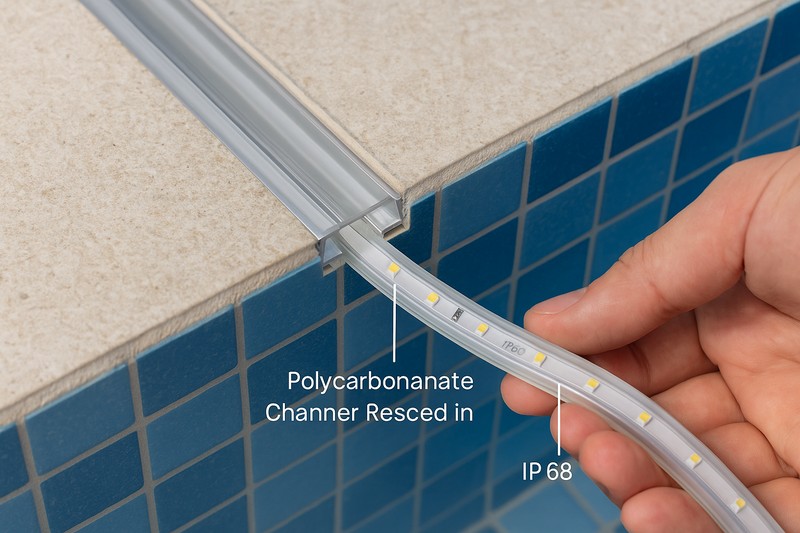
I worked with a pool builder who now includes a recessed channel as a standard feature in all his high-end pools. He calls it being "lighting-ready." It’s a small upfront cost for him during construction, but it’s a massive selling point for his clients. They know their pool is ready for a premium, integrated lighting system. It prevents the nightmare scenario of trying to properly secure a strip to a finished tile or plaster surface, which often involves messy adhesives that fail over time. Planning the mounting method from the start is the mark of a true professional.
Why Adhesives and Clips Fail
Standard installation methods are not designed for the underwater world.
- Adhesive Backing5: The 3M tape on the back of an LED strip will fail almost immediately in chlorinated water. It is not a mounting solution.
- Standard Clips: Regular plastic or metal mounting clips are also a poor choice. Plastic can become brittle from chemicals and UV. Metal clips, unless they are high-grade 316 stainless steel6, will rust and stain the pool surface.
The Professional Solution: Mounting Channels
Channels provide the secure, permanent housing required for a lasting installation.
- Recessed Installation (New Construction)7: This is the premium method. A groove is created in the pool shell during construction, and the mounting channel is set flush with the surface (tile, plaster, etc.). The LED strip then sits inside this channel, completely protected from pool cleaning equipment and creating a seamless, integrated look. This requires planning but delivers the best result.
- Surface-Mounted Installation (Retrofitting)8: For existing pools, you can use specialized underwater channels. These are fastened to the pool wall using stainless steel screws (must be Grade 316 or higher for saltwater) and a high-quality, chlorine-resistant marine-grade adhesive/sealant. This provides a robust, long-lasting installation.
Here’s how to choose the right method:
| Mounting Method | Best For | Pros | Cons/Challenges |
|---|---|---|---|
| Recessed Channel | New builds; major renovations. | Perfectly integrated, highly protected, most professional look. | Requires planning during the construction phase; higher initial labor. |
| Surface-Mounted Channel | Retrofitting existing pools. | Can be added at any time; very secure when done correctly. | The channel is visible; requires careful drilling and sealing of the pool shell. |
| Adhesive/Sealant Only | NEVER an option. | None. | Guaranteed to fail. Looks unprofessional, creates a safety hazard. |
Protecting the strip is just as important as waterproofing it. A proper mounting channel ensures your beautiful lighting effect doesn’t turn into a maintenance headache.
How Do You Power Underwater Lighting Safely and Legally?
You’ve selected and mounted the perfect IP68 strip. Now, how do you get power to it without creating an electrical hazard? National and local electrical codes for pools are incredibly strict for a reason.
You must use a low-voltage (12V or 24V DC) system powered by an isolated, outdoor-rated, Class 2 power supply. The power supply must be located a safe, legally mandated distance from the pool’s edge, and all wiring must be run inside a conduit.

I work closely with contractors who are licensed electricians, and they are incredibly serious about this. One of them, a specialist in high-end outdoor projects, walked me through his process. The low-voltage power supply is installed at least 10 feet away from the water’s edge, typically mounted on a nearby wall or post. He then runs the low-voltage wire through a sealed PVC conduit buried underground, which terminates in a waterproof junction box. The connection from the lead wire to the IP68 strip itself is the most critical point. He uses specialized IP68-rated connectors that are heat-shrunk and then further sealed inside the junction box. There is zero room for error. He says, "I plan every connection as if it’s going to be underwater forever, even the ones that are technically on dry land." This level of diligence is not optional; it’s required by law (like the NEC in the US) and is essential for safety.
The Pillars of a Safe Power System
Adhering to electrical codes is your primary responsibility. While codes vary by location, the core principles are universal.
- Low Voltage is Mandatory9: Never use high-voltage (120V/240V) lighting directly in a pool. Only 12V or 24V DC systems are permissible for this application. The low voltage dramatically reduces the risk of serious electric shock.
- Use a Class 2 Power Supply10: A Class 2 power supply is a safety-rated transformer that is inherently power-limited. In the event of a fault, it is designed to fail safely without delivering a life-threatening amount of energy. It must also be rated for outdoor or wet locations.
- Respect Setback Distances11: Electrical codes mandate a minimum distance between the power supply and the edge of the pool. This "setback" prevents any possibility of the high-voltage side of the system coming into contact with the water. Check your local codes for the exact distance required.
- Conduit and Waterproof Connections12: All wiring must be protected. Low-voltage cable running underground to the pool must be inside a conduit. Every single connection must be 100% waterproof using IP68-rated connectors, heat shrink tubing with adhesive linings, and waterproof junction boxes.
Here’s a simplified safety checklist:
| Component | Requirement | Critical Safety Reason |
|---|---|---|
| LED Strip Voltage | 12V or 24V DC ONLY. | Minimizes electric shock risk in case of a fault. |
| Power Supply | UL-listed (or equivalent), Class 2, Outdoor/Wet Location Rated. | Ensures the power source is isolated and fails safely. |
| Power Supply Location | At a mandated distance from the water’s edge (e.g., >10 ft). | Prevents high-voltage AC power from being near the pool. |
| Wiring and Connectors | All wiring in conduit; all connections must be IP68 rated. | Creates a physically protected and sealed electrical path. |
Always consult with and hire a licensed electrician for any pool lighting installation. Non-compliance is illegal, dangerous, and a massive liability for your business.
Conclusion
For pool and water features, safety and durability are paramount. Exclusively use low-voltage, IP68-rated LED strips made from premium silicone or PU, and ensure the entire system is installed by a qualified electrician.
Exploring Ingress Protection standards helps you choose the right products for various environments, ensuring safety and longevity. ↩
Understanding the IP68 rating is crucial for ensuring safety and durability in underwater lighting projects. ↩
Learn about polyurethane’s effectiveness and durability in harsh underwater conditions, ensuring long-lasting performance. ↩
Explore the advantages of silicone in underwater settings, including its waterproof and UV-resistant properties. ↩
Understanding the failure of adhesive backing in chlorinated water can help you choose better mounting solutions. ↩
Discover why using high-grade 316 stainless steel is crucial for preventing rust and ensuring durability in pool environments. ↩
Explore the advantages of recessed installation to achieve a seamless and professional look for your pool lighting. ↩
Learn the best practices for retrofitting surface-mounted channels to ensure a secure and lasting installation. ↩
Discovering the importance of low voltage in pool lighting can help prevent serious electric shock and enhance safety. ↩
Understanding Class 2 Power Supplies can enhance safety in electrical installations, ensuring compliance and reducing risks. ↩
Learning about setback distances is crucial for safety and compliance, preventing dangerous electrical hazards. ↩
Exploring waterproof connection methods can significantly improve safety and reliability in outdoor electrical systems. ↩