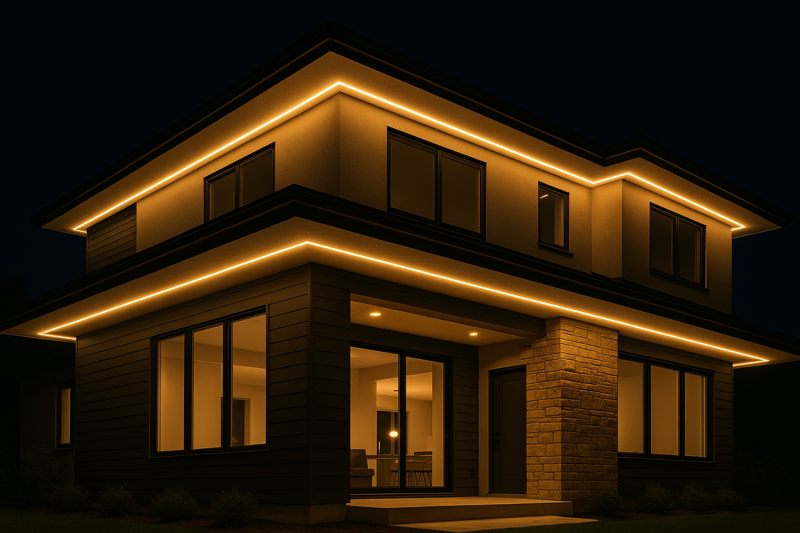
At night, your client’s beautifully manicured landscape disappears into a dark, flat void. A few generic spotlights create harsh hot spots and ugly shadows, completely failing to capture the garden’s natural beauty and dimension.
By strategically uplighting trees, grazing textures on shrubs, and defining garden beds with flexible LED strips, you can create layers of soft, integrated light. This transforms the landscape into a living sculpture, highlighting its natural form and depth.
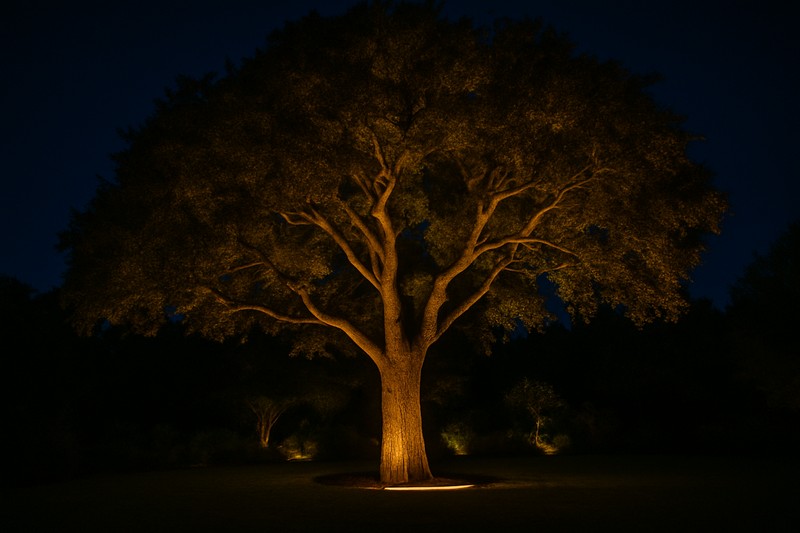
As a manufacturer, I believe light is a material, just like stone or wood. The most talented designers don’t just illuminate a landscape; they paint with light. They use it to reveal the texture of bark, the shape of a leaf, and the depth of the entire garden. This is the difference between simple visibility and creating true magic.
What is the Best Way to Light a Large, Mature Tree?
A single spotlight aimed at a grand, mature tree just creates a harsh glare on the lower trunk, leaving the magnificent upper canopy completely lost in the darkness. This approach makes the tree look smaller and less impressive.
Use a layered approach. Place powerful, narrow-beam uplights away from the base to illuminate the canopy from the ground up, and wrap the trunk with a flexible LED strip to create a foundational 360-degree glow.
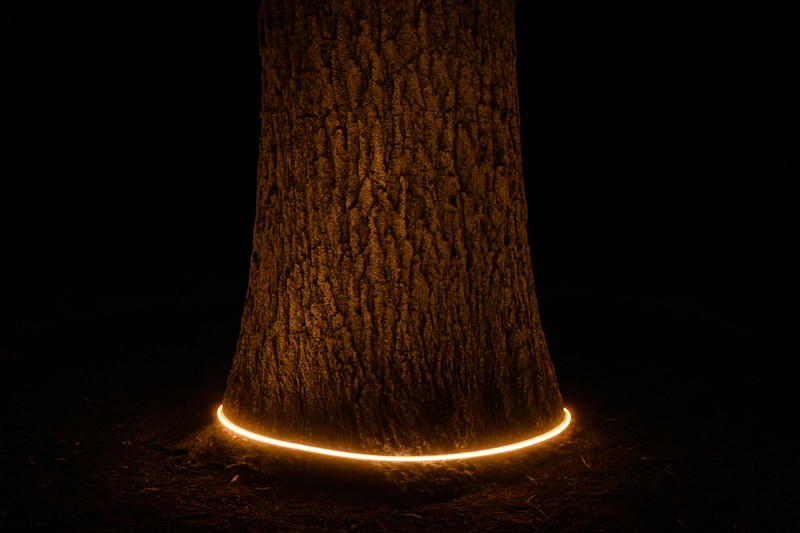
This dual technique is a signature of high-end landscape lighting. From the factory, we can provide both powerful linear fixtures for uplighting and highly flexible strips for wrapping. Offering this complete solution allows a designer like Tom to give a feature tree the majestic presence it deserves day and night.
Strategies for Lighting Majestic Trees
Giving a large tree a powerful presence at night requires more than one type of light.
Uplighting the Canopy
The goal here is to get light high up into the leaves and branches. Instead of placing a fixture right at the base, move it several feet away and aim it up into the canopy. Using multiple points of light from different angles creates a more dimensional, natural look. For very tall trees, a powerful linear LED fixture is often more effective than a traditional round spotlight.
Wrapping the Trunk
Wrapping the trunk with a flexible, durable LED strip provides a soft, foundational light that helps the tree stand out from its dark surroundings. It reveals the beautiful texture of the bark. The key is to use a strip that emits light sideways or is flexible enough to hug the contours of the trunk for a seamless look.
The Moonlighting1 Effect
For the ultimate subtle effect, a technician can mount small, downward-facing LED fixtures high up within the branches. This mimics the effect of natural moonlight filtering through the leaves, creating soft, dappled light2 patterns on the ground below. It’s a complex but incredibly beautiful technique.
| Technique | Light Placement | Primary Visual Effect |
|---|---|---|
| Canopy Uplighting | On the ground, away from the trunk, aimed up. | Highlights the leafy crown, creates drama. |
| Trunk Wrapping | Directly on the trunk surface. | Shows bark texture, creates a 360-degree glow. |
| Moonlighting1 | High in the branches, aimed down. | Creates natural, dappled light2 on the ground. |
How Do You Light Flower Beds and Shrubs Without Making Them Look Flat?
Shining a spotlight directly at a flower bed or a row of shrubs tends to wash out all the color and texture. It creates a flat, boring "wall of green" and doesn’t do justice to the intricate shapes of the plants.
Use linear LED strips at a low angle to "graze" the plants. Placing a strip along the edge of a bed and aiming it across the foliage reveals texture and creates beautiful highlights and shadows, bringing the plants to life.
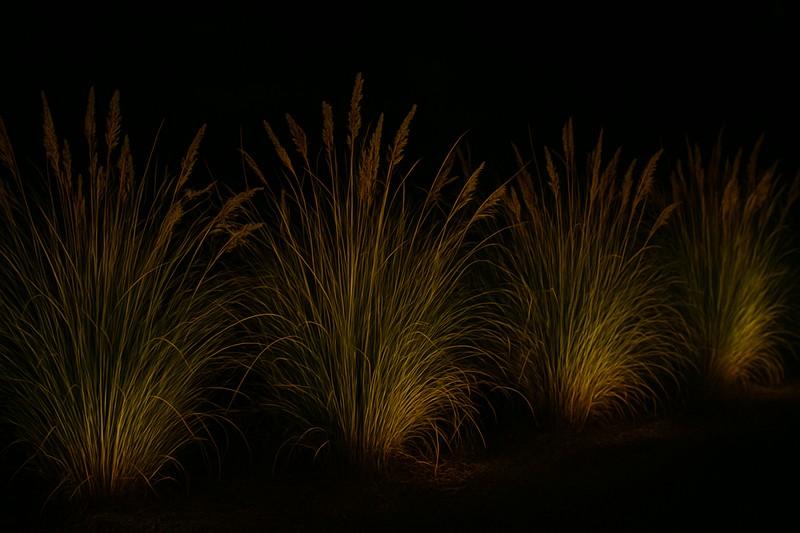
This technique is all about playing with angles. As a product supplier, I know that the low profile of an LED strip is its biggest advantage here. It can be easily hidden in mulch or along a hardscape edge, making the light source invisible and the effect seem completely natural.
Adding Dimension to Lower Plantings
The goal is to reveal form and texture, not just flood an area with light.
Grazing for Texture
This is the most effective technique for hedges, ornamental grasses, or any plant with interesting foliage. Place a continuous LED strip on the ground close to the base of the plants. The light skims across the surface at a sharp angle, catching the edges of leaves and creating dramatic shadows that reveal incredible detail.
Defining Borders
Install an LED strip along the inside edge of a hardscape border, like a low retaining wall or concrete curb. Tucking the strip under the capstone or lip of the border creates a clean line of light that perfectly frames the planting bed. It contains the space visually and provides a soft, indirect glow.
Creating Pools of Light
You don’t have to light the entire bed. Use shorter sections of LED strips3 to create soft "pools" of light around specific prize-winning roses, hostas, or sculptural plants. This draws the eye to key features and creates a more dynamic, less monotonous lighting scheme4.
| Technique | Strip Placement | Design Goal |
|---|---|---|
| Grazing | Close to the base of plants, aimed across. | To reveal the texture of foliage and flowers. |
| Bordering | Along a hardscape edge, pointing into the bed. | To frame the planting bed and create a clean line. |
| Pooling | Around specific plant clusters. | To highlight feature plants and create focus. |
How Can You Create a Sense of Depth in the Landscape?
If you light every tree and shrub with the same level of brightness, the entire yard can look like a flat, two-dimensional stage set. There’s no sense of distance, making the property feel smaller and less interesting.
Create visual depth by layering the light. Use brighter light for foreground elements close to the viewer, a softer level for mid-ground plants, and the most subtle light for trees in the background.
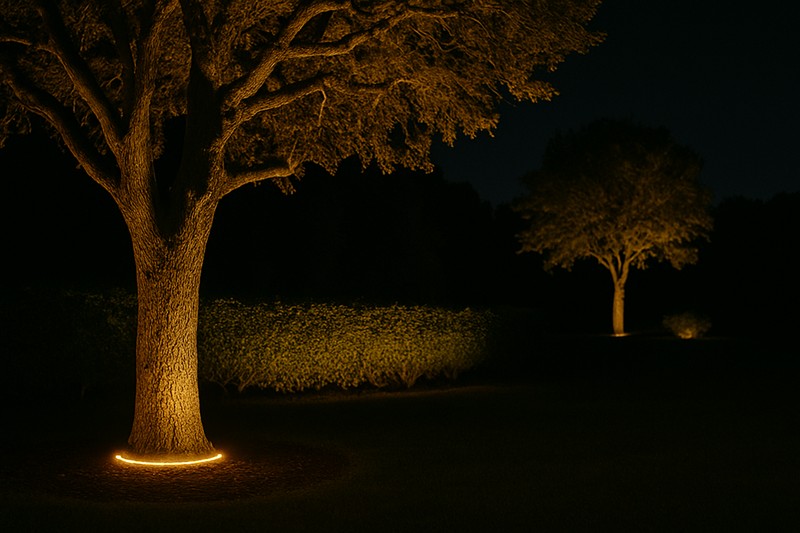
This is a core principle of theatrical and artistic lighting design that separates amateurs from pros. For my B2B clients like Tom, teaching their own clients about this concept adds immense value. It shows they’re not just installers; they are designers who understand how to manipulate perception and make a space feel larger and more immersive.
The Three Layers of Landscape Light
Think of your design as having a foreground, midground, and background.
The Foreground: The Welcome
These are the elements closest to the patio or viewing area, like a feature tree, a planter, or the plants framing a walkway. This layer should receive the most focused and often the brightest light. It’s the visual anchor of your scene.
The Midground: The Connection
This layer connects the foreground to the background. It includes things like shrubbery, garden beds, and secondary trees. The lighting here should be softer and more diffuse than the foreground. Its job is to lead the eye through the space without stealing the show. Using the grazing and bordering techniques is perfect for this layer.
The Background: The Vista
This is the furthest layer of your property, such as the distant tree line. The lighting here should be the most subtle of all. Just a faint uplight on a few select trees is enough to suggest that the property continues, creating a sense of mystery5 and vastness. It prevents the yard from ending at a harsh black wall.
| Light Layer | Brightness Level | Purpose in the Design |
|---|---|---|
| Foreground | Brightest | To create a strong focal point6 and anchor the view. |
| Midground | Medium | To connect the elements and guide the eye. |
| Background | Softest | To create a sense of scale, depth, and mystery. |
What Technical Specs Really Matter for LEDs Used in a Garden?
A garden is a brutal environment for any electrical product. Constant moisture, dirt, insects, fertilizer chemicals, and UV rays will destroy low-quality lighting in months, leading to angry clients and costly repair jobs.
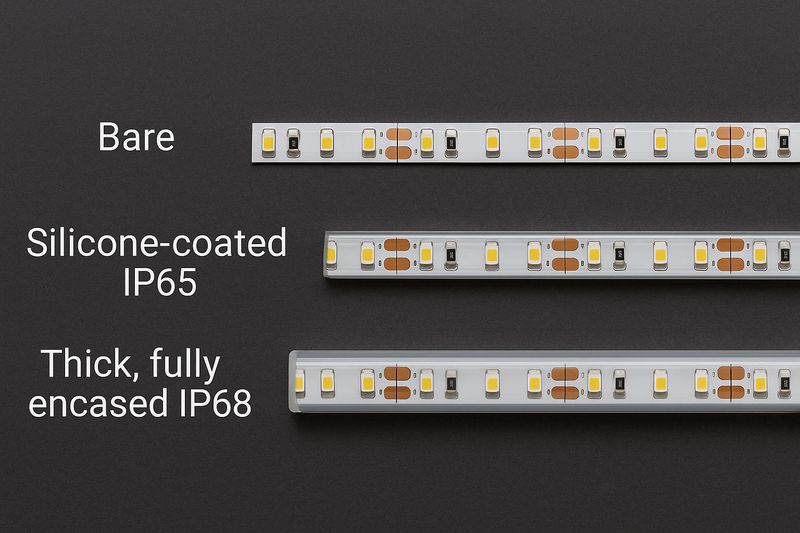
Only use LED strips with a minimum IP67 rating for water and dust protection, housed in a high-quality, UV-resistant silicone jacket. The entire system must be low-voltage (12V or 24V) for safety.
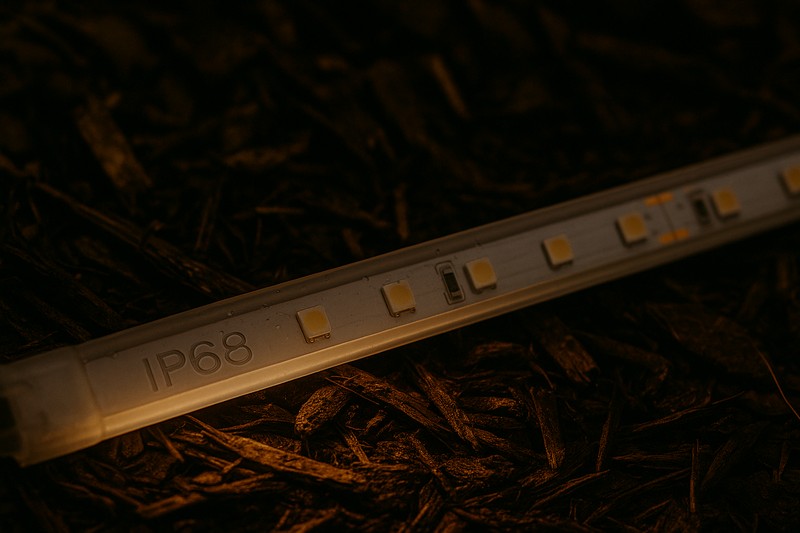
This is where my expertise as a factory owner is most critical. I see firsthand the difference between products that are just "water-resistant" and those truly built to survive being buried in wet soil for years. Specifying the right materials is the single most important factor for a long-lasting, reliable landscape lighting installation.
Engineering for Survival
Appearance matters, but durability is what protects your reputation.
IP Rating: Your Defense Against Water
The Ingress Protection (IP) rating is crucial.
- IP67 means the product is protected against temporary immersion. It’s suitable for most above-ground landscape applications where it might sit in puddles.
- IP68 means the product is protected against continuous immersion in water under specific pressure. This is the rating you need for any strip that might be buried in soil or installed in an area with poor drainage.
Jacket Material: Your Shield Against the Sun
The clear outer casing of the strip is its armor. Cheap PVC jackets will turn yellow, become brittle, and crack when exposed to the sun’s UV rays. A high-quality UV-stabilized silicone or polyurethane (PU) jacket will remain flexible and clear for many years, protecting the sensitive LEDs inside.
Low Voltage for Safety
Never use 120V line voltage lighting in a flexible, exposed landscape application. A 12V or 24V DC7 system is inherently safer, especially in a wet environment. It ensures that if a shovel accidentally cuts a wire, it won’t pose a lethal threat to a person or pet. Always pair the strips with a properly rated outdoor LED driver.
| Feature | Professional Specification | Why It Is Essential for Landscapes |
|---|---|---|
| IP Rating | IP67 Minimum, IP68 Preferred8 | To protect against rain, sprinklers, and ground moisture. |
| Jacket Material | UV-Stabilized Silicone/PU | To prevent yellowing and cracking from sun exposure. |
| Voltage | 12V or 24V DC7 | For safety in wet environments and around people. |
Conclusion
By treating light as a design material, you can use LED strips to paint a masterpiece. Layering light, grazing textures, and choosing durable products will transform any landscape into a breathtaking nocturnal experience.
Discover how the Moonlighting technique can enhance your outdoor spaces with natural light effects. ↩ ↩
Learn about the beauty and impact of dappled light in creating inviting outdoor environments. ↩ ↩
Explore this link to discover top-rated LED strips that enhance your garden’s beauty and functionality. ↩
This resource offers expert tips on designing a lighting scheme that elevates your garden’s aesthetics. ↩
Exploring this resource will provide insights on enhancing your landscape with mystery, making it more inviting and intriguing. ↩
This link will offer valuable techniques to establish a captivating focal point, enhancing the overall aesthetic of your garden. ↩
Explore the advantages of 12V or 24V DC systems for safety and efficiency in landscape lighting. ↩ ↩
Learn how IP67 and IP68 ratings protect your outdoor lighting from moisture and enhance durability. ↩