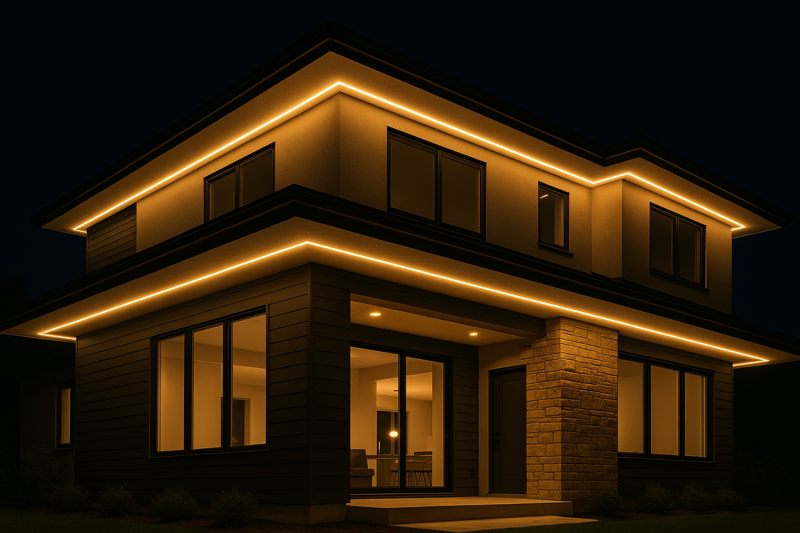
Struggling to choose outdoor LED strips for your home?
The best LED strips for home use combine durability, brightness, and easy installation for outdoor spaces.
Here’s how to find the right fit for your garden, patio, or deck.
Why is IP rating important for outdoor home lighting?
Most outdoor failures come from moisture and dust.
Choose the right IP level to protect your lights from the weather.
IP Ratings Explained
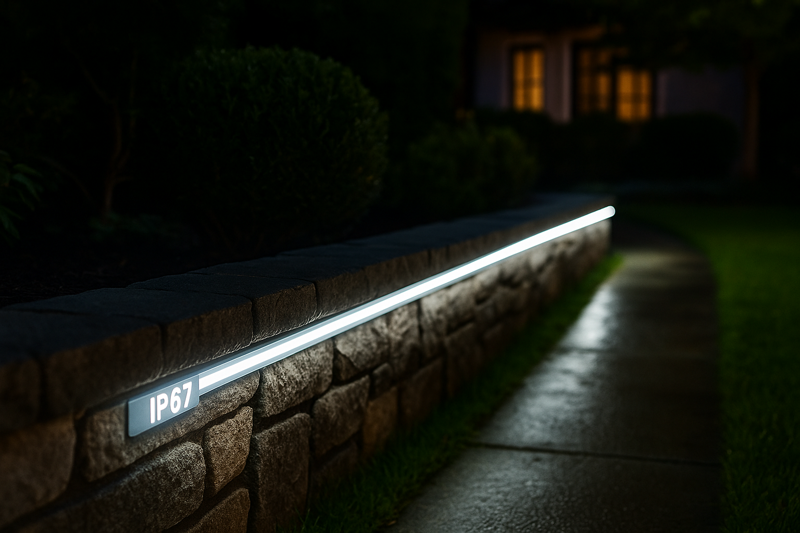
When I first installed LED strips outdoors, I didn’t understand IP ratings. That mistake cost me time and money. Now, I always check the label. IP65 is splashproof. IP671 handles heavy rain. IP68 can even survive full submersion.
Here’s a quick breakdown:
| IP Rating | Protection Type | Best Use Case |
|---|---|---|
| IP65 | Dust-tight, light water | Covered patios, under awnings |
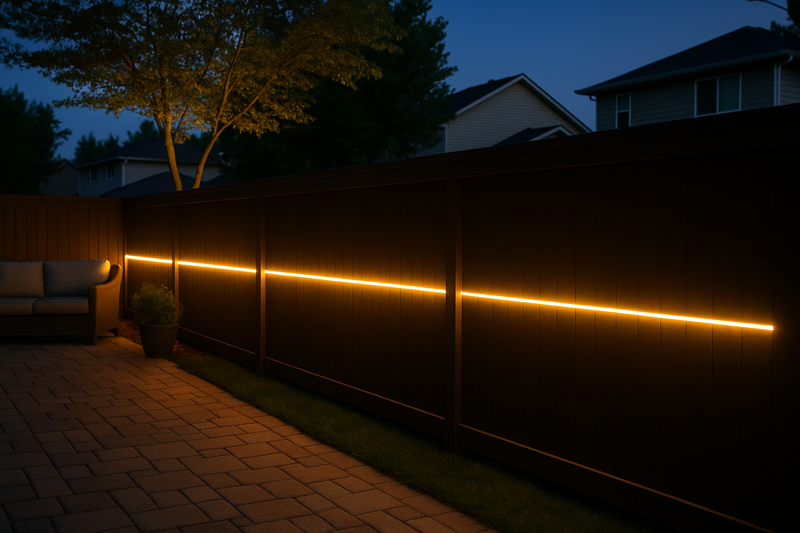
| IP67 | Rainproof and sealed | Garden fences, pathways |
| IP682 | Fully waterproof | Near ponds, steps, submerged areas |
For most homes, I recommend IP67. It works for nearly all weather conditions and gives peace of mind year-round.
Another thing I consider is cable entry. Even if the strip itself is waterproof, a weak spot at the connector can still fail. I use silicone sealant3 around entry points and make sure to avoid placing connectors directly in areas that pool water, like the corner of a deck.
If you live in a region with heavy snow, IP68 may be safer. Water turns to slush and ice, which can press into weak spots. I learned this on a rooftop job where the IP67 strip worked fine until snowmelt refroze around the joints.
What brightness level works best for outdoor spaces?
Not all lights are bright enough for open areas.
Balance safety, mood, and power by checking lumens per meter.
Brightness Guidelines for Outdoor Areas
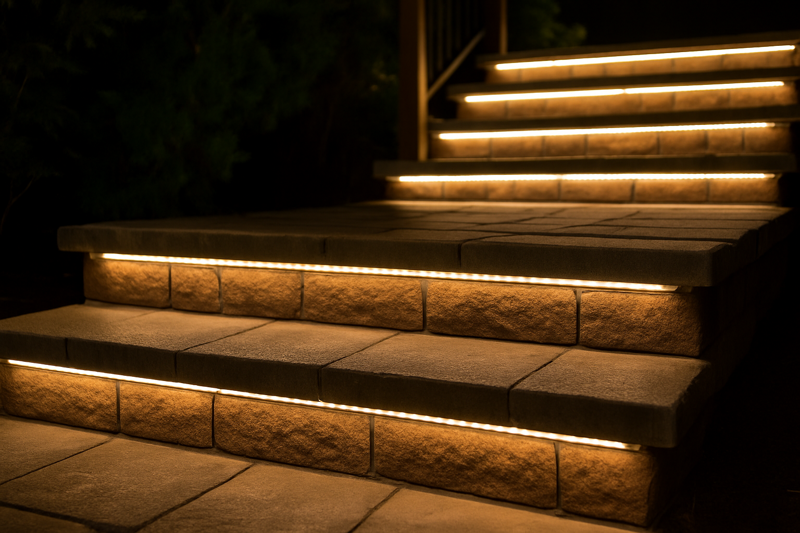
When I light a walkway or staircase, I aim for 800–1000 lumens per meter. For softer deck lighting or railings, 300–500 lumens is enough. If it’s too bright, it ruins the mood. If it’s too dim, it’s not safe.
Here’s what I recommend:
| Area | Suggested Lumens/m | Why |
|---|---|---|
| Garden paths | 500–800 lm/m | Safe to walk, not harsh |
| Deck edges | 300–600 lm/m | Subtle frame, easy on eyes |
| Steps and stairs | 700–1000 lm/m | Prevent trips and falls |
| Outdoor kitchens | 800–1200 lm/m | Bright enough for prep and cooking |
Always check the lumen output on the spec sheet—not just wattage. Good LED strips use less power but still shine bright.
Also think about spacing. The wider apart your strip is from a surface, the more the brightness spreads and the dimmer it looks. That’s why I prefer placing strips under eaves or inside diffusers for more even light. Don’t forget that most power supplies lose 5–10% brightness at long distances, so I always test the furthest segment.
Which color temperature fits a cozy outdoor vibe?
Lighting color changes the whole atmosphere.
Use warm whites for comfort and cooler tones for modern looks.
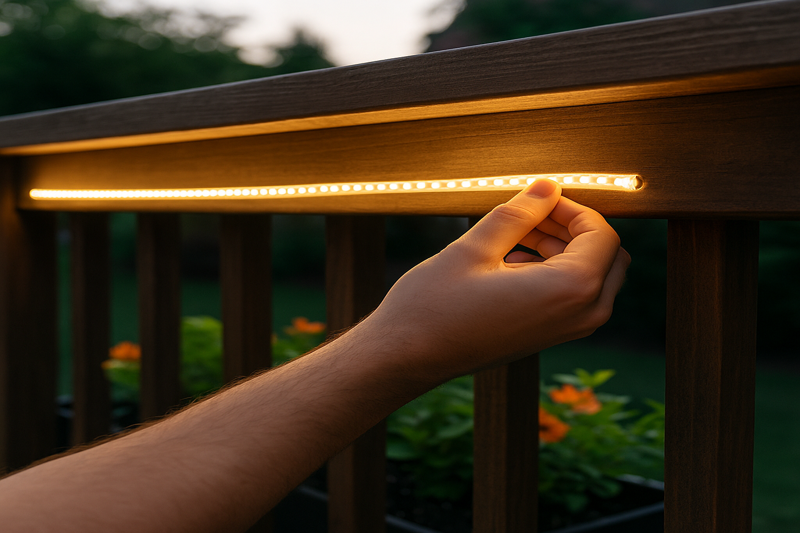
Choosing the Right Color Temperature
For homes, I usually install 2700K to 3000K strips. They give off a golden glow that feels inviting. Higher values like 4000K look clearer but can feel too cold.
Here’s how to pick:
| CCT (Kelvin) | Look & Feel | Best For |
|---|---|---|
| 2700K | Cozy, amber tone | Patios, gardens, family decks |
| 3000K | Soft white | Pergolas, walkways |
| 4000K | Neutral white | Security zones, garage area |
| 5000K+ | Bright, daylight | Not recommended for relaxing spaces |
I always test a small section first. What looks great inside may feel harsh outdoors.
Some clients request RGB strips. I only use those when the goal is festive or dynamic lighting. For everyday home comfort, nothing beats consistent warm white. One time I replaced an RGB setup on a customer’s pergola because it just didn’t feel cozy enough for evening dinners.
What types of outdoor strips are best for home DIY installs?
Some strips are easier to install without tools.
Look for plug-and-play kits with adhesive backs and waterproof connectors.
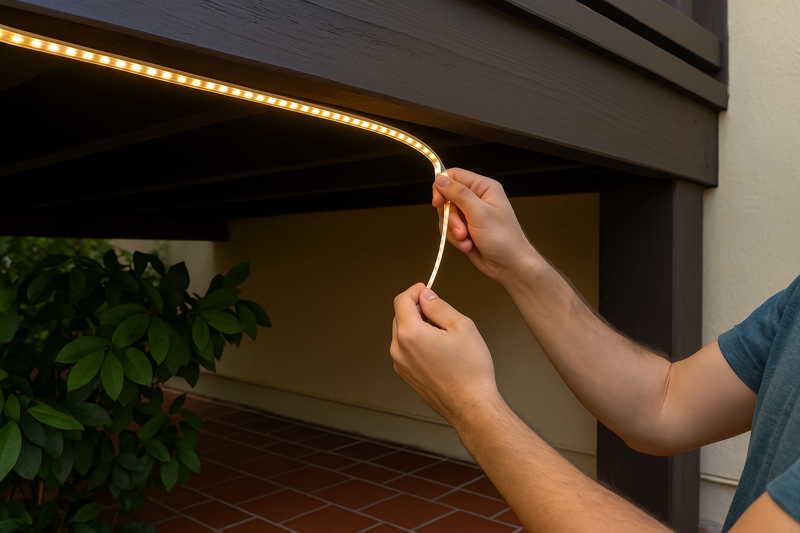
Features That Simplify Installation
For home users, I suggest buying full kits: strip + driver + remote + clips. It saves you time searching for parts. Many of my neighbors prefer 5-meter kits with 24V power.
Look for:
- Strong 3M adhesive backing4
- Pre-attached waterproof connectors
- Clear cutting lines every 10cm
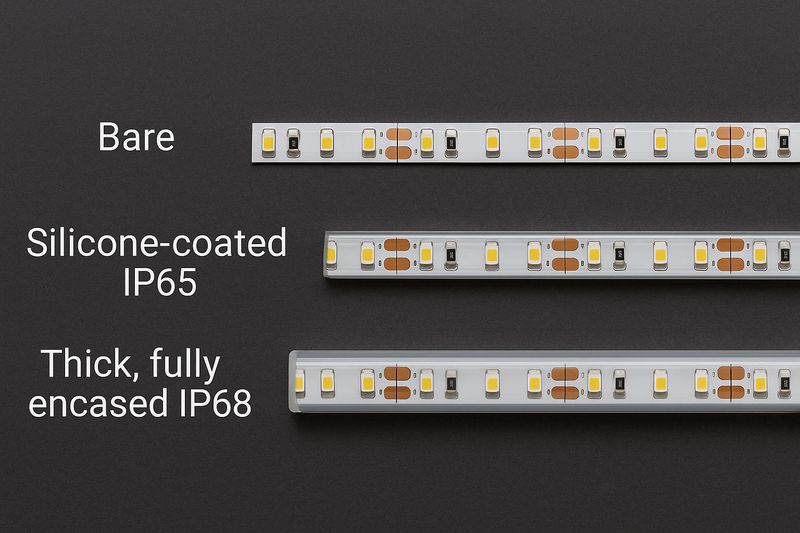
- Flexible silicone casing
Avoid bare PCB strips for outdoor use—they peel fast and fail in rain. I recommend choosing strips with full silicone extrusion5. It’s safer and lasts longer.
Installation is easier when you lay everything out first. I mark the placement with masking tape before peeling the adhesive. For curves or corners, I cut and reconnect using silicone-covered corner joiners6. I avoid sharp 90-degree bends because they stress the internal circuit.
My tip: Always plug in and test before permanently sticking the strip. It’s easier to adjust alignment before the glue sets. Also, buy a few extra clips—the ones that come in kits are often just enough but not generous.
How do I maintain outdoor LED strips after installation?
Even weatherproof lights need checks.
Clean regularly and inspect after storms to keep them working.
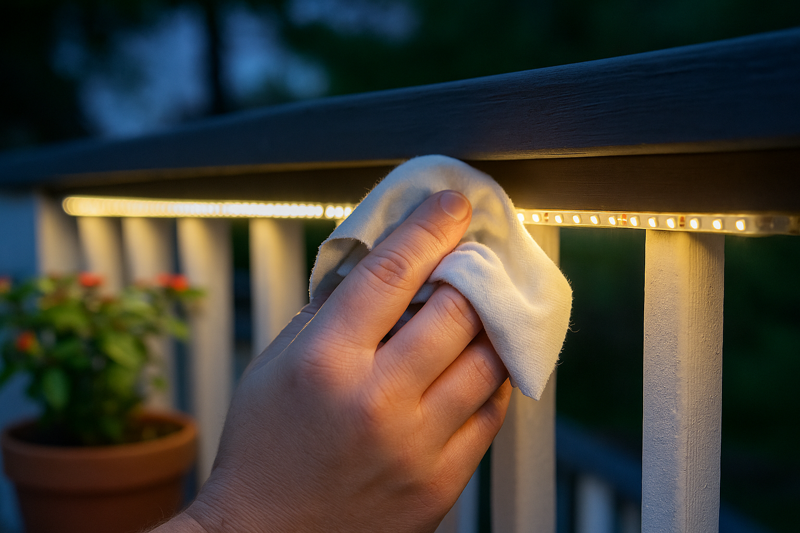
Maintenance Tips That Extend Lifespan
I clean my strips once every 1–2 months. I use a dry or lightly damp cloth—never soak them. After big rains or wind, I check for peeling or damaged connectors.
Here’s my routine:
| Task | Frequency | Tip |
|---|---|---|
| Wipe down surface | Monthly | Avoid pressure on the casing |
| Check connections | After heavy rain | Look for rust or exposed wires |
| Re-test brightness | Every 3 months | Compare to first install level |
If a section fades, I replace only that part. Most kits are cuttable and reconnectable, which saves cost.
I’ve found that bugs sometimes get under the diffuser or inside open ends—especially in summer. That’s why I seal unused connectors with caps and silicone. Also, I label the power supply with the install date to track performance.
If your power supply is outside, make sure it’s elevated and not sitting in puddles. I once had a unit trip the breaker just because water collected near the enclosure during a thunderstorm. A plastic box and a few bricks solved that problem.
Conclusion
Use IP67-rated warm white LED strips with the right brightness and proper mounting—and your outdoor spaces will shine every night.
Understanding the IP67 rating can help you choose the right LED strips for outdoor use, ensuring durability and performance. ↩
Exploring the IP68 rating will inform you about the highest level of waterproofing, ideal for extreme conditions. ↩
Learning how to properly use silicone sealant can enhance the waterproofing of your installations, preventing future issues. ↩
Explore the advantages of 3M adhesive backing for LED strips to ensure a secure and long-lasting installation. ↩
Discover why full silicone extrusion is crucial for outdoor LED strips to ensure durability and weather resistance. ↩
Learn how silicone-covered corner joiners can enhance your LED strip installations, especially around curves and corners. ↩