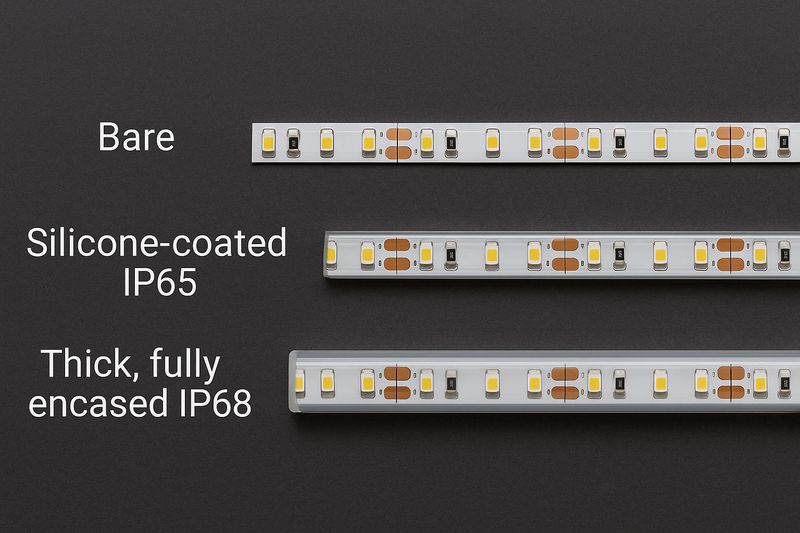
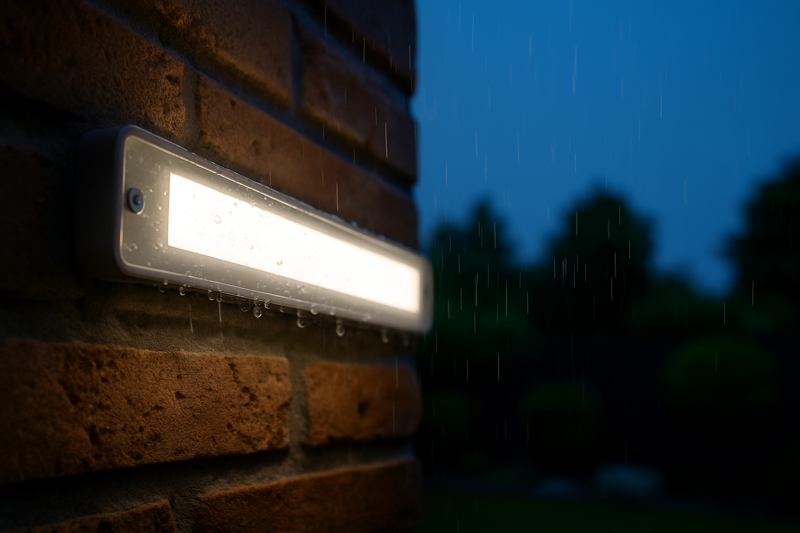
Unsure which waterproof level you need? Let’s break it down.
IP65, IP67, and IP68 ratings protect LED strips from dust and water. But each works best in different outdoor conditions.
Stick with us—the right choice can save your time, budget, and reputation.
What does an IP rating actually mean?
IP ratings look confusing at first. We’ll keep it simple.
IP ratings define how well a product resists dust and water.
How to read IP codes
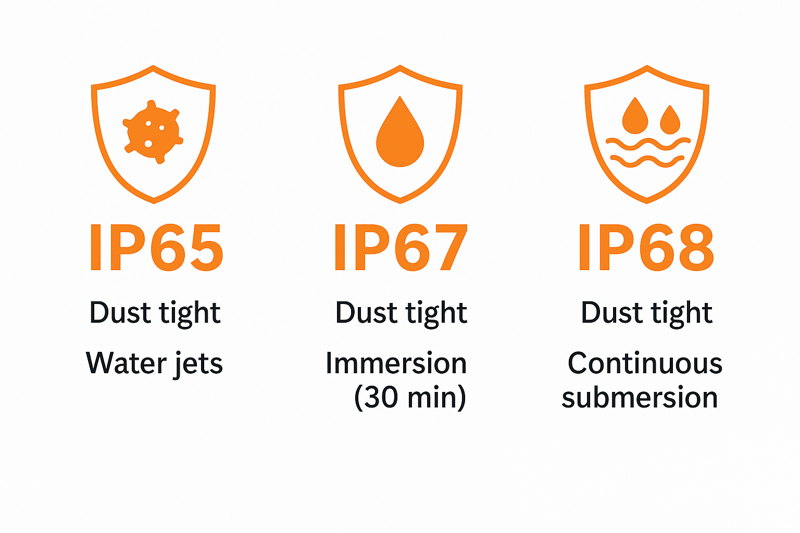
"IP" stands for Ingress Protection1. The first number means solid particle protection (like dust). The second number means liquid protection (like water).
| Rating | Solid (1st digit) | Liquid (2nd digit) |
|---|---|---|
| IP65 | 6 = Dust tight | 5 = Water jets |
| IP672 | 6 = Dust tight | 7 = Immersion (30 min) |
| IP68 | 6 = Dust tight | 8 = Continuous submersion |
The higher the second digit, the better it holds up in wet environments. But more protection also usually means higher cost.
Why it matters for LED strips
At RHLITE, we help buyers pick the best strip based on environment, not guesswork. When you understand the rating, you won’t overpay or under-protect your install.
Is IP65 enough for outdoor use?
You might think a basic waterproof level is good enough.
IP65 resists dust and low-pressure water jets but not immersion.
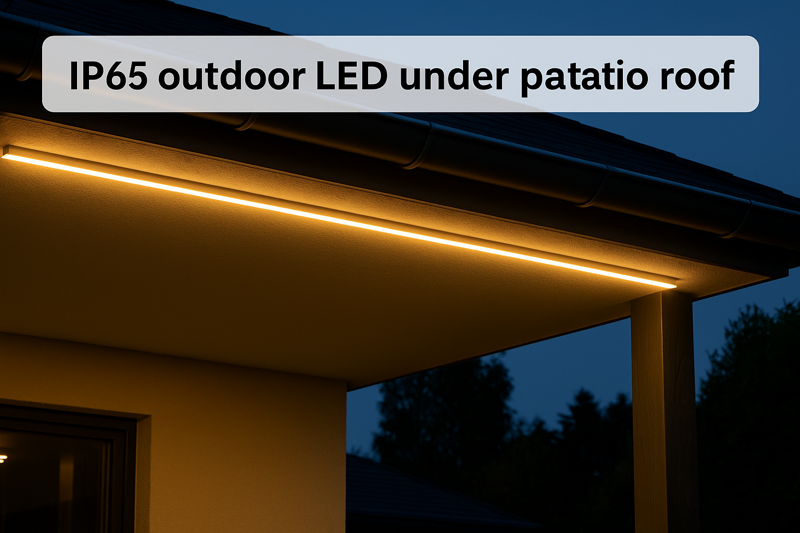
Where IP65 works well
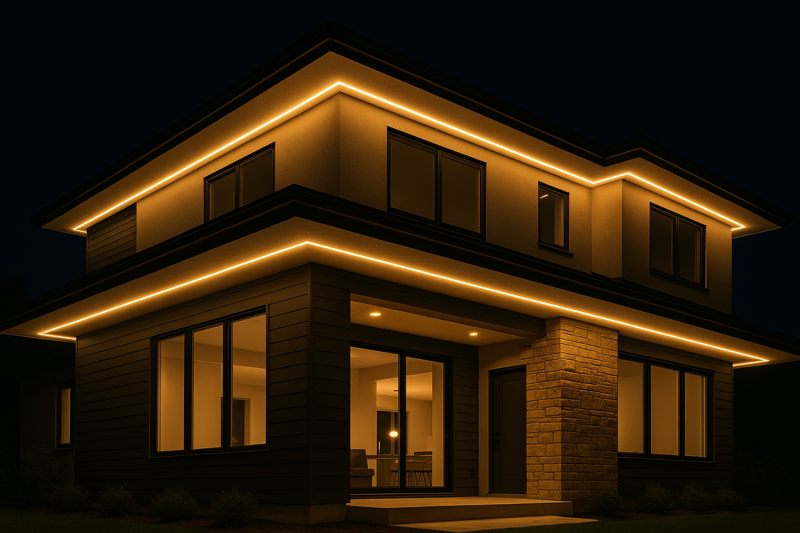
IP65 LED strips are great for outdoor areas that are covered: under eaves, roofed patios, or exterior signage that won’t be directly exposed to rain. They can survive splashes or occasional spray but should never sit in puddles or soak in water.
We often recommend IP65 for:
- Garden beds with protective cover
- Building facades under awnings
- Pergolas with overhang
If you need lights in a wet zone, this level might fall short. Water creeping into the strip can cause short circuits or discoloration.
What clients have told us
Contractors using IP65 in humid but sheltered zones had success. But one client tried IP65 strips for a fountain—the result? Moisture damage in 2 weeks. Lesson learned.
What makes IP67 a safe outdoor standard?
Many pros choose IP67—but is it always necessary?
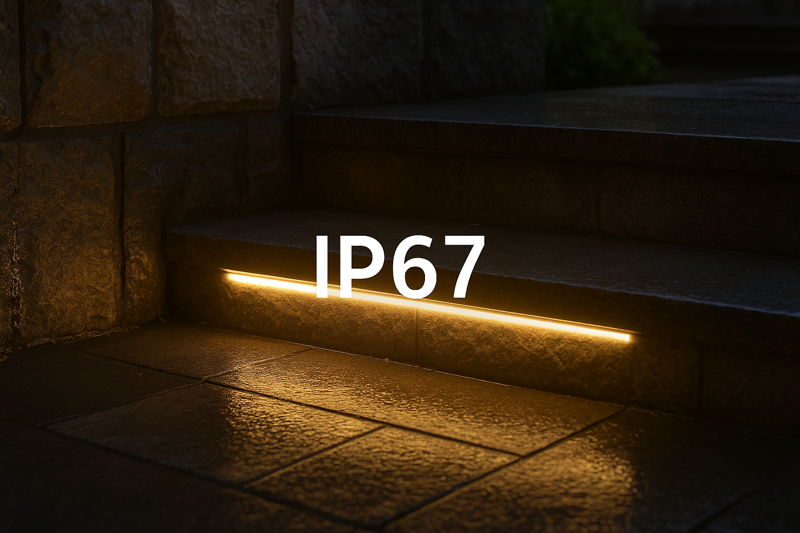
IP67 strips can survive temporary submersion in water up to 1 meter.
Where IP673 adds safety
If your project includes open-air spaces with possible rainfall or damp ground contact, IP67 is a strong pick. This includes:
- Pool surroundings (non-submerged)
- Deck steps exposed to stormwater
- Facade lines with no overhang
The seal is usually silicone extrusion4 or heavy PU potting5—both designed to resist rain, splash, and temporary flooding. Just don’t treat them like underwater lighting.
Real use case
A client lit a restaurant terrace with IP67 strips. It withstood heavy seasonal rains without fail. Compared to a prior project using IP65 that had several returns, this spec saved cost long term.
Is IP68 overkill or essential?
Some clients ask: Do I really need full submersion protection?
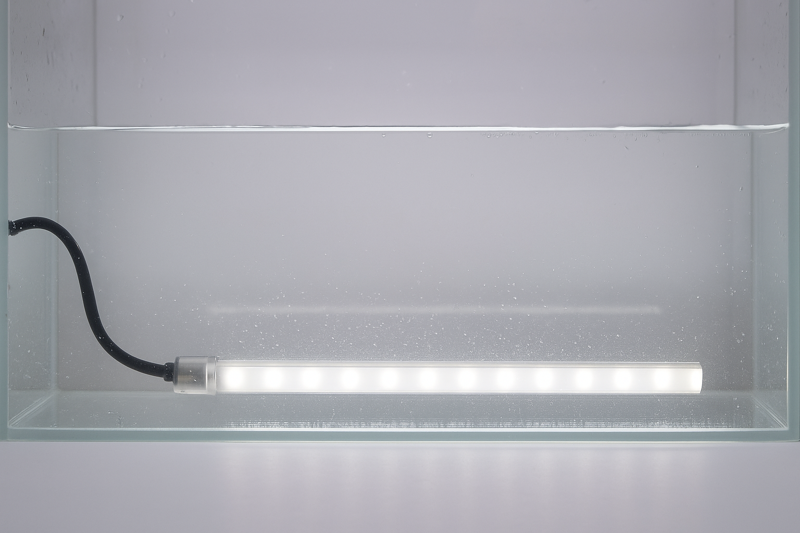
IP68 strips handle full-time immersion. But they also cost more.
When to choose IP68
Use IP68 when the strip will be permanently underwater or in a location where water contact is daily and unavoidable. Think:
- Fountain basins
- Aquarium builds
- Underground pathways with drainage issues
They feature strong silicone extrusion or glue-filled enclosures. They’re often thicker, stiffer, and harder to bend—but they deliver.
When it’s too much
If your lights are never submerged, IP68 might be unnecessary cost. Instead of "best," think "best for this job."
Which IP rating do we recommend most often?
Still unsure which one fits your case best?
IP67 balances protection and cost for most outdoor installations.
Our advice by project type
| Project Location | Recommended IP Rating |
|---|---|
| Covered patios | IP65 |
| Open facades | IP67 |
| Near pools or drains | IP67 |
| Submerged zones | IP68 |
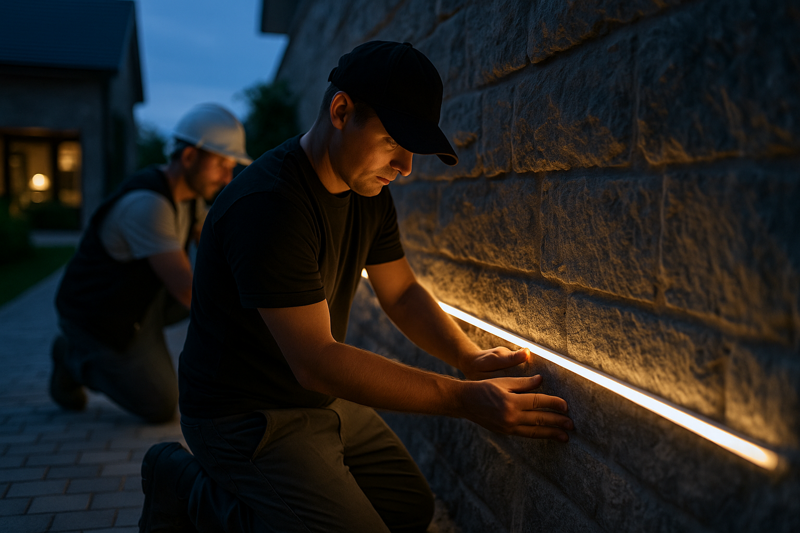
We usually start with IP67 for exposed areas. It covers 90% of our clients’ outdoor lighting needs. Only go higher when the job calls for it.
Our goal is to match spec to need—not oversell you.
Conclusion
Use IP65 for splash zones, IP67 for exposed installs, and IP68 only when submerged.
Understanding Ingress Protection ratings is crucial for selecting the right equipment for various environments. Explore this link to learn more! ↩
IP67 is a popular rating for waterproof devices. Discover its significance and applications to make informed purchasing decisions. ↩
Understanding the IP67 rating can help you choose the right lighting for outdoor projects, ensuring durability and safety. ↩
Exploring silicone extrusion can provide insights into its effectiveness in creating waterproof seals for various projects. ↩
Learning about heavy PU potting can enhance your knowledge of protective coatings for electronic devices in outdoor settings. ↩