Struggling to choose the right LED strip? Let’s solve this.
COB and SMD strips both work outdoors. Each has strengths in light quality, durability, and cost.
There are big differences. Let’s go through them now.
What are the key differences between COB and SMD LED strips?
Both types look similar, but their structure and light effects are very different.
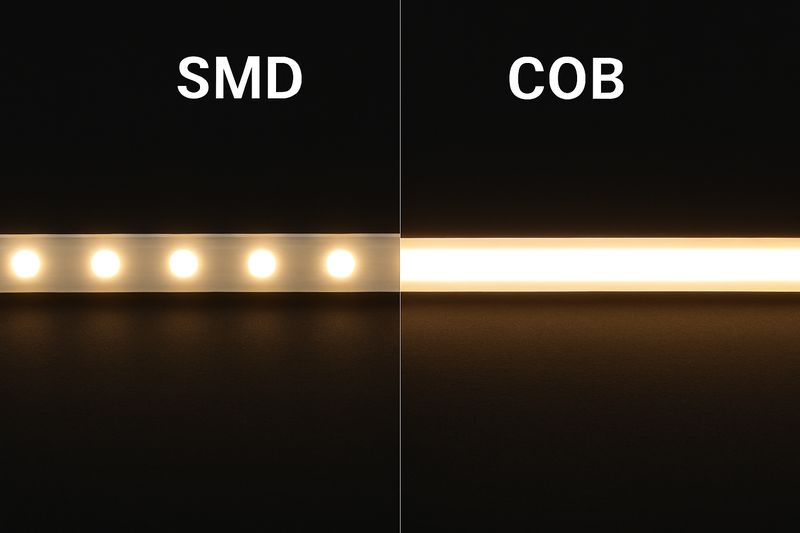
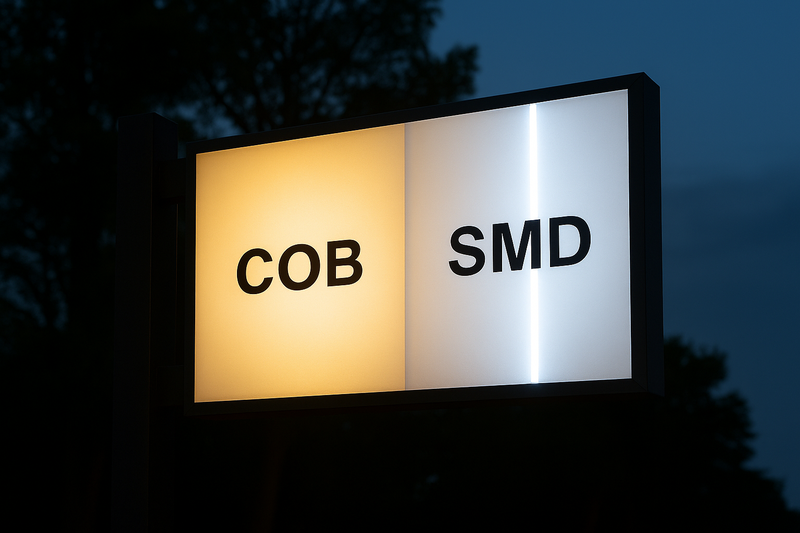
COB is smooth and dot-free. SMD is bright but can show hotspots.
How they’re built
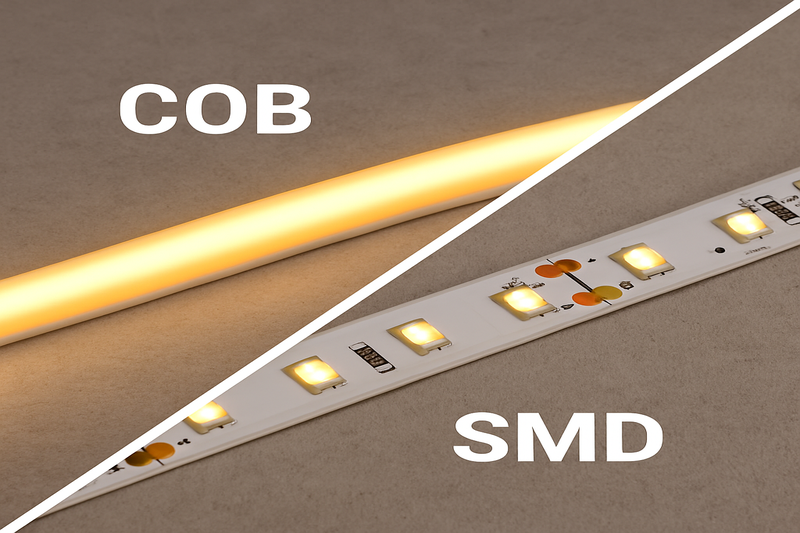
COB (Chip on Board)1 places many tiny LED chips directly onto the PCB. These are covered in a layer of phosphor to give smooth, even light. SMD (Surface Mounted Device)2 attaches larger LED chips separately with gaps between them.
| Feature | COB | SMD |
|---|---|---|
| Light Quality | No visible dots | May show dots or gaps |
| Build Method | Direct chip bonding | Mounted individual LEDs |
| Appearance | Smooth and clean | Bright but segmented |
Why it matters
COB gives a modern, soft look. This is great for upscale projects or where light will be seen up close. SMD offers punchier brightness. That’s better for general area lighting where high lumen output matters most. When choosing for outdoor use, consider how far people will be from the light source.
Which performs better for outdoor brightness?
Outdoor spaces need strong and clear light. Which gives more?
SMD strips usually shine brighter than COB strips per watt.
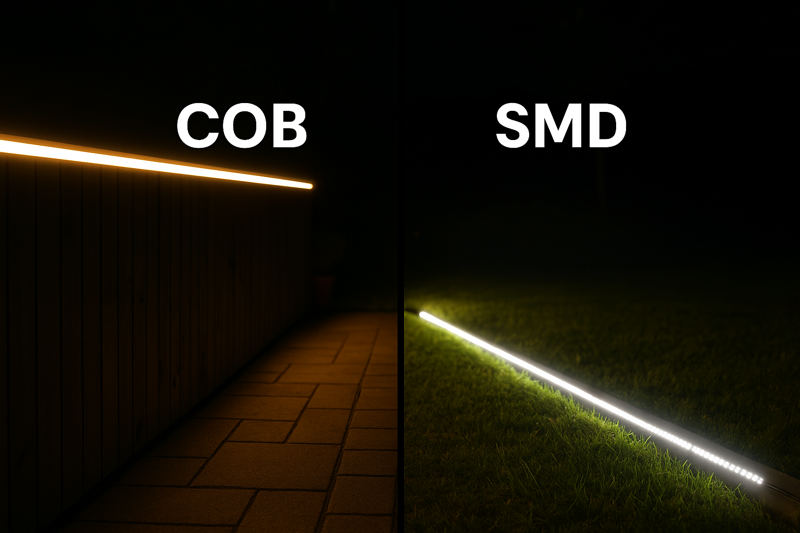
Raw brightness vs visual effect
SMD strips3 like 5050 and 2835 types can emit more lumens per watt. That makes them better for gardens, signs, and flood-style lighting. COB isn’t as bright, but its glow is even and soft. This matters when you need balanced, low-glare light.
| Metric | COB | SMD |
|---|---|---|
| Lumens/Watt4 | 80-100 | 90-120 |
| Visual Comfort | Excellent | Moderate |
| Application Zone | Pathways, accent | Wide areas, signage |
What I learned on real jobs
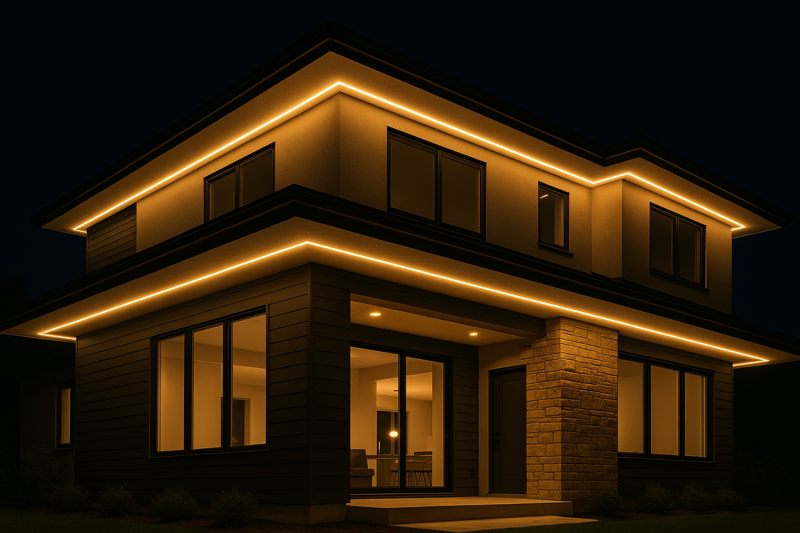
One of our clients installed COB5 under a hotel canopy. It looked stunning and gentle. Later, they tried SMD for a parking lot — it gave the visibility needed. I now recommend COB for close-range or decorative tasks, and SMD for wide space coverage.
Which LED strip handles water and weather better?
Outdoor LEDs must survive rain, dust, and sun. Which one lasts longer?
Both COB and SMD can be waterproof. But COB needs better sealing.
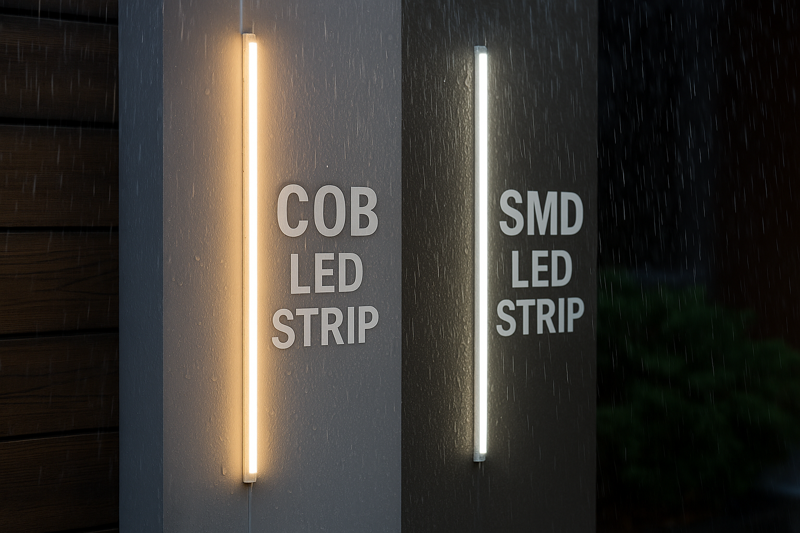
IP rating and sealing material
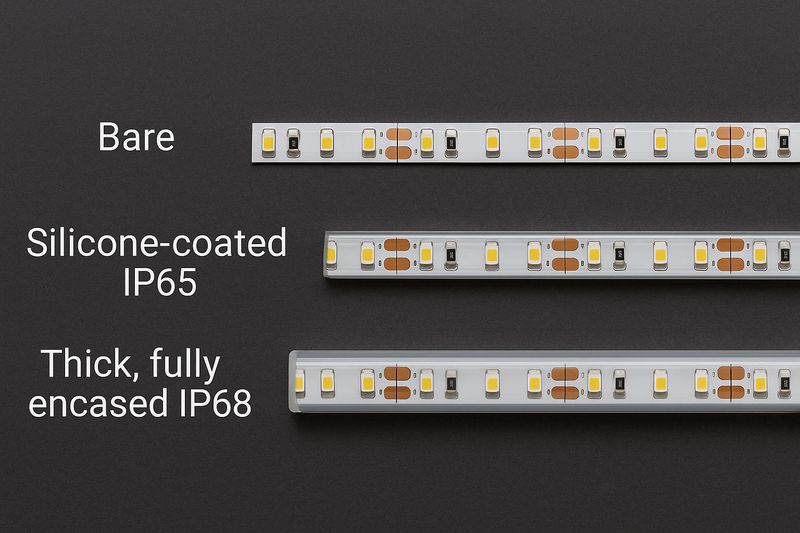
COB strips often use silicone extrusion6 — a one-piece cover that keeps water out. SMD strips use PU potting or silicone sleeves. Both methods can reach IP67 or IP687, which is great for outdoor use. However, poor sealing8 leads to corrosion.
What to check with suppliers
Always ask:
- Is the strip silicone or PU coated?
- Is the connector waterproof?
- Is the strip certified (CE, RoHS)?
| Question | Why it matters |
|---|---|
| What’s the sealing method? | Prevents water damage |
| Is it UV resistant? | Protects from sun degradation |
| What’s the IP rating? | Tells how waterproof it is |
In one project, a poorly sealed SMD strip failed after three months. We replaced it with a COB strip that had full extrusion. It’s been running for over a year now.
Which LED strip is easier to install outdoors?
Tight curves and tricky spaces need flexible lights. Which bends better?
COB is more flexible and installs faster in tough places.
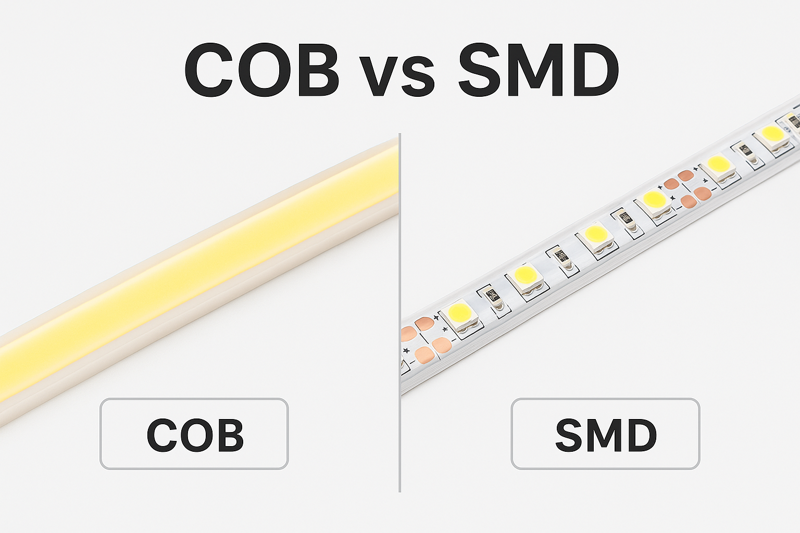
Why COB bends better
COB’s continuous chips make it slim and bendable. SMD needs more space because of the separate chip layout. If your outdoor design has corners, curves, or circles — COB works best.
What installers say
We work with many contractors. Their feedback:
- "COB sticks better on curves."
- "SMD cracks if bent too hard."
- "COB takes less time to lay out."
| Strip Type | Flexibility | Mounting Time | Connector Needed |
|---|---|---|---|
| COB | High | Short | Fewer |
| SMD | Medium | Long | More |
COB simplifies tricky projects. That means fewer returns and happier clients.
What’s more energy-efficient and long-lasting?
Long-term savings matter. Which strip wins?
SMD gives better efficiency, but COB handles heat better.
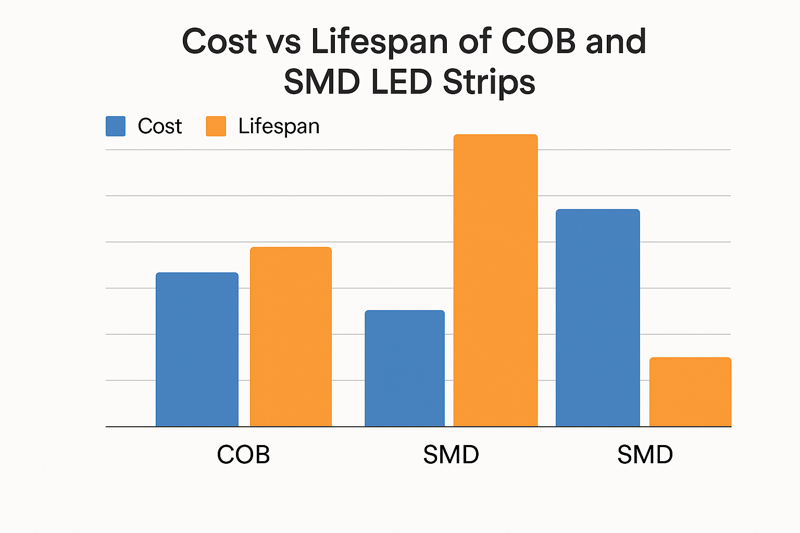
Heat and efficiency trade-off
SMD chips produce more light per watt. But they also create more heat spots. If not cooled, heat reduces lifespan. COB spreads heat more evenly across the strip. This helps COB maintain color and output longer, especially in enclosed installs.
What you save over time
A client used SMD strips in a billboard — great brightness, but replacements were frequent. On their second project, we used COB with an aluminum channel. It lasted longer and stayed cooler.
| Factor | SMD Strip | COB Strip |
|---|---|---|
| Lumen Efficiency | Higher | Medium |
| Heat Resistance | Lower | Better |
| Avg Lifespan | 25,000 hrs | 30,000–40,000 hrs |
Which offers the best total value?
Budgets are tight. But quality matters too.
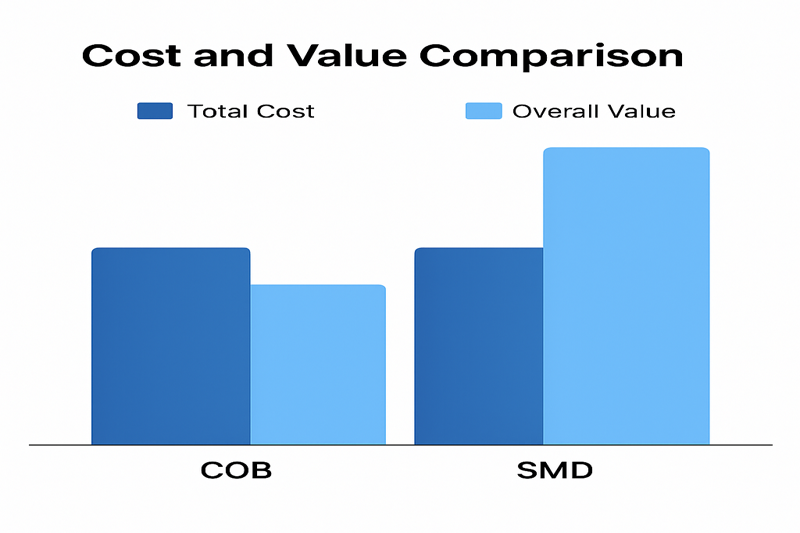
COB costs more but saves on labor and upgrades.
How pricing breaks down
SMD costs less per meter. But COB cuts installation time and looks better in high-end spaces. For one-off orders, SMD fits. For long-term clients, COB wins loyalty.
| Cost Area | SMD Strip | COB Strip |
|---|---|---|
| Material Cost | Lower | Higher |
| Installation Labor | Higher | Lower |
| Maintenance Needs | More | Less |
What I recommend to clients
I tell distributors: use SMD for competitive projects. But when building a brand or serving designers, go with COB. It’s consistent, beautiful, and earns repeat business.
Conclusion
COB is smooth, durable, and flexible. SMD is bright and affordable. Choose based on your project goals.
Explore the benefits of COB technology for lighting solutions, especially for upscale projects and close-up visibility. ↩
Learn about SMD technology’s advantages for general area lighting and its bright output, ideal for various applications. ↩
Explore the advantages of SMD strips, including their efficiency and suitability for various applications, to enhance your lighting choices. ↩
Understanding Lumens per Watt is crucial for selecting energy-efficient lighting solutions that meet your needs effectively. ↩
Learn about COB lighting technology, its unique features, and ideal use cases to make informed decisions for your lighting projects. ↩
Exploring silicone extrusion can reveal its advantages in creating effective seals against water damage, enhancing product longevity. ↩
Understanding IP ratings is crucial for selecting the right lighting for outdoor use, ensuring durability and performance. ↩
Learning about the risks of poor sealing can help you make informed decisions when choosing lighting solutions, preventing future failures. ↩