Many people get confused when they try to choose LED strip lights for outdoor architecture. I’ve been there too. It’s not always easy to know what to look for. The wrong lights will ruin the entire look of a building and won’t last long outside.
To select the right outdoor LED strip lights for architecture, consider IP rating, light output, mounting method, and control compatibility to ensure durability and design alignment.
If you’re an architect, lighting designer, or contractor, I’ll show you exactly how I approach outdoor LED strip lighting for buildings. These tips are based on what works in real projects, not just theory.
Why do architectural LED projects need special outdoor strip lights?
Architectural LED strips must offer uniform light, design integration, and outdoor durability. Standard strips often fail to meet the visual and technical needs of building exteriors.
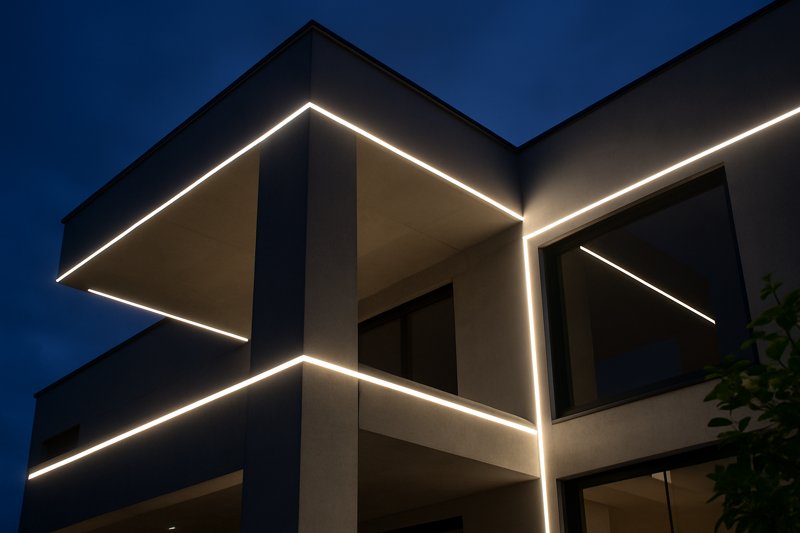
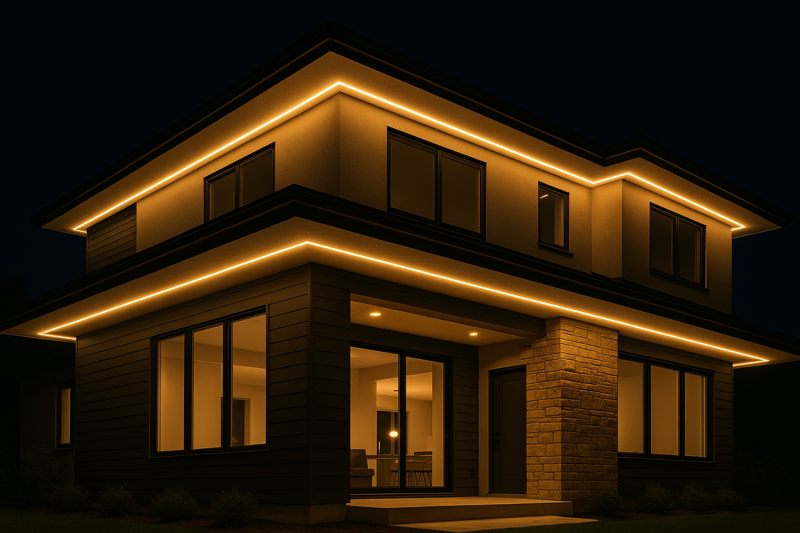
Most outdoor LED strip lights are designed for decoration. But architectural lighting is more serious. The light is meant to match the shape of the building. It must highlight lines, textures, and materials. Ordinary lights don’t give that clean look. They often show hot spots, glare, or flicker over time.
I’ve worked on a project where we used the wrong strips. They didn’t have enough protection. Within two months, several sections stopped working. The look was patchy. The client was upset. We had to re-install everything. That cost time, money, and trust.
Architectural lighting has one main job—show the building’s beauty clearly at night. That means uniform light, clean lines, and zero distractions.
What makes architectural lighting different?
| Feature | Decoration Lighting | Architectural Lighting1 |
|---|---|---|
| Purpose | Mood or fun | Shape and form |
| Uniformity2 | Not important | Very important |
| Integration3 | Simple attachment | Designed to fit structure |
| Control | Often fixed | Usually dimmable or dynamic |
How does IP rating protect strip lights outdoors?
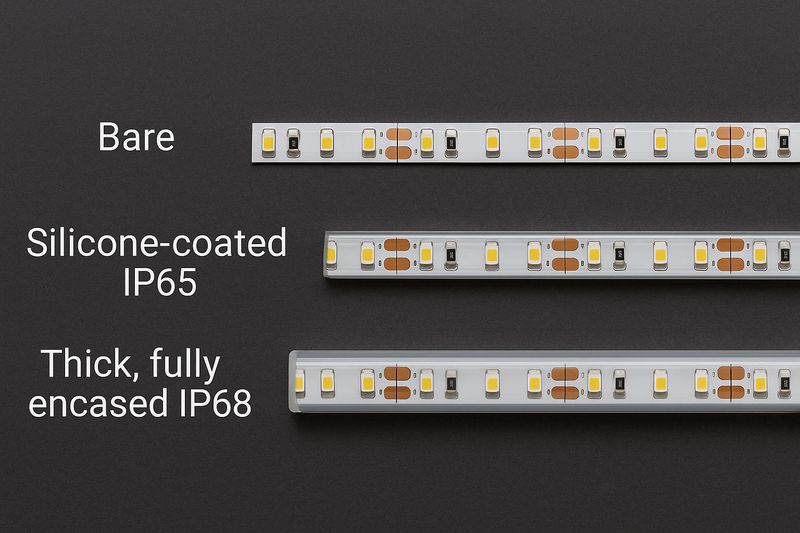
IP ratings indicate resistance to water and dust. Selecting IP67 or IP68 ensures strip lights can survive outdoor conditions like rain, snow, or humidity.
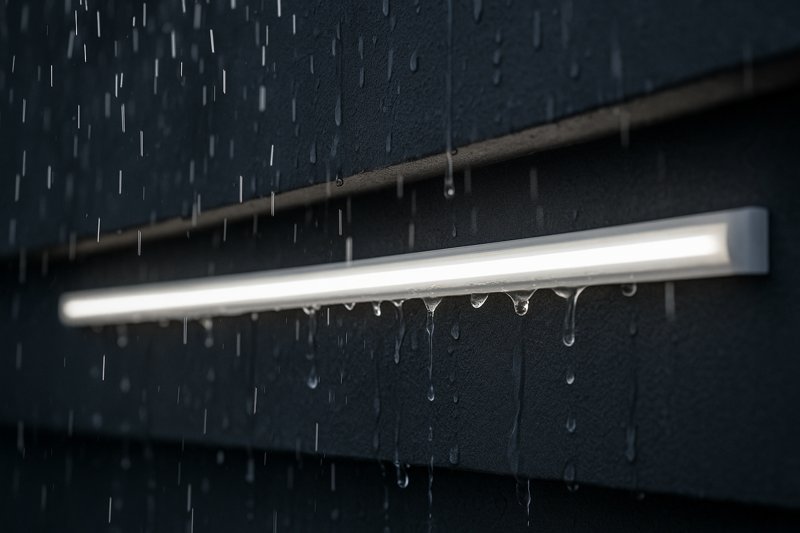
Outdoors is never the same two days in a row. Sometimes it rains. Sometimes the sun is too strong. Sometimes there’s dust. I learned this the hard way when I used IP65 strips under a roof edge. After one storm, water got in. The lights failed. That’s why I now check the IP rating every time.
The IP rating shows how well a product keeps out water and dust. For architectural work, especially on facades or bridges, this is critical. These are not places you want to visit again to fix lighting.
IP protection levels and uses
| IP Rating4 | What It Blocks | Where It Works Best |
|---|---|---|
| IP65 | Water jets, dust5 | Under eaves or semi-covered spaces |
| IP67 | Short-term immersion | Outdoor walls and fences |
| IP68 | Full waterproofing6 | Fountains, bridges, high exposure |
What color temperature works best for architecture?
Color temperature affects mood and perception. Warm tones suit traditional buildings, while cool tones match modern designs. CRI and material pairing are also critical.
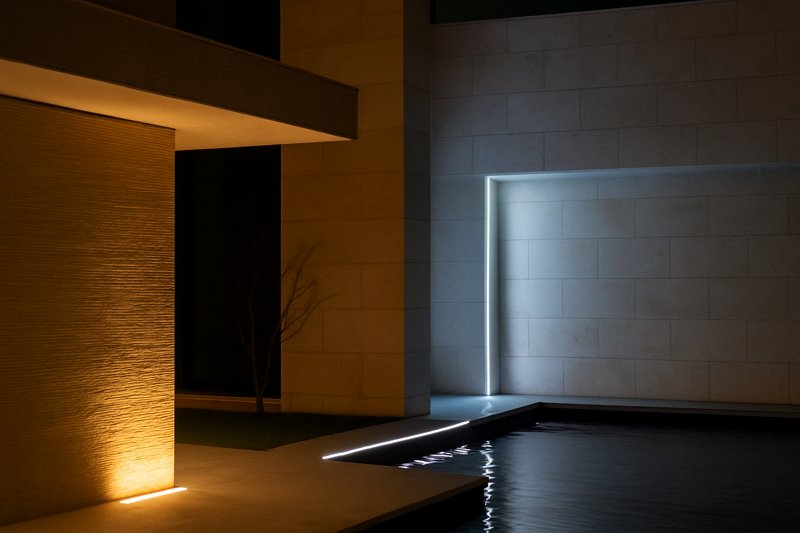
Color temperature changes how people feel about the space. Warmer light feels cozy. Cooler light feels modern and clear.
I used to pick warm white by default. But then I realized that modern buildings look better with cooler tones. A hotel might need 3000K, but a tech office often looks better at 4000K.
CCT means correlated color temperature. It’s measured in Kelvin (K). Lower numbers are warm. Higher numbers are cool. The building material matters a lot. A brick wall might feel soft under warm white. A concrete surface pops under cooler light.
Common CCT choices and buildings
| Temperature | Look | Best for |
|---|---|---|
| 2700K–3000K | Warm, relaxed7 | Villas, resorts, heritage buildings |
| 4000K | Neutral, bright8 | Offices, hospitals, signage |
| 5000K–6500K | Cool, sharp | Factories, malls, large exteriors |
| RGB/RGBW | Dynamic color9 | Clubs, stores, entertainment spaces |
Should I use COB or SMD LED strips?
COB offers dot-free lighting for visible areas, while SMD provides higher brightness. Choosing depends on visibility, mounting depth, and overall design intent.
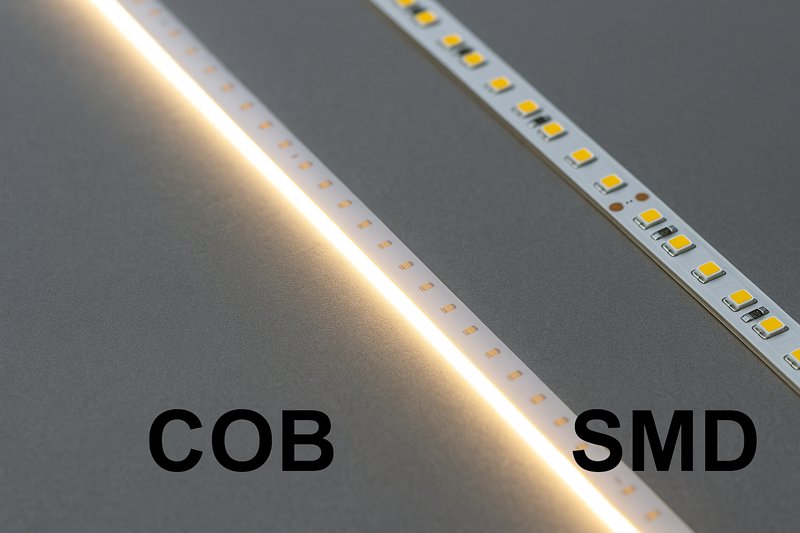
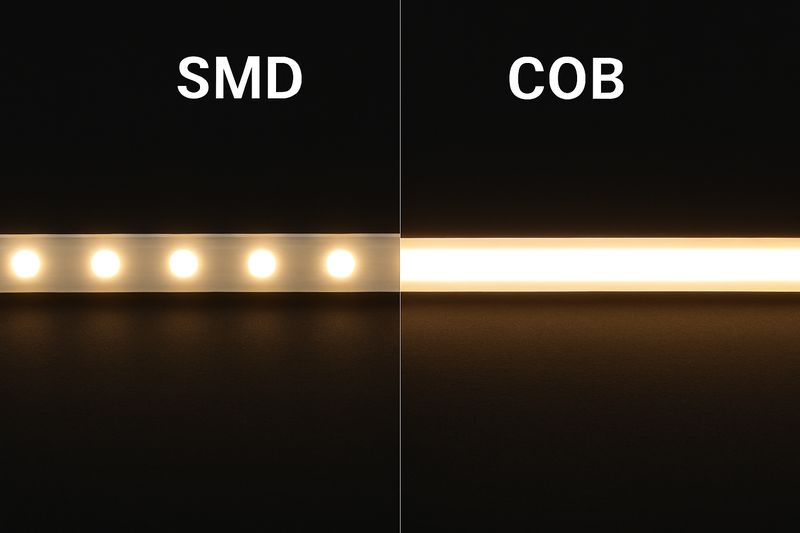
COB gives smooth light with no dots. SMD is brighter per chip but needs a diffuser to hide hot spots.
I’ve used both types in my work. COB strips are perfect when the strip will be visible to people. They produce a clean line of light. SMD strips work better inside aluminum channels or behind diffusers where you want strong output.
Comparing SMD and COB
| Feature | SMD | COB |
|---|---|---|
| Appearance | Dotted | Continuous |
| Output | Higher per chip | Softer, more uniform |
| Flexibility | Very flexible | Also flexible |
| Use case | Hidden, backlight | Exposed, clean lighting |
How should I mount outdoor LED strips on buildings?
Secure mounting improves heat dissipation and lifespan. Use aluminum profiles for structure and silicone sleeves for flexibility in curved installations.
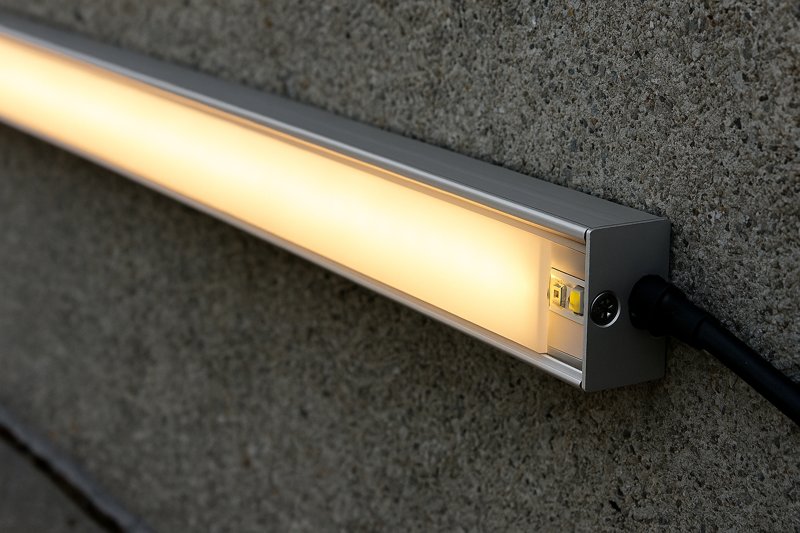
Mounting matters as much as the light itself. Good lighting looks bad if it’s loose, misaligned, or falling off.
I’ve seen great lights fail because the glue didn’t hold up. Or water entered through poorly sealed corners. That’s why I always use aluminum profiles for straight lines, and flexible sleeves for curves.
Mounting options
| Mount Type | Advantage | Use Area |
|---|---|---|
| Aluminum profile | Heat control, straight10 | Walls, borders, soffits |
| Silicone tube | Flexible and sealed11 | Columns, corners, curves |
| PU coating | Impact-resistant, UV safe12 | Bridges, fences, tunnels |
Can outdoor LED strips support smart control?
Smart LED strips can integrate with DALI, DMX, Wi-Fi, or Bluetooth. Proper drivers and controllers allow flexible dimming and programmable lighting scenes.
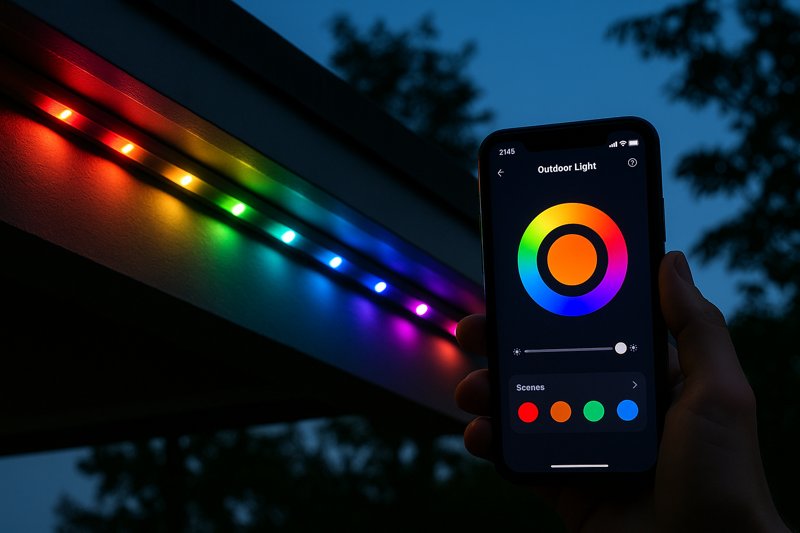
Yes. Many clients now ask for smart control systems. They want to control color, brightness, and timing from apps or building systems.
There are many ways to do this. For simple projects, I use Bluetooth or Wi-Fi controllers. For commercial work, I go with DALI or DMX. These allow group control and scene presets.
Control types and uses
| Control Type | How It Works | Good For |
|---|---|---|
| DALI | Wired dimming | Offices, hotels, big buildings |
| DMX512 | Stage protocol | Clubs, events, exteriors |
| Wi-Fi/Bluetooth | App based | Homes, stores, small projects |
Conclusion
Choosing the right outdoor LED strip for architectural lighting means more than reading specs. I think about the structure, the weather, the look, and how people interact with the building. Every project is different, but with the right approach, the light always speaks for the design.
Understanding architectural lighting can enhance your design projects by integrating light with structure effectively. ↩
Exploring the significance of uniformity in architectural lighting can improve your lighting design skills and outcomes. ↩
Learning about integration in architectural lighting can help you create cohesive and functional spaces in your projects. ↩
Understanding IP Ratings is crucial for selecting the right equipment for specific environments. Explore this link to learn more. ↩
Discover how water jets and dust can impact electronics and the importance of IP ratings in protecting them. ↩
Learn about the significance of full waterproofing and its applications in various industries by exploring this resource. ↩
Explore how warm, relaxed lighting enhances the ambiance in villas and resorts, creating a cozy atmosphere for guests. ↩
Discover the advantages of neutral, bright lighting in enhancing productivity and comfort in offices and hospitals. ↩
Learn how dynamic color lighting can transform the atmosphere in clubs and entertainment venues, attracting more visitors. ↩
Understanding heat control can enhance your choice of mounting options, ensuring better performance and longevity. ↩
Exploring flexibility in mounting options can help you choose the right solution for complex structures and designs. ↩
Learning about impact-resistant and UV safe coatings can guide you in selecting durable and long-lasting mounting solutions. ↩