Sometimes LED projects fail for small reasons. Bad connectors are one of them.
Solderless LED connectors are convenient, but they don’t work in every situation.
Let’s figure out when they’re a smart shortcut—and when they cause problems.
How do solderless LED connectors work?
Most people want fast installation. But fast doesn’t always mean reliable.
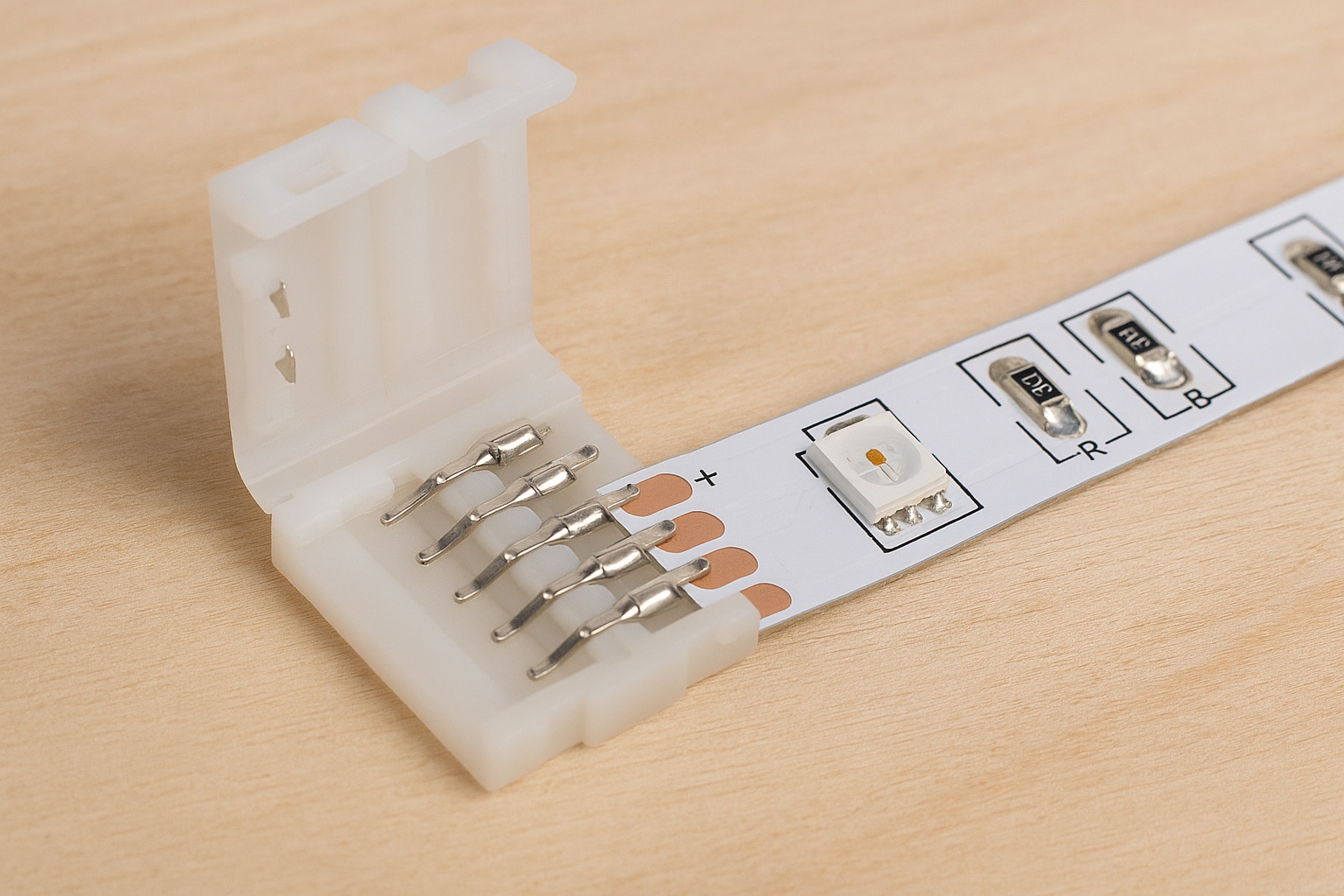
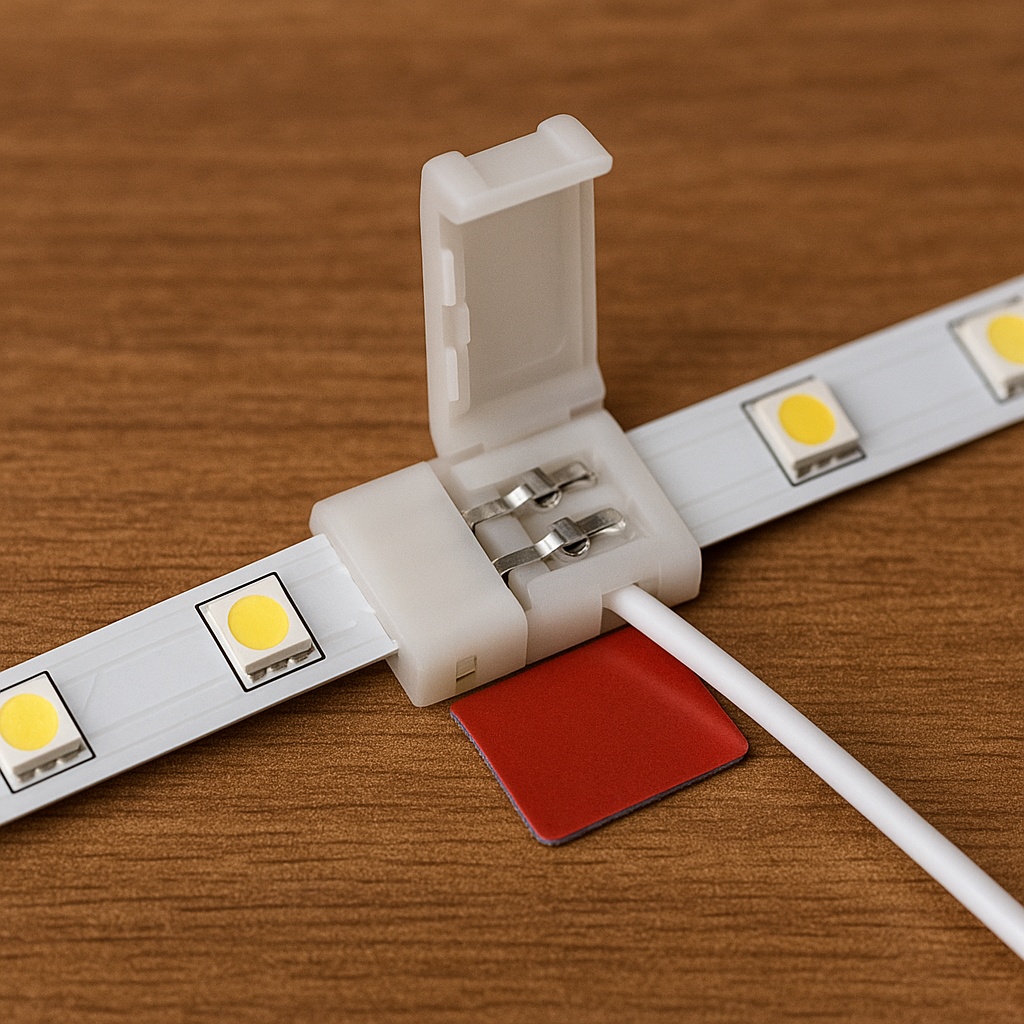
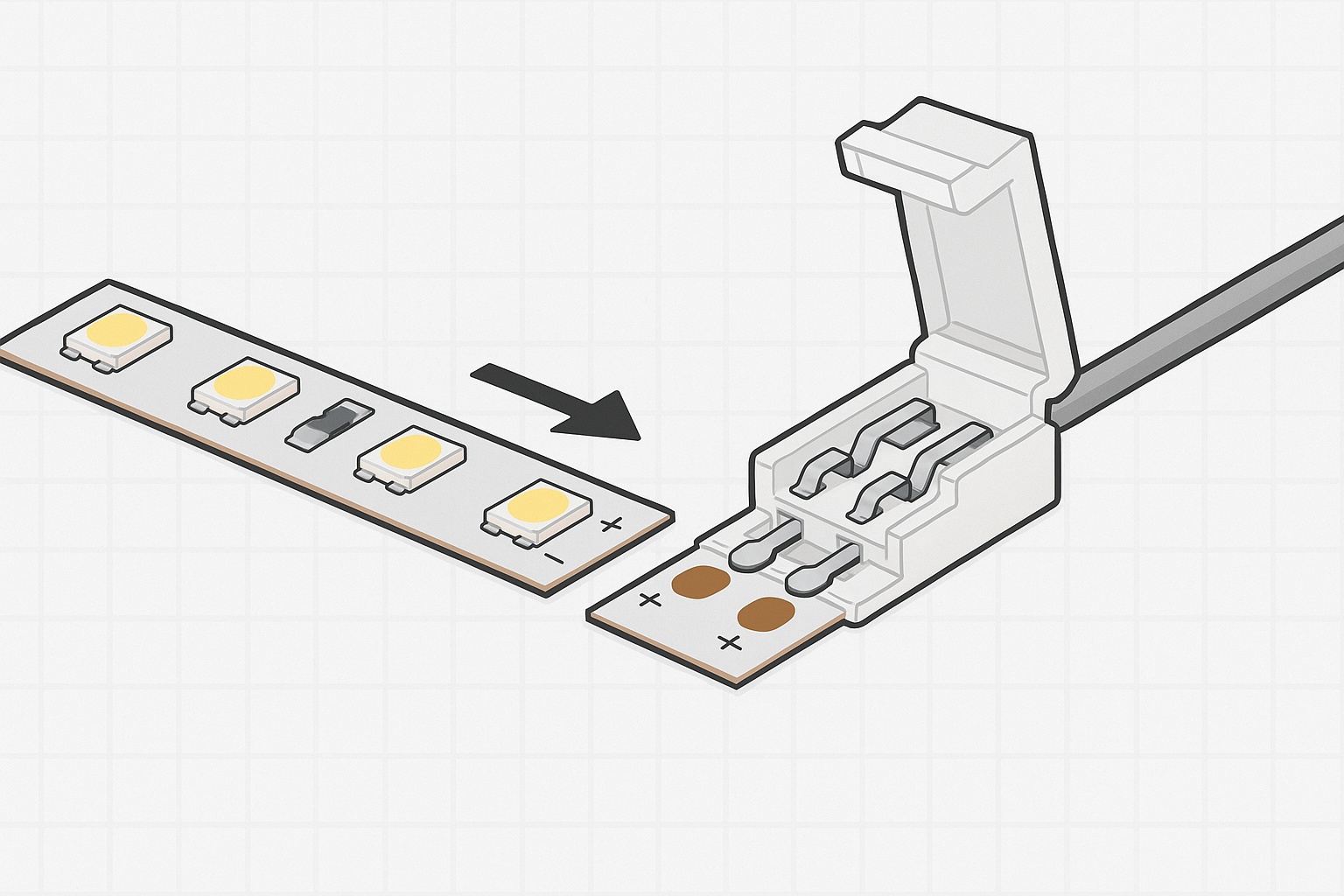
Solderless connectors use contact pressure to complete a circuit, skipping solder.
Contact Mechanism: Pressure vs. Permanence
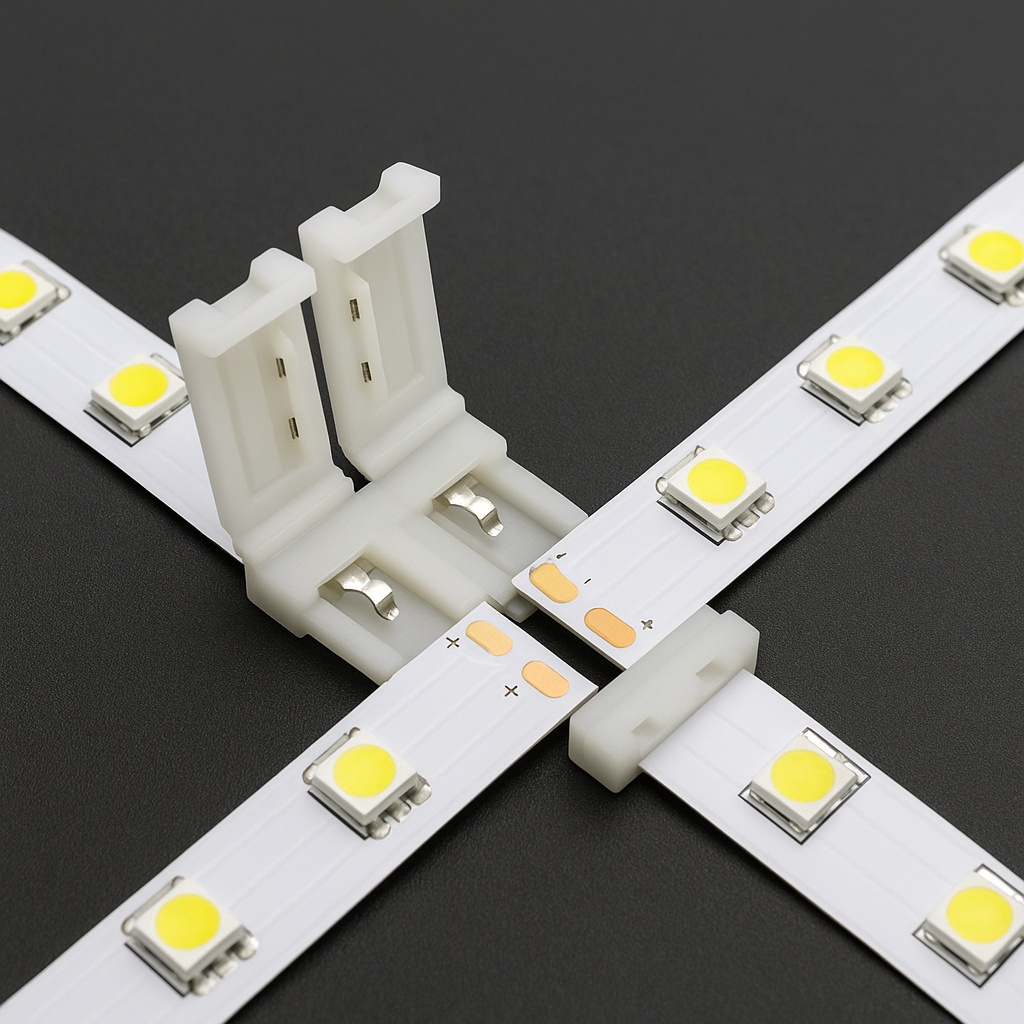
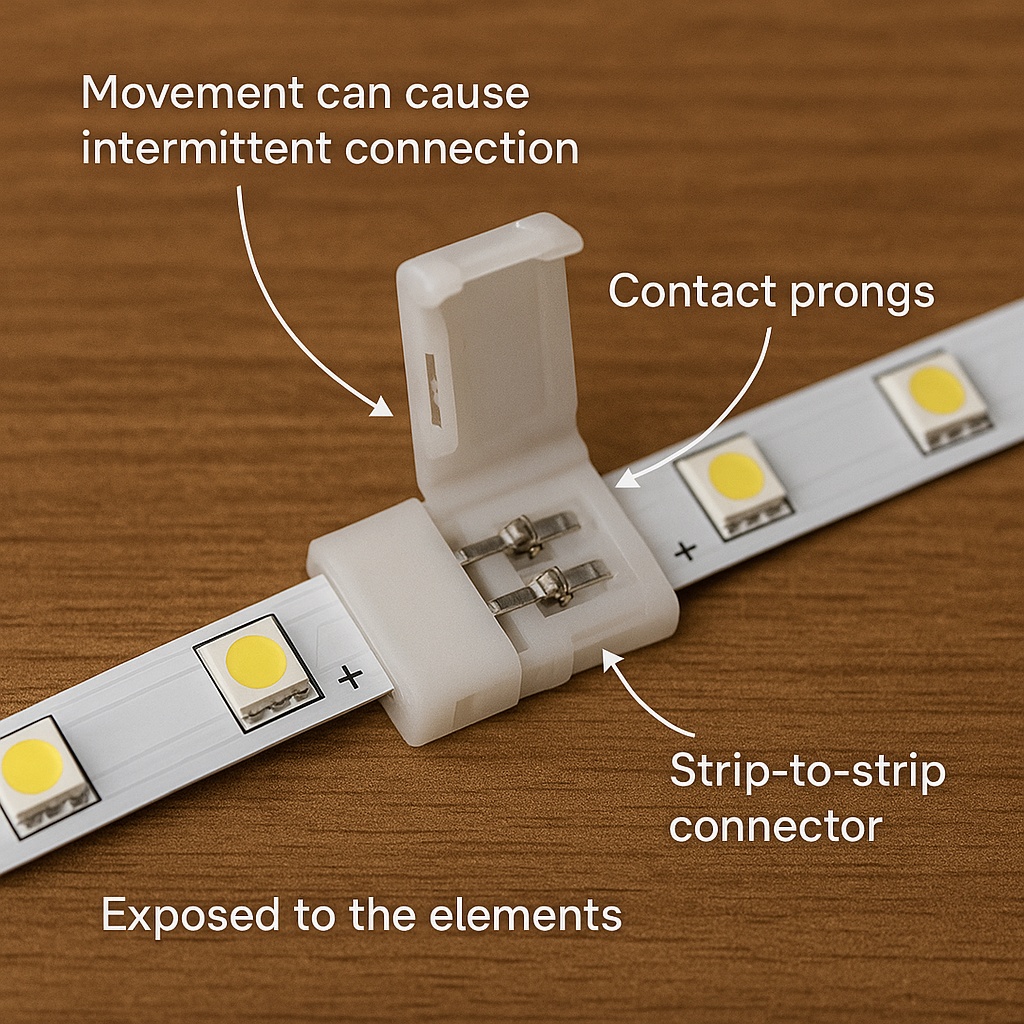
Solderless connectors use prongs to press against the copper pads on LED strips. When the clasp closes, the strip is held tightly. The contact is made by friction, not by fused metal like soldering.
This can work well when the installation stays still. But if the strip moves, the pressure weakens and contact may fail.
| Feature | Solderless Connector | Soldered Joint |
|---|---|---|
| Installation Speed | Fast | Slower |
| Tools Required | None | Soldering iron, solder |
| Durability | Moderate | High |
| Water Resistance | Low | High (with heat shrink) |
| Movement Tolerance | Low | High |
When should you avoid solderless connectors?
You want lights that stay on. A loose connector can ruin that.
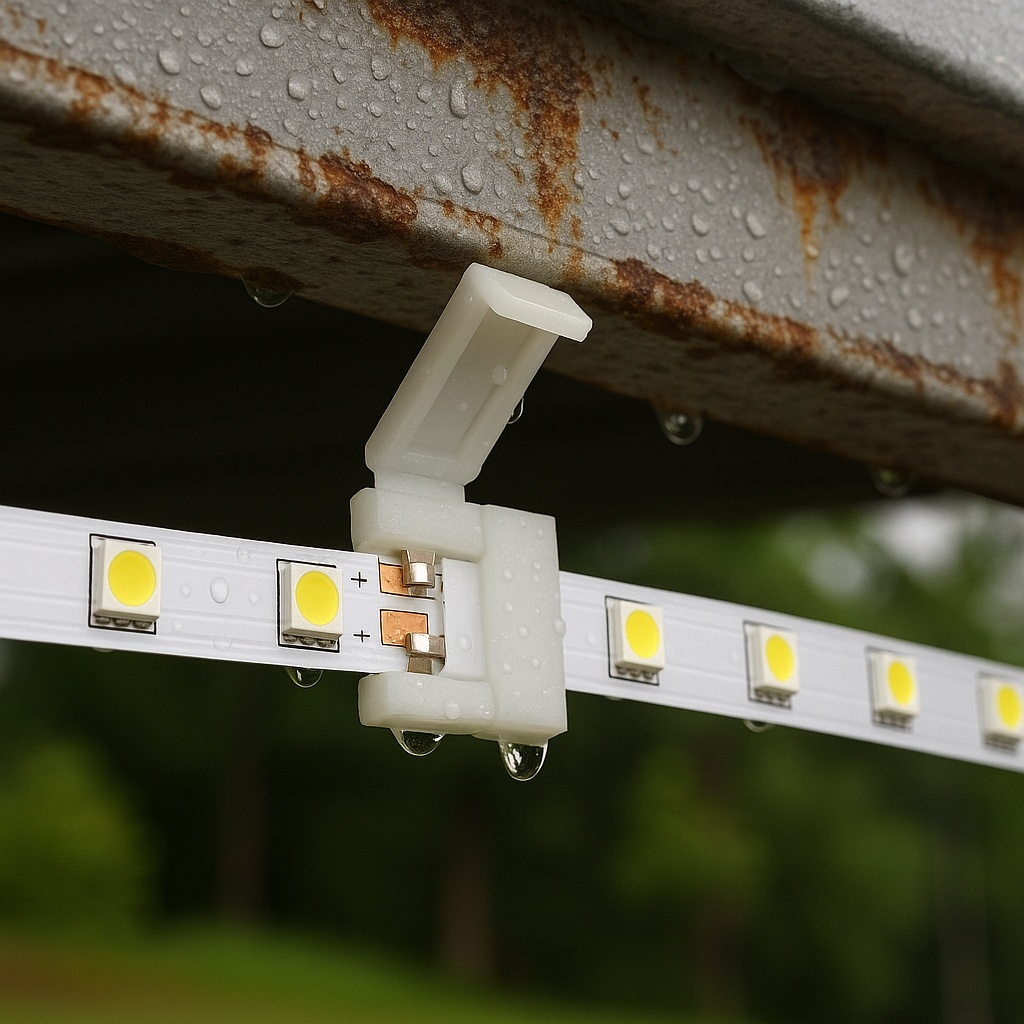
Avoid solderless connectors when vibration, moisture, or reliability are serious issues.
Vibration, Moisture, and Access Risks
| Installation Type | Problem with Solderless Connector |
|---|---|
| Cars or Boats | Movement breaks contact |
| Outdoor signage | Moisture causes corrosion |
| Retail installations | One failure affects multiple strips |
| Tight enclosures | Connector bulk causes misalignment |
What’s the better alternative to solderless connectors?
You may think soldering is hard. It’s not. It just takes five minutes and a little patience.
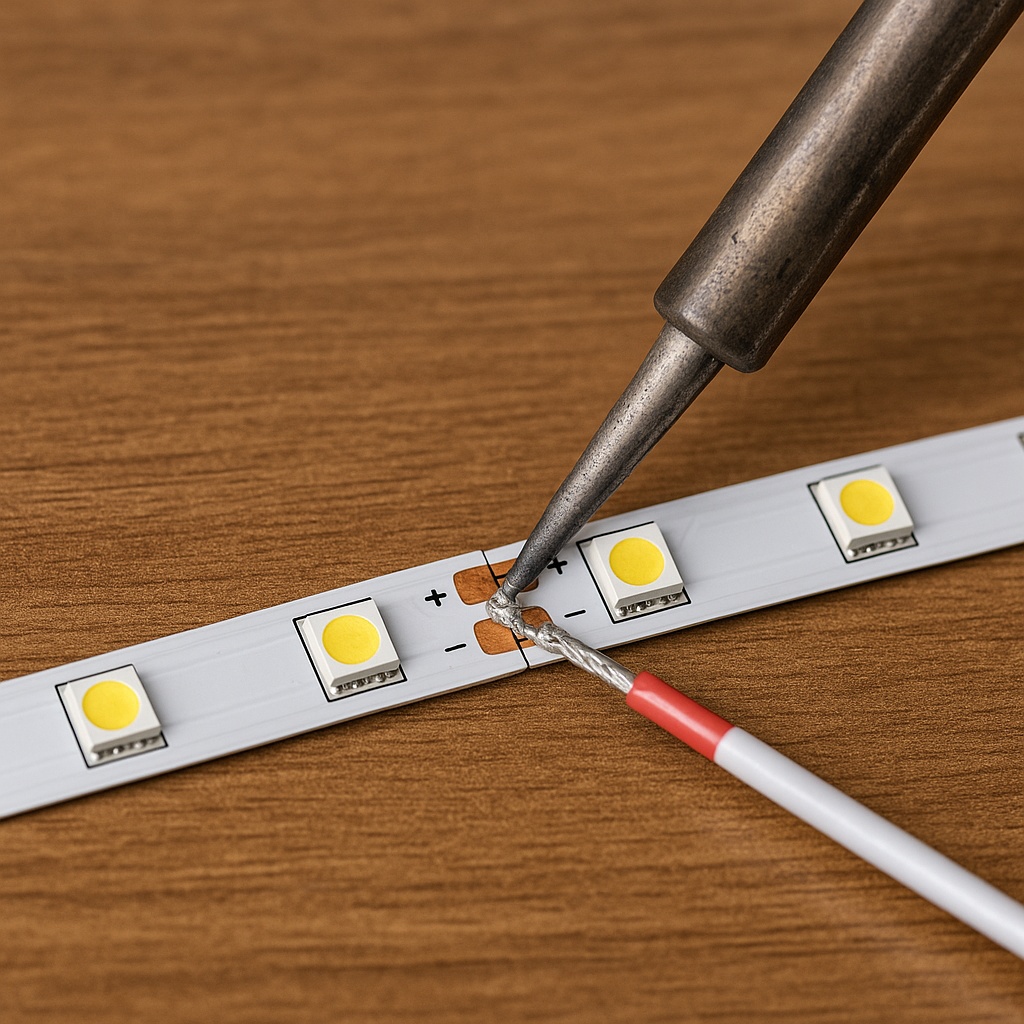
Soldering LED connections gives you long-term stability, even in harsh environments.
Why Soldering Wins
- Cut the LED strip cleanly.
- Strip the wire and tin both ends.
- Apply the solder quickly.
- Cover the joint with heat shrink tubing.
- Test your connection.
| Reason | What It Solves |
|---|---|
| Better contact | Prevents flickering or dropouts |
| Compact connection | Fits narrow channels |
| Heat shrink protection | Adds water and dust resistance |
| One-time setup | No adjustment after installation |
Can connectors and soldering be combined?
Sometimes, the best choice is to mix both methods.
You can use connectors and add solder to increase durability.
| Scenario | Why Hybrid Works |
|---|---|
| Trade show or movable displays | Easy install + solid connection |
| Tight project timelines | Solder where it matters most |
| Uncertain weather environments | Prepare for long-term exposure |
How can you reduce connector failures altogether?
Connector issues often come from bad planning. Fewer joints mean fewer failures.
Designing with fewer connection points improves your LED layout’s stability.
| Practice | Why It Matters |
|---|---|
| Use longer strip segments | Fewer connectors needed |
| Wire in parallel | Limits failure impact |
| Minimize handling | Protects delicate contact pads |
| Choose rated power supplies | Prevents overload and voltage sag |
Soldering Tips
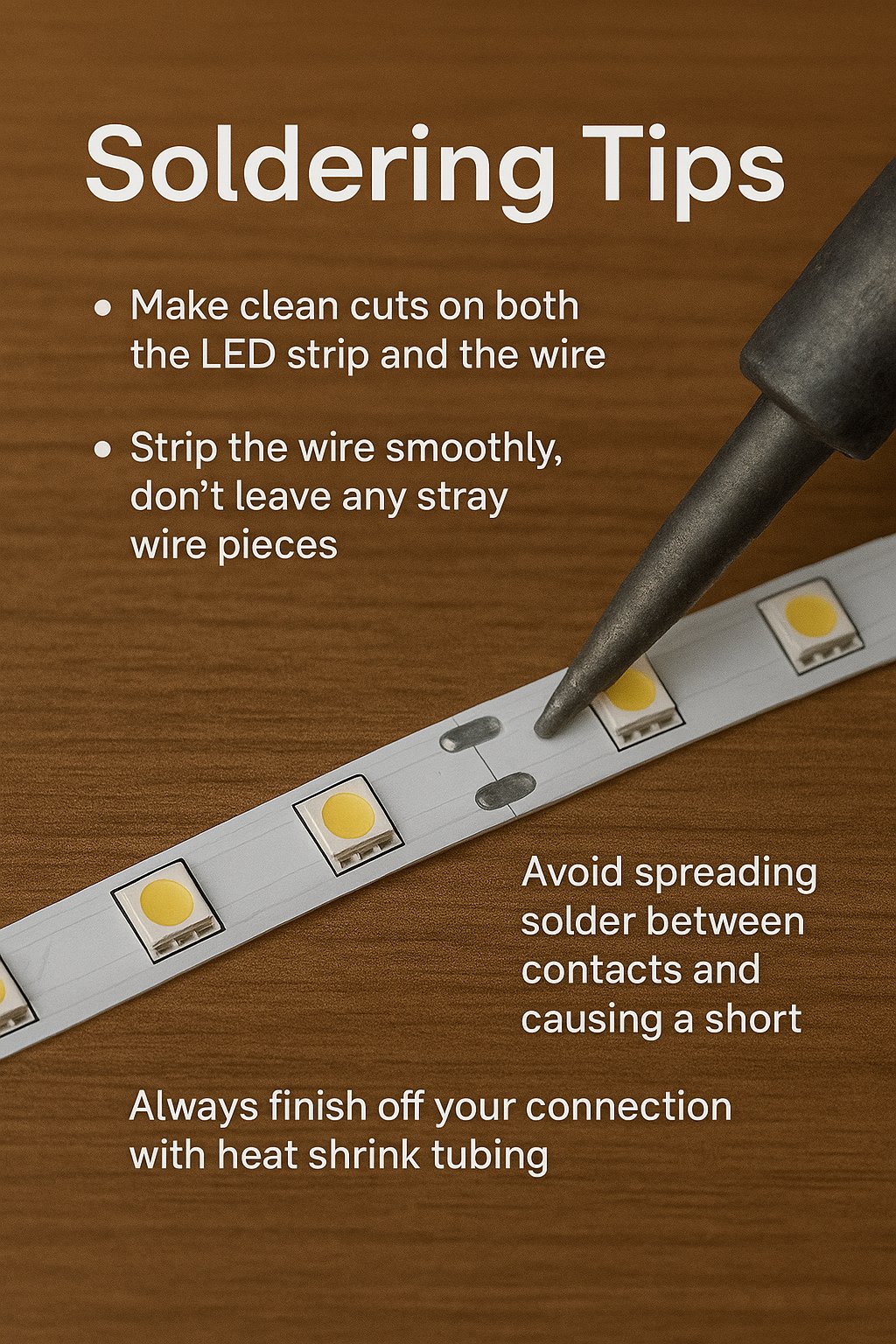
- Make clean cuts on both the LED strip and the wire
- Strip the wire smoothly, don’t leave any stray wire pieces
- Pre-tin both the wire and the LED strip before you make the connection
- Avoid spreading solder between contacts and causing a short
- Always finish off your connection with heat shrink tubing
Problem Scenarios for Connectors
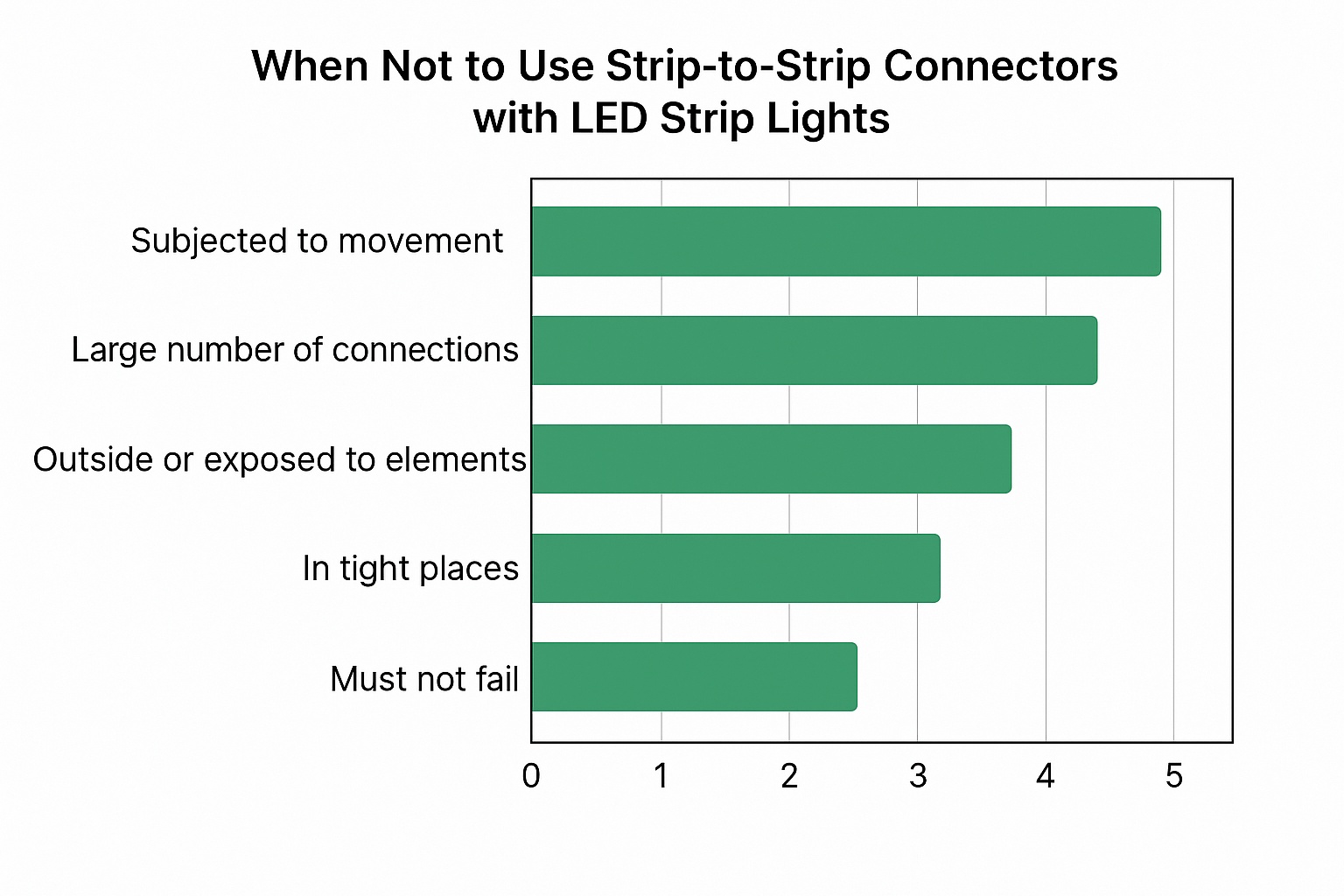
Installation Diagram
Conclusion
Use solderless connectors only when speed matters more than permanence. For reliability, solder your joints.