Struggling to install your LED strip lights correctly? Don’t worry—this step-by-step guide will help you select the right power supply, match voltages, and wire your strips for optimal performance.
Discover how to wire 12V and 24V LED strip lights safely and effectively. Includes best practices for standard strips, COB continuous light strips, and high-brightness commercial LED applications.
Read on to ensure your next LED strip lighting project goes smoothly.
Why Voltage and Current Matter in LED Strip Wiring
Most installation failures are caused by incorrect power supply configurations.
- Voltage: Common options are 12V and 24V. Match the voltage of your power supply with your LED strips.
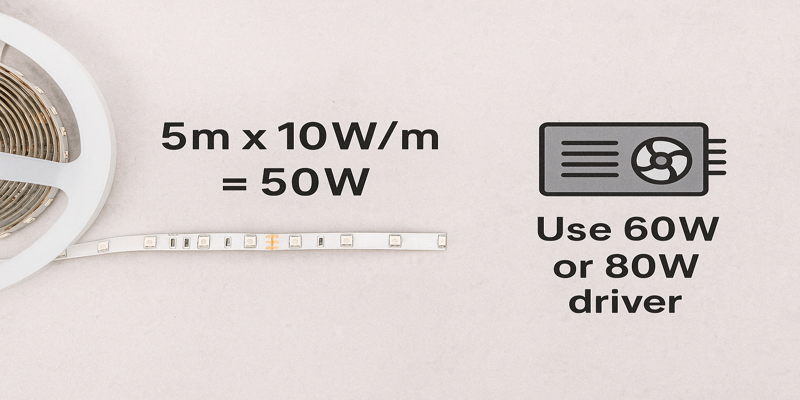
- Current/Power: Total power = wattage per meter × total length.
- Pro tip: Follow the “80/30 rule”
Use 30–80% of your power supply’s capacity for best performance.
Example: For a 100W power supply, ideal load is 30W–80W.
How to Choose the Right Type of LED Strip
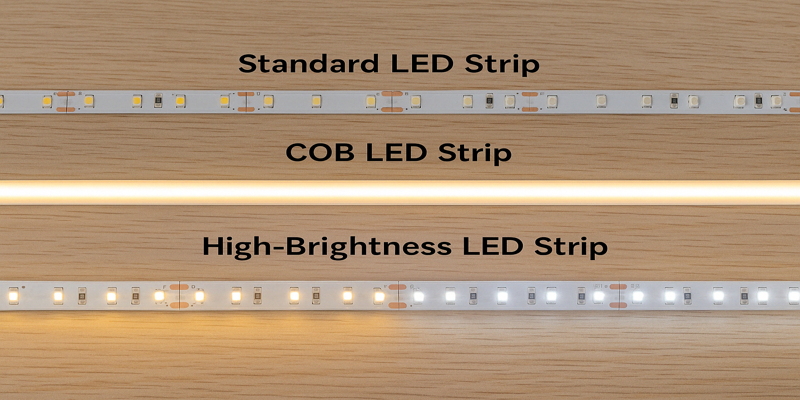
Different project needs call for different strip types:
| Type | Key Features | Recommended Use |
|---|---|---|
| 12V Standard LED Strips | Economical, for short runs | Cabinets, displays, accent lighting |
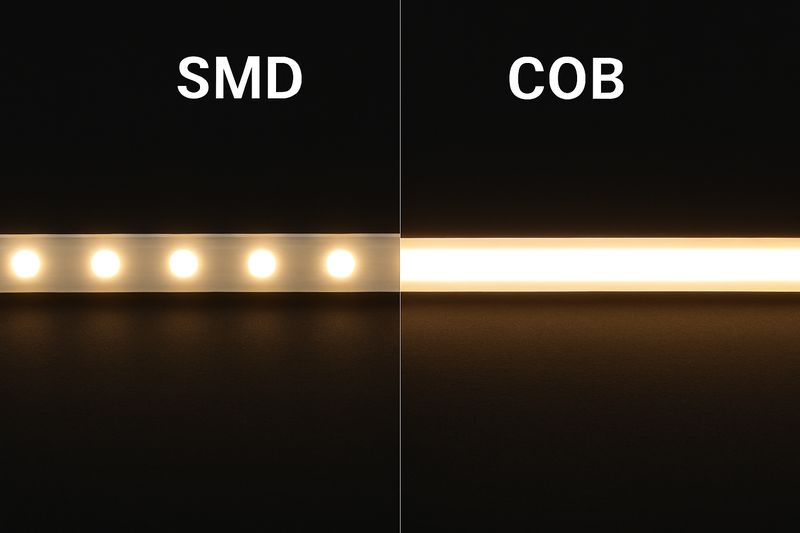
| 24V COB LED Strips | Spotless continuous light | Linear lighting, ceilings, wall lights |
| 24V High-Brightness Strips | Long run capacity, high output | Retail, showrooms, commercial zones |
Step-by-Step Wiring Process
✅ Step 1: Choose the Right Power Supply
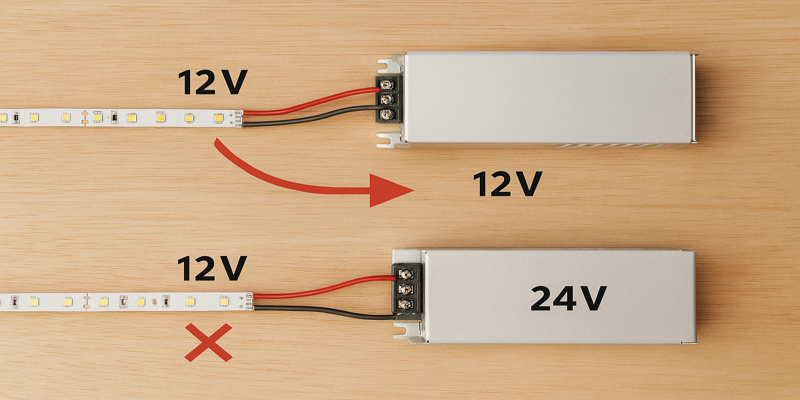
- Match power supply voltage to LED strip voltage.
- Add a 20% safety margin to your wattage calculation.
- Use UL-listed power supplies.
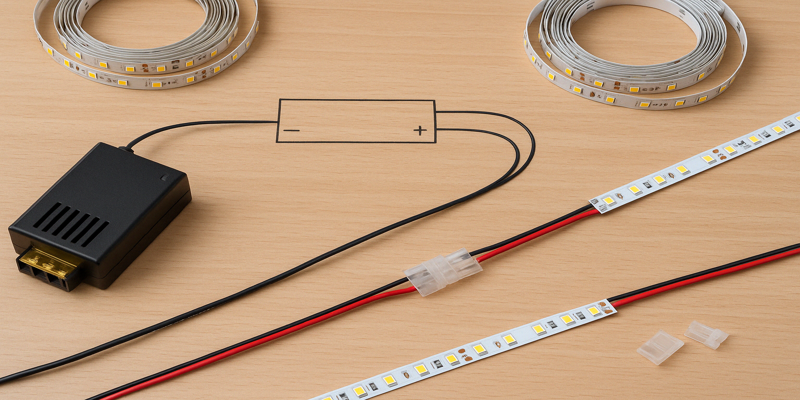
✅ Step 2: Connect Your LED Strips
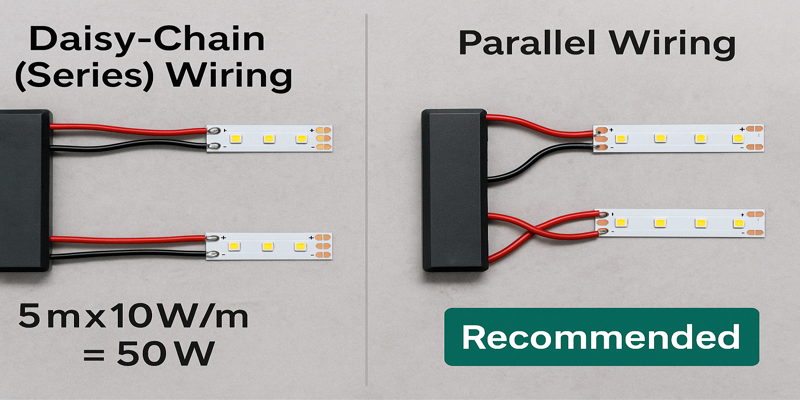
- Match positive and negative terminals.
- Use parallel connections, not daisy chains.
- Inject power every 5m for long or dense strips.
✅ Step 3: Mount the Strips
- Use adhesive backing or mounting brackets.
- Avoid sharp bends; follow bend radius specs.
- Test before permanent installation.
📸 Suggested Image: Real installation photo with clean aluminum channel mounting and driver placement.
Wiring Tips for Different LED Strip Types
🔸 12V Standard LED Strips
- Good for small-scale lighting
- Wire gauge: 22 AWG or thicker
- Avoid long serial connections
🔸 24V COB LED Strips
- Uniform, dotless lighting
- Wire gauge: 18 AWG or thicker
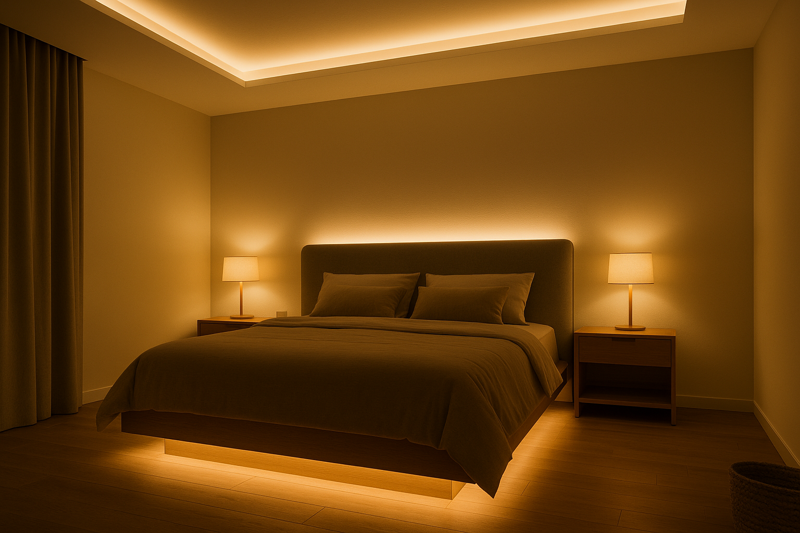
- Ideal for indirect and linear lighting
🔸 24V High-Brightness LED Strips
- For long distances or large spaces
- Wire gauge: 18 AWG or 16 AWG
- Use multiple drivers for large installations
Summary of Key Wiring Tips
| Item | Best Practice |
|---|---|
| Polarity | Connect + and – correctly |
| Wiring method | Use parallel wiring |
| Power supply load | Keep within 30%–80% of rated capacity |
| Test before mounting | Always test before final installation |
| Wire selection | Match gauge to current and distance |
| Connection quality | Use high-quality connectors or solder joints |
Additional Best Practices for Installers
Use Quality Accessories
- Aluminum profiles for heat dissipation and finish
- Snap-in connectors for fast connections
- Dimmers and remote controls for user comfort
Common Wiring Mistakes to Avoid
- Mismatched voltages (12V LED + 24V driver = failure)
- Overloading power supplies
- Ignoring voltage drop on long runs
Application-Specific Notes
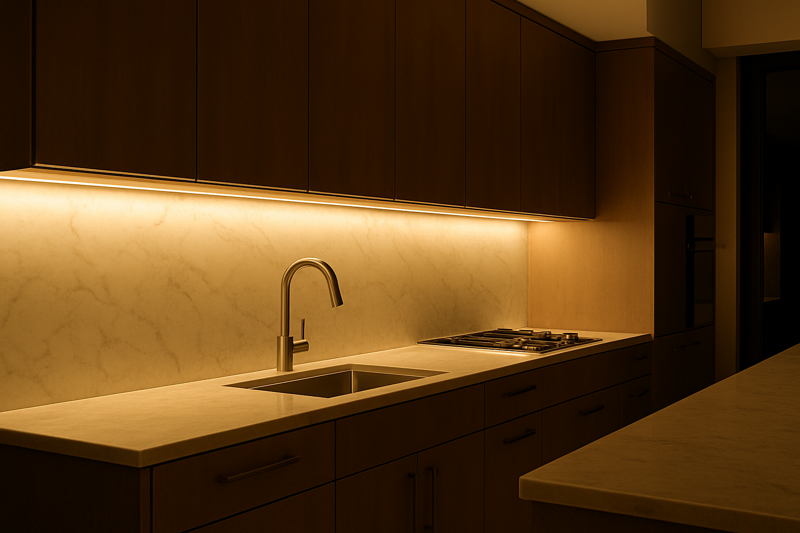
- Kitchen lighting: Use waterproof LED strips
- Retail displays: Choose high CRI strips
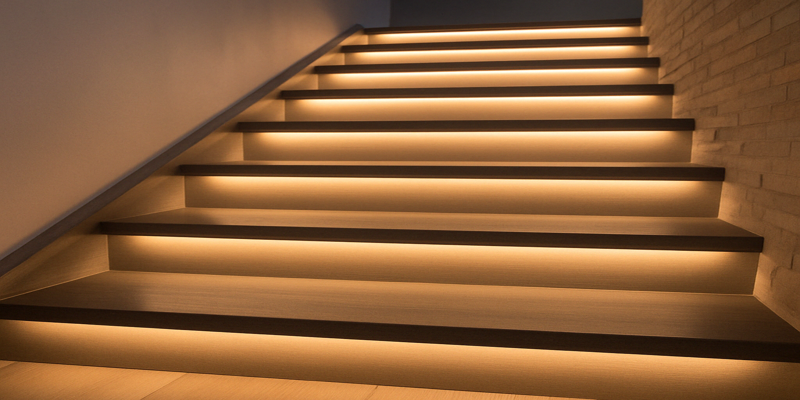
- Staircase lighting: Use low-voltage + secure installation
Frequently Asked Questions About LED Strip Wiring
1. Can I wire LED strip lights without a driver?
No. Most strips need a constant voltage driver. Without it, you risk failure.
2. What happens if I use a 12V power supply on 24V strips?
They won’t light up. Always match the voltage.
3. How do I power long LED runs?
Use 24V strips. Inject power every 5 meters. Use thicker wires and parallel feeds.
4. How do I size the power supply?
Multiply total wattage and add 20% buffer. Stay within 30–80% of the power supply’s max rating.
5. What wire gauge should I use?
22 AWG for short 12V runs. 18–16 AWG for 24V or long/high-power setups.
Conclusion: Simplify Your LED Strip Lighting Installations
Whether you’re using 12V strips for cabinets or 24V COB and high-output strips for commercial spaces, proper wiring ensures long-lasting, safe lighting performance.
🛠️ Need Help with Your LED Project?
We provide:
- LED strip product selection assistance
- Custom wiring diagrams
- OEM/ODM services and branding
- Full LED lighting solutions for contractors & wholesalers
👉 Contact us today for free technical advice and fast quotations.