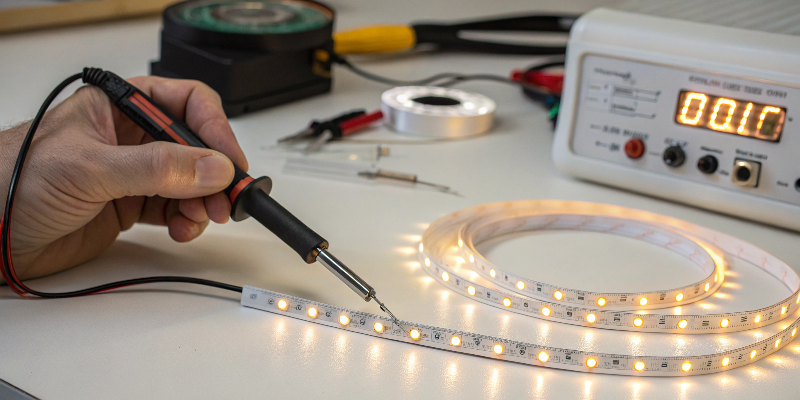
Wiring LED strip lights seems tricky—but only before you know the correct steps.
To wire LED strip lights, connect the power supply to the strip using compatible connectors or soldering.
If you’re wondering how to power or hardwire LED strips, this guide will break down everything simply.
Can LED strip lights be hardwired?
Many projects need seamless integration—hardwiring LED strips solves that.
Yes, LED strip lights can be hardwired into mains or circuits for a cleaner and more permanent setup.
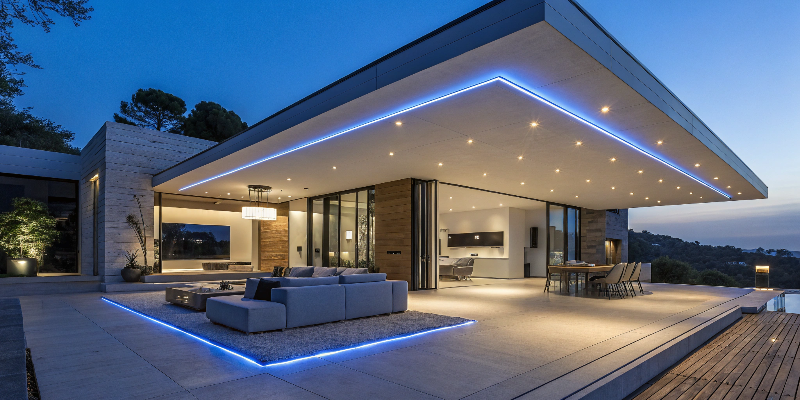
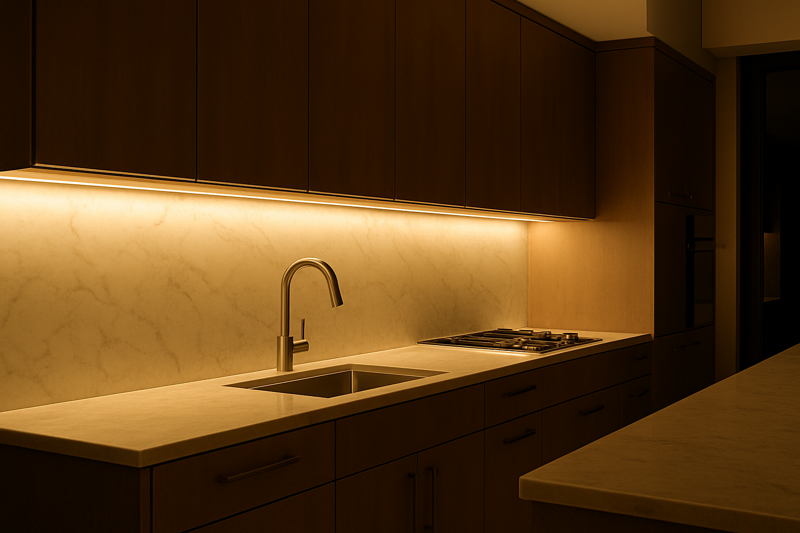
Hardwiring LED strips means you connect them directly to an AC power circuit through a power supply. This is ideal for commercial installations, kitchens, under-cabinet lighting, or when strips are hidden and shouldn’t rely on visible plugs.
Key Considerations for Hardwiring
| Factor | Details |
|---|---|
| Voltage Matching | LED strips come in 12V or 24V—never wire directly into 110V/220V mains. |
| Power Supply Use | A compatible LED driver1 must be installed between strip and mains. |
| Certification Needs | Ensure all components meet local electrical safety standards. |
| Installer Expertise | Hire licensed electricians2 for permanent hardwiring. |
In one of my office projects, we installed warm white LED strips above floating shelves. Instead of using an adapter, we hardwired them to the lighting circuit through a junction box. The result? A sleek look with zero clutter.
Hardwiring is also safer for permanent installs, as it reduces chances of accidental unplugging or loose connections. Just remember to always use a constant voltage LED driver and double-check polarity before sealing any wire connection.
How do LED strip lights connect to power?
Every lighting project starts with power—and strips have specific needs.
LED strip lights connect via adapters, connectors, or soldered wires to a power supply.
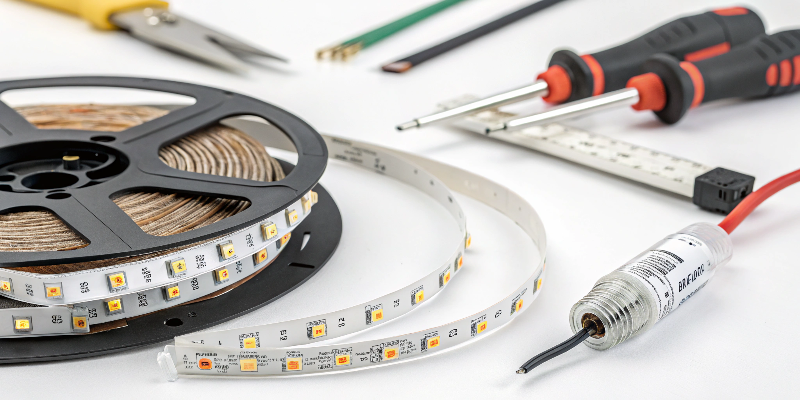
Depending on your installation type, LED strips can be powered using a plug-in adapter, a hardwired driver, or portable battery packs. Each has its place depending on whether you’re installing temporary mood lighting or a professional-grade lighting system.
Power Options Explained
| Power Method | Pros | Cons |
|---|---|---|
| Plug Adapter | Easy setup; no wiring needed | Not suitable for permanent installs |
| Hardwired Driver | Clean look; long-term reliability | Needs professional installation |
| Battery Pack | Portable, ideal for mobile setups | Limited runtime |
I’ve done dozens of projects where the client preferred plug-and-play solutions. But once, during a retail window install, we opted for a hidden hardwired driver tucked into a wall niche. It powered five meters of RGBW LED strips with ease and stayed cool throughout the day.
Common Connection Methods
- Barrel connectors – quick but bulky
- Screw terminals – more secure, needs tools
- Soldering – cleanest and most reliable, but permanent
- Snap connectors – tool-free but sometimes unreliable over time
Always pick the method based on the installation type and maintenance access.
How to wire LED strip lights to mains?
Direct-to-mains wiring is possible—but only with the right tools.
You must use a compatible LED power supply to connect strip lights to mains electricity.
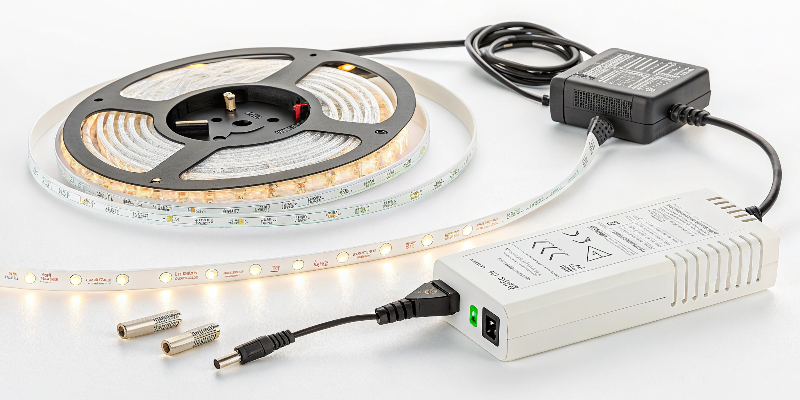
LED strip lights are designed for low-voltage operation (usually 12V or 24V). Mains power is high-voltage (110V or 220V). To safely power LED strips from mains, you need a constant voltage power supply that transforms AC to DC.
Step-by-Step Wiring to Mains
- Identify strip voltage. Usually 12V or 24V, printed on the reel or spec sheet.
- Choose the power supply3. Ensure it matches your input (AC) and output (DC) voltage.
- Shut off power. Before touching any wires, turn off the circuit at the breaker.
- Wire the AC input. Use appropriate terminals to wire the driver to the mains.
- Connect DC output. Attach the + and – wires to the LED strip.
- Test and mount. Power it up to confirm before fixing everything in place.
Additional Wiring Tips
| Step | Pro Tip |
|---|---|
| Grounding | Always ground the driver if it includes a ground wire |
| Strain relief | Use clips to avoid wire movement at terminal blocks |
| Heat management | Keep driver in ventilated area to prevent overheating |
I once did an install where the driver was buried inside a wooden cabinet. It caused overheating and reduced lifespan. After moving it to a vented panel, performance returned to normal.
What is the correct way to wire LEDs?
Wiring LEDs wrong can cause flicker, failure—or worse, fire.
The correct way to wire LEDs is to ensure voltage match, polarity alignment, and appropriate power supply.
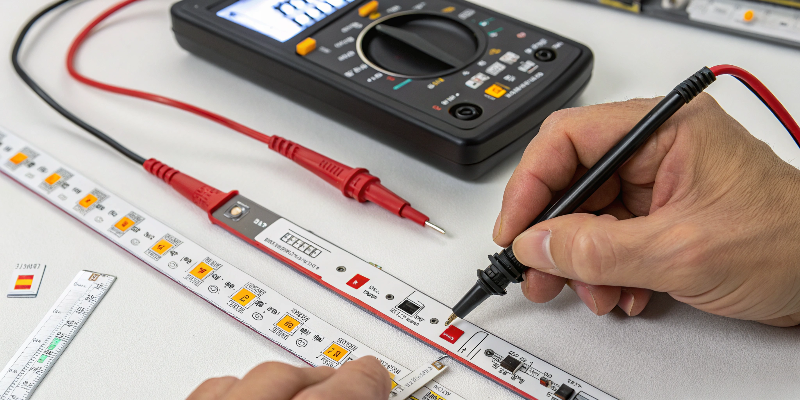
Getting LED wiring right starts with planning. Know your strip type, length, and power needs. Never assume all strips are the same. Mistakes often happen when mixing RGB and single-color types or trying to extend beyond rated length without amplification.
Wiring Principles for LED Strips
Polarity
Always connect positive to positive and negative to negative. Reversing may not damage the strip instantly, but it won’t light and may trip the driver.
Power Load
Calculate the total wattage of your strip. Then select a driver with 20–30% more capacity. For example, if your strip needs 48W, go for a 60W driver.
Parallel Wiring
Never chain long runs of LED strips in series. It causes voltage drops and uneven brightness. Use parallel wiring and feed power every 5 meters for consistent lighting.
Common Issues and Fixes
| Mistake | Cause | Fix |
|---|---|---|
| Flickering Light4 | Undersized power supply | Upgrade driver to proper wattage |
| Dim Sections | Voltage drop from long runs | Add power feed at both strip ends |
| No Power | Polarity reversed or loose connection | Double-check wire direction and joints |
In one project, I fixed an issue where every second strip was dimmer. The original installer had chained them in series across 10 meters. I rewired them with a distribution block and fed power to each strip—problem solved.
Can you wire LED strip lights directly to a battery?
Portable projects need power—batteries offer flexibility.
Yes, LED strip lights can be wired directly to a battery if voltage and capacity match.
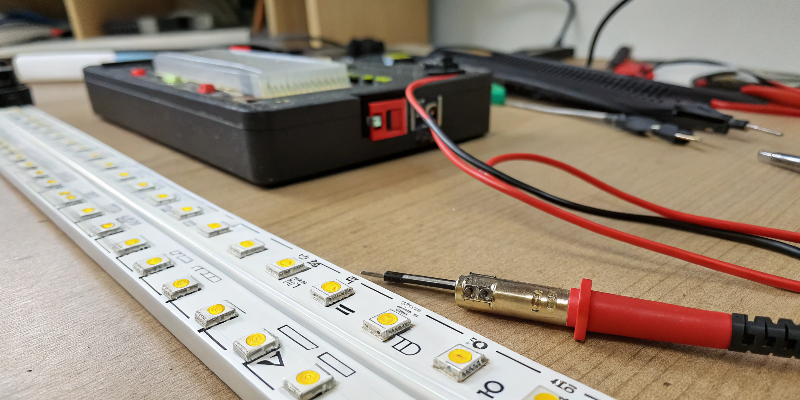
LED strips are low voltage, which makes them suitable for battery-powered setups. Whether for off-grid locations, photography setups, or camping lights, using a battery is both safe and simple—if you match the voltage properly.
How to Wire LED Strips to Battery
- Choose the right battery. 12V lead-acid or lithium-ion is common.
- Check amperage. Ensure it provides enough current for your strip wattage.
- Add protection. Use a fuse and switch between battery and strip.
- Wire with care. Match polarity and secure terminals.
| Battery Type | Runtime Estimate (for 5m 12V 24W strip) |
|---|---|
| 12V 7Ah SLA | ~3.5 hours |
| 12V 20Ah Li-ion | ~10 hours |
| 8 AA Batteries | ~1 hour (not recommended) |
I once powered a photo booth with a compact lithium-ion pack and 3 meters of RGB LED strip. It ran for 8 hours without dropping brightness. We even added a remote dimmer for extra control.
For outdoor setups, always use waterproof connectors and seal your battery pack. Also, store the battery in a ventilated, dry place to avoid swelling or leakage.
Can LED strip lights be wired into lighting circuit?
For uniform control, integrating with existing lights helps.
Yes, LED strips can be wired into a lighting circuit using proper drivers and safety measures.
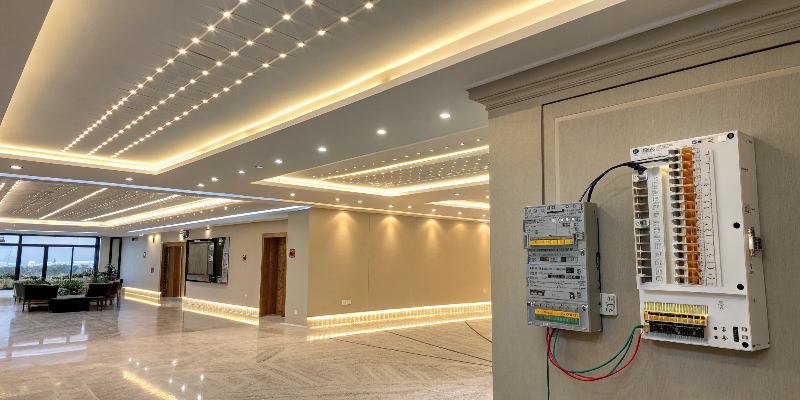
Wiring LED strips into the same circuit as ceiling lights or wall fixtures is a great way to sync control using a single switch. It’s clean, efficient, and common in modern homes or hospitality settings.
How to Integrate with Lighting Circuit
- Turn off power. Safety first.
- Find lighting loop. Identify which switch controls the target lighting zone.
- Add an LED driver. Connect it between the switch and LED strip.
- Use a junction box. Keep wiring neat and up to code.
- Test and seal. Make sure everything works before final assembly.
How to Integrate with Lighting Circuit
- Turn off power. Safety first.
- Find lighting loop. Identify which switch controls the target lighting zone.
- Add an LED driver5. Connect it between the switch and LED strip.
- Use a junction box. Keep wiring neat and up to code.
- Test and seal. Make sure everything works before final assembly.
Dimmer Compatibility
If your existing lighting is dimmable, ensure the driver and LED strip are compatible with the dimmer type (TRIAC, 0-10V, or DALI). Mixing incompatible components can result in flickering or damage.
| Dimmer Type | Driver Requirement |
|---|---|
| TRIAC | TRIAC-dimmable driver |
| 0-10V | 0-10V dimming driver |
| DALI | DALI driver required |
For a hotel hallway, I once connected all under-rail LED strips to the same lighting circuit as the ceiling sconces. The entire zone dimmed together—clean look, easy control, and clients loved it.
Conclusion
Wiring LED strips is simple when you match voltage, use safe methods, and plan power correctly.
This link will help you understand the importance of selecting the correct LED driver for optimal performance and safety. ↩
Discover the benefits of hiring licensed electricians to ensure safety and compliance in your electrical installations. ↩
Choosing the right power supply is crucial for optimal LED strip performance. Explore this link to find the best options available. ↩
Learning about flickering light issues can save you time and money by preventing future problems in your LED strip setups. ↩
Understanding LED drivers is crucial for ensuring compatibility and optimal performance in your lighting projects. ↩