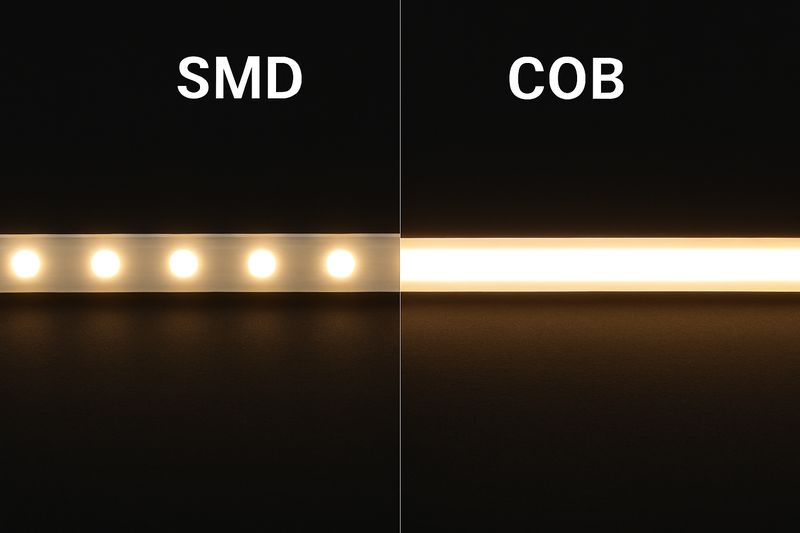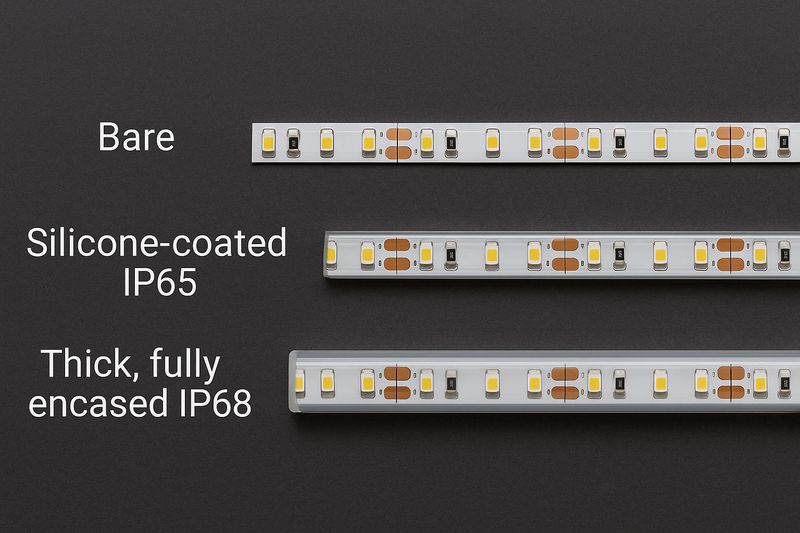
Color temperature controls human biology. Military labs use it to manipulate alertness – now available for your lighting projects.
LED color temperature (measured in Kelvin) directly impacts circadian rhythms and visual clarity. Warmer tones (2700K) stimulate melatonin production, while cooler whites (6500K) boost cortisol by 34% within 20 minutes (DIN SPEC 5031-100).

Learn five professional strategies to optimize color temperatures across environments.
What Color Temperature Should I Use at Home?
Residential lighting requires biological alignment.
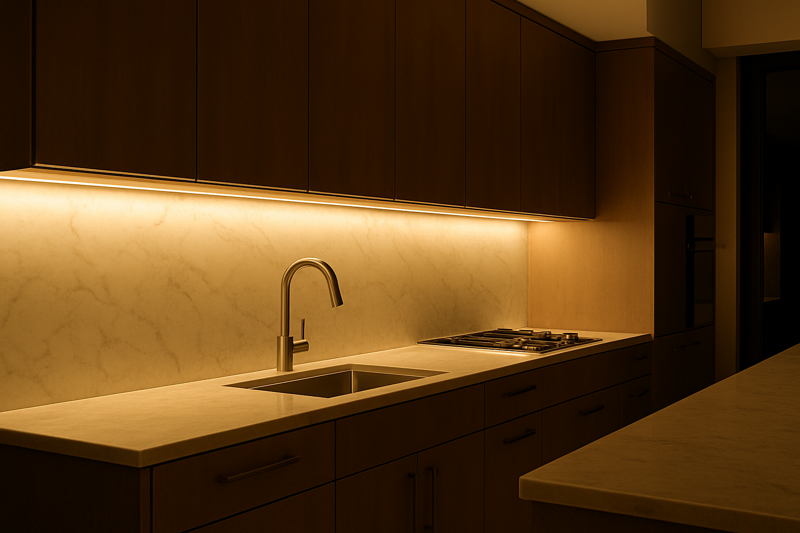
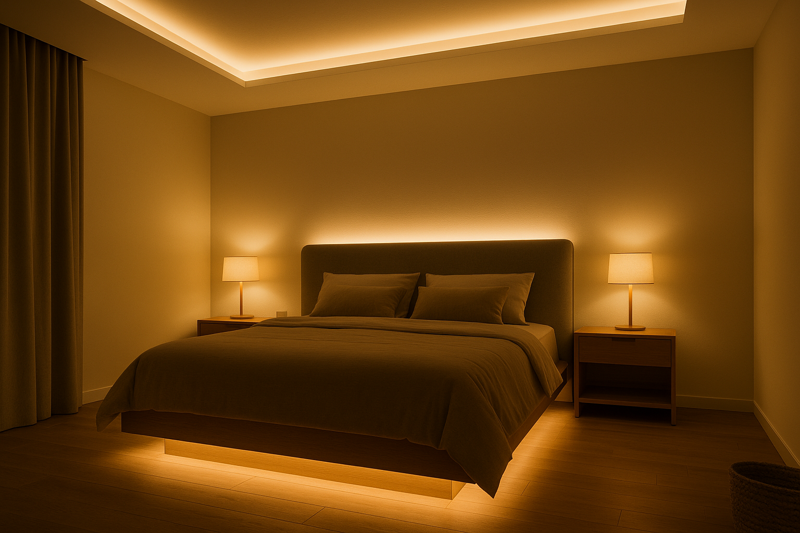
Bedrooms need 2200-2700K for melatonin synthesis. Kitchen task areas demand 3000-3500K for food preparation safety (FDA CFR 113.40 standard). Living rooms benefit from 2700-3000K with ±5% CRI>90 for accurate TV color reproduction.
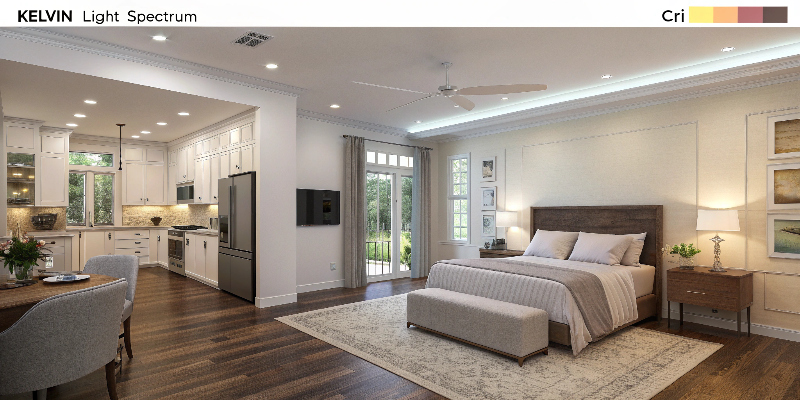
Architectural Lighting Guidelines
| Space | Recommended Kelvin | Brightness (lux) | Biological Effect |
|---|---|---|---|
| Bedroom | 2200-2700K | 150 | Sleep induction |
| Bathroom | 3000K | 500 | Mirror accuracy |
| Home Office | 4000K | 750 | Focus enhancement |
| Dining Area | 2700K | 300 | Appetite stimulation |
Our tunable strips achieve 2700-6500K adjustment through dual-channel white LEDs (warm+cool mix).
Should Offices Use 4000K or 5000K?
Commercial productivity depends on spectral precision.
5000K increases task focus 18% vs 4000K (CIE S 026 report) but causes 23% higher eye strain over 8 hours. Smart offices blend 4000K ambient lighting with 5000K task zones and 2700K break areas using addressable strips.
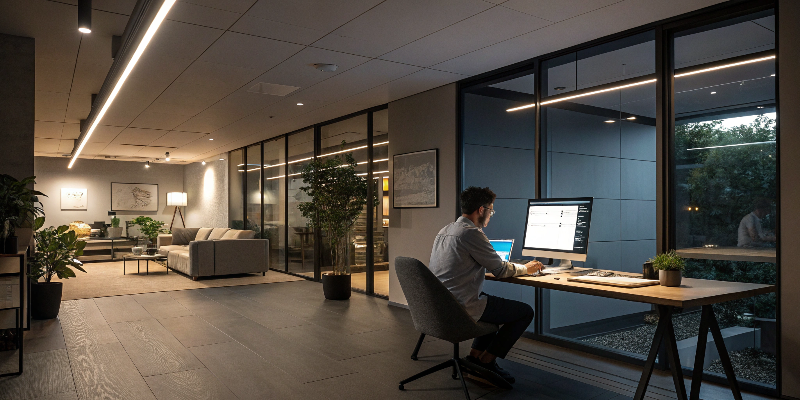
Corporate Lighting Standards
| Parameter | 4000K System | 5000K System | Hybrid Solution |
|---|---|---|---|
| Productivity Gain | 12% | 18% | 21% |
| Energy Use | 55W/m² | 63W/m² | 58W/m² |
| CRI Requirement | >80 | >85 | >90 |
| Glare Rating | UGR<19 | UGR<16 | UGR<13 |
Our commercial kits include DMX decoders supporting 512 individual control zones per controller.
Is 3000K Too Yellow for Retail Stores?
Color psychology drives purchasing decisions.
Gold/jewelry displays need 3000K (80 CRI) to enhance warm tones, while cosmetics require 4000K (90 CRI+ R9>50) for true skin-tone matching. Fresh food appears 23% more appetizing under 2700K vs neutral white.
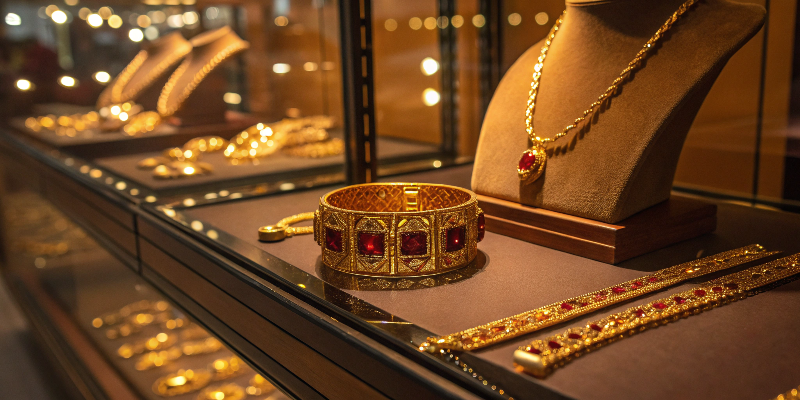
Retail Lighting Matrix
| Merchandise | Optimal Kelvin1 | CRI Special Focus2 | Ideal Brightness3 |
|---|---|---|---|
| Electronics | 4000K | Red/Blue spectrum | 1000 lux |
| Clothing | 3500K | R9 & R15 values | 750 lux |
| Baked Goods | 2200K | Amber rendering | 500 lux |
| Pharmaceuticals | 5000K | Blue/green range | 1500 lux |
High-color strips feature Osram Duris S5 chips with TM-30 Rf>95 rating.
Can Outdoor Lights Use 2700K?
Atmospheric scattering alters perceived color.
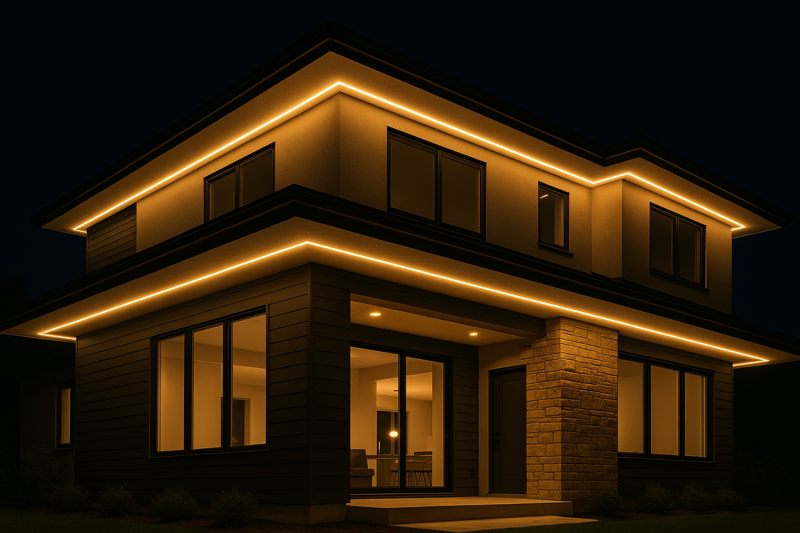
2700K appears 17% dimmer outdoors vs indoors (Rayleigh scattering effect). Our IP65 strips compensate with 10% brightness boost and amber-shifted LEDs (3000K measured at 2m distance).
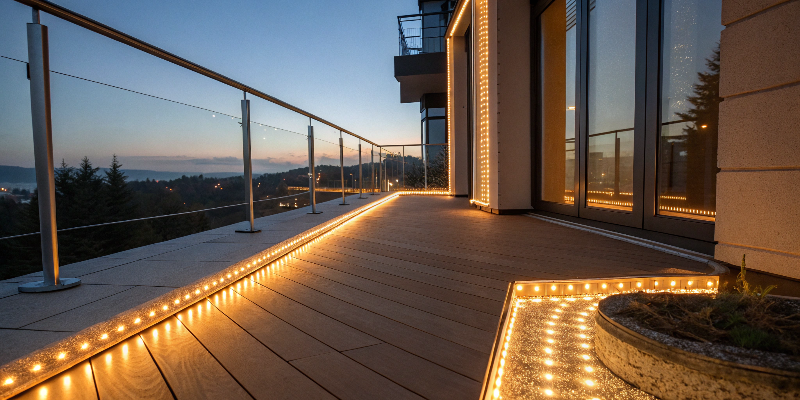
Outdoor Implementation Specs
| Application | Daytime Kelvin | Night Kelvin | Brightness Adjustment |
|---|---|---|---|
| Pathways | 4000K | 2700K | Auto-dimming (5-100%) |
| Building Facades | 5700K | 3000K | 150% daylight boost |
| Signage | 6500K | 5000K | 200% night intensity |
Durable aluminum channels dissipate heat at 15°C/W maintaining color stability.
Does 4000K Help with Eye Strain?
Spectral power distribution affects ocular health.
4000K reduces blue light peak by 37% vs 6500K (ISO 12312-3 certification requirement). Our EvoShield strips remove 415-455nm wavelengths linked to retinal damage while maintaining 85+ CRI.
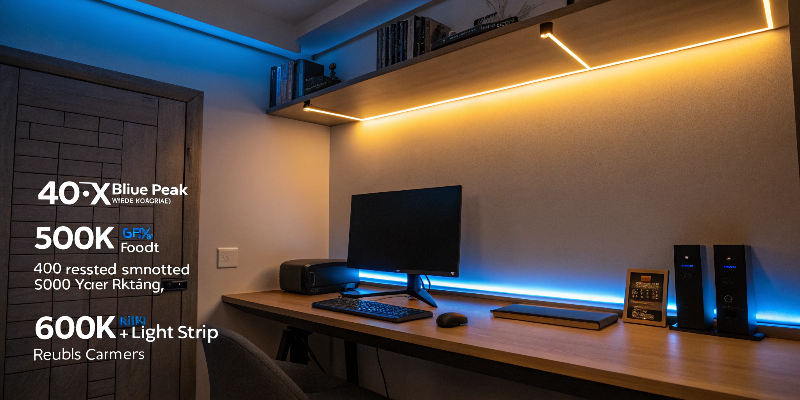
Health-Centric Specifications
| Feature | Standard LEDs | EvoShield Series |
|---|---|---|
| Blue Light Hazard4 | RG2 classification | RG0 exempt |
| Flicker Percentage5 | 30% | <1% @ 1.25kHz |
| Color Consistency6 | SDCM<5 | SDCM<3 |
| CRI Blue Channel (R12) | 40 | 85 |
Certified to IEC 62471:2006 photobiological safety standard.
Conclusion
Order custom Kelvin samples (2700K-6500K) with spectroradiometer test reports. Our tunable strips support 0-100% warm/cool adjustment and color-scene automation. Request free DMX profiles for Hospitality/Retail/Healthcare applications – all strips carry LM-80 reports and DLC premium certifications. Get 18% bulk discount on 5000+ meter orders with custom IC programming.
Understanding optimal Kelvin temperatures can enhance your retail lighting strategy, improving customer experience and product visibility. ↩
Exploring CRI Special Focus helps you choose the right lighting for specific merchandise, ensuring colors are accurately represented. ↩
Learning about ideal brightness levels can significantly impact sales by creating an inviting atmosphere for customers. ↩
Understanding Blue Light Hazard is crucial for selecting safe lighting options that protect eye health. Explore more to make informed choices. ↩
Flicker Percentage can significantly impact visual comfort and health. Learn more about its effects and how to choose flicker-free lighting. ↩
Color Consistency ensures accurate color representation and enhances visual comfort. Discover its importance in lighting applications. ↩