LED light strips have become a popular lighting solution for various projects. But do you know what "density" means when it comes to these strips? It’s more than just a number; it directly influences the brightness and functionality of your lighting.
The density of LED strips refers to the number of LEDs per unit length, typically measured in LEDs per meter. This factor plays a critical role in determining the strip’s brightness, flexibility, and overall effectiveness.
Understanding the density of LED strips is crucial for selecting the right one for your needs. Let’s dive deeper into what it means for your project.
What is a good LED density?
When we talk about the density of LED strips, we’re referring to how many LEDs are packed into a given length of the strip, usually one meter. The density directly affects how bright the strip will appear when illuminated.
The ideal LED density depends on the intended application. Higher density means brighter light, but it also requires more power.
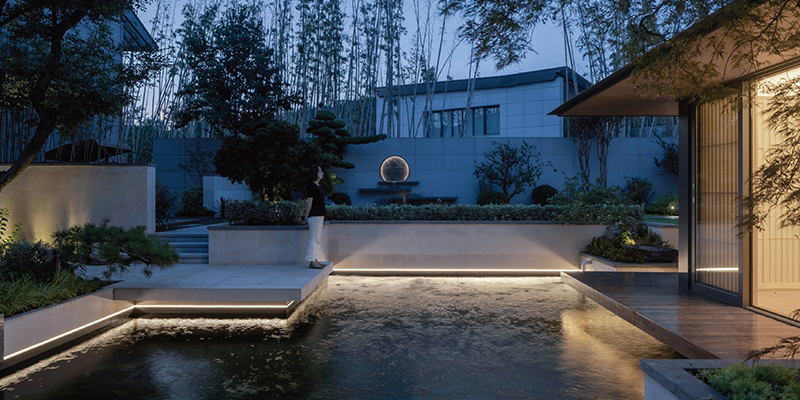
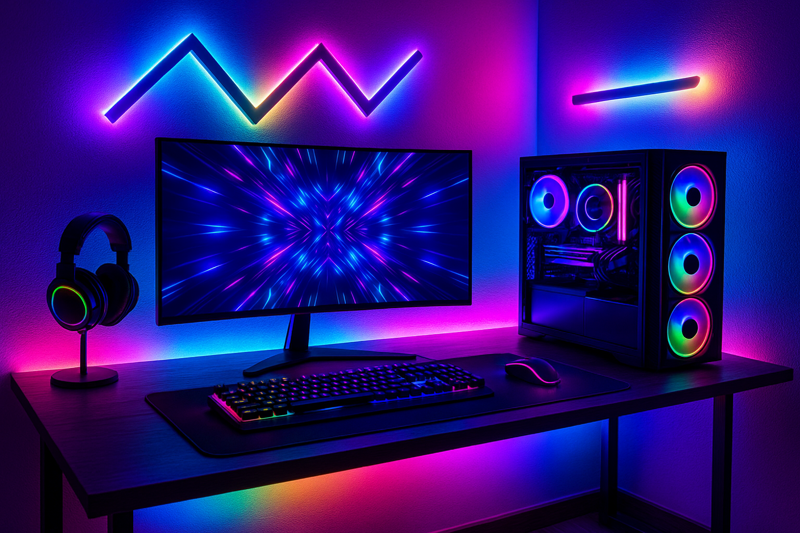
The ideal density of an LED light strip depends on its intended use. For example, for general-purpose lighting, you may only need 30-60 LEDs per meter. But for more intricate, decorative, or high-output lighting, you may want a strip with 120 LEDs per meter or more. High-density strips will provide more even, bright light but at the cost of greater power consumption.
Common LED Densities for Different Applications
| Application | LED Density1 (LEDs per meter) |
|---|---|
| Accent Lighting | 30-60 LEDs/m |
| Task Lighting | 60-120 LEDs/m |
| Decorative or Bright Effects | 120+ LEDs/m |
Higher-density LED strips not only provide more brightness but also offer smoother light effects, as the LEDs are spaced more closely together. For decorative lighting, the smoother, more uniform glow is usually preferred, whereas for task lighting, you may need more focused, brighter light, which could require a higher density.
Impact of Density on Brightness and Power Consumption
Higher-density LED strips use more power, which means they’ll need a higher capacity power supply2. If you’re planning on using high-density strips, you’ll need to ensure that your power supply is capable of supporting the increased demand. It’s essential to balance brightness with energy efficiency3 when choosing your strips.
What is high density LED light strip?
A high-density LED light strip refers to a strip that has a large number of LEDs packed into a short length. This can range from 120 LEDs per meter to as much as 300+ LEDs per meter.
High-density LED strips are ideal for projects requiring intense light output and uniform illumination.
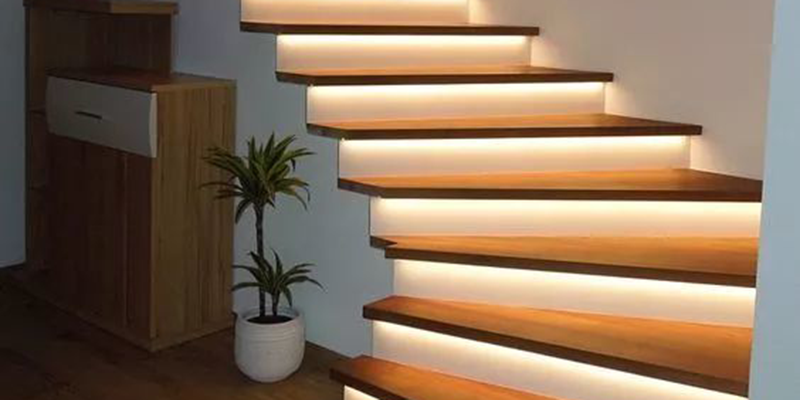
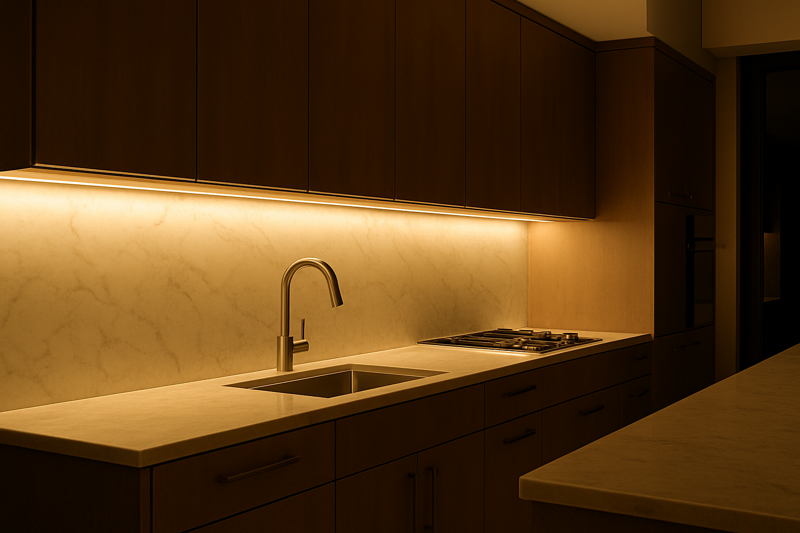
High-density LED strips are perfect for applications like architectural lighting, backlighting for signage, or under-cabinet lighting, where even, bright light is essential. These strips are often used in commercial settings or areas that require focused, high-output lighting.
Advantages of High-Density LED Strips
High-density LED strips are advantageous because they provide:
- Smoother lighting: Since the LEDs are spaced closer together, you won’t see gaps or “hotspots” in the light.
- More brightness: These strips emit more light, making them suitable for areas that need illumination.
- Better color consistency: With more LEDs, there’s less color variation across the strip.
However, higher-density LED strips tend to use more power, so be sure to account for this when planning your power supply and installation.
What do the numbers mean on LED light strips?
When you see numbers like 5050, or 2835 associated with LED strips, what do they mean? These numbers refer to the size of the LED chip used in the strip.
The first part of the number indicates the dimensions of the LED chip in millimeters. The larger the number, the bigger the LED chip, typically resulting in brighter light.
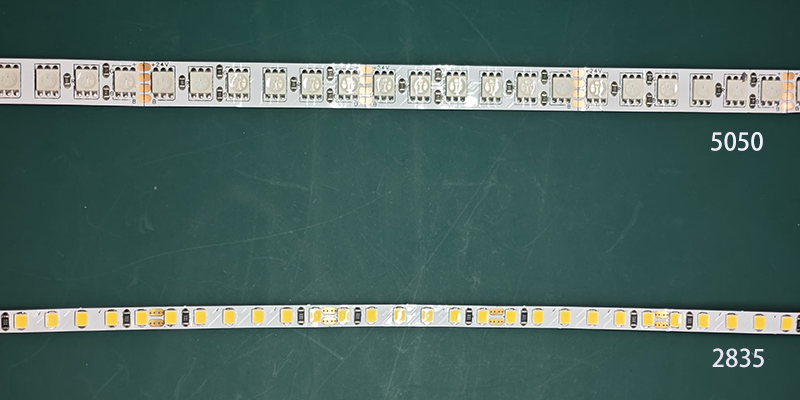
Here’s a breakdown of the common LED codes and their meaning:
| LED Type | Size (in mm) | Characteristics |
|---|---|---|
| 5050 | 5.0 x 5.0 | Brighter, versatile, high-density |
| 2835 | 2.8 x 3.5 | Slim, efficient, common for high-density strips |
Understanding LED Codes
These numbers are critical in determining the type of strip you’re dealing with:
- 5050 LEDs are larger and brighter, often used for task lighting or areas that need more light output.
- 2835 LEDs are a more recent design, offering a good balance between size, brightness, and energy efficiency, making them a popular choice for high-density strips.
By understanding these numbers, you can make more informed decisions based on your project’s lighting requirements.
How do I tell what type of LED strip I have?
If you’re unsure what type of LED strip you have, there are a few ways to identify it.
Check the product packaging, LED chip size, and LED density to identify the strip type.
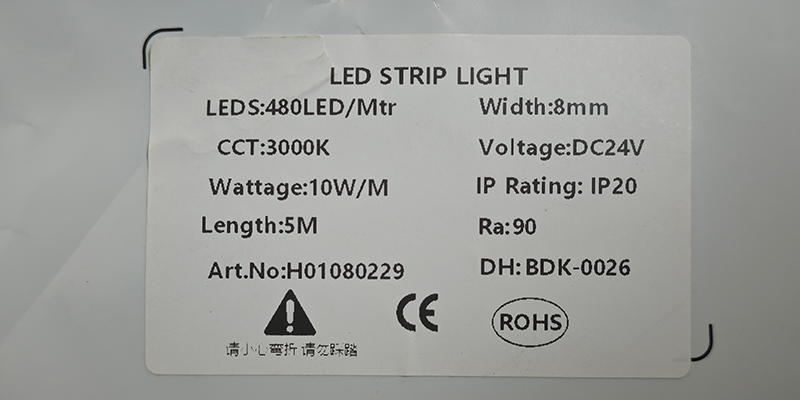
Here are some ways to identify your LED strip:
- Chip Size: Look at the size of the LED chips. It’s usually printed on the packaging, but if it’s not, you can measure it with a ruler.
- LED Density: The density of the LEDs is typically marked on the strip itself. You can count how many LEDs are in a 1-meter length of the strip.
- Voltage: Check the voltage specification on the strip. Most LED strips are either 12V or 24V. This can help determine if it’s designed for high power applications or more energy-efficient uses.
What does COB or SMD mean in LED lights?
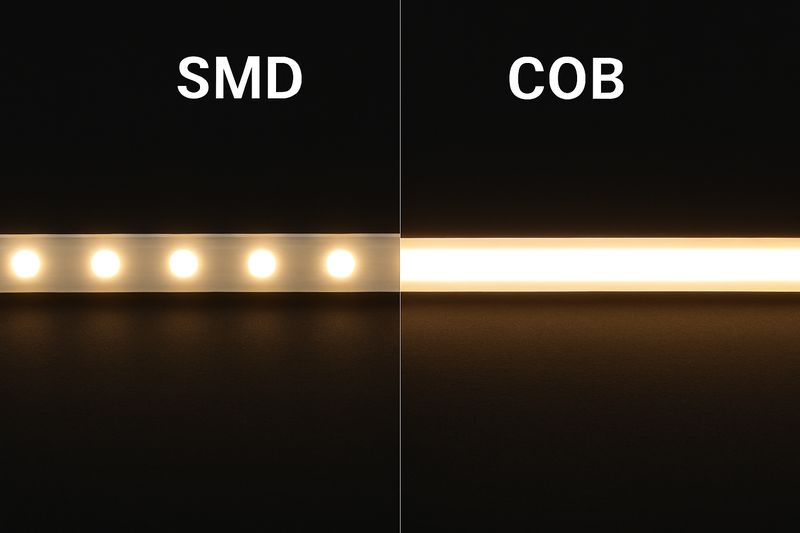
COB (Chip-on-Board) and SMD (Surface-Mount Device) are two common technologies used in LED strips, and they impact how the light is emitted.
COB and SMD LED strips differ in how the chips are mounted, which affects their performance in terms of brightness, flexibility, and light distribution.
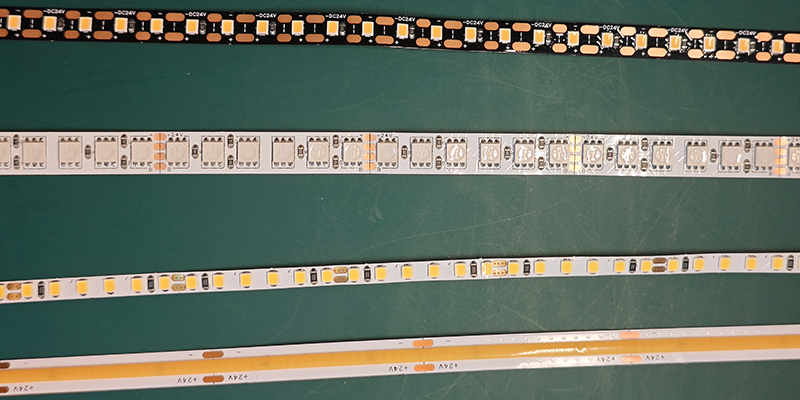
COB LED Strips
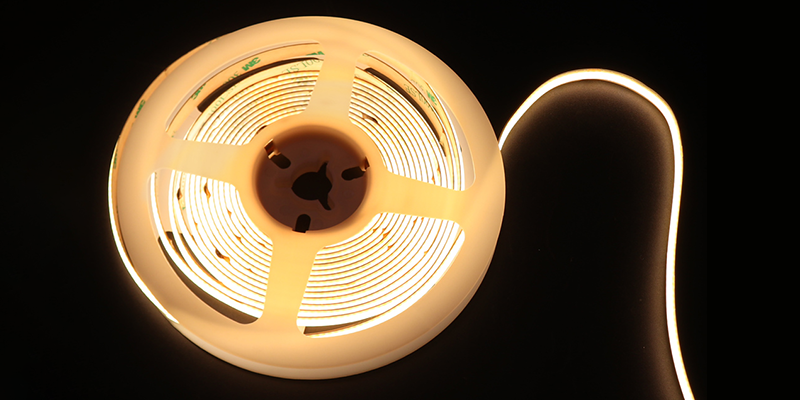
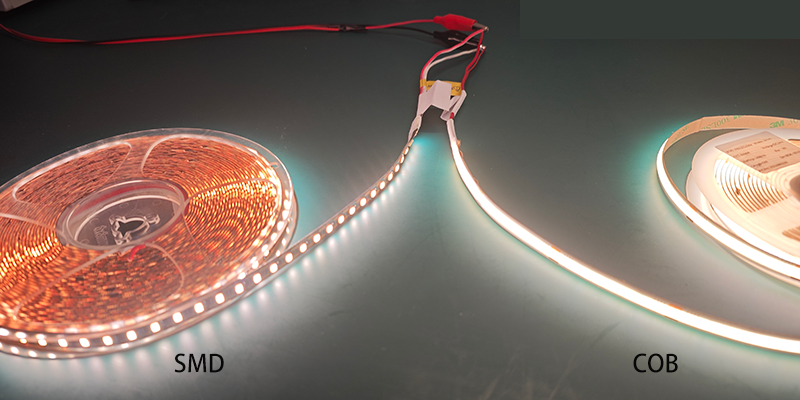
COB LED strips4 are made with multiple LED chips mounted directly onto a substrate. This design results in continuous lighting, with no visible gaps between individual LEDs. COB strips are ideal for applications where smooth, even lighting is needed.
SMD LED Strips
SMD LED strips5 use individual LED chips mounted on the surface of a circuit board. These strips are often more flexible and versatile than COB strips, but they may not offer the same smoothness or consistency in light output.
COB vs SMD6: Which to Choose?
- COB strips are better for continuous, even light, and are often used in applications where appearance matters (e.g., backlighting, signage, or under-cabinet lighting).
- SMD strips are more flexible and are often used in areas where the lighting needs to follow curves or other intricate designs.
Differences Between SMD and COB LED Strips with the Same Density
Even when SMD and COB LED strips have the same density, the way they perform can be quite different. Here’s a comparison between the two:
SMD and COB strips with the same LED density can offer different light quality, flexibility, and power consumption.
| Feature | SMD LED Strips | COB LED Strips |
|---|---|---|
| Light Quality | Less uniform, potential hotspots | Even, continuous light output |
| Flexibility | More flexible | Less flexible due to structure |
| Efficiency | Good for task lighting | Excellent for decorative lighting |
| Heat Dissipation | Better in lower densities | Better in higher densities |
| Power Consumption | Lower power consumption | Higher power consumption due to increased LED count |
While SMD LED strips are better for more flexible installations or when you need to follow complex shapes, COB LED strips excel in producing smooth, consistent light over a larger surface area, making them ideal for display lighting, signage, and other applications where uniform illumination is necessary.
Conclusion
LED strip density plays a crucial role in determining the light output, power usage, and aesthetic quality. By understanding these factors, you can choose the right LED strip to meet your project’s specific needs.
Understanding LED Density is crucial for selecting the right lighting for your needs. Explore this link to learn more about its impact on brightness and efficiency. ↩
Choosing the right power supply is vital for optimal LED performance. This resource will guide you in making an informed decision. ↩
Improving energy efficiency in LED lighting can save costs and reduce environmental impact. Discover effective strategies in this informative link. ↩
Explore the benefits of COB LED strips for continuous lighting and their ideal applications in various settings. ↩
Learn about the flexibility and versatility of SMD LED strips, perfect for intricate lighting designs. ↩
Discover the key differences between COB and SMD LED strips to make an informed choice for your lighting needs. ↩