Confused about LED light colors? Let’s make it clear today.
LED lights come in warm white, cool white, daylight, RGB, and tunable white, each serving specific functions.
Unsure which color fits your space? Keep reading to find out.
What are the different types of lighting color?
Choosing the wrong color disrupts both mood and functionality.
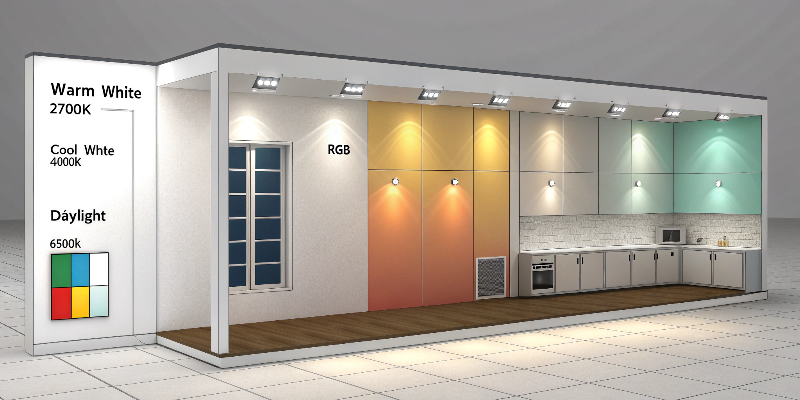
Lighting colors include warm white, cool white, daylight, RGB, and tunable white, designed for varied applications.
Understanding LED Lighting Colors
| Lighting Color Type1 | Color Temperature | Appearance | Best For |
|---|---|---|---|
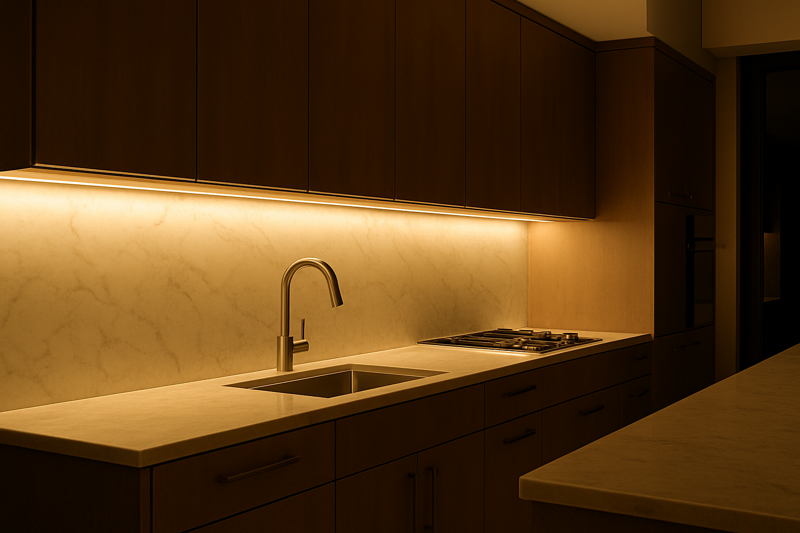
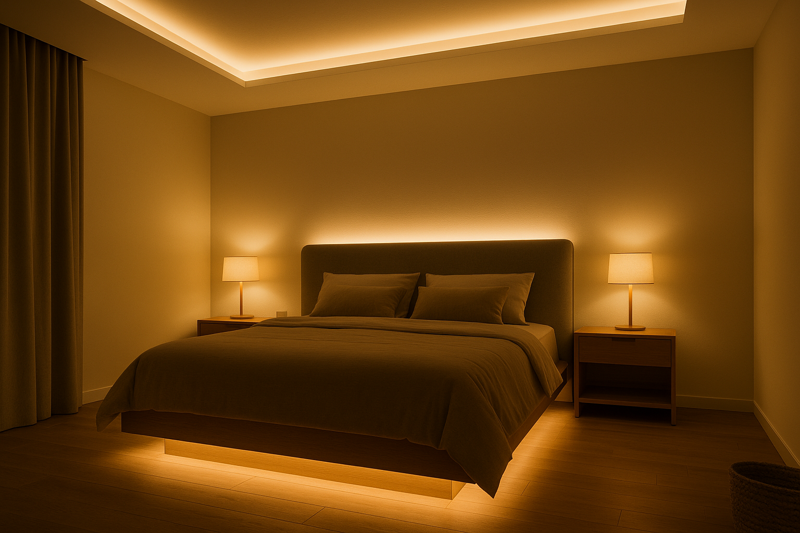
| Warm White | 2700K-3000K | Soft yellowish light | Living rooms, bedrooms |
| Cool White | 4000K-5000K | Bright white light | Offices, kitchens |
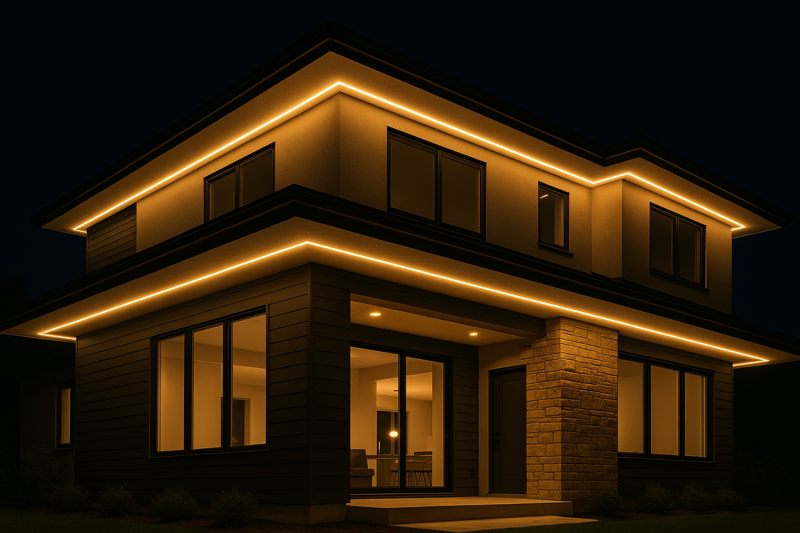
| Daylight | 6000K-6500K | Bluish-white light | Commercial spaces, outdoor |
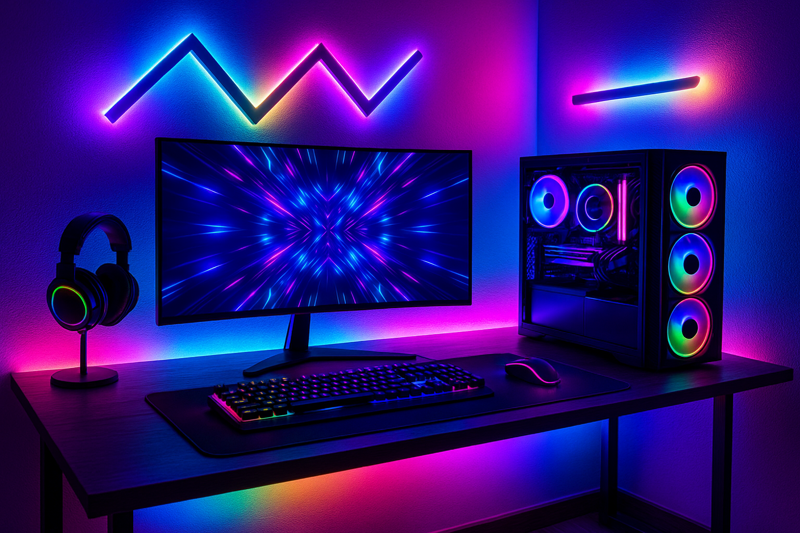
| RGB2 | Customizable colors | Any color | Decorative, entertainment |
| Tunable White3 | Adjustable 2700K-6500K | Flexible | Multi-purpose rooms |
How to Select the Right Lighting Color
Key Considerations:
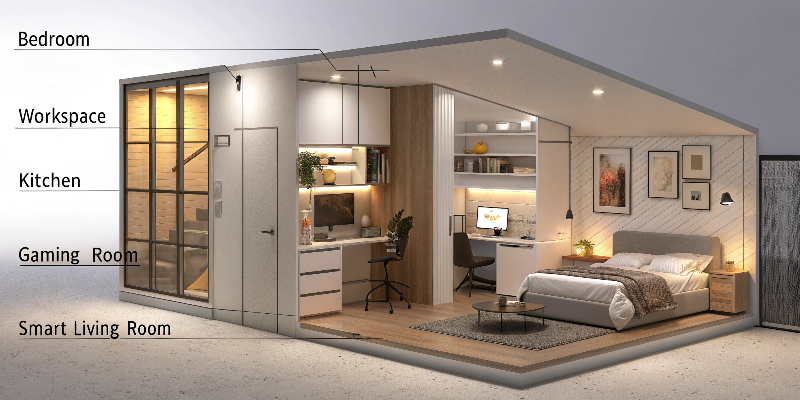
Purpose of the Space
Living rooms require warm white for comfort. Offices need cool white for clarity.User Mood and Experience
Warm colors calm users; cooler tones energize them.Aesthetic Preferences
RGB lights are perfect for creative, personalized setups.Control and Flexibility
Tunable white allows adjusting the color temperature anytime, ideal for dynamic environments.Energy Efficiency and Maintenance
Monochromatic whites generally offer better energy efficiency than RGB setups.
Making the correct decision ensures both functionality and visual harmony in the space.
What are the different types of light in LED?
Using the wrong LED type can lead to wasted energy, budget, and poor lighting effects.
LEDs are categorized as monochromatic, RGB, RGBW, and tunable white, each suiting specific applications.
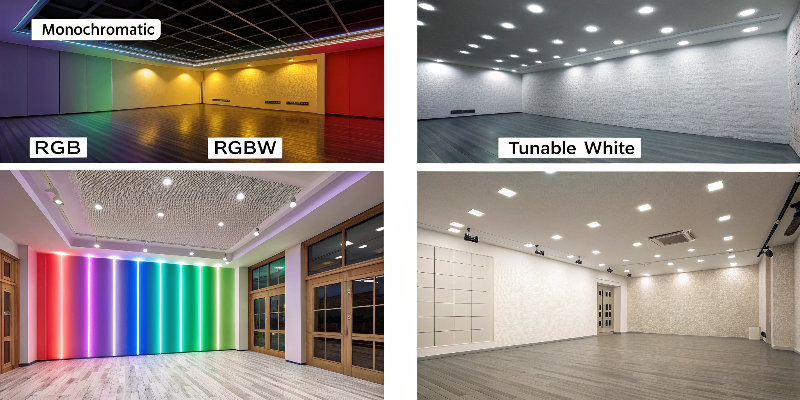
Different Types of LED Lights
| LED Light Type | Description | Use Cases |
|---|---|---|
| Monochromatic | Emits one fixed color | Task lighting, signage |
| RGB | Combines red, green, blue LEDs | Accent, entertainment |
| RGBW | Adds a white LED to RGB | More flexible, balance between color and white |
| Tunable White4 | Adjustable white tones | Hospitality, retail |
How to Choose the Best LED Type
Factors to Evaluate:
Color Flexibility5
RGB and RGBW6 offer millions of color options. Monochromatic LEDs are static but reliable.Application Needs
For functional lighting, monochromatic and tunable white are ideal. For decorative purposes, RGB and RGBW excel.Controller Compatibility
RGBW and tunable white require advanced controllers, unlike basic monochromatic lights.Cost vs. Functionality
RGBW and tunable white are pricier but provide better customization.Installation Complexity
Monochromatic lights are simpler to install. RGB systems need proper wiring for color control.
By carefully matching LED type to project requirements, I avoid unnecessary expenses and rework.
What are the 4 different types of light?
Misunderstanding lighting types leads to poorly designed spaces. Knowing all types gives me creative freedom.
Lighting types include ambient, task, accent, and decorative, each fulfilling a specific role.

Breakdown of Light Types
| Light Type | Purpose | Common Applications |
|---|---|---|
| Ambient | General illumination | Ceilings, recessed lights |
| Task | Focused light for activities | Desks, counters |
| Accent | Highlights specific areas | Artwork, textures |
| Decorative | Adds visual appeal | Chandeliers, LED strips |
How to Use Different Light Types Effectively
Practical Applications:
Ambient Lighting
It creates the foundation of light in any room, preventing shadows.Task Lighting7
Provides high illumination to support activities like reading or cooking.Accent Lighting8
Draws attention to focal points like art pieces, sculptures, or textures.Decorative Lighting
Enhances the aesthetic value, often becoming the centerpiece itself.Combining Types for Layered Effect9
I often layer all four types to achieve balance: ambient for base light, task for precision, accent for depth, and decorative for style.
This layering approach enhances both function and atmosphere.
Which is brighter, cool white or daylight?
Judging light solely by brightness numbers is misleading without knowing color temperature effects.
Daylight (6000K-6500K) appears brighter than cool white (4000K-5000K) due to its bluish tone.
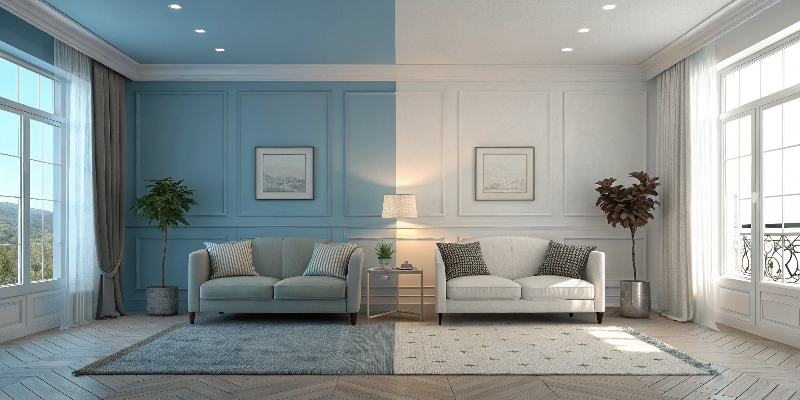
Color Temperature’s Impact on Perceived Brightness
| Color | Temperature | Perceived Brightness |
|---|---|---|
| Cool White | 4000K-5000K | Neutral, clean light |
| Daylight | 6000K-6500K | Sharp, bluish, perceived brighter |
Key Factors:
Lumen Output
True brightness depends on lumens, not Kelvin alone.Color Sensitivity
Our eyes perceive bluish daylight as brighter, especially during daytime.Application Environment
Cool white suits indoor tasks. Daylight excels outdoors or in detailed settings.Aesthetic Preference
Daylight may feel harsh in residential settings, while cool white feels balanced.Energy and Efficiency Consideration
Higher Kelvin doesn’t mean higher energy use but may impact visual comfort.
Understanding these factors prevents mismatched lighting and client dissatisfaction.
Which is brighter, 4000K or 6000K?
Many buyers confuse Kelvin temperature with brightness levels. The truth is more nuanced.
6000K appears brighter and cooler than 4000K, though lumen output matters more.
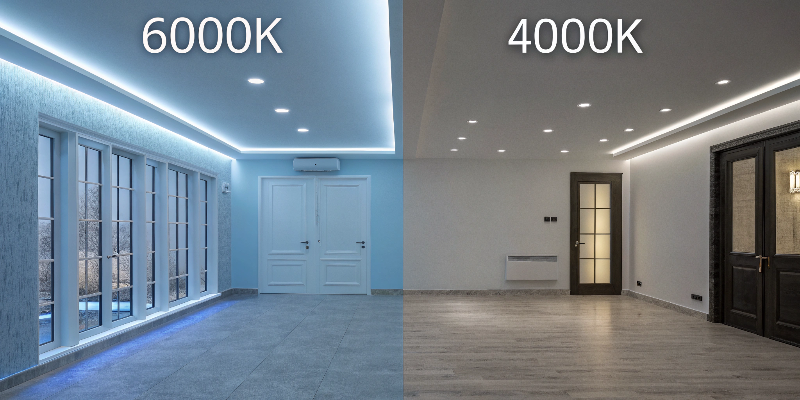
Kelvin vs. Brightness
| Color Temperature | Appearance | Usage |
|---|---|---|
| 4000K | Neutral white | Offices, homes |
| 6000K | Cool daylight | Outdoor, industrial |
Factors to Consider:
Visual Perception
6000K looks sharper, enhancing visual clarity.Purpose of the Space
4000K is versatile, while 6000K is more functional for industrial use.Glare and Comfort
High Kelvin may cause discomfort in living spaces.Energy Efficiency
Both can have similar wattage and lumen output, affecting power consumption equally.Mood Influence
6000K promotes alertness; 4000K creates a balanced, neutral ambiance.
Selecting based solely on Kelvin without factoring in lumens can cause poor lighting results.
What color light is best for mood?
Choosing the wrong light color may negatively affect emotions and atmosphere.
Warm white (2700K-3000K) is best for creating a cozy, relaxed environment.
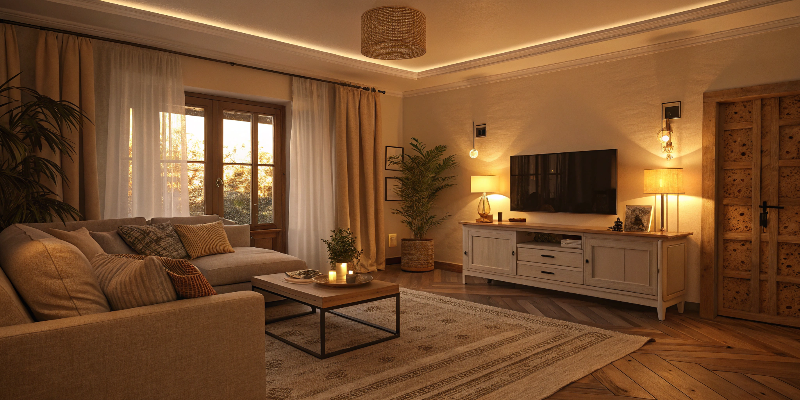
How Light Color Affects Mood
| Color Temperature | Emotional Effect | Ideal Locations |
|---|---|---|
| Warm White (2700K) | Relaxing, intimate | Homes, restaurants |
| Cool White (4000K) | Balanced, focused | Offices, retail |
| Daylight (6000K) | Energetic, alert | Factories, outdoors |
| RGB | Fun, playful | Events, clubs |
Key Influences:
Biological Response
Warm tones reduce stress by mimicking sunset light.Psychological Comfort
Cool tones improve concentration but may cause fatigue over time.Task-Dependent Needs
Different activities require different color tones for productivity or relaxation.Brand Image & Identity
Retailers and restaurants often use warm lights to attract customers.Customizability Options
Tunable white or RGB systems allow mood adjustment based on occasions.
By matching light color to purpose, I ensure the space enhances well-being and productivity.
Which type of LED strip light are better?
Wrong strip selection leads to inefficiencies and subpar aesthetics.
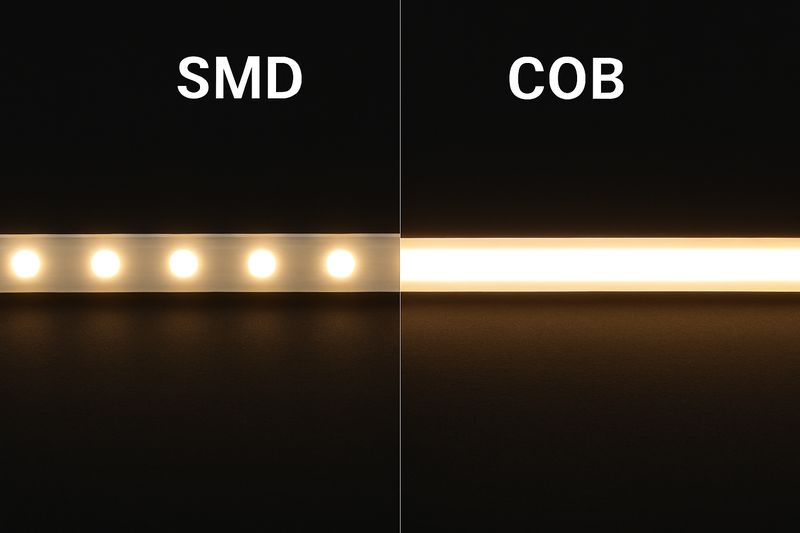
SMD2835, SMD5050, and SMD5630 strips differ by brightness, size, and use cases.
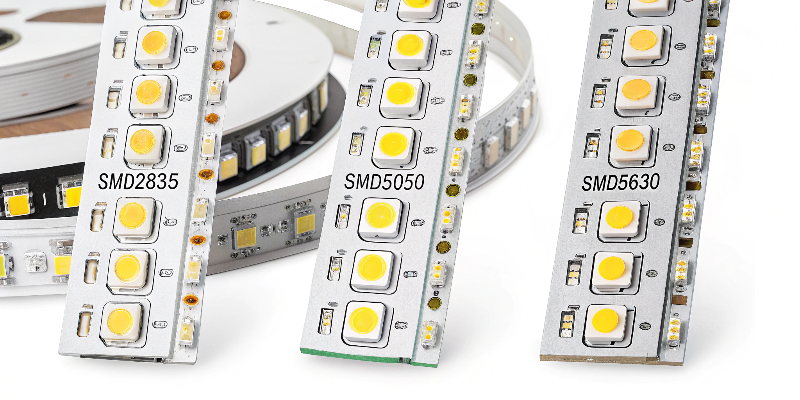
Comparing LED Strip Light Options
| Strip Type | Key Features | Ideal Use |
|---|---|---|
| SMD283510 | Compact, low heat, cost-effective | Residential, small spaces |
| SMD505011 | High brightness, RGB capable | Commercial, decorative projects |
| SMD563012 | Ultra-bright, wider beam | Industrial, outdoor signage |
Important Factors:
Brightness Level
SMD5630 offers the highest lumens, ideal for large areas.Color Options
SMD5050 supports RGB, making it best for dynamic designs.Power Consumption
SMD2835 is energy efficient but less bright.Heat Dissipation
Larger chips like 5630 generate more heat; require better heat sinks.Customization Needs
SMD5050 allows logo customization and flexible control options.
In conclusion, we often recommend SMD5050 as a balance of flexibility, brightness, and reliability, especially for projects needing both function and style.
LED color choices affect mood, efficiency, and design success. Choose wisely based on specific project needs.
Explore this resource to understand various lighting color types and how they can enhance your space effectively. ↩
Discover the benefits of RGB lighting for creating personalized and vibrant atmospheres in your home. ↩
Learn about tunable white lighting and how it can provide flexibility and adaptability in your lighting design. ↩
Learn about tunable white LED lighting and its applications in hospitality and retail for adjustable ambiance. ↩
Discover why color flexibility is crucial for various lighting applications and how it enhances design. ↩
Explore the advantages of RGBW LED lights for versatile lighting solutions that balance color and white tones. ↩
Explore this link to discover expert tips on maximizing task lighting for productivity and comfort in your space. ↩
Learn how accent lighting can transform your home by highlighting key features and creating a stunning visual impact. ↩
Discover the advantages of layered lighting techniques to create a harmonious and functional living environment. ↩
Explore the advantages of SMD2835 LED strip lights for energy efficiency and compact design, perfect for small spaces. ↩
Learn about SMD5050’s high brightness and RGB capabilities, ideal for vibrant and dynamic lighting projects. ↩
Discover the ultra-bright SMD5630 LED strip lights, perfect for industrial and outdoor signage needs. ↩