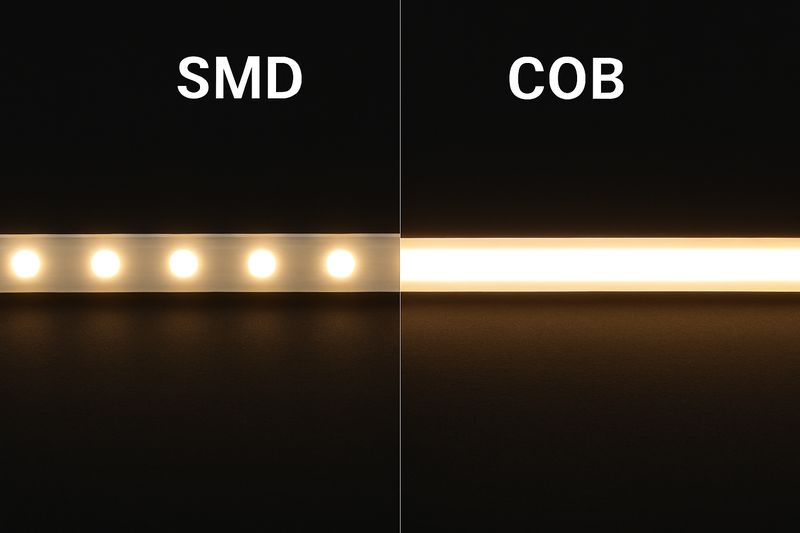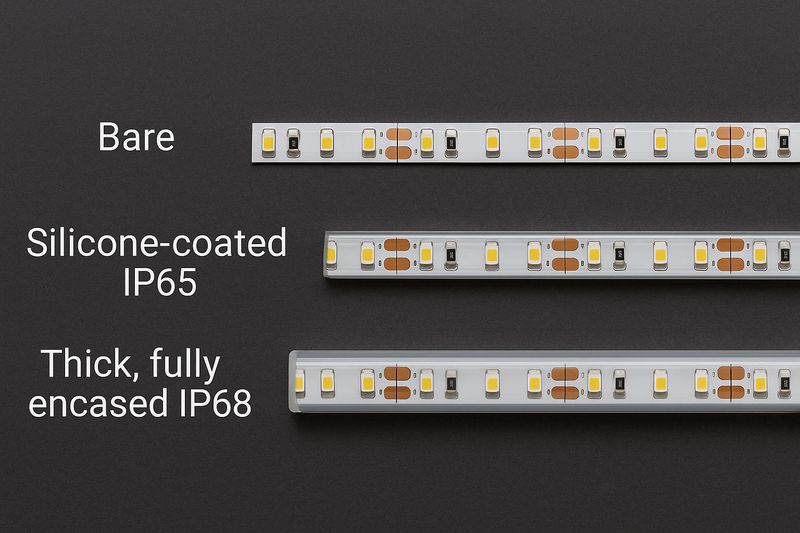
Tired of outdoor LED strip lights that flicker, fade, or fail after just one season? Choosing the wrong lights means wasted money, safety hazards, and a disappointing outcome for your project. Let’s fix that.
The best outdoor LED strip lights excel in 5 key areas: superior weatherproofing (IP rating), durable UV-resistant materials, optimal brightness and color, robust thermal management, and reliable, certified components for longevity.
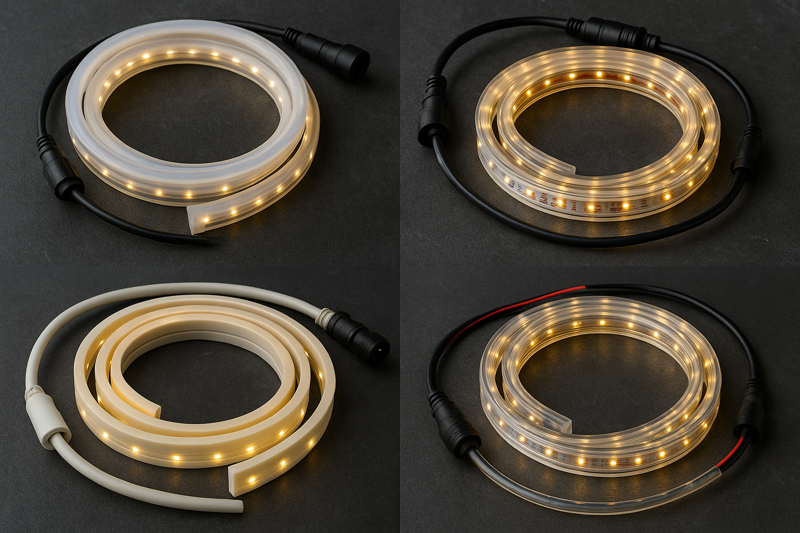
When you’re looking to illuminate an outdoor space, whether it’s for a client’s architectural project or your own wholesale inventory, you need LED strip lights that can truly withstand the elements and perform reliably year after year. As the owner of Rhlite, a factory specializing in LED strip solutions, I’ve seen firsthand what separates a top-tier outdoor LED strip from the ones that cause headaches. This guide will break down the 5 essential features you need to look for.
1. Superior Weatherproofing (IP Rating): Is Your First Line of Defense Adequate?
Are your current outdoor LED strips failing due to water damage or dust ingress? An inadequate Ingress Protection (IP) rating means your lights are vulnerable, leading to short circuits, corrosion, and premature failure. This is a critical oversight.
Truly weatherproof LED strips boast high IP ratings, typically IP65 for sheltered areas, and IP67 or IP68 for exposed locations, ensuring robust protection against dust and water penetration for long-lasting outdoor performance.
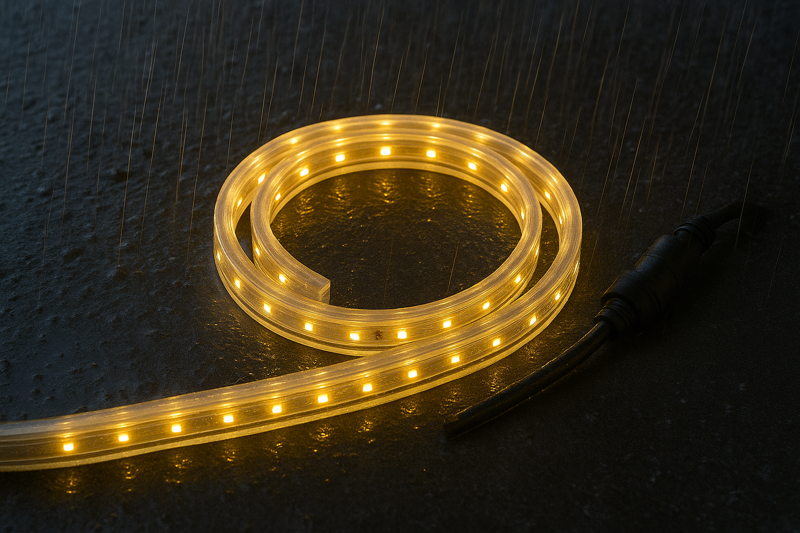
The IP rating is arguably the most crucial feature for any outdoor LED strip light. It’s a two-digit number: the first digit indicates protection against solid particles (like dust), and the second indicates protection against liquids (like rain or jets of water). For outdoor use, you need both to be high. When I talk to clients like Tom, who sources for projects in diverse climates like North America and Japan, ensuring the IP rating matches the application is a top priority. Misunderstanding or misrepresenting IP ratings can lead to significant issues down the line, a common pain point with some suppliers.
Decoding the Digits:
- First Digit (Solids):
- You’ll almost always want a ‘6’ for outdoor use (e.g., in IP65, IP67, IP68). This means the strip is "Dust Tight" – no ingress of dust; complete protection against contact. This is important because dust can cause overheating or short circuits over time.
- Second Digit (Liquids): This is where you need to match the rating to the exposure level:
- IPX51 (e.g., IP65): Protected against low-pressure water jets from any direction. This is generally suitable for sheltered outdoor areas like under eaves, covered porches, or well-protected signages.
- IPX7 (e.g., IP672): Protected against temporary immersion in water (up to 1 meter deep for up to 30 minutes). This is a robust choice for most exposed outdoor applications such as garden lighting, deck perimeters, pathways, and facade lighting. At Rhlite, we often recommend IP67 as a versatile and reliable standard for many outdoor projects.
- IPX83 (e.g., IP68): Protected against continuous immersion in water under conditions specified by the manufacturer (e.g., depth and duration). This is necessary for underwater applications like pools and fountains, or in areas prone to prolonged submersion.
Beyond the Numbers:
It’s not just about the stated IP rating; it’s about how that rating is achieved and maintained.
- Quality of Seals: Look for strips where the protective casing (silicone, PU) is thoroughly sealed, especially at the end caps and any connector points. Factory-sealed ends are always preferable to field-sealed ones for maximum integrity.
- Manufacturing Process: As a factory, we have precise control over the extrusion or coating process that creates the waterproof barrier. Consistent application and quality materials are key.
- Certification: While many IP ratings are self-declared, reputable manufacturers may offer third-party test reports to verify their claims. This is something we provide to give clients like Tom extra assurance against falsified certificates.
| IP Rating | Solids Protection | Liquids Protection | Typical Rhlite Outdoor Application |
|---|---|---|---|
| IP65 | 6 (Dust Tight) | 5 (Water jets from any direction) | Sheltered Patios, Soffits, Covered Walkways |
| IP67 | 6 (Dust Tight) | 7 (Temporary immersion, up to 1m for 30 mins) | Exposed Gardens, Decks, Facades, Pathways |
| IP68 | 6 (Dust Tight) | 8 (Continuous immersion, conditions manufacturer-spec) | Pools, Fountains, Very Wet Environments |
Don’t compromise on the IP rating. It’s the foundation of your outdoor LED strip’s ability to survive and thrive in the challenging outdoor environment. It’s the difference between a light that lasts and one that becomes a quick liability.
2. Durable, UV-Resistant Materials: Will Your Strips Survive the Sun and Elements?
Have you seen outdoor LED strips become brittle, yellow, or crack after sun exposure? Using materials that aren’t UV-resistant or durable enough for outdoor conditions leads to compromised waterproofing and a shortened lifespan, ruining aesthetics and performance.
The best outdoor LED strips use high-grade, UV-stabilized materials like silicone or polyurethane (PU) for their casing. These resist degradation from sunlight, temperature extremes, and moisture, ensuring long-term structural integrity.
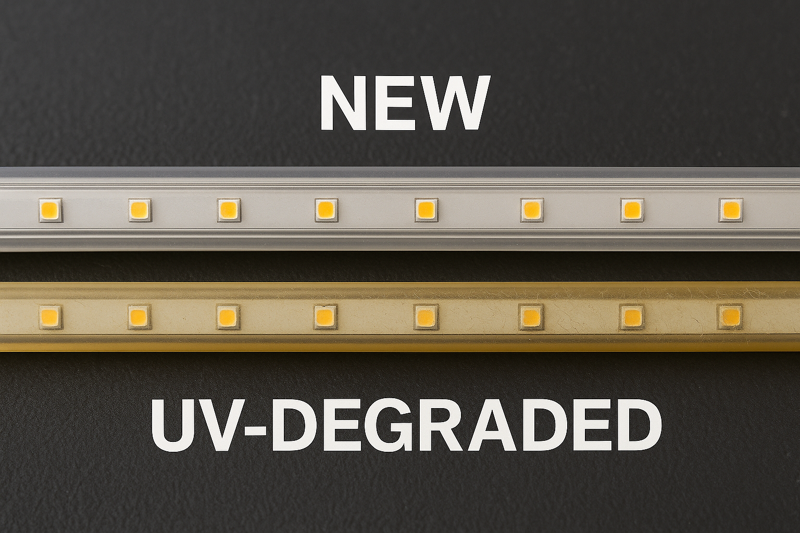
After the IP rating, the material used to encase and protect the LEDs is the next critical feature for outdoor longevity. Outdoor environments are harsh; sunlight, in particular, bombards materials with UV radiation, which can break down inferior plastics and coatings. For clients like Tom, who expect products to maintain their appearance and function over many years, material quality is a non-negotiable aspect. This is where a factory’s control over sourcing raw materials, like we have at Rhlite, makes a significant difference.
Why Standard Plastics Fail Outdoors:
- UV Degradation4: Many common plastics, if not specifically UV-stabilized, will absorb UV radiation. This causes the polymer chains to break down, leading to:
- Yellowing/Discoloration: The strip loses its clarity and aesthetic appeal.
- Brittleness: The material becomes fragile and prone to cracking, especially with temperature changes.
- Loss of Waterproofing: Cracks in the casing compromise the IP rating, allowing moisture and dust to enter.
- Temperature Extremes: Materials must expand and contract with temperature fluctuations without failing. Cheap materials can become too rigid in the cold or too soft in the heat, leading to seal failure or warping.
Materials That Excel Outdoors:
- High-Grade Silicone (UV-Stabilized)5:
- Flexibility: Silicone remains flexible over a wide temperature range.
- Water Resistance: Naturally hydrophobic and excellent for creating waterproof seals.
- UV Resistance: When properly formulated with UV stabilizers, high-quality silicone resists yellowing and degradation from sunlight for many years. This is a common and reliable choice we offer at Rhlite.
- Beware: Not all silicone is created equal. Low-quality silicone will degrade much faster.
- Polyurethane (PU)6:
- Exceptional UV Resistance: PU often offers superior UV resistance compared to many silicones, making it an excellent choice for very sunny or harsh environments.
- Durability & Abrasion Resistance: PU can be tougher and more resistant to physical damage.
- Clarity: Can offer very high optical clarity.
- This is often considered a premium option for maximum longevity.
- Avoid: Simple PVC jackets or epoxy resin coatings are generally not suitable for long-term, exposed outdoor use as they tend to degrade quickly under UV light and temperature stress.
Manufacturing Matters:
The process of applying these materials is also key.
- Extrusion (for Silicone): A consistent, void-free extrusion process ensures a uniform protective layer.
- Potting/Encapsulation (for PU or Silicone): This involves filling a channel or mold containing the LED strip with the protective material. Ensuring complete fill without air bubbles is crucial.
As a factory, we invest in quality raw materials and precise manufacturing techniques to ensure our outdoor LED strips maintain their integrity. This focus on material science is fundamental to producing products that meet the long-term expectations of clients in demanding markets.
| Material Property | Importance for Outdoor Longevity | Preferred Material Choices | Rhlite’s Offering |
|---|---|---|---|
| UV Resistance | Prevents yellowing, brittleness, cracking from sunlight | UV-Stabilized Silicone, PU | High-Grade UV-Stabilized Silicone, PU |
| Water Resistance | Maintains IP rating, prevents moisture ingress | Silicone, PU | Excellent sealing with both |
| Temperature Stability | Withstands expansion/contraction without damage or seal loss | Silicone, PU | Both offer wide temp range |
| Durability | Resists physical wear and tear | PU (often higher), Good Silicone | Good to Excellent |
| Chemical Resistance | Withstands atmospheric pollutants, cleaning agents (mild) | Generally good for both | Suitable for typical environments |
Choosing LED strips made with the right, high-quality, UV-resistant materials is a direct investment in the lifespan and continued performance of your outdoor lighting.
3. Optimal Brightness (Lumens) & Color Temperature (CCT): Is Your Lighting Fit for Purpose?
Are your outdoor spaces improperly lit – too dim for safety, too glaring for comfort, or the wrong color for the desired mood? Choosing incorrect brightness levels or color temperatures can ruin the functionality and aesthetics of your outdoor lighting design.
The best outdoor LED strips offer a range of brightness options (lumens/meter) and color temperatures (Kelvin) to suit specific applications, from subtle warm accent lighting (e.g., 2700K) to bright, cool functional light (e.g., 5000K).
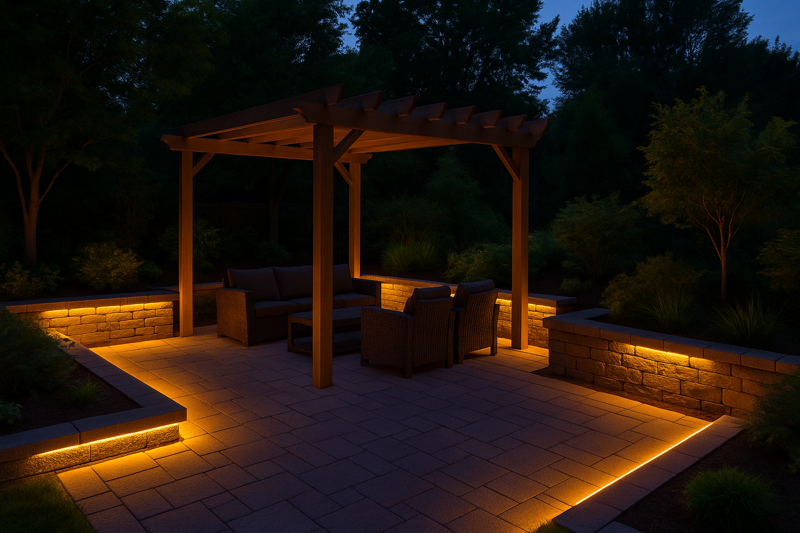
Once you’ve ensured an LED strip can survive outdoors, the next step is to make sure it delivers the right kind of light. Brightness (measured in lumens) and color temperature (measured in Kelvin) are fundamental to achieving the desired effect and functionality. For my clients like Tom, who may be sourcing for a variety of projects from cozy residential patios to bright commercial facades, having access to a wide range of options and understanding how to specify them is crucial. Getting this wrong means the lighting simply won’t meet the project’s goals, regardless of how durable the strip itself is.
Brightness (Lumens per Meter/Foot):
The amount of light emitted by the strip. The "right" brightness depends entirely on the application:
- Accent Lighting (e.g., highlighting plants, architectural features, under railings): Typically requires lower lumen outputs, perhaps 200-500 lm/m. The goal is a subtle glow, not overpowering illumination.
- Ambient/General Illumination (e.g., lighting patios, walkways, seating areas): Needs moderate brightness for visibility and comfort, around 400-800 lm/m.
- Task/Security Lighting (e.g., illuminating large areas, building perimeters, signage): Requires higher lumen outputs, often 800 lm/m to 2000+ lm/m, for clear visibility and impact.
At Rhlite, we can customize the LED density and type to achieve a wide spectrum of lumen outputs, meeting precise project needs.
Color Temperature (CCT – Measured in Kelvin):
The perceived "warmth" or "coolness" of the white light:
- Warm White (2200K – 3000K): Creates a cozy, inviting, traditional ambiance, similar to incandescent bulbs or candlelight. Excellent for residential settings, garden lounging areas, and restaurant patios. My go-to for a relaxing feel is usually around 2700K.
- Neutral White (3500K – 4500K): A balanced, cleaner light. Good for general outdoor areas where good visibility is needed without being too stark, or for modern architectural designs.
- Cool White (5000K – 6500K): A bright, crisp, often bluish light. Best suited for commercial, industrial, or security applications where maximum visibility is key. Can feel clinical in residential spaces.
- RGB/RGBW/Tunable White:
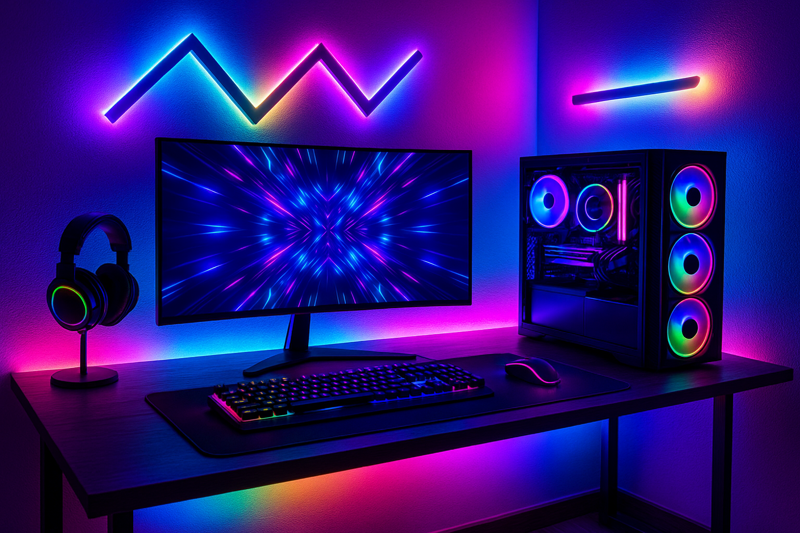
- RGB: Full-color changing for dynamic effects.
- RGBW: RGB plus a dedicated white chip for better quality white light.
- Tunable White: Allows adjustment of CCT from warm to cool.
Color Rendering Index (CRI):
How accurately the light reveals the true colors of objects. For general outdoor use, CRI 80+ is usually fine. For applications where color fidelity is critical (e.g., illuminating artwork, high-end landscapes, retail displays), aim for CRI 90+ or even 95+. We offer high CRI options because we understand that for designers and architects, this is often a crucial detail.
| Application Type | Typical Lumen Range (per meter) | Common CCT Range | Recommended Min. CRI |
|---|---|---|---|
| Garden Accent | 200-400 lm/m | 2700K-3000K | 80+ |
| Pathway/Step Lighting | 300-600 lm/m | 2700K-4000K | 80+ |
| Patio/Deck Ambient | 400-800 lm/m | 2700K-3500K | 80+ (90+ for premium) |
| Architectural Detail | 500-1000 lm/m | 3000K-4500K | 85+ (90+ for premium) |
| Security/Flood | 1000-2000+ lm/m | 4000K-6000K | 70+ (80+ preferred) |
By carefully selecting the brightness and color temperature, you ensure the outdoor LED strip lights not only last but also create the perfect atmosphere and functionality for the intended space. This level of choice is a key benefit of working directly with a factory.
4. Robust Thermal Management: Can Your LEDs Beat the Heat for Longer Life?
Are your outdoor LED strips dimming prematurely or failing unexpectedly, even if they are weatherproof? Overheating is a silent killer of LEDs, drastically reducing their lifespan and brightness if not properly managed, especially in enclosed or sun-exposed installations.
Effective thermal management, often achieved through quality PCB design, appropriate LED density, and the use of aluminum mounting channels, is crucial for dissipating heat away from the LEDs, ensuring their longevity and consistent performance.
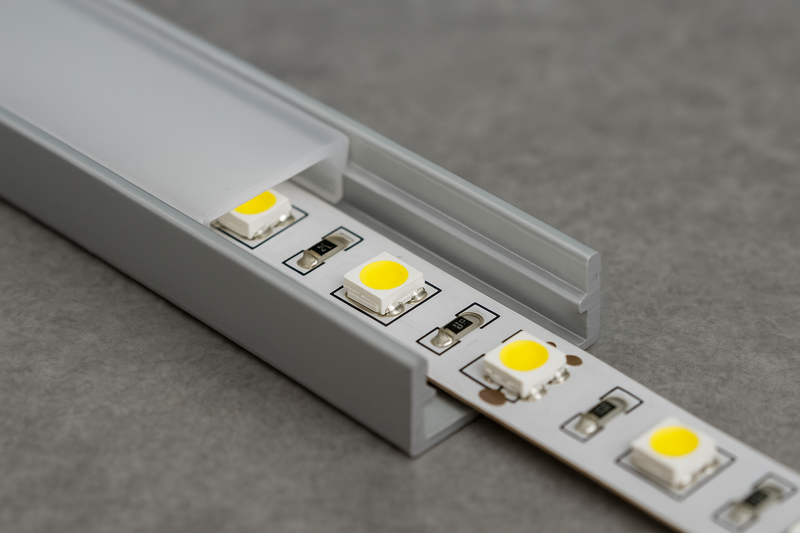
While weatherproofing protects LEDs from external threats, thermal management protects them from an internal one: their own heat. LEDs are efficient, but they still generate heat. If this heat isn’t effectively drawn away, the LED junction temperature rises, which accelerates degradation, reduces brightness (lumen depreciation), causes color shifts, and ultimately shortens the LED’s lifespan. For long-term outdoor projects, especially those in warmer climates or where strips are installed in confined spaces or direct sun, managing heat is vital. This is a technical aspect that experienced buyers like Tom understand the importance of, as it directly impacts the total cost of ownership.
Why Heat is an Enemy of LEDs:
- Reduced Lifespan (L70): The L70 rating of an LED (the time until it outputs 70% of its initial lumens) is highly dependent on its operating temperature. Higher temperatures mean a shorter L707 lifespan.
- Lumen Depreciation: Even before complete failure, overheated LEDs will dim faster over time.
- Color Shift: Prolonged high temperatures can cause the phosphors in white LEDs to degrade, leading to undesirable changes in color temperature.
- Component Failure: Excessive heat can also stress other components on the strip, like resistors, leading to premature failure of the entire strip.
Key Elements of Good Thermal Management8:
- Quality Printed Circuit Board (PCB):
- Copper Thickness: The PCB acts as the first pathway for heat. Thicker copper layers (e.g., 2oz, 3oz, or even 4oz for high-power strips) provide better thermal conductivity, drawing heat away from the LED chips more effectively. At Rhlite, we offer options for PCB copper weight.
- PCB Material: Certain PCB materials offer better thermal performance, though this is often a consideration for very high-power applications.
- LED Chip Efficiency and Density:
- More efficient LEDs generate less heat for a given light output.
- Lower density LED strips (fewer LEDs per meter) naturally generate less heat overall compared to very high-density, high-power strips. The choice depends on the required brightness.
- Aluminum Mounting Channels9/Profiles: This is a highly recommended and effective solution.
- Heat Sink: Aluminum is an excellent thermal conductor. Mounting the LED strip in an aluminum channel provides a significantly larger surface area for heat to dissipate into the surrounding air. This can dramatically lower the operating temperature of the LEDs.
- Protection: Channels also offer physical protection, which is a bonus.
- Proper Installation Environment:
- Avoid installing strips in tightly sealed, unventilated enclosures where heat can build up, unless the strip is specifically rated for such use and is of lower wattage.
- Consider airflow around the installation if possible.
As a manufacturer, we design our strips with thermal performance in mind, using quality PCBs and advising clients on the best mounting practices. For example, for high-output strips intended for continuous use, we always recommend pairing them with appropriate aluminum profiles.
| Thermal Management Factor | How It Helps Dissipate Heat | Rhlite’s Approach / Recommendation | Impact on Long-Term Performance |
|---|---|---|---|
| PCB Copper Weight | Better thermal conductivity away from LEDs | Standard 2oz, options for 3oz/4oz | Slower lumen depreciation, longer life |
| LED Efficiency | Less heat generated per lumen | Sourcing efficient LED chips | Lower operating temperature |
| Aluminum Mounting Channel | Acts as a heat sink, increases surface area | Strong recommendation, supply various profiles | Significantly extends LED lifespan |
| Installation Space | Allows airflow, prevents heat buildup | Advise on ventilation for enclosed installations | Prevents overheating, ensures stability |
| LED Density | Affects overall heat load per meter | Offer various densities to match application | Balance brightness with thermal load |
Good thermal management isn’t always visible, but it’s a critical feature that works behind the scenes to ensure your outdoor LED strip lights deliver on their promise of longevity and consistent brightness.
5. Reliable, Certified Components & Connectors: Are You Sacrificing Quality at Critical Points?
Are you experiencing failures not in the LED strip itself, but in its connections or power supply? Using substandard connectors, drivers, or internal components can undermine the entire system, even if the strip itself is high quality, leading to frustrating and costly fixes.
The best outdoor LED strips utilize high-quality, certified internal components (LEDs, resistors) and are paired with equally reliable, IP-rated connectors and certified power supplies (drivers) to ensure system-wide durability and safety.
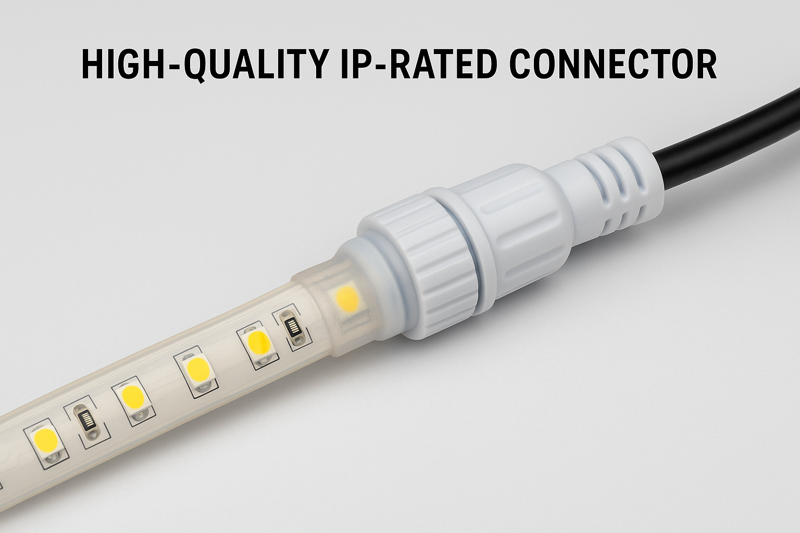
An LED strip lighting system is only as strong as its weakest link. You can have the most durable, weatherproof LED strip, but if it’s powered by an unreliable driver or joined with flimsy, non-waterproof connectors, the system is destined for early failure. For buyers like Tom, who are sourcing complete solutions for projects, the quality and reliability of every component, from the LED chip itself to the end connector, are paramount. This is where dealing with a knowledgeable factory like Rhlite, which can advise on and supply a complete, quality-matched system, becomes invaluable. This also addresses the pain point of suppliers falsifying certificates for components.
Critical Components Beyond the Strip Itself:
- LED Chips:
- Reputable Brands: Sourcing LED chips from established manufacturers (e.g., Epistar, San’an, Cree, Nichia, Samsung, depending on the performance tier required) generally ensures better consistency, efficacy, color stability, and lumen maintenance (longevity).
- Binning: Tight binning by the LED manufacturer ensures uniformity in color temperature and brightness from batch to batch and strip to strip.
- On-Board Resistors: These small components are crucial for regulating current to the LEDs. Low-quality resistors can fail, leading to sections of the strip going out.
- Printed Circuit Board (PCB): As discussed under thermal management, the quality of the PCB (copper thickness, material) also affects overall reliability and current handling capacity.
- Connectors (for joining strips or connecting to power):
- IP Rating: For outdoor use, any field-installed connectors must match or exceed the IP rating of the strip itself (e.g., IP67 or IP68 connectors). These often use O-rings, gaskets, and screw-tight mechanisms to ensure a watertight seal.
- Material Quality: Connectors should be made from durable, UV-resistant materials.
- Secure Connection: They must provide a reliable electrical and mechanical connection that won’t loosen over time due to vibration or temperature changes. Soldering wires and using adhesive-lined heat shrink is often the most robust field connection method.
- Power Supplies (Drivers):
- Outdoor Rating: Drivers installed outdoors must be IP65 rated or higher, or housed in a suitable weatherproof enclosure.
- Safety Certifications: Look for drivers with relevant safety certifications for your region (e.g., UL for North America, CE for Europe). This is a major point for Tom, who deals with US markets.
- Efficiency and Reliability: High-quality drivers are more efficient (less wasted energy as heat) and have a longer operational lifespan.
- Correct Sizing: The driver must be correctly matched to the voltage of the strip and have about 20% wattage overhead.
The Rhlite Assurance:
As a factory that provides one-station solutions, we understand the interplay between all these components.
- We source quality LED chips and passive components.
- We design and manufacture our own LED power supplies, ensuring compatibility and quality.
- We offer a range of IP-rated connectors and can advise on the best connection methods for specific outdoor applications.
- We provide genuine certifications for our products and components, building trust with our clients.
| Component | Why Quality & Certification Matter Outdoors | Rhlite’s Focus | Benefit for Buyers Like Tom |
|---|---|---|---|
| LED Chips | Longevity, brightness consistency, color stability | Sourcing from reputable brands, LM-80 data available | Reliable long-term light performance |
| On-Board Resistors | Stable current regulation, prevents segment failure | Use of quality, correctly rated resistors | Fewer strip failures |
| PCB Quality | Heat dissipation, current handling, structural integrity | Min. 2oz copper, good design practices | Durability, consistent power delivery |
| Connectors | Maintaining IP rating, secure electrical connection | Offer IP67/IP68 connectors, advice on soldering | Prevents water ingress at joints |
| Power Supplies (Drivers) | System safety, longevity, efficiency, outdoor suitability | Manufacture/supply certified IP-rated drivers | Reliable power, code compliance |
| Overall Certification | Proof of safety, quality, and performance claims | Provide genuine UL, CE, RoHS, IP test reports | Trust, market access, reduced risk |
Investing in a system with reliable, certified components throughout is essential for the long-term success and safety of any outdoor LED strip light installation. It ensures peace of mind and protects your investment.
Conclusion
Focus on these 5 features—weatherproofing, durable materials, optimal light, thermal management, and quality components—to select the best outdoor LED strip lights. This ensures lasting, impressive, and reliable illumination for any project.
-
Learn about the IPX5 rating and its suitability for outdoor lighting, especially in sheltered areas, to make informed choices. ↩
-
Explore the advantages of IP67 rated lighting, ideal for outdoor use, ensuring durability and reliability in various weather conditions. ↩
-
Discover the specific applications for IPX8 rated lighting, essential for underwater and prolonged submersion scenarios. ↩
-
Understanding UV degradation is crucial for selecting durable outdoor materials. Explore this link to learn more about its impact on plastics. ↩
-
High-grade silicone is essential for outdoor applications. Discover its advantages and why it’s a top choice for durability. ↩
-
Polyurethane offers exceptional durability and UV resistance. Learn why it’s preferred for outdoor materials and applications. ↩
-
Understanding the L70 rating is crucial for evaluating LED lifespan and performance. Explore this link to learn more about it. ↩
-
Effective thermal management is key to maximizing LED performance and lifespan. Discover best practices to enhance your lighting solutions. ↩
-
Aluminum mounting channels can significantly enhance heat dissipation for LEDs, ensuring better performance and longevity. Learn more about their benefits. ↩