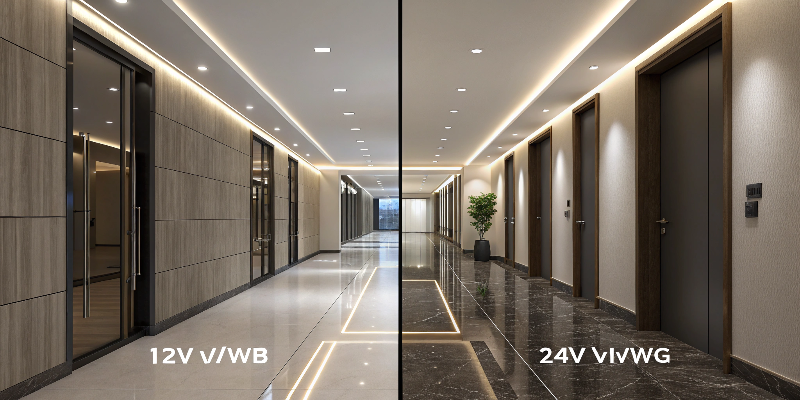
Struggling to choose between 12V and 24V LED strip lights? Here’s what you need to know.
12V and 24V LED strip lights differ in voltage drop, brightness consistency, and use cases.
Choosing the wrong voltage can ruin your design or project performance.
What happens if I wire a 12V power supply to 24V LED strip lights?
A mismatch in voltage can instantly damage the product.
Connecting a 12V power supply to 24V LED strips will make them not light up at all.
Why Voltage Matching Matters
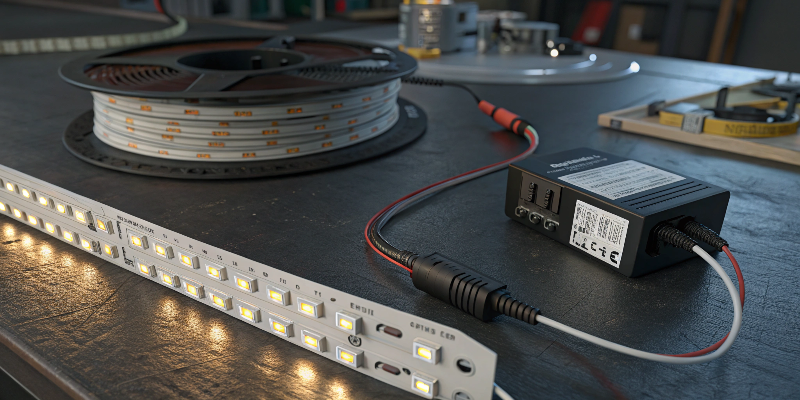
LED strips are designed for specific input voltages. If you underpower a 24V LED strip with a 12V power supply, the circuit won’t activate. There’s not enough energy for the internal resistors and chips to operate. On the flip side, if you apply 24V to a 12V strip, it may overheat and get permanently damaged.
Why Voltage Matching Matters
LED strips are designed for specific input voltages. If you underpower a 24V LED strip1 with a 12V power supply2, the circuit won’t activate. There’s not enough energy for the internal resistors and chips to operate. On the flip side, if you apply 24V to a 12V strip, it may overheat and get permanently damaged.
Common Mistakes and Safety Risks
| Mistake | Result | Safety Risk |
|---|---|---|
| 12V power to 24V strip | No light output | None |
| 24V power to 12V strip | Overheating, instant burn-out | Fire hazard possible |
| Wrong power supply polarity3 | Circuit damage | Short circuit risk |
If you’re working on architectural lighting projects like I do, it’s essential to double-check your power specs before wiring anything.
What is the best voltage for LED strip lights?
The best voltage depends on length, brightness, and installation setup.
24V is generally better for longer runs, while 12V suits shorter sections.

Understanding Voltage Drop and Project Size
When we talk about “best,” we’re usually talking about performance over distance. Here’s where 24V wins. It handles voltage drop4 much better than 12V. This matters when you’re running LED strips5 longer than 5 meters without breaks.
Comparison by Project Type
| Application Type | Recommended Voltage |
|---|---|
| Cabinet or shelf lighting | 12V |
| Room perimeter or wall wash | 24V |
| Commercial installations | 24V |
| Small DIY lighting kits | 12V |
For my commercial clients, especially architects designing hotel lobbies or retail environments, I almost always recommend 24V to avoid dimming at the far end of the strip.
Are 24V LED strips brighter?
Voltage doesn’t equal brightness—power and design do.
Brightness depends more on wattage and LED density than on voltage itself.
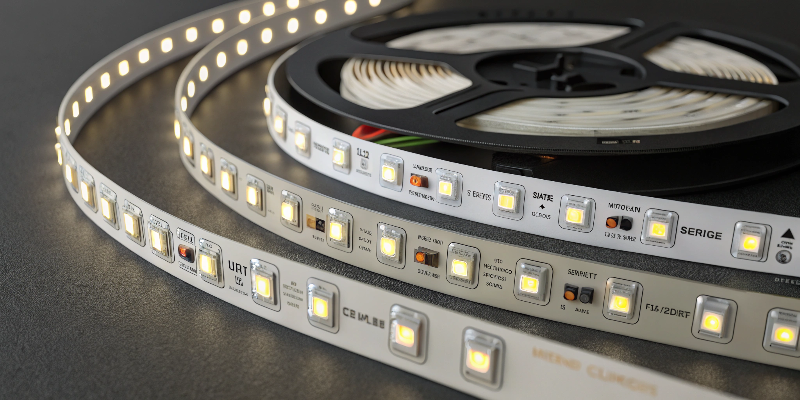
Why Brightness Is a Common Misconception
A 24V strip is not automatically brighter than a 12V one. What makes a strip brighter is how much power each segment draws and how many LEDs are packed per meter. However, 24V strips tend to maintain brightness better across longer distances.
Side-by-Side Comparison
| Feature | 12V Strip | 24V Strip |
|---|---|---|
| LED Density per meter | Varies | Varies |
| Max continuous brightness | Equal, watt-for-watt | Equal, watt-for-watt |
| Brightness consistency | Weaker over long runs | Stronger over long runs |
So, if your project includes multiple corners, long lines, or ceiling coves, 24V gives better brightness consistency—without needing repeaters or amplifiers.
Is 24V better than 12V?
It depends on your setup and expectations.
24V is more efficient for longer installations, while 12V fits compact or mobile applications.
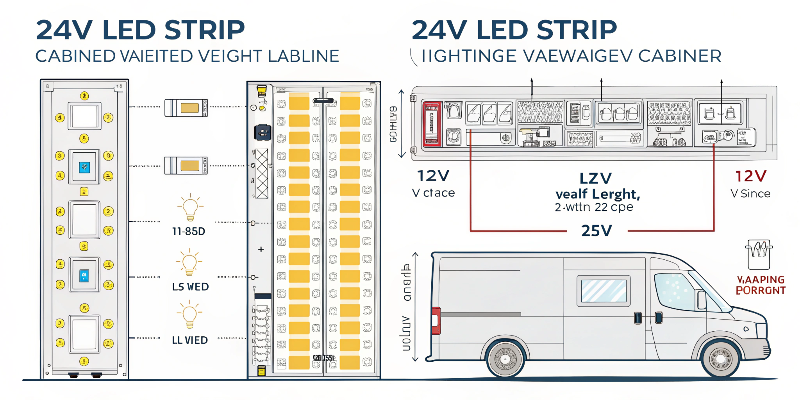
Efficiency and Flexibility
24V systems6 reduce the current by half compared to 12V systems at the same power. That means less heat, smaller wires, and fewer drops. But 12V has more flexible installation options7 due to its shorter cut lengths—helpful in detailed projects.
Choosing Based on Use Case
| Use Case | Best Voltage |
|---|---|
| Automotive lighting | 12V |
| Office ceiling lighting | 24V |
| Art display backlighting | 12V |
| Architectural facades | 24V |
When I helped a U.S. client light a high-end spa, we used 24V for every ceiling fixture to maintain uniformity across 10-meter runs. No flicker, no dim ends.
How long can you run a 24V LED strip?
24V allows longer continuous runs than 12V before voltage drop affects performance.
You can usually run 24V LED strips up to 10 meters without a voltage drop.
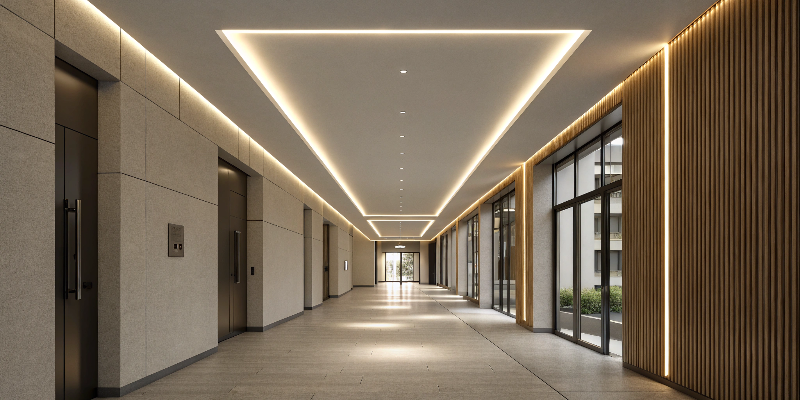
Understanding Voltage Drop and Power Design
Every conductor has resistance. As current flows, some voltage gets lost—this is the voltage drop. For 12V, even 5 meters can show dimming. With 24V, that range doubles. You still need to match wire gauge and power supply output.
Recommended Max Strip Lengths Without Amplifiers
| Voltage | Max Length (No Drop) | With Amplifier |
|---|---|---|
| 12V | 5 meters | 10–15 meters |
| 24V | 10 meters | 20–25 meters |
When I work with lighting designers, we often lay out power injection points every 8–10 meters for 24V systems. That ensures consistency across hotel corridors, long halls, and retail shelving.
Conclusion
24V LED strips are ideal for long, consistent lighting; 12V works better for tight, flexible installations.
-
Explore this link to understand the advantages and specifications of 24V LED strips for your projects. ↩
-
Learn about the functionality of 12V power supplies and their compatibility with LED lighting systems. ↩
-
Discover the dangers of incorrect power supply polarity and how to avoid potential hazards in your projects. ↩
-
Understanding voltage drop is crucial for optimizing electrical systems, especially in long-distance applications. Explore this link for in-depth insights. ↩
-
Learn about the best practices for LED strip usage to enhance your lighting design and avoid common pitfalls. This resource is invaluable for designers. ↩
-
Explore the benefits of 24V systems, including efficiency and reduced heat, to enhance your lighting projects. ↩
-
Learn about the installation flexibility of 12V systems, which can be crucial for detailed projects and custom setups. ↩